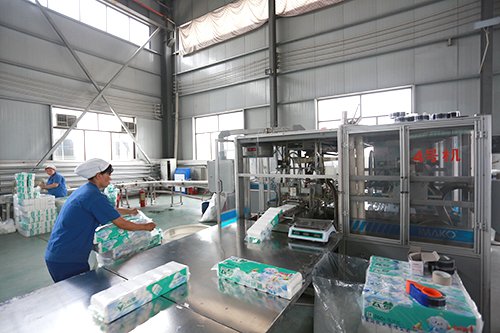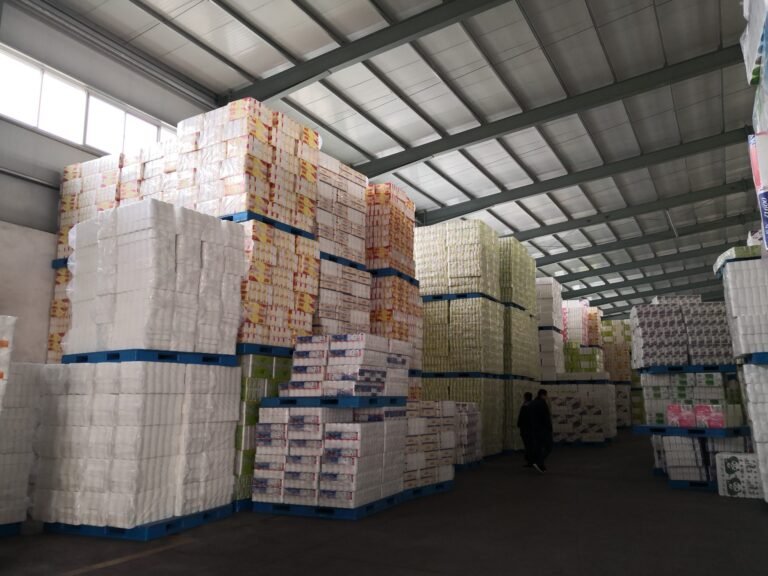
An entry line comes back queried and the invoice looked fine. Two cartons off one machine, one read as stock and one as an article, because the web was slit at the width a rewinder happens to run. Ply and softness did not move. A measurement did.
Related on this site: the origin documents that back a China claim past the HS code.
Chapter 48 sorts tissue on a size line, not a product line, and that is the honest shape of a tissue paper HS code question: the reading follows the slit width. We quote tariff mirrors with attribution and publish no rate. What we add is what a code database cannot: our formats on each side of the line, and what a mixed container does to a packing list.
The Line Is Width, Not Product
One sentence carries the split. In the Chapter 48 notes as rendered on a mirror of China’s tariff, the stock headings apply only to paper, paperboard, cellulose wadding and webs of cellulose fibres in strips or rolls of a width exceeding 36 cm, or in rectangular sheets, squares included, of which one side exceeds 36 cm and the other exceeds 15 cm, measured in the unfolded state. A European consolidated tariff repeats both numbers.
What is absent matters as much. Ply is absent; creping, embossing and printing are expressly permitted, so none can be the divider; softness and furnish appear nowhere.
Nor is a heading a quality grade. The divider is a ruler measuring a converting decision made on a machine list, which is why two importers of identical tissue off identical reels can land on opposite sides of it.
| The comparison | Above the line (stock side) | Below the line (article side) |
|---|---|---|
| Measurement that decides | Width over 36 cm; or sheet sides over 36 cm and over 15 cm, unfolded | Width not exceeding 36 cm; or cut to a size or special shape |
| Moved by, not moved by | Slit width; not ply, grammage, furnish, pattern or print | Cut width or cut size; not carton, pack count or brand |
| Our formats arriving here | Mother jumbo rolls, cut to a converter’s rewinder | Consumer rolls, jumbo washroom rolls, facial tissue, napkins, pocket packs |
Heading 4803: Tissue Stock Above the Line
A UK consolidated-tariff commodity page renders the stock heading as toilet or facial tissue stock, towel or napkin stock and similar paper for household or sanitary purposes, cellulose wadding and webs of cellulose fibres, whether or not creped, crinkled, embossed, perforated, surface-coloured, surface-decorated or printed. A Chinese mirror attaches the size condition to the same list. Both quoted, neither adopted.
The working word is stock: paper that has not become an article, a roll fed to a rewinder with its identity still ahead. Everything the list allows – creping, embossing, deco patterns, the perforation line – happened at the paper machine, which is why a declaration asks for those descriptors.
Above the line some systems ask a second question: the same UK page splits the eight-digit lines under 4803 00 at a boundary in grams per square metre per ply, so with our published 13 to 45 GSM range a PO line must say whether a grammage is per ply or combined.
Our mother jumbo rolls sit on the wide side because we sell width rather than a standard: a parent roll is cut to the rewinding machine of the plant that orders it – a statement about delivered width, not a classification. The converting side is worked in our mother jumbo rolls category, its converting plant guide and supplier shortlist; the furnish argument in virgin versus recycled parent rolls.
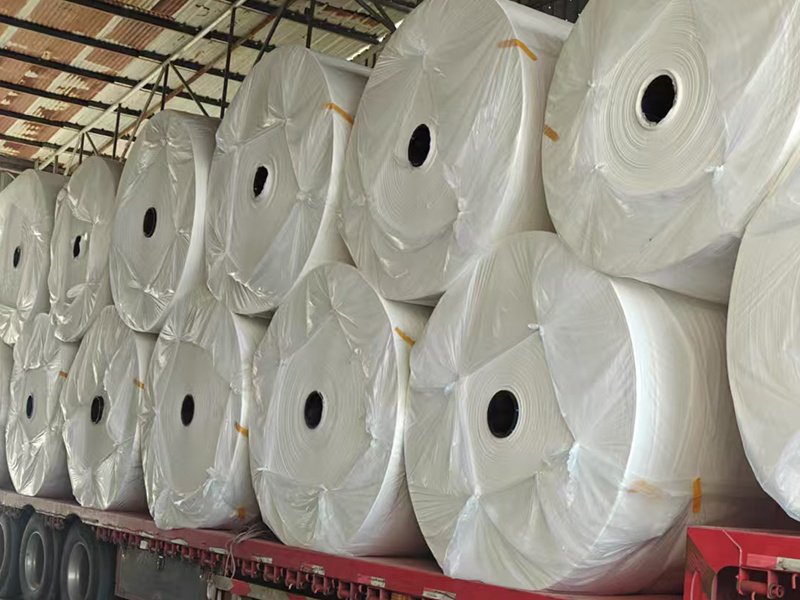
Video: “Jumbo Roll Tissue manufacturing process” on the Top Source Paper channel (@topsourcepaper4025). It shows parent-roll production, not customs paperwork; use it as physical-format context only.
Heading 4818: Finished Formats Below the Line
Below the line the wording turns from stock into articles. The heading text on the mirrors we read covers toilet paper and similar paper, cellulose wadding or webs of cellulose fibres of a kind used for household or sanitary purposes, in rolls of a width not exceeding 36 cm or cut to size or shape.
Under it sit 4818.10 toilet paper; 4818.20 handkerchiefs, cleansing or facial tissues and towels; 4818.30 tablecloths and serviettes, tablecloths and table napkins on a US-side list; and 4818.90 bed sheets and similar household, sanitary or hospital articles. On a Chinese mirror the first three carry that qualifier inside the subheading text itself, not only in a chapter note: width not exceeding 36 cm, or cut to special shape.
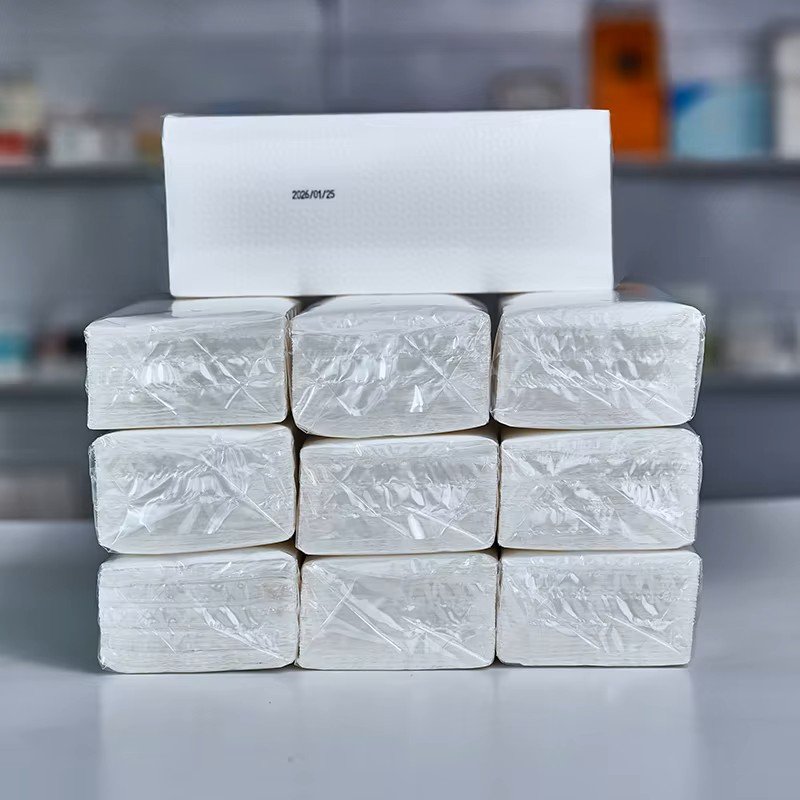
Mapped to our lines, the comparison is form. Consumer bath tissue is slit far below 36 cm. Jumbo washroom roll is specified by us as an 18 to 28 cm diameter, and a diameter is not a web width: it fits a dispenser, while width is what the measurement takes. Facial tissue, napkins, fold towels and pocket packs are cut sheets - cube box, flat box, soft PE pack - listed on our toilet paper category and its roll dimensions piece.
Retail packaging is not the test: a printed carton does not put goods below the line and a plain one does not put them above.

The Same Sheet, Two Headings: Worked Readings
Run one web through the comparison. Each line is the rule's arithmetic, an illustration to confirm with your broker against the edition in force where you import, not a classification of anyone's goods.
| Line on a PO | Arithmetic | Side it reads on | Status |
|---|---|---|---|
| Creped tissue web, one roll, 66 cm wide | 66 is above 36 | Stock side; a mirror's examples show a jumbo roll declared at 66 cm | Illustration; broker confirms |
| Napkin cut 40 by 40 cm, folded for a sleeve | Unfolded sides 40 and 40 | Still the stock measurement, however it is folded | Illustration; broker confirms |
| The same napkin cut 33 by 33 cm | 33 is not above 36 | Article side, on the tablecloth and serviette wording | Illustration; broker confirms |
| Consumer bath tissue, web slit 10.1 cm | 10.1 is below 36 | Article side, on the toilet-paper wording | Illustration; broker confirms |
Rows two and three are the piece in miniature: two napkins off one machine, one cut 40 cm, one cut 33 cm, on opposite sides of a comparison that has nothing to do with quality.
One Container, Two Headings
A mixed 20GP is ordinary for us and inconvenient for a declaration. White-label goods and mother rolls consolidate into one 20GP, while a fully custom printed build - printed carton and printed outer packaging bag together - runs at 1x40'HQ, a tier our MOQ article owns. Load wide parent rolls with narrow consumer rolls on one consignment and it sits on both sides of the comparison, so it cannot be one description.
The order of operations is the fix. A packing list must be split by width before any declaration can be, because the broker works from the list, not from a mill's intention. Pallets grouped under one line named "tissue paper" force someone to reverse-engineer widths from carton marks, and that guesswork is what draws a query. Ours groups by form plus measurement: rolls of this width, sheets of those side lengths.
Then three documents agree line for line: invoice description, packing list, goods description on the bill of lading. Where they disagree, the disagreement is the finding regardless of which is right, and every quantity is your figure as importer. We publish no loading plan; stacking and strapping belong to container loading and moisture-proof packing, and this page sits inside our buyer resources hub.
The Declaration Fields a Tissue PO Usually Omits
Nothing a broker needs is missing from a quotation. It is missing from the purchase order, the document that survives into the entry. At least one national system we read lists, among the declaration elements required on the stock line, a specification expressed as the width of the strip or roll or the side length of the sheet, beside name, type, material and brand; the article lines carry the same element.
| Field the entry wants | Where it sits in a quotation | What the PO drops |
|---|---|---|
| Rolled or sheeted | Format column: parent roll, consumer roll, cube box, folded sheet | A line named after the brand, not the form |
| Width in cm, or both sheet sides | Rewinder band; slit width per roll; cut size per sheet | Roll diameter, pack count, or nothing |
| Creped, embossed, perforated state | Embossing clause: micro, edge, deco, perforation line | The word embossed, no pattern or line |
| Ply, grammage, name and origin | Ply and GSM inside our published 13 to 45 GSM range, plus named line and origin | A grammage with no per-ply basis; a marketing name no invoice matches |
Every row is a template change rather than a new document: add columns for form, measurement and finish state, filled from the quotation you already approved. The mixed container stops being a problem because the list draws on fields already there.
Editions, Subheadings and Who Owns the Answer
Numbers move, and the drift is visible on the mirrors themselves. One flags 4818.40 as superseded and redirects the reader while still printing the paper sanitary-article name against it; a catalogue page from the same vendor lists the line as an unremarkable entry. Study material for the size note disagrees in a second way, some sources covering headings 48.03 to 48.09, others adding 48.01. We treat that as edition risk, not evidence.
The wording we are confident about is the 36 cm comparison, the stock list permitting creping, embossing, perforation and printing, and the article subheadings qualified by a width not exceeding 36 cm or cut to special shape. What we are unconfident about is how any destination applies them, at which subdivision, under which year of nomenclature, to your packing list.
The far side of the boundary is money and market access. Duty rate, value-added tax, preferential origin and regulatory treatment on arrival belong to your broker in the market you import into, with a ruling if your volume justifies one. No such figure appears here: a number from a Chinese mirror describes a system you are not filing in. The sourcing sequence is owned by our ten-step buyer's guide, the reseller route by becoming a tissue reseller.
So send measurements rather than a request for a code: rolls of a stated web width, sheets of stated side lengths measured unfolded, creping and embossing state as quoted, ply and grammage given per ply and combined, origin and port of loading; then ask them to confirm classification, the national subdivision per packing-list group and the treatment that applies. Subheading numbering moves between nomenclature editions, so the edition in force in your destination market on the day your entry is filed is the only wording that decides anything - confirm it with your broker before the container ships.
What We State on Shipping Documents
Commercial documents carry physical specification from us: the line by name, form, ply, grammage with its per-ply or combined basis, embossing method, and the delivered web width or cut sheet size. The origin line reads Hebei, Baoding Mancheng, China; port of loading is Tianjin Xingang on FOB, CIF, CFR or EXW terms, and who pays what under each term is our trade terms guide, not this page.
Behind that sits the evidence set an inspector may ask about, listed in full in our certifications and QC reports piece rather than repeated twice: a lot report on tensile strength, brightness and virgin-fibre content, a wet-strength and dust test video pack, a packing photo set. They record what the paper is, not a code, and certify nothing about your regulations - the boundary of this buyer resources page.
What we do not state is equally on the record: no classification for your entry, no rate, tax, preference or conformity position, and nothing here as holding or being covered by any certification scheme. A buyer who collects a manufacturer's code has bought someone else's guess, stamped with a name they must defend.
Frequently Asked Questions
What HS code do bulk toilet paper rolls fall under?
The web width they were slit to decides, not the word bulk. A finished roll slit to a width not exceeding 36 cm meets the article-side toilet-paper wording on the mirrors; the same creped web arriving as a parent roll above 36 cm meets the stock wording. Which heading and subdivision applies is your broker's call, from the widths on your packing list and the edition in force in your market, not a manufacturer's page.
Is a jumbo roll a different code from the finished roll?
Not because it is called jumbo. The comparison is width: a washroom jumbo roll slit below the 36 cm line reads on the article side like a smaller consumer roll, while a wide parent roll meant for rewinding reads above it, though both came off the same reel. One trap: we specify jumbo roll tissue by a diameter of 18 to 28 cm, and a diameter says nothing to a width comparison. Keep web width on the order and diameter on the dispenser sheet.
Does the width on my PO really matter to customs?
It is the number the comparison turns on. The size line separating stock from article headings is expressed in centimetres of width or of sheet side, measured unfolded, and at least one national system we read lists that width, or the side length of the sheet, as a required declaration element. A PO carrying only pack count and diameter hands your broker a blank where the deciding figure belongs.
Can you give me the duty rate for my country?
No, and we will not publish one on this page. Duty, value-added tax, preferential origin and regulatory treatment are set by the market you import into, are edition- and agreement-specific, and are your broker's decision and yours to file; a figure lifted from a mirror of another country's tariff would be worthless to act on. What we supply is physical fact a broker needs: form, web width or sheet side lengths, creping and embossing state, ply and grammage basis, origin and port of loading.
What description should appear on the bill of lading?
The same words as the invoice line and the packing-list group it describes - for a mixed load, one description per width group rather than a lumped one. Write form plus measurement in the order a declaration expects: rolls with a stated web width, or sheets with stated side lengths measured unfolded. A bill of lading reading only "tissue paper" conflicts with nothing, which is why it fails quietly.
Read widths off your own packing list, split the load by measurement before anyone splits it by code, and send your broker numbers rather than a product name. Subheading numbering moves between nomenclature editions, so the edition in force in your destination market on the day your entry is filed is the only wording that decides anything - confirm it with your broker before the container ships.