Put made in China on a commercial invoice and you have stated where the goods were produced. You have not qualified them for any duty. Preferential tariff treatment is decided by the destination market’s own rules of origin and by the document those rules name as acceptable proof, and an invoice line is almost never that document. For an importer buying tissue from a mill in Baoding Mancheng, Hebei, the workable chain has three rungs: descriptive origin on the commercial paperwork, an official certificate of origin when the destination scheme or a bank asks for one, and a factory declaration as supporting evidence with a deliberately narrow job. This page walks that chain, states plainly what each document can and cannot carry, and lists the origin clauses to put into the purchase order before production is booked.
Related on this site: packaging data duties alongside origin paperwork.
Related on this site: keeping customs documents and receipt-side records in the same units.
Related on this site: the recall-side use of the same batch and invoice references customs reads.
An Origin Statement and a Duty Claim Are Two Different Things
Almost every dispute about origin paperwork starts because one of these two claims got confused with the other, so it is worth separating them before anything else.
The first claim is descriptive: the goods were manufactured in China. Customs authorities require an origin declaration at entry, and for imports into the United States the marking regime in 19 CFR Part 134 puts country-of-origin marking responsibility on the importer of record, just as the origin declaration on the entry paperwork is the importer’s to make. This claim is cheap to support. An invoice that says made in China, a packing list that matches it, a bill of lading showing a Chinese load port, and a consistent factory address normally do the job.
The second claim is preferential: the goods should enter at a reduced or zero duty rate because they qualify under a trade arrangement the destination country applies. That claim is not supported by a sentence; it is supported by a certificate in the specific form that destination scheme recognises, issued or attested by a body that scheme accepts, describing a product that actually meets that scheme’s origin test. Every preferential scheme in the world works that way, and none of them accepts a supplier’s invoice note as a substitute for the named document.
One more confusion deserves a line, because tissue shipments hit it constantly. Under FOB or CIF terms the port shown on the transport document is Tianjin Xingang, while the goods were produced in Baoding Mancheng, Hebei. The load port is a place of export, not a place of origin, and documents should never be written as if they were the same field. A shipment can leave Tianjin and still be made inland in Hebei; the paperwork that matters simply has to say so consistently.
Layer One: What the Commercial Documents Carry
The commercial invoice, the packing list, the bill of lading, and the shipping mark artwork form the descriptive layer. Their job is to state origin plainly, and, more importantly, to state it identically. The same product description, the same factory location, the same carton count, the same lot references, everywhere. Brokers and customs systems read these documents first, and a mismatch between what the invoice calls the goods and what the certificate will later call the goods is the single most common reason an origin document set gets challenged.
This layer also serves purposes beyond customs. Banks under a letter of credit routinely require an origin-stamped invoice before payment; marketplaces and retailers that list country-of-origin claims ask importers for the same descriptive paperwork; and your own receiving team needs the invoice, packing list and certificate to describe one identical shipment, because the container is the subject of every document in the chain. What this layer cannot do is earn a duty rate. It describes; it does not certify.
Layer Two: The Official Certificate of Origin and Who Signs It
An official certificate of origin is a separate document, issued in China by a body the destination country’s scheme recognises. In practice the two issuing channels are the local chambers of commerce and the council for the promotion of international trade bodies that handle certificate work in the exporting country; which one applies, and in what form, is decided by the destination scheme, not by the factory’s preference.
Certificates split into two families. A non-preferential certificate of origin simply attests where goods were made; it satisfies market-access paperwork, letters of credit, and some countries’ general import administration. A preferential certificate takes a form tied to a specific arrangement between the exporting and destination countries, such as the certificate forms used for regional agreements in Asia, and its value depends entirely on the goods meeting that arrangement’s origin test and the certificate being issued in exactly the form that arrangement recognises.
For a converting factory running 100 percent virgin wood pulp through its own tissue lines, the substantive origin position is straightforward to document: the tissue is produced at a named facility in Hebei, from an input that is itself a declared material, and the factory can evidence both facts against its own production records. The certificate exists to turn those facts into the shape a foreign customs authority has agreed to accept. The arrangement between China and your destination market, if any, and the product-specific origin test inside it, is not something this mill or any exporter can pre-declare for you; it is a question for your customs broker and the destination authority, and the certificate paperwork is arranged against the answer.
Layer Three: Supplier Declarations and the Limits of Self-Certification
A third document type circulates in trade: the supplier’s declaration, sometimes called a manufacturer’s statement of origin, made out on the producer’s letterhead and identifying the goods, the facility and the production facts. Where a destination scheme runs a self-certification model, origin can be claimed by an approved or registered exporter making exactly such a statement, and some schemes let the underlying producer’s declaration support that claim. But approval and registration belong to the person making the claim, which in most schemes is the exporter of record in China or, depending on the arrangement, a registered party on the destination side. Neither an ordinary factory nor an ordinary invoice note can self-certify under a scheme it has not been registered into.
Outside those schemes, a factory declaration earns its place as background evidence, not as an entitlement document. It supports the descriptive claim, it gives your broker a producer-level narrative for the shipment, and it can be the raw material from which an officially issued certificate is applied for. What it is not is a substitute for the certificate itself. When a model answer online tells you a signed origin affidavit on producer letterhead is what customs wants, read the scheme first: some customs regimes do accept declaration-based origin for preference, but only for declared parties operating inside a defined program.
What the Factory Commits To on Paper, and What It Will Not
From this side of the transaction, the position is worth stating as plainly as the paperwork itself. The mill will commit on its commercial documents to the production facts it actually owns: that the tissue was manufactured at its facility in Baoding Mancheng, Hebei, China; the facility name and address; the product description; the batch, invoice and order references that tie a carton to a production run. It issues the shipping and quality documents that the commercial files and with-shipment evidence record, and it will arrange a certificate of origin application against whichever form your import side names, before the vessel is booked.
It will not commit on paper to conclusions it cannot verify and does not own. Classification and rate questions are not decided by an exporter; the site’s dedicated breakdown of the tissue heading split between household paper classifications, the HS-code guide for tissue imports, sets out why the factory explicitly declines to fix either a code or a duty outcome. Agreement eligibility sits in the same category: the mill can evidence that goods were made in China at a named plant, but whether those goods qualify for a preference in your market is determined by your destination’s rules and your broker’s reading of them, and no wording in a factory document can responsibly overrule that.
Consistency Is the Real Deliverable
Follow the failure cases and the pattern is obvious: origin paperwork almost never fails because a document is missing, and almost always fails because two documents disagree. The invoice calls the product one thing and the certificate another. The packing list says four hundred cartons and the declaration says four hundred and twenty. The load port on the bill of lading is quietly reused as the origin field. None of these are lies about origin; all of them are enough to stall an entry or void a certificate at the window.
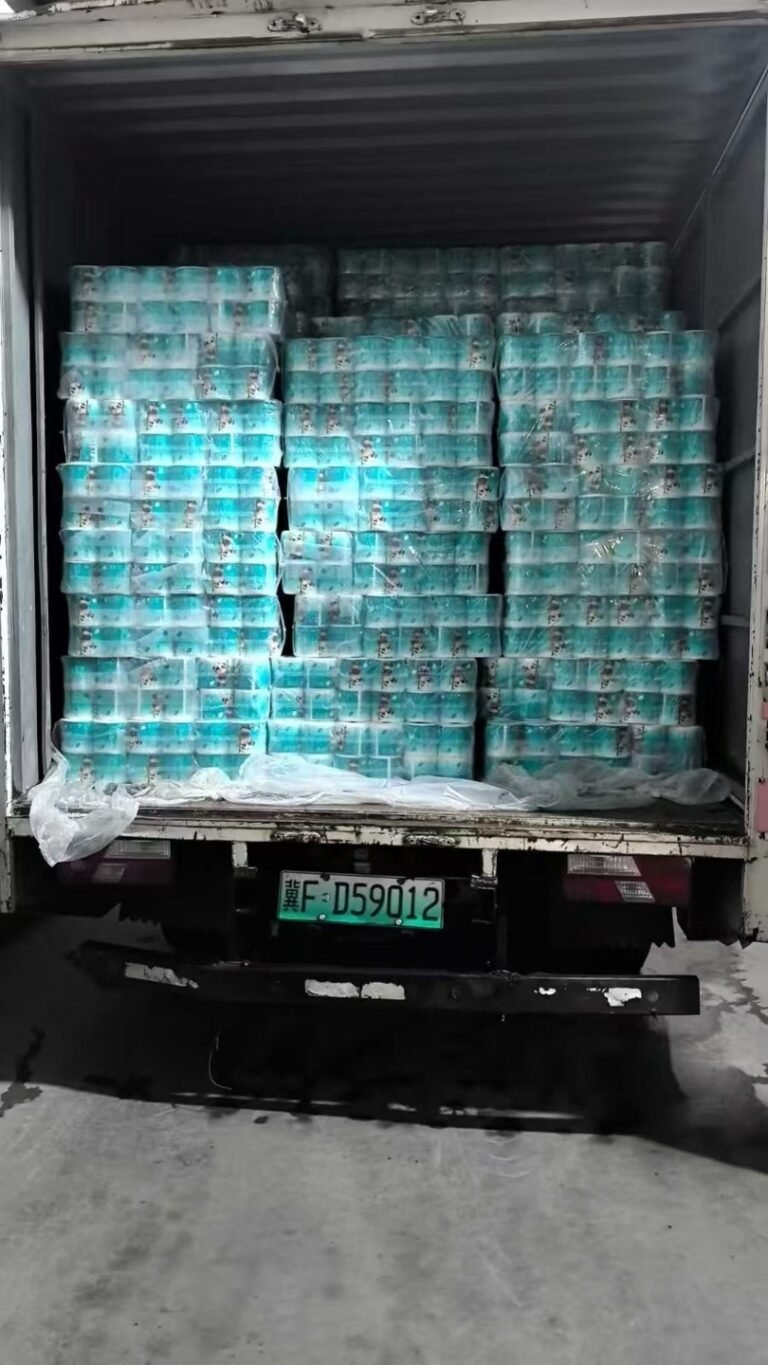
Write for consistency the way you would write a specification. One product description, adopted verbatim across invoice, packing list, certificate and shipping mark. One factory identity block, with the full place of manufacture written as Baoding Mancheng, Hebei, China on every document that has an origin field. One set of order, batch and container references that appear on all of them. And one rule about substitutions: if artwork, count or description changes mid-production, every document that already exists for that order is corrected before more are issued against the old version. A container of white-label rolls moving under a 20GP booking, or a printed private-label order under a 40’HQ, is the unit every one of those papers describes; the documents should read as if they are all talking about the same physical object, because they are.
The Buyer’s Action List: Origin Clauses Before You Book
Translate the chain into purchase-order language and the work happens once, before production, instead of at the customs window after it. If you are new to the ordering rhythm these clauses slot into, the buyer resources hub collects the rest of the commercial-side references, from trade terms to with-shipment evidence.
Name the document, not the wish. Instead of requiring origin paperwork in the PO, require the specific instrument: a non-preferential certificate of origin, or the named preferential form your broker has identified for your destination. Your broker is the party who knows which certificate your customs regime accepts for which duty outcome; ask them the question in writing before the order is signed, not after the vessel has sailed.
Fix the fields. Put in the PO the exact origin text (Baoding Mancheng, Hebei, China), the exact product description string to be used on every document, and the reference fields that must appear on each: order number, batch, invoice number, container number. Specify who bears the certificate fee and how many originals plus copies are issued and to whom.
Set the draft-review gate. Require a scan of the completed certificate and commercial document set for your approval before shipping, and the same for any document the scheme says must be corrected, reissued, or re-signed. Then keep the with-shipment evidence file tied to the same batch references so that a year later, when a destination authority asks how a container got its origin story, every paper answers with one voice.
Where You Still Own the Question
Three things cannot be delegated to the factory no matter how good the paperwork is. The first is eligibility itself: whether your market runs a preferential arrangement that covers tissue from China, and whether your product’s composition and processing meet that arrangement’s specific origin test, is a legal question for your broker or a ruling service, not a commercial term you can buy. The reference portal CBP’s cross-rulings system shows the shape of how the US customs authority documents origin and classification determinations, and an equivalent authority exists in every importing market.
The second is the self-certification route, if your scheme offers one: registered-exporter or approved-claimant status belongs to a party in the arrangement and to their compliance program, never to a factory letter sitting in a shipment file. The third is any trade-remedy exposure that exists alongside a preference claim; remedy measures and origin preferences are separate regimes that can apply to the same carton at the same time, and only the destination authority’s rules resolve how. The general sourcing walkthrough on this site covers the ordering rhythm around these documents; this page deliberately owns only the origin chain itself.
Send Your Document Draft With the Order
If you are setting up an order from the Hebei mill, the fastest way to make the origin paperwork boring is to hand us the paperwork you will need. Send your broker’s named certificate requirement, your preferred product description string, and your origin-field wording to info@chinatoiletpaper.com with the purchase order, and the commercial set and certificate application will be drafted against exactly those lines, with a scan of the finished document set to you before the container is released. We issue what we can attest and apply for what your destination scheme names; we do not sell duty outcomes, and we will not sign a document whose conclusion belongs to your customs authority.
What This Page Does Not Own
The companion articles on this site hold their own ground and this page does not poach it. The split between the two tissue headings and why classification is not a factory ruling lives on the HS-code guide. Which party pays which cost and carries which risk under FOB, CIF, CFR and EXW is settled on the trade-terms page, where the only origin it discusses is the load port. The eight-piece quality and with-shipment evidence pack, including the records that tie a batch to its documents, is the subject of the QC and certification reports guide. And the step-by-step ordering flow that these origin clauses slot into starts with the sourcing walkthrough; this page deliberately owns only the origin document chain itself.
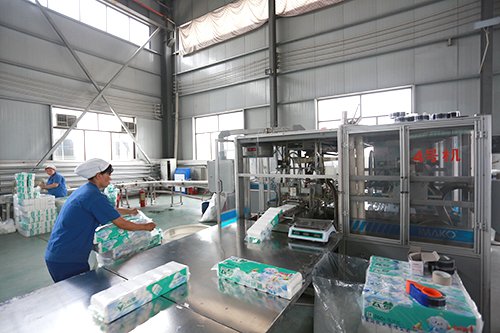
Video: “toilet tissue paper manufacturing process” on the Top Source Paper channel (@topsourcepaper4025). It shows the converting floor in Hebei where finished tissue is produced on our own lines, which is the fact an origin document is trying to state: a named facility doing the manufacturing, not a trading desk describing someone else’s.
Frequently Asked Questions
Is a made in China stamp on the invoice enough to prove origin?
It is enough for the descriptive claim and not enough for any preferential claim. The invoice statement supports the origin declaration customs expects at entry, and it satisfies letters of credit and market listing paperwork that ask where goods came from. Duty preference is different: every preferential scheme names a specific certificate, issued or attested by an accepted body, in the exact form that scheme recognises. An invoice line is not that document in any scheme. Keep the invoice wording identical to whatever certificate is later issued, because a mismatch between the two is one of the most common reasons origin sets get challenged.
Who issues a certificate of origin for tissue exported from China?
In China, official certificates of origin are issued by the recognised certificate channels, which in practice means the local chamber of commerce system or the promotion bodies that handle export certification work. The factory arranges the application against the production records for the order, providing the manufacturing facility, description and references the certificate must state. Which issuing form applies is set by the destination scheme and named by your broker: a non-preferential certificate attests place of manufacture for general purposes, while preferential certificates exist only inside the arrangements your market participates in. The exporter arranges; the destination scheme decides.
Can a factory letterhead declaration replace the certificate?
Only where a specific scheme runs a self-certification model and the claimant holds approved status inside it. In those arrangements, origin can be claimed through a declaration made by a registered or approved party, and a producer's supporting statement can underpin it. Outside such schemes, a factory declaration is supporting evidence: it backs the descriptive origin claim and feeds the official application, but it carries no entitlement. A signed letterhead from an unregistered producer does not become a customs document because it is carefully worded.
Does the factory decide whether my shipment gets a reduced duty?
No, and a factory that claims to is the red flag, not the reassurance. Reduced duty depends on the destination country's own preferential tariff schedules, on whether tissue products are covered, and on whether your goods meet the origin test written into the applicable arrangement. Those are legal determinations made under the importing country's rules, applied by its authorities, typically routed through your customs broker. The factory's side of the job is narrower and concrete: state production facts truthfully, keep every document consistent, and apply for the certificate form your import side names.
What origin requirements belong in the purchase order?
Four lines, written before production is booked. First, the named certificate your broker has identified for your destination, with the fee and number of originals allocated. Second, the exact origin field text, including the full manufacturing location, and the single product description string all documents must reuse verbatim. Third, the shared reference fields each document must carry: order number, batch, invoice number, container number. Fourth, a draft-review gate: the completed document set is sent to you for approval before shipping, and corrected on the spot if any two papers disagree.