The tired explanation of recycled parent rolls is that they are made of short, weak fibre. It is mostly wrong. The best-known reason recycled chemical-pulp fibre builds weaker sheets is a loss of its ability to swell when it is put back into water – a drying damage called hornification – and fibre length loss is not the headline at all. Get that wrong and you will spec the wrong tests, distrust the right measurements, and pay for a problem that was never the one on the invoice.
Wholesale listings make the choice look like a dropdown: bamboo pulp, virgin wood pulp, recycled pulp, mixed pulp, priced per tonne. The reality at the reel is a comparison across five measurable properties, a contaminant story that no price list shows, and a verification route that uses the supplier’s own paperwork against itself.
Key Takeaways
- The recognised explanation for weaker recycled chemical-pulp fibre is swelling loss on re-wetting, known as hornification – kinks, microcompressions and pore closure carry the reported strength penalty, not mainly fibre shortening.
- Literature absorption ranges by furnish put recycled-fibre tissue around 4 grams of water per gram of fibre, bleached kraft between 5 and 10, and premium tissue lines up to 18 – figures to attribute, never to claim as own specs.
- Fillers and coatings carried over from recovered paper hold fibre surfaces apart, which serves opacity and brightness grades and taxes bonded area and dry strength at the same time.
- One reference for scale: over half of the mass of pulp used in papermaking comes from fibre recovered from wastepaper, so “recycled” tells you nothing about quality by itself.
- This mill’s position is binary and documented: 100 percent virgin wood pulp, no recovered waste-paper pulp, and every shipment carries a virgin-fibre physical-index COA with a 100% Virgin Fiber Verification Report alongside tensile and brightness.
- Fluorescent-brightener chemistry, 21 CFR 176.170 and brightness measurement are owned by the brightness guide; this page links to them instead of repeating the corrections.
- A Furnish Decision a Dropdown Cannot Explain
- What Recycling Does to a Fibre
- At the Reel: Five Measurable Differences
- The Contaminant Load No Price List Shows
- Why the Mill’s Paperwork Is the Only Proof
- Verifying a Virgin-Fibre Claim at Goods-In
- The Converter’s Arithmetic Runs in Tonnes and Stops
- Frequently Asked Questions
A Furnish Decision a Dropdown Cannot Explain
Open any wholesale portal and the material field reads the same way: virgin wood pulp, recycled pulp, mixed pulp, bamboo, as if the four were equivalent options on a form. The underlying scale is large enough to matter – over half of the mass of pulp used in papermaking comes from fibre recovered from wastepaper (Poyry 2011, as cited in the BioResources strength review) – which means a converter cannot dismiss recycled furnish as an oddity. It is the majority material of the industry.
What the majority status does not do is make the furnish equivalent at the reel. The wholesale listing prices the tonne; the converting line converts time. The two currencies disagree more sharply on recycled stock, and that disagreement is the subject of this comparison.
What Recycling Does to a Fibre
Here is the correction most discussions get backwards. The best-known and arguably the dominant cause of strength deficiency in recycled chemical-pulp fibre is a loss of the fibre’s ability to swell when placed back into water – the phenomenon called hornification (Lyne and Gallay 1950; Jayme 1944, as cited in the BioResources review). Drying collapses the fibre wall and closes pores irreversibly; re-wetting does not reopen them, so the fibre stays stiff and conforms poorly to its neighbours, which is what actually reduces bonded area and strength.
The practical consequences follow directly. A recycled sheet takes longer to wet out, holds less water in the fibre wall, and bonds with fewer effective contacts than the same pulp before its first drying. Meanwhile the changes behind the property differences are subtle rather than dramatic: recycling bleached kraft entails only a modest drop in hemicellulose, with no substantial surface-chemistry change, and the measured strength penalty is attributed to physical damage – kinks, microcompressions and pore closure – plus contaminant effects. So a converter who blames “short fibres” for a recycled reel’s behaviour is testing for the wrong cause and will buy the wrong remedy.
What the Mechanism Means for Testing
The mechanism decides which tests are worth running. If the reported penalty were mostly fibre shortening, a length measurement would find it; the review attributes it instead to physical damage – kinks, microcompressions and pore closure – plus contaminant effects. That is why the checklist that matters on a recycled reel is wet-out and bonding behaviour, not a fibre-length line on a brochure.
At the Reel: Five Measurable Differences
The comparison table is built from published, attributed measurements where numbers exist, and from first-party positions where they do not.
| Property | Recycled furnish | Virgin furnish | Evidence to name |
|---|---|---|---|
| Water absorption capacity | About 4 g water/g fibre for recycled-based tissue | 5-10 g/g for bleached kraft | Literature ranges, attributed (Kullander 2012; Hubbe et al. 2013; De Assis et al. 2018 as cited) |
| Bonding after wetting | Reduced by hornification, worsening per cycle | First-drying behaviour only | BioResources strength review |
| Brightener load | Often dosed to lift grey; method matters | No brightening agents here | Brightness guide owns the details |
| Dust and fines | Fines fraction shifts with furnish and de-inking | Controlled by micro-pore purification | QC position, shipment video pack |
| Moisture response | Stiff, poorly conforming fibre | Moisture controlled at parent-roll stage | Documented QC position; see the runability guide for converters |
Reading the Table Honestly
None of the rows convicts recycled paper of uselessness. Recycled-based tissue has a legitimate low-cost channel, and the absorption gap is a range, not a verdict. What the table does is move the debate from adjectives to numbers, which is where a converter can actually work. The wet-strength, dust and fibre-property management that defines this mill’s position is laid out in the runability guide for converters; the GSM and long/short ratio spec belongs to the parent-roll GSM and fibre-ratio page.
The Contaminant Load No Price List Shows
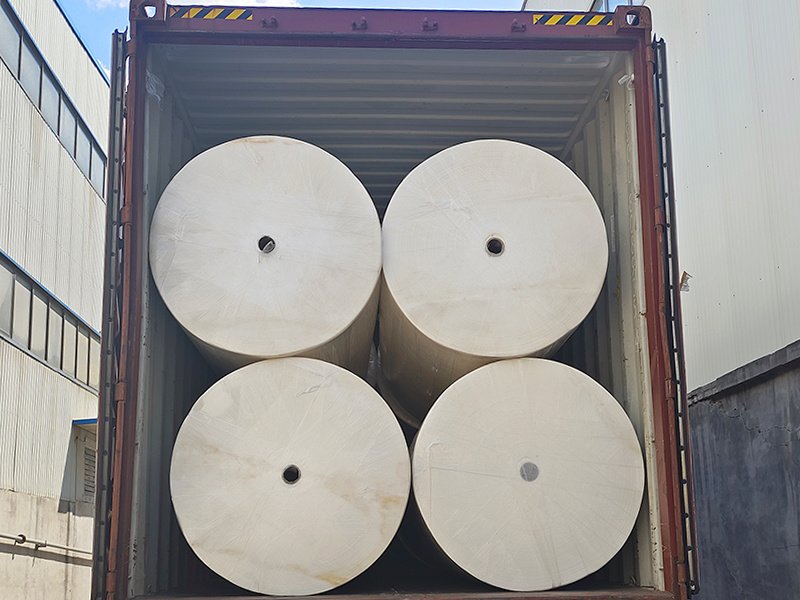
Recycled pulp is not just fibre; it is the accumulated legacy of everything that was printed, coated, glued and aged before collection. Ink residues survive de-inking at some rate. Adhesive fragments – the stickies family – and filler particles survive too, and fillers have a specific mechanical signature: they hold fibre surfaces apart, adding air space that helps opacity and brightness grades while taxing bonded area and dry strength in the same breath.
A converter buying by tonne never sees any of this at the price line. The visible consequences arrive later, as slower drainage on the wet end, as deposit build-up on rolls and felts, as a dust count that climbs with run hours, and as a brightness story that needs chemistry to restore. None of that belongs to “short fibre”, and none of it is visible in a dropdown. The tolerance question this raises – how much residual ink, how much stickies, how much filler – is an order-term negotiation, and the supplier vetting that addresses it is covered in the mother-roll supplier guide.
Why the Mill’s Paperwork Is the Only Proof
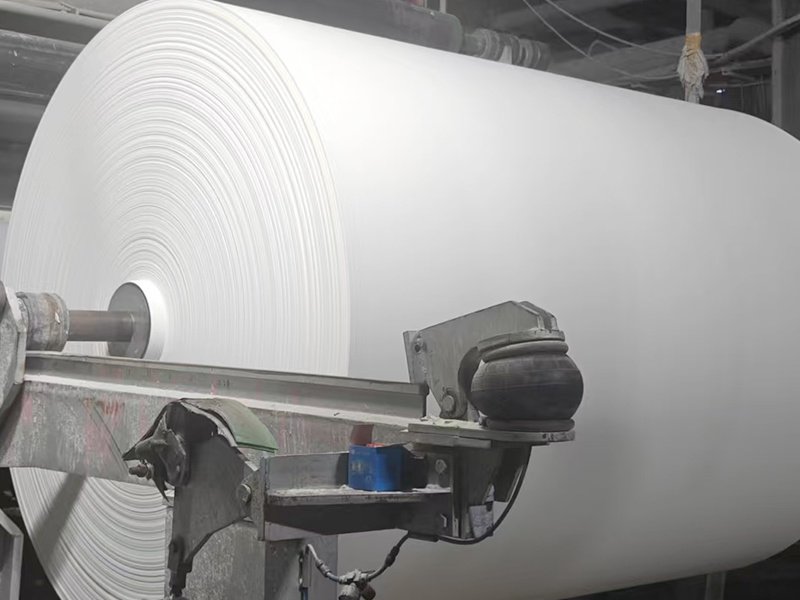
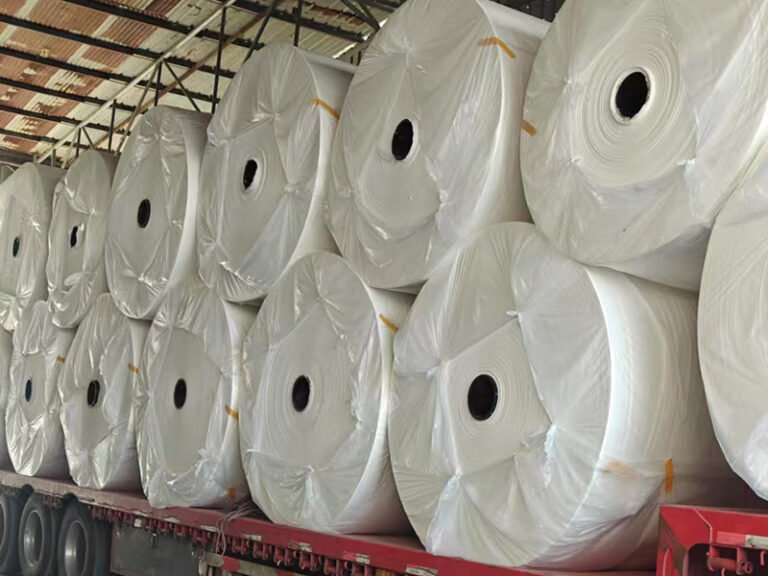
Furnish claims cannot be photographed. A reel of virgin pulp and a reel of recycled pulp look identical on a pallet, weigh the same per metre, and differ only in what the laboratory and the converting line measure. That is why the first-party documentation here is built the way it is: every shipment carries a virgin-fibre physical-index certificate of analysis that names tensile strength, brightness and a 100% Virgin Fiber Verification Report, plus a wet-strength and dust inspection video pack shot before the goods were sealed, plus loading and moisture-proof packing photo records.
The Gates Behind the Paperwork
The inspection sequence is the same three gates regardless of line: parent-roll sampling for tensile and whiteness first, then the rewind patrol check on grammage, tension and perforation, then the pre-shipment total check on carton specification and the drop test. A virgin claim is enforced by gate one plus the COA; the other two gates are why the claim survives contact with a container. For the full specification sheet a converter should demand on every load, the parent-roll converting guide owns the list.
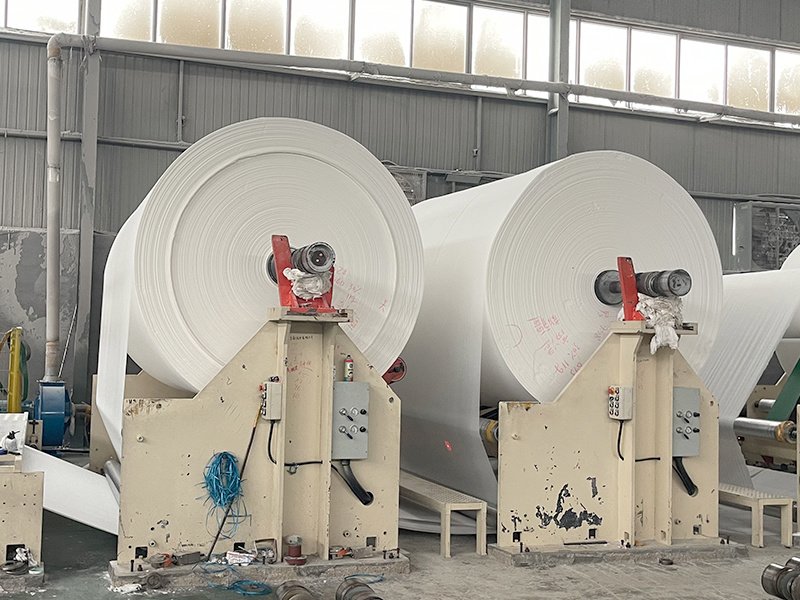
Video: “Jumbo Roll Tissue manufacturing process”, Top Source Paper own channel. Mill footage of jumbo-roll production for the converting trade; it is not a furnish-comparison or test demonstration.
Verifying a Virgin-Fibre Claim at Goods-In
Run this sequence, and the claim either survives or it does not. Match the COA batch identifier against the carton or reel stencils before anything is unloaded, because a report without a tie to the goods is decoration. Photograph the video pack reference and the inspection timestamp against the same batch. Pull one reel or roll per batch into a reference shelf and label it with the COA number, because six months later the claim is fought with the retained sample, never with memory. Then, only as an escalation and not as a routine, dispute the brightener and brightness story with laboratory methods – and read the exact scope of what those methods can and cannot do in the brightness verification guide, which this page deliberately does not repeat.
One line belongs on the order itself: furnish stated as 100 percent virgin, verified by the virgin-fibre COA, with the verification report named as a condition of acceptance. On this side of the trade, that is the policy the mother roll range is quoted against, and the enquiry line answers the furnish and verification questions in the same reply.
The Converter’s Arithmetic Runs in Tonnes and Stops
The honest economics of a furnish choice are not on the price sheet, and this page will not invent the numbers for them. What the literature and the plant position do supply are the exchange rates: a stiffer, less swellable fibre changes drainage, bonding, dust and run stability; a savings on the tonne that costs stops on the line has to be counted in hours, not in cents. Every converting plant holds the two sets of figures – cost per tonne on one side, stops per shift on the other – and comparing them on your own line is the only version of this calculation that is worth doing.
Where the decision lands for a given plant depends on its product: food-contact and hygiene-led lines sit differently from industrial wiping grades, and the recycled-fibre side has a legitimate conversation for the second group. The decision framework, acceptance-plan and red-flag work that go with it are in the supplier and acceptance guide, and the verification first, economics second, is why the sequence above stays short: count what the reel does on your line, and hold the paperwork to the claim it makes.
Frequently Asked Questions On Parent Roll Furnish
What is the difference between virgin and recycled parent rolls?
Origins and behaviour. Virgin furnish is pulp made directly from wood fibre; recycled furnish is pulp from recovered paper. Recycled chemical-pulp fibre loses swelling and bonding ability through drying damage called hornification, so the two behave differently at the reel and on the line even at the same grammage.
Why is recycled tissue often weaker?
Because drying collapses the fibre wall and closes pores irreversibly, so re-wetting cannot restore swelling – the best-known and arguably the dominant cause of strength deficiency in recycled chemical-pulp fibre. Fibre length loss is not the headline cause, which is why testing for length misdiagnoses the reel.
Does recycled pulp contain contaminants?
At some level, yes – ink residues, adhesive fragments and filler survive de-inking and repulping. Fillers hold fibre surfaces apart, which helps opacity grades and taxes bonded area and dry strength. Residual levels are an order-term question, not a listing attribute.
How do I verify a parent roll is 100% virgin pulp?
Accept it only with a virgin-fibre physical-index COA carrying a 100% Virgin Fiber Verification Report, matched by batch identifier to the goods, plus the wet-strength and dust inspection video pack shot before sealing. Brightness and brightener disputes escalate to the lab methods described in the brightness guide.
Is recycled furnish cheaper and is it worth it?
Per tonne, usually cheaper; per running line, that depends on your stops and dust counts. The comparison every plant should run is cost per tonne against stops per shift on its own line, with food-contact and hygiene-led products treated as a different decision class.