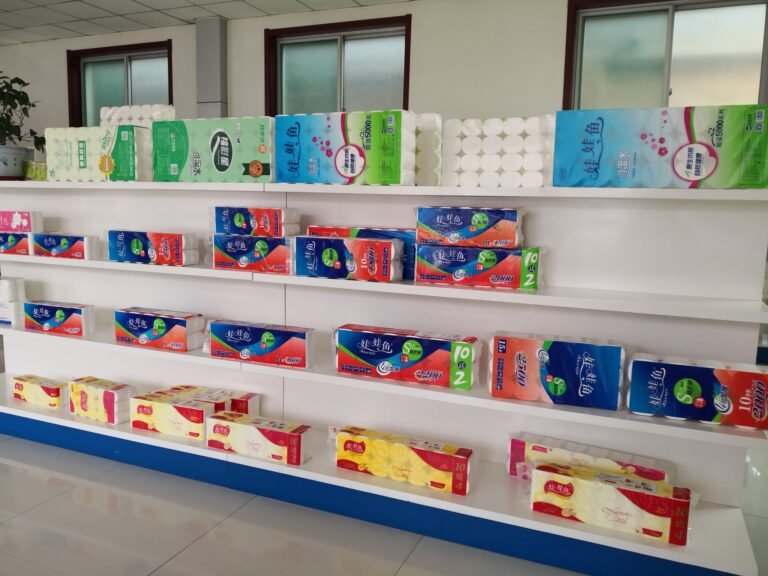
It happens every season somewhere in the trade: a buyer builds his first container of bath tissue around a price per roll and skips one detail — the roll geometry. When the cargo lands, the rolls are too tall for the shelf program, or the dispensers run dry by Thursday because the meterage was never verified against the quoted length. Nothing is wrong with the paper. The dimensions are wrong for the channel. For importers buying wholesale toilet paper from Chinese factories, getting the specification sheet right is cheaper than fixing a container of wrong geometry.
This guide sets out the practical toilet paper roll dimensions that matter when you order by the container — width, diameter, core, meterage — and how each measurement decides whether the product fits the shelf, the dispenser, and the buyer’s expectations.
Standard Toilet Paper Roll Dimensions at a Glance
There is no single global standard, but the commercial market clusters into a few recognizable size bands. The figures below combine what US and European distributors publish on live product pages with what our factory produces for export.
| Format | Roll width | Roll outer diameter | Core | Length per roll |
|---|---|---|---|---|
| Household standard roll | 9.5–11.5 cm | ~11.5 cm (major US listings cite 4-1/2 in) | ~41 mm (1-5/8 in on the listings we verified) | Set by sheet count; sheet ~4 in long |
| Household coreless roll | 9.5–11.5 cm | varies by meterage | none | brand-specified |
| Jumbo roll (JRT/JJT) | 8.4–9.4 cm | 18–28 cm factory range; 23 cm seen on live listings | ~76–83 mm nominal (3 in class) | 229–610 m observed (750–2,000 ft) |
Two observations jump out. First, the jumbo roll width (8.4–9.4 cm) is usually narrower than a household roll, because the paper is engineered to unwind continuously through a large-roll dispenser rather than tear across a wider sheet. Second, jumbo length is quoted in feet or meters, never in sheets — a specification you will need to read carefully in every RFQ.
Four Measurements That Decide Fit
Every toilet paper roll specification sheet carries dozens of numbers, but only four decide whether a shipment works commercially.
Roll width
Width is set by the web width of the tissue at the rewinding stage and equals the sheet width in perforated rolls. US retail sheets cluster around 4 in (10.2 cm); distributor listings we can verify today span 3.9 in to 4.5 in. Move outside that band and two things happen: the roll feels wrong in use, and it stops matching the mold of your customer’s holder lids.
Outer diameter
Diameter is the shelf-facing number. The mainstream US listing we verified gives a household roll diameter of 4-1/2 in (about 11.5 cm); commercial jumbo rolls span 18–28 cm in our production range. Every large-roll dispenser, however, has a maximum loading diameter set by its door and mechanism — the spec sheet of the hardware, not the paper, draws that ceiling. Confirm your installed holders’ maximum roll size before you let a supplier sweeten an offer by adding centimeters of diameter.
Core inner diameter
The core has to match the spindle, not the other way around. Household rolls in US listings show a core around 1-5/8 in (about 41 mm), while jumbo formats ride on a large 3-inch-class core — a live distributor spec we have checked reads 3-1/4 in. Coreless rolls eliminate the number entirely, which is why coreless has become its own category on janitorial supply shelves. Our factory quotes core inner diameter as a customization item precisely because spindle sizes differ by dispenser brand.
Meterage and sheet count
Household rolls are sold by rolls per pack and sheets per roll; commercial jumbo rolls are sold by length. A verified example from a US janitorial distributor’s jumbo roll line: a 2-ply roll at 3.7 in width running 1,000 ft (roughly 305 m) with a 9 in outside diameter, packed 12 rolls per case. Sibling products in the same category span 750 ft to 2,000 ft. When a supplier quotes you meterage, check it against roll diameter and ply the same way — the three numbers are locked together by physics.
Jumbo Roll Sizing for Facility Programs
Facility managers think in restock cycles, not meters. The arithmetic is simple if you declare one assumption: pull length per hand-dry. At an explicitly hypothetical 4 in per pull, a 750 ft roll runs to roughly 2,250 uses and a 2,000 ft roll toward 6,000 — substitute your dispenser’s actual stop length and the same division holds. That is the whole commercial argument for extra large rolls in airports, stadiums, and office towers — fewer interventions by cleaning staff, not softer paper.
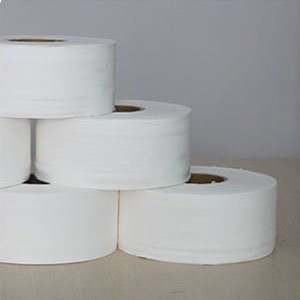
Specifying jumbo geometry starts with the dispenser. Our jumbo toilet paper line runs 18–28 cm diameter in 2-ply and 3-ply construction from 100% virgin long-fiber pulp, and the outer diameter is dialled to the holder model the end client already owns. If you are new to jumbo formats, the jumbo roll tissue buying guide walks through dispenser fit and meterage claims in more detail, and this breakdown of high-capacity JRT for airports and offices covers the traffic-density side.
Household Pack Sizes for Retail Shelves
Retail changes the unit of sale from the roll to the pack. Count-per-pack is a standard customization item — from handful packs up to shelf-filling megapacks — and it interacts directly with roll diameter because cross-section grows with the square: as a declared example, a roll at 11.5 cm occupies roughly a third more cross-section than one at 10 cm, and the multiplier runs across every carton in the container. This is one of the least discussed levers in bulk toilet paper sourcing — the geometry you approve at order stage is the geometry you pay freight on at container stage.
Ply count enters the same equation. A 3-ply household roll at identical diameter weighs more and runs shorter in meters than a 2-ply, and the comparison of 1-ply, 2-ply, and 3-ply specification for bulk buyers explains how to set GSM honestly for each construction. Our standard rolls run 13–18 GSM per ply with edge embossing and a defined perforation length, in cored and coreless builds.

Specifying Custom Dimensions to a Factory
Once you know which four numbers matter, the OEM conversation gets short. At minimum send: roll width, target outer diameter or meterage, core inner diameter (or “coreless”), GSM per ply, ply count, and count-per-pack with carton dimensions. The factory then runs a feasibility pass on those parameters together, because they compete for the same volume.
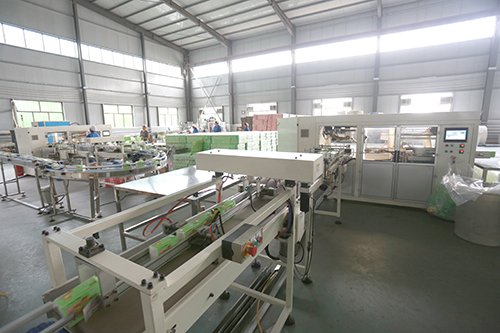
Two practical notes from the export floor. First, ask for the sample before the contract: sample rolls and small consignments ship in 1–3 working days from our line, and a sample in your own dispenser tells you more than any spec sheet. Second, treat length claims as the audit target. Short meterage at correct diameter is the oldest trick in the converting trade; it is why our QC stage measures rewind tension and slit length before cartoning, with the check documented in the pre-shipment video report.
How Roll Dimensions Change Container Loading
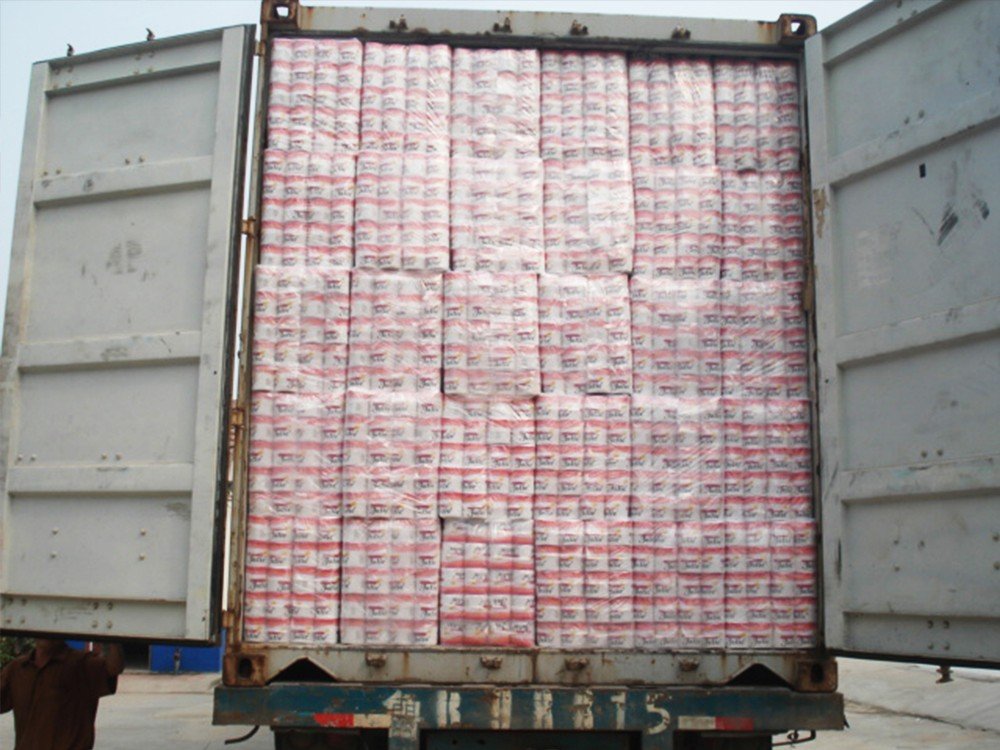
A 20GP container gives you roughly 33 cubic meters of internal volume; a 40HQ gives roughly 76. White-label orders can start at a shared 20GP, while custom color-printed packaging moves to a full 40HQ. Within that fixed box, your roll geometry sets the units per container: same paper, larger diameter, fewer rolls; tighter packs and squared carton dimensions, more.
Before you lock dimensions, get the load calculation in writing — rolls per carton, cartons per pallet, pallets per container — and sanity-check the volume yourself. The guide to FOB, CIF, and EXW cost comparison shows how that number flows straight into your landed cost per roll.
Video: how toilet tissue is rewound, slit, and packed to specified roll dimensions (Top Source Paper factory)
Frequently Asked Questions on Roll Sizes
What is the standard toilet paper roll size?
Mainstream household rolls measure about 9.5–11.5 cm wide; the major US listing we verified cites a 4-1/2 inch (about 11.5 cm) roll diameter on a 1-5/8 inch (about 41 mm) core.
What size is a jumbo toilet paper roll?
Jumbo rolls typically run 18–28 cm in diameter, roughly 8.4–9.4 cm wide, on a 3-inch-class core, with lengths from about 230 m to over 600 m per roll. Length, not sheet count, is the trade unit.
Why do jumbo rolls have no perforation?
Most commercial jumbo formats are continuous, non-perforated paper pulled to length by the dispenser. Perforation exists on household sheets; on jumbo lines it would cut tensile strength and complicate high-speed rewinding.
Can I order custom roll dimensions from a Chinese factory?
Yes — width, diameter, core inner diameter, ply, and pack count are standard customization items. Send the six specification numbers, request a 1–3 day sample, and approve the sample in your own holder before contracting the container.
Core choice interacts with those dimensions; the coreless versus cored guide explains how the core affects dispenser fit and waste.
Dimensions choose the roll, but the channel chooses the order object; see the wholesale bath tissue vs retail packs guide for the label and container side.
Dimensions fix how much paper is on the roll; the toilet paper brightness buyer guide fixes how white that paper may claim to be and how to verify it.