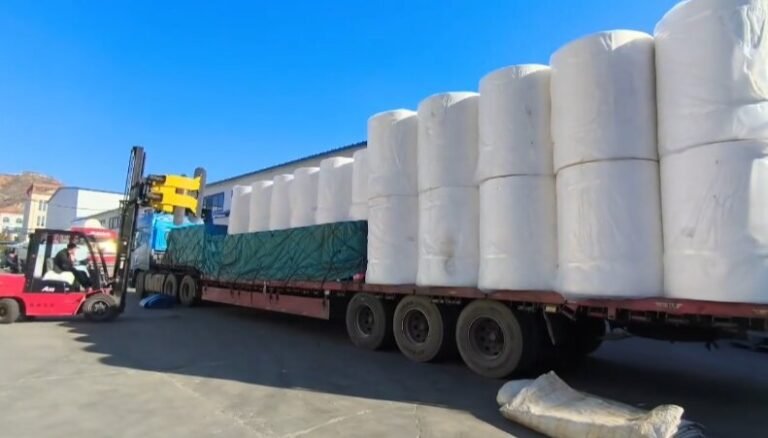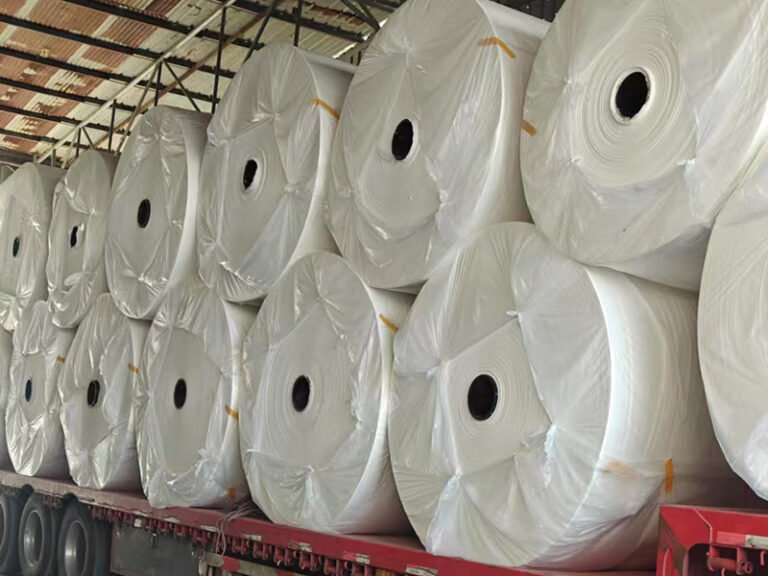
A mother roll is bought by the tonne and judged by the metre. That single difference turns parent-roll purchasing into a different discipline from buying finished tissue: you are not comparing pack sizes or shelf formats, you are buying a machine input whose behaviour on your rewinder decides your output. A reel that runs well on one plant’s equipment can stop a neighbouring plant’s line, and neither buyer can tell from a price per tonne which one they have.
Converters buy virgin-pulp parent rolls from China on a specification, and the difference between a good container and an expensive lesson is what that specification says. Here is what to settle on your own line first, what to put in writing to a mill, how to build an acceptance plan that survives arrival, and which supplier answers should worry you.
Why Parent Rolls Are Bought Differently From Finished Goods
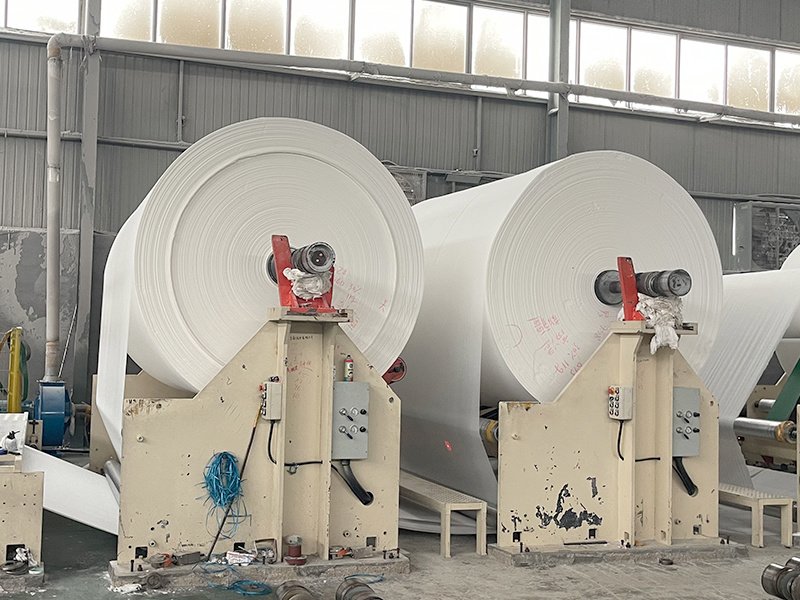
Finished tissue is judged by what a consumer touches. A parent roll is judged by how a machine behaves: unwinding tension, whether the web breaks at speed, whether the sheet holds a perforation, whether the reel runs true at the diameter your creel accepts. The buyer’s counterpart is therefore not a category manager but a plant, and the deliverable is not a carton but a set of physical properties held inside a tolerance.
That is why the supply base splits in two. Traders list mother rolls by tonnage with minimum orders commonly quoted around 15 tonnes; mills quote against your converting line. Both appear in the same search results, and the gap between them is what a converter’s due diligence exists to close.
We make parent rolls to order: 100% virgin wood pulp, with web width, basis weight, brightness and tensile strength cut and controlled to the downstream rewinding and slitting equipment, and with moisture content and ring-crush strength treated as named control points rather than incidental outcomes. Orders ship from a shared 20GP container, and the line itself is on the mother jumbo rolls page.
Fix Your Line Before You Email A Supplier
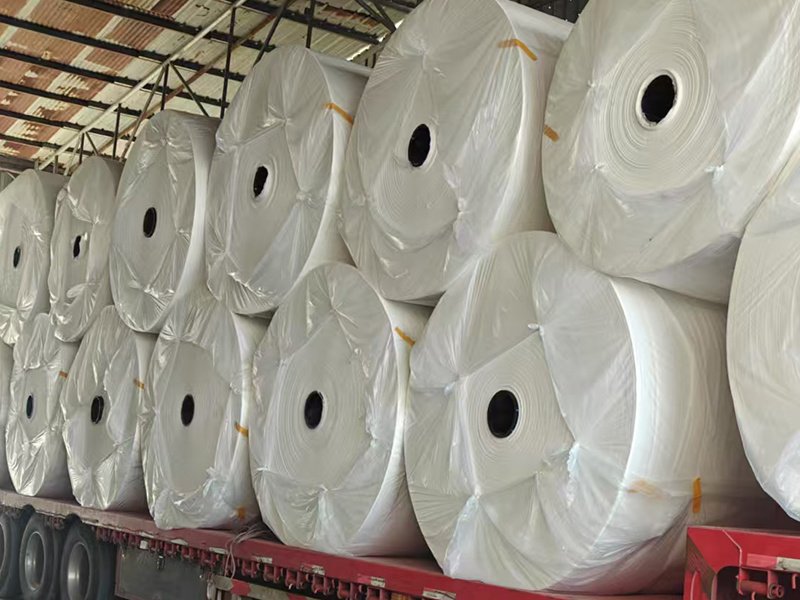
A specification written in the abstract invites a quote for something your equipment will not accept. Write it against your machine, with four numbers you can read off your own plant.
First, the working width your creel and slitter accept, in millimetres, with the trim waste you tolerate at the edge. Converting-machinery suppliers publish parent-roll width bands of roughly 1.2 to 2.8 metres for toilet paper, kitchen roll and facial tissue lines (tissue machine capacity guide), which tells you the real constraint is your machine, not the mill’s habit. Second, the reel diameter your holders take, because an oversized reel is a handling problem before it is a paper problem. Third, the running speed at which your line has proved it can hold tension on a soft, extensible web. Fourth, the ply and grammage band your converting plan needs, since a parent roll specified one step heavier than necessary is a permanent yield loss you pay for on every metre wound.
The physical meaning of each property is already worked through in our converting plant guide to virgin-pulp parent rolls and the parent roll GSM and fibre ratio specification guide, and how reels behave once they are on the machine is in the rewinding, slitting and runability guide. What this article adds is the buyer’s paperwork: the specification line, the tolerance column, and the acceptance plan that decides whether a container is accepted or claimed.
The Same Enquiry, Two Different Answers
Send one enquiry to a trading desk and to a mill and the replies diverge on every line. The physical definitions of the properties you are asking about are already set out in our parent roll GSM and fibre ratio guide, so what matters here is who can answer in numbers and who can only answer in availability.
| Your question | A tonnage trader | A producing mill |
|---|---|---|
| Web width and trim | What is in the warehouse | Cut to your creel, per order |
| Grammage and tolerance | A nominal figure | A band you can test on arrival |
| Moisture at shipping | Not measured per reel | A stated control point with a method |
| Ring-crush strength | Usually not quoted | A named control point for stacking and transit |
| Furnish proof | A description on the listing | A COA verifying 100% virgin fibre |
| Minimum order | Commonly around 15 tonnes | A shared 20GP container |
Two lines on that sheet are the ones a plant with a weak process avoids. Moisture is measurable and belongs in the contract as a band with a stated test condition, not as a promise. Ring-crush strength is what keeps a reel from being flattened by the load stacked against it in transit, and a supplier who has never measured it will answer with tensile instead, which is a different property doing a different job.
Build An Acceptance Plan, Not A Hope
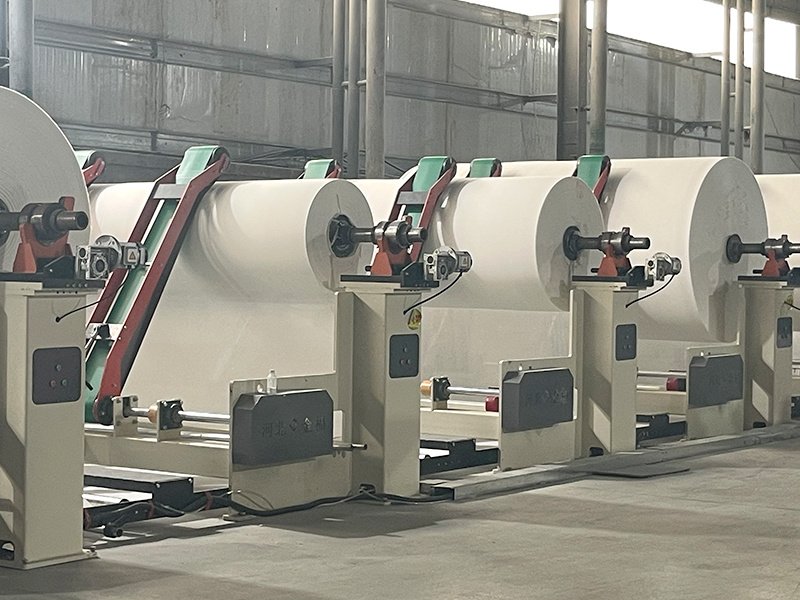
A specification without an acceptance plan is a wish. Paper-procurement practice has a mature form of one: an industry guide to acceptance sampling recommends sorting attributes into critical, major and minor classes, and puts the properties that stop converting into the major tier rather than the cosmetic one — basis weight outside tolerance, low burst factor and high moisture, together with severe edge damage and crushed cores, which disrupt unwinding and cause web breaks. It also names the methods to insist on, citing TAPPI T 410 for basis weight, T 412 for moisture and T 403 or ISO 2758 for burst strength, and offers a working moisture example of accepting a 6 to 8% band against a 7% target (PaperIndex acceptance sampling guide).
Two cautions before you copy that across. The guidance is written for sack and wrapping paper mills, so take the method and set your own tissue tolerances against your line. And a number without a test condition is not a measurement: moisture taken off a reel on a damp dock is not the same reading as moisture from a conditioned sample, so the contract should fix the method, the conditioning and the place of sampling.
| Class | Attribute checked | How it is verified | Disposition |
|---|---|---|---|
| Critical | Furnish not as declared | Mill COA verifying 100% virgin fibre, checked against the order | Reject the reel, not the shift |
| Major | Grammage outside tolerance | Weigh per square metre, one reading per reel | Claim; drives yield loss on every metre |
| Major | Moisture outside band | Oven or probe reading per the stated method | Claim; causes curl, static and rewind collapse |
| Major | Crushed core or damaged edge | Visual count against total reels at devanning | Photograph in stowage position before moving |
| Minor | Wrap scuffing, cosmetic marks | Visual on the outer layers only | Accept and record for the next order |
Then run the machine test that no document can replace: put the worst-looking reel on the creel, not the prettiest, and run it at production speed. A container is judged by its weakest reel, because that is the one your line will meet first and the one that sets the tone for the month’s break rate.
What A Mill’s Own QC Ought To Prove
Ask where a supplier checks parent rolls, and listen for a specific gate rather than a philosophy. Our first quality gate is a spot check on the reel itself for tensile strength and brightness, before anything is converted; the in-process patrol during rewinding covers grammage, tension and the perforation line, and the pre-shipment check closes on carton specification with a drop test. The document that travels with the goods is a physical-index COA covering tensile strength, brightness and 100% virgin fibre verification — which is the direct answer to the question a tonnage quote cannot address: whether the furnish is what you paid for.
If a mill cannot tie a reel back to a production record, a quality problem at your plant has no upstream explanation available to either side. That traceability question is worth more than a discount, and it is the difference between a supplier and a trading desk.
Order Structure: One Container Against Fifteen Tonnes
Parent rolls ship as a container commitment. Ours go out from a shared 20GP, which is what makes a trial order possible at all: you do not have to fill a high cube of one width to test a mill. A trader quoting by tonnage with a 15-tonne minimum turns the same trial into a freight compromise, and a supplier who will only discuss tonnes is telling you which side of the supply chain they sit on.
On timing, samples and reference reels are prepared and sent within one to three working days, a first production run takes 25 to 30 working days and repeat orders 20 to 25. Freight moves FOB, CIF, CFR or EXW out of Tianjin Xingang on 30% T/T deposit with the 70% balance released before shipment against the QC report and a container sealing video — the terms and lead-time mechanics are laid out in the FOB, CIF and EXW cost guide and collected on the buyer resources page, so they are not repeated at length here.
Red Flags That Predict A Stopped Line
No measurable moisture position
A supplier who answers a moisture question with “we dry it properly” has not measured it. Ask for the band, the method and the reading, and expect a number in reply rather than a reassurance.
A price well below the pack
Virgin pulp is a commodity input with a visible world price. A quote materially under the market is usually explained by furnish, grammage or meterage rather than by efficiency, and the difference surfaces as web breaks or a short reel on your own line. Our stated position is explicit: no de-inked recycled furnish anywhere in the range, a controlled long- and short-fibre ratio, and grammage and cut length held to what is claimed.
Brightness sold without a report
Brightness is a measured property on a COA, and optical brightening is a separate question entirely. Ask which one a supplier is quoting, because a high-brightness reel can be a clean furnish or an additive, and only one of those is what a tissue brand wants to hand a customer.
Traceability stops at the shipping mark
If a mill cannot tie a reel back to a production record, then a defect at your plant has no upstream answer. A parent-roll spot check on tensile and brightness before converting is the record a converter can claim against; without it, every dispute becomes a standoff.
Video: “Jumbo Roll Tissue manufacturing process”, Top Source Paper own channel
Frequently Asked Questions On Mother Roll Tissue Suppliers
What is a mother roll in tissue production?
A mother or parent roll is the large machine-made reel of tissue a converting plant slits, embosses, rewinds and packs into finished goods. Nothing downstream can be fixed by a converter if the reel itself is inconsistent.
How do I specify virgin-pulp parent rolls to a Chinese mill?
State web width and trim, grammage with tolerance, minimum tensile at your running speed, a moisture band, a ring-crush minimum, reel diameter and core, and require brightness plus virgin-fibre verification on a COA.
What is the minimum order for parent rolls?
From this plant, mother jumbo rolls ship from a shared 20GP container. Trader listings commonly quote by tonnage instead, with minimum orders around 15 tonnes.
How do I check that a parent roll is 100% virgin pulp?
Require a report verifying virgin fibre alongside tensile strength and brightness, and treat an undocumented furnish claim as unverified. Blended or recycled furnish shows up as dust, grey tone and web breaks.
Which properties stop a converting line fastest?
Out-of-tolerance grammage, high moisture, weak tensile and crushed or damaged reel edges. All four are measurable before you load, which is why they belong in the acceptance plan.
Supplier screening and acceptance plans are done here; the furnish verification guide adds the goods-in sequence that proves a 100% virgin claim on delivery.