Minimum order quantity is the first question every new buyer asks — and the answer is almost never as simple as a single number. For tissue paper sourced from a China-based virgin-pulp manufacturer, the MOQ depends on whether you are ordering white-label (standard product, your brand applied at the packaging stage) or full custom print (your design on every roll, box, and carton).
Related: the plate-archive and no-repeat-plate-fee statement a private-label buyer should request.
This guide explains the two MOQ tiers, what drives the difference, how lead times and plate costs work, and how to calculate the actual volume you need for your first container.
The Two MOQ Tiers: 20GP White-Label and 40’HQ Custom Print
Top Source Paper operates a two-tier MOQ structure based on the level of customization:
| Order Type | Minimum Order | What This Means |
|---|---|---|
| White-label / standard product | 1 x 20GP container | Standard tissue products (toilet paper, facial tissue, hand towels, kitchen roll, napkins) shipped without custom printing. Your branding is applied at the packaging level (carton label or shrink-wrap sleeve). |
| Custom print / private label | 1 x 40’HQ container | Full custom printing on product packaging, tissue rolls, boxes, or the tissue itself (depending on product line). Includes plate-making for your design. |
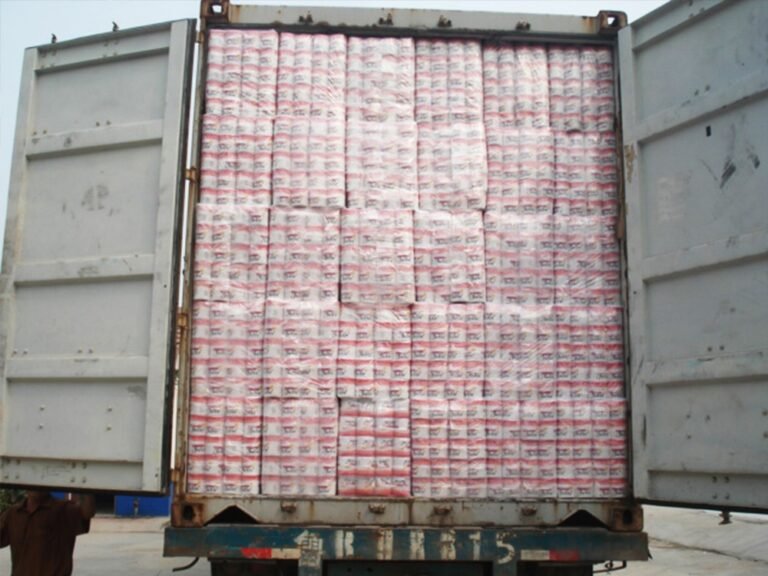
The 20GP (20-foot General Purpose) container is the standard small shipping unit in ocean freight. It holds approximately 33 cubic meters of cargo. For tissue products, a 20GP typically holds 5-10 tons depending on the product format and packaging density.
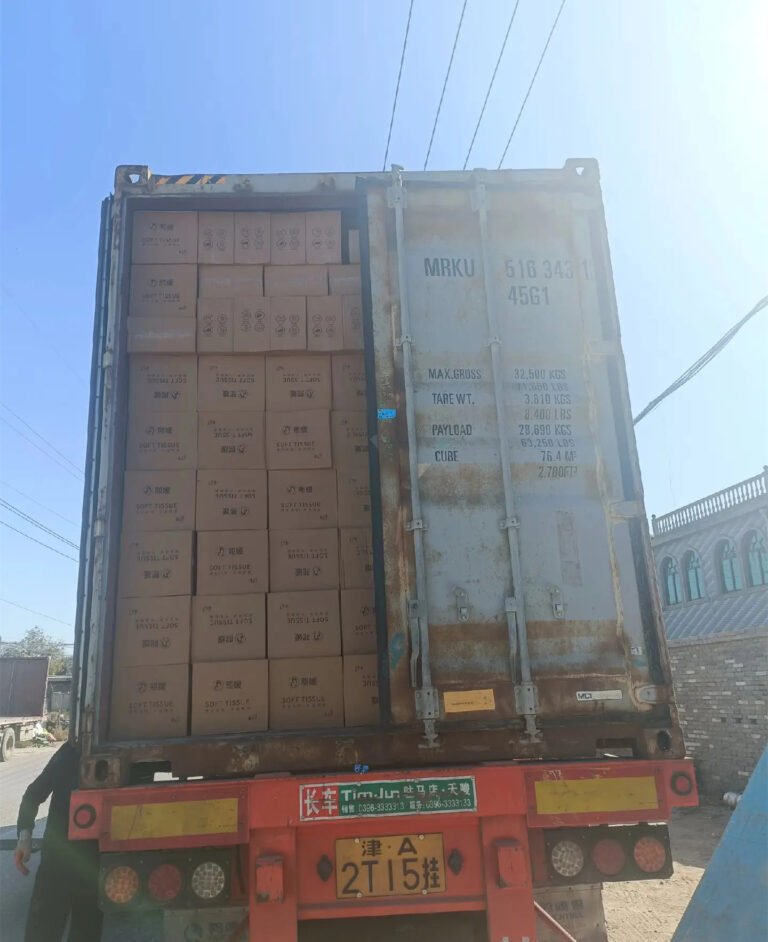
The 40’HQ (40-foot High Cube) container holds approximately 76 cubic meters — roughly double the volume of a 20GP. This is the standard unit for custom-printed orders because the plate-making and setup cost is amortized across a larger production run, making the per-unit cost viable for both the factory and the buyer.
Why Custom Print Requires a Larger Minimum
The 40’HQ minimum for custom orders is not arbitrary. It is driven by three production realities:
Plate-making cost. Every custom design requires printing plates (for flexographic or offset printing). Plate-making involves a fixed setup cost regardless of how many units are printed. Running plates for a 20GP-worth of product would make the per-unit plate cost prohibitive. A 40’HQ spreads that cost across roughly twice the volume.
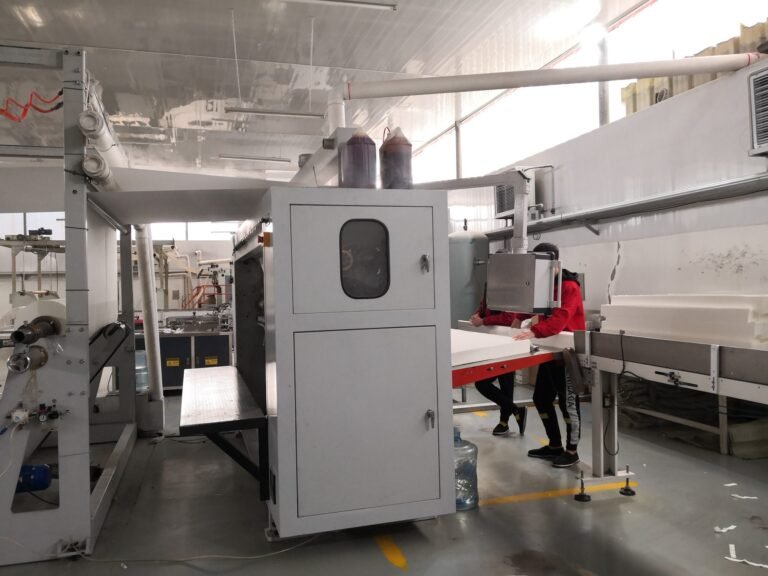
Production setup time. Switching a production line from one design to another requires cleaning, plate installation, color calibration, and test runs. This setup time is the same whether the run produces 20GP or 40’HQ worth of product. Longer runs are more efficient for both the factory and the buyer.
Design archival and reorder policy. Top Source Paper archives every customer’s design files and printing plates securely. On reorders, the archived plates are reused at no additional plate-making cost. This means the plate investment is a one-time cost — but it only makes economic sense when the initial run is large enough to justify it.
Lead Times: What to Expect for Each Order Type
Lead time is measured from order confirmation (deposit received and design approved) to cargo readiness at the factory.
| Phase | White-Label (20GP) | Custom Print (40’HQ) |
|---|---|---|
| Sampling / design proof | 1-3 working days | 1-3 working days |
| First production run | 25-30 working days | 25-30 working days (includes plate-making and color proofing) |
| Reorder | 20-25 working days | 20-25 working days (plates already on file) |
The 25-30 working day window for first orders includes time for plate-making (custom), design proof approval, raw material preparation, production, and quality inspection. Reorders are faster because the plates are archived and the raw material supply chain is already established for your specification.
Payment Terms and Trade Conditions
Top Source Paper’s payment and trade terms are consistent across all order types:
- Payment: 30% T/T deposit at order confirmation; 70% balance before shipment. The pre-shipment balance is due after the buyer receives the QC report, container loading photos, and seal number for verification.
- Trade terms: FOB, CIF, CFR, or EXW. FOB Tianjin Xingang Port is the most common for buyers who have their own freight forwarder. CIF and CFR include ocean freight to the destination port.
- Shipping port: Tianjin Xingang Port, the major commercial port serving northern China’s manufacturing base.
Ocean Shipping Protection: Why It Matters for Tissue
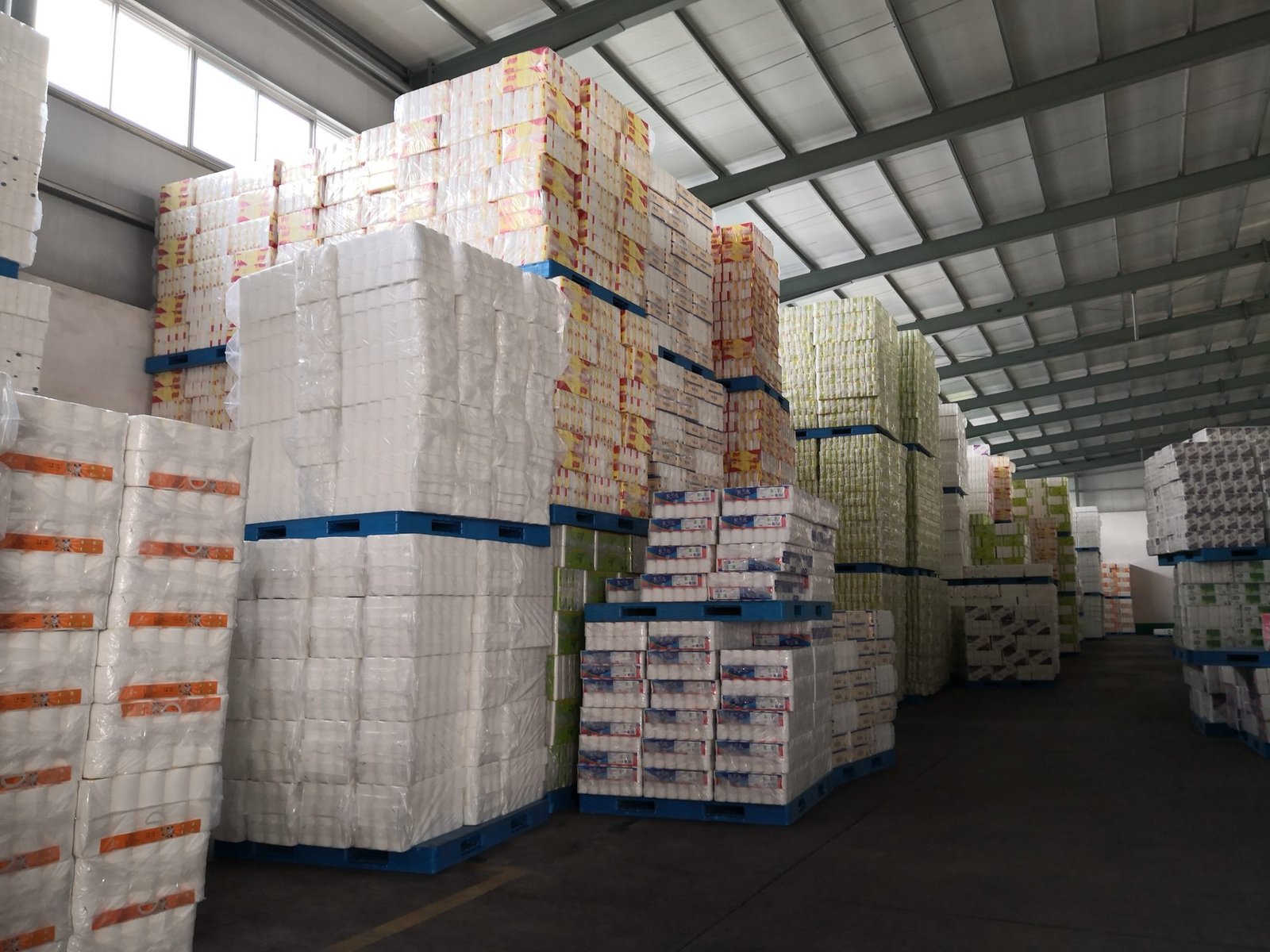
Tissue paper is vulnerable to moisture during ocean shipping. A 30-45 day sea voyage through tropical humidity can damage unprotected cargo through mold, warping, or compression failure. Top Source Paper’s packing standard for all container shipments includes:
- High-strength reinforced waterproof corrugated outer cartons
- Standard fumigation-free pallets with high-tensile strapping
- Pre-loading container seal and water-tightness inspection
- Moisture-proof inner wrapping for each product unit
This packing standard applies to both 20GP and 40’HQ shipments and is included in the quoted price. Buyers should confirm the packing specification on the proforma invoice before production begins.
Quality Documentation With Every Shipment
Each container shipment from Top Source Paper ships with three quality documents:
- COA (Certificate of Analysis): Covers tensile strength, brightness, and 100% virgin fiber verification. This is the document that customs and buyers use to confirm the product matches the specification.
- Burst-resistance and dust-rate inspection video: A video package showing the actual test results for the production batch, not a generic certificate.
- Loading and moisture-proof packing photos/video: Documentation of the container loading process, including the seal number, pallet placement, and moisture-proof measures applied.
The three-stage QC process that generates these documents covers: parent roll inspection (tensile and brightness), in-process patrol during converting (GSM, tension, perforation), and pre-shipment final inspection (carton specs and drop test).
How to Calculate Your First Order
For buyers planning their first tissue paper order from China, here is the calculation sequence:
- Determine the product mix: Which tissue categories do you need (toilet paper, facial tissue, hand towels, kitchen roll, napkins)? Each can be mixed within a single container.
- Confirm the specification: Ply, GSM, format, embossing, and packaging for each product. Request samples (1-3 working days) to validate before ordering.
- Calculate container capacity: Work with the factory to determine how many units of each product fit in a 20GP or 40’HQ. The factory provides loading plans with carton counts per container.
- Choose white-label or custom: If your brand packaging is ready and volume supports it, go custom (40’HQ). If you are testing the market or need smaller volume, start white-label (20GP).
- Request a proforma invoice: This includes the unit price, container loading plan, payment terms, and estimated lead time. Review all details before confirming.
Top Source Paper supports buyers through this entire process. With 18+ years of virgin-pulp tissue manufacturing and export experience, the factory provides loading plans, sample shipments, and specification consultation before any order is confirmed.
For MOQ consultation, container loading plans, or sample requests, contact Top Source Paper via WhatsApp at +86-13180210660 or email at info@chinatoiletpaper.com.
Frequently Asked Questions
What is the minimum order quantity for tissue paper from China?
White-label tissue paper starts at 1 x 20GP container (approximately 33 cubic meters). Custom-printed or private-label tissue paper requires 1 x 40’HQ container (approximately 76 cubic meters). The higher minimum for custom orders covers plate-making and production setup costs.
How long does a tissue paper order take from China?
First orders take 25-30 working days from deposit confirmation to cargo readiness. Reorders take 20-25 working days because printing plates are already on file and raw material supply chains are established. Sampling takes 1-3 working days.
Do I pay for printing plates every time I reorder?
No. Top Source Paper archives all customer design files and printing plates securely. Reorders use the archived plates at no additional plate-making cost. The plate investment is a one-time cost on the first order.
What payment terms does a China tissue factory accept?
Top Source Paper accepts 30% T/T deposit at order confirmation with 70% balance due before shipment. The balance is paid after the buyer receives the QC report, loading photos, and container seal number for verification. Trade terms include FOB, CIF, CFR, and EXW.
Can I mix different tissue products in one container?
Yes. You can mix toilet paper, facial tissue, hand towels, kitchen roll, and napkins within a single 20GP or 40’HQ container. The factory provides a loading plan showing how many cartons of each product fit within the container volume.
The same container logic applies upstream: see the guide to buying virgin-pulp parent rolls from China.
The 20GP versus 40HQ container arithmetic is the MOQ tier, and the white label vs private label route comparison explains where that commitment comes from.
MOQ tiers say how much to commit; the wholesaler capacity and QC evaluation guide says whether the supplier behind the tier can hold the line.