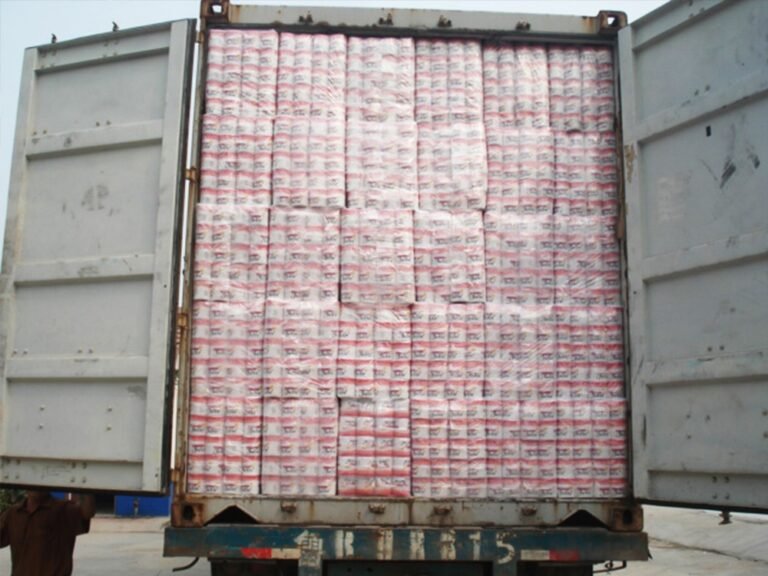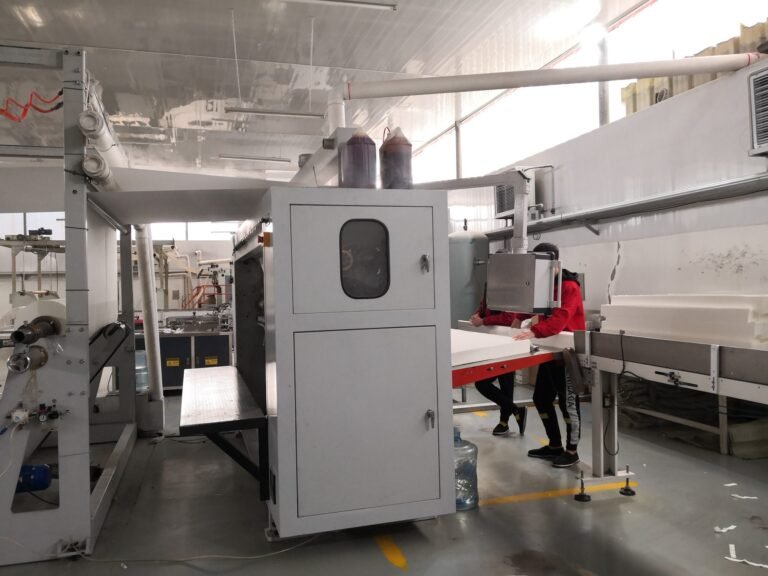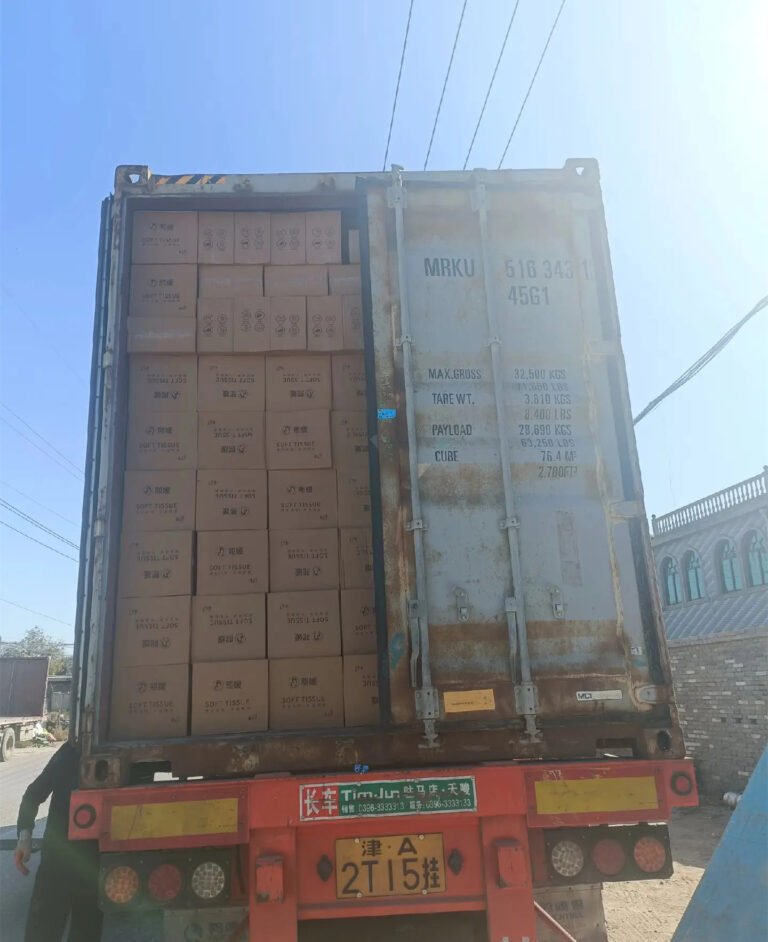
Sourcing tissue paper from China is a high-stakes procurement decision. The country produces more tissue paper than any other nation — and the gap is not close. But the supply base is fragmented: thousands of factories, ranging from fully integrated virgin pulp manufacturers to small converting workshops that buy parent rolls and resell finished product under their own name. For an importer, distributor, or brand owner evaluating Chinese tissue suppliers, the difference between a successful sourcing relationship and a costly mistake comes down to knowing what to verify, what to specify, and what to watch for at every stage of the process.
Related: which QC reports and certificates to request before you buy.
This guide is written from the perspective of a source factory — Top Source Paper, a 100% virgin wood pulp tissue manufacturer based in Baoding, Hebei Province, with 18+ years of export experience. Every recommendation here reflects what a transparent, integrated manufacturer expects buyers to ask for. If a supplier cannot answer these questions, that is information too.
Step 1: Verify the Supplier Is a Manufacturer, Not a Trader
The first and most critical filter in Chinese tissue sourcing is distinguishing a real manufacturer from a trading company. Trading companies buy finished product from factories and resell it at a markup. They add no production value, have no control over quality, and cannot customize specifications beyond what their upstream factory allows.
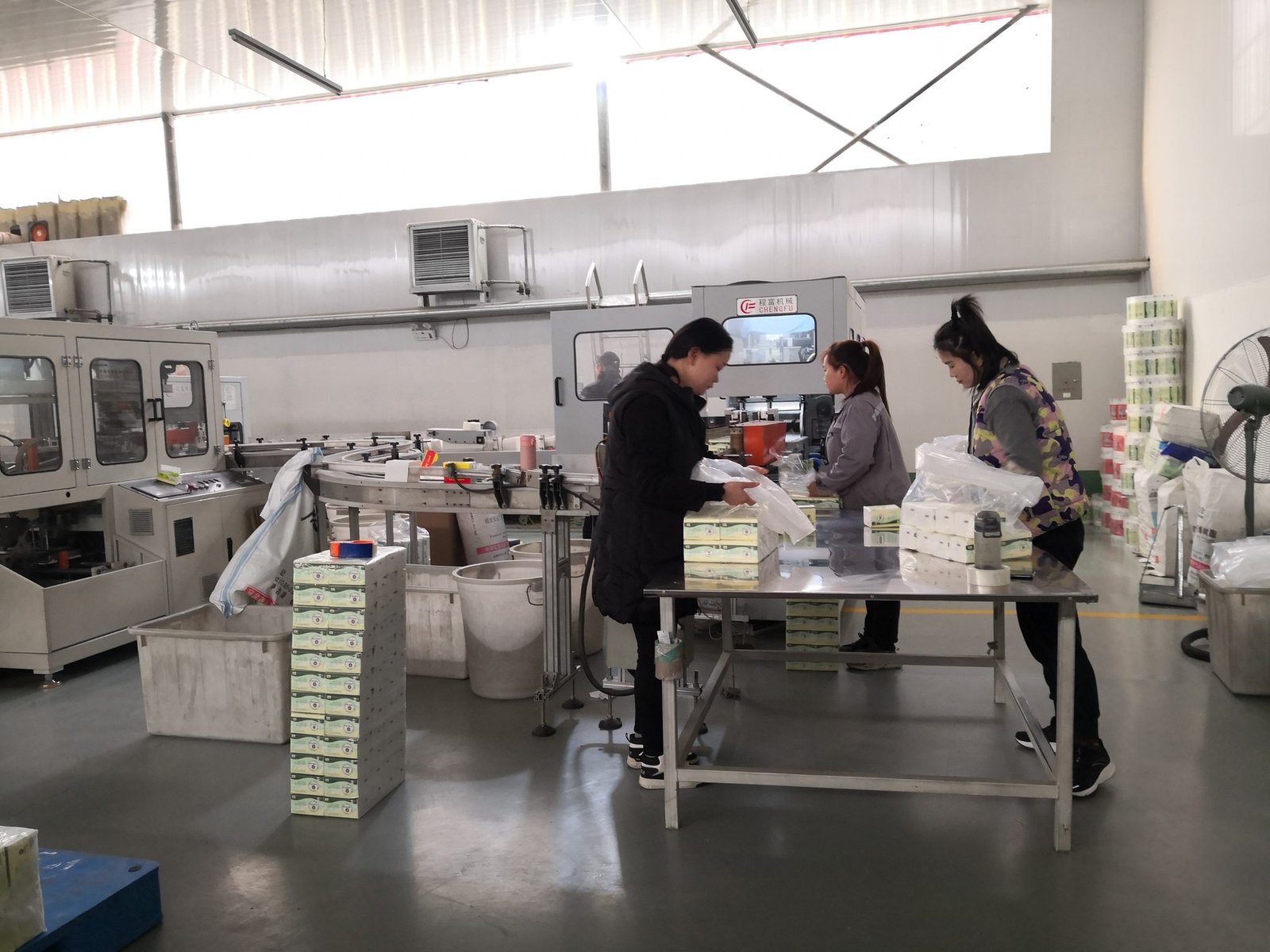
A real manufacturer owns the production line — from the tissue machine that produces the parent (jumbo) roll to the converting equipment that cuts, folds, embosses, and packages the finished product. Integrated manufacturers like Top Source Paper control the entire chain: raw fiber input, pulp preparation, tissue making, converting, packaging, and container loading.
How to verify:
- Ask for the business license — The scope should include “manufacturing” (生产) and “processing” (加工), not just “sales” (销售) or “trading” (贸易).
- Request a factory audit or video tour — A real factory will welcome this. A trader will deflect or offer only a “showroom visit.”
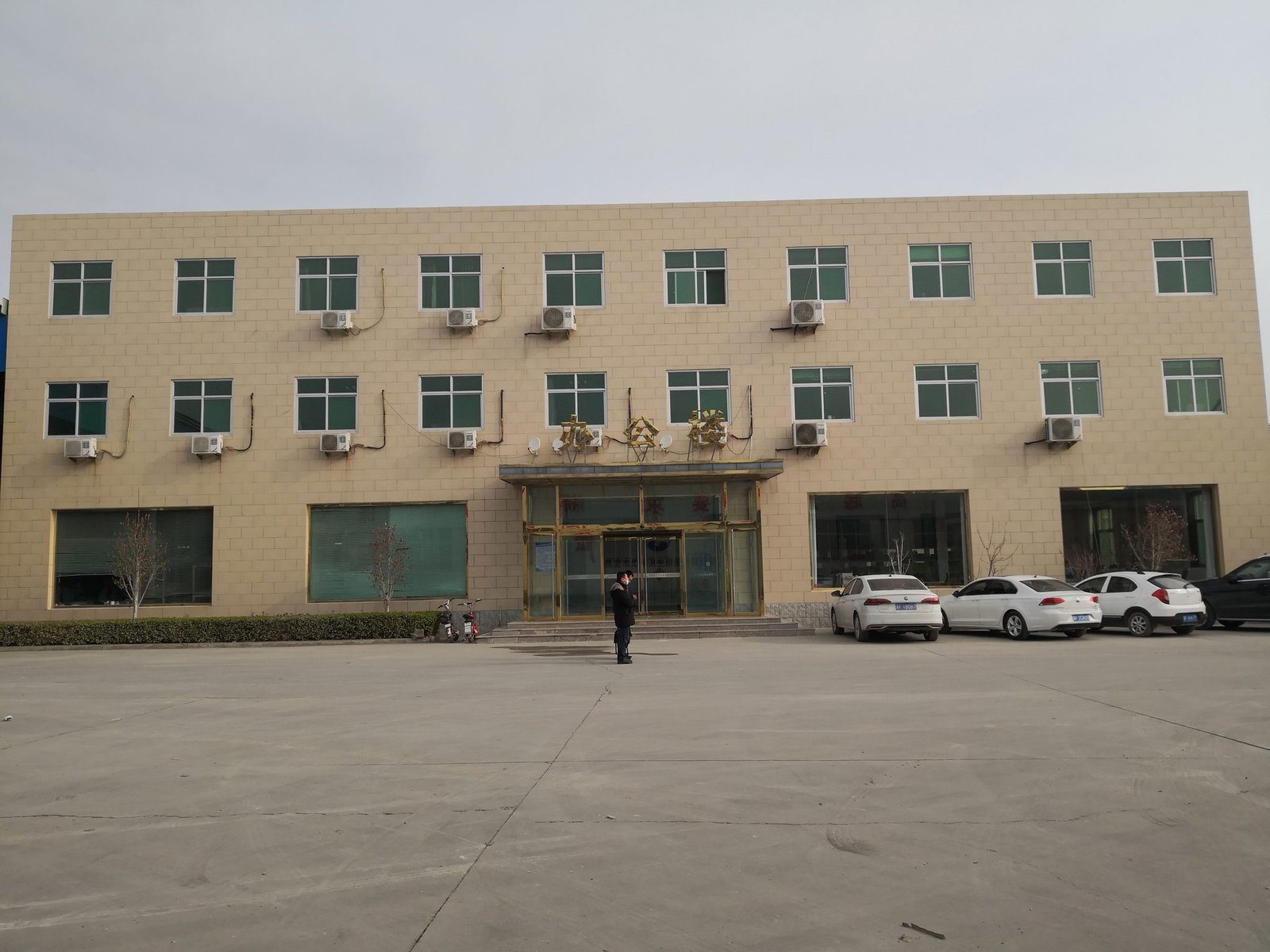
- Check the address — Baoding, Hebei Province (specifically Mancheng District / 满城区) is one of China’s largest tissue manufacturing clusters. Factories in this region benefit from established supply chains for raw pulp, packaging materials, and logistics infrastructure.
- Ask technical questions — A manufacturer can answer detailed questions about GSM tolerance, embossing patterns, fiber ratios, and machine speeds. A trader will give vague answers or need to “check with the factory.”
Top Source Paper is located in Daceying Village (大册营村), Mancheng District, Baoding — the heart of northern China’s tissue manufacturing base. The factory operates fully integrated production lines from parent roll to finished, container-loaded product.
Step 2: Confirm the Fiber Source — Virgin Pulp vs Recycled
This is the single most important quality differentiator in tissue paper, and it is where the most misleading claims occur.
100% virgin wood pulp means the tissue is made exclusively from fresh wood fiber that has never been processed into a paper product before. The fiber is long, clean, and consistent. Virgin pulp tissue is softer, stronger, lower in dust, and free from the contaminants that can be present in recycled fiber (ink residue, adhesive traces, unknown source materials).
Recycled or mixed pulp uses de-inked recovered paper fiber. It is cheaper — sometimes 20–30% cheaper per ton — but produces tissue that is rougher, dustier, weaker when wet, and potentially non-compliant with food-contact safety standards in the EU and US.
How to verify virgin pulp:
- Request a COA (Certificate of Analysis) — A legitimate manufacturer provides a COA with every shipment documenting fiber composition, tensile strength, brightness, and GSM. The COA should specifically state “100% virgin wood fiber” with no recycled content.
- Check for fluorescent brightening agents — Some manufacturers add optical brighteners to make recycled pulp appear whiter. A simple UV light test reveals these agents. Top Source Paper uses no fluorescent brightening agents in any product.
- Ask about the pulp source — A transparent manufacturer will identify the pulp supplier or at least the country of origin. Vague answers like “imported pulp” without specifics are a red flag.
At Top Source Paper, all products — toilet paper, facial tissue, kitchen towels, hand towels, napkins, jumbo rolls, and mother rolls — are produced exclusively from 100% virgin wood pulp. No recycled fiber is used in any product line, at any GSM, for any market.
Step 3: Specify Your Product Requirements Before Requesting a Quote
The quality of the quotation you receive depends entirely on the quality of the specification you provide. Vague inquiries (“I need toilet paper, please quote”) produce vague quotes that cannot be compared and often hide cost traps.
A complete specification for any tissue product should include:
| Parameter | What to Specify | Example |
|---|---|---|
| Product type | Toilet paper, facial tissue, kitchen towel, hand towel, napkin, jumbo roll, mother roll | Standard toilet paper roll |
| Ply | 1-ply, 2-ply, or 3-ply | 2-ply |
| GSM | Per-ply or total (clarify which) | 15 GSM per ply (30 GSM total) |
| Dimensions | Roll diameter × width, or sheet size | 10 cm diameter × 10 cm width, 30g core |
| Embossing | Micro, edge, deco/point-to-point, or plain | Edge embossing |
| Packaging | Individual wrap type, count per pack, packs per carton | 12 rolls per poly bag, 10 bags per carton |
| Customization | Private label print, core printing, tissue embossing logo | 4-color printed poly bag with our logo |
| Quantity | Number of containers or units | 1×40’HQ |
Providing this level of detail eliminates back-and-forth, ensures you receive a comparable quote, and signals to the supplier that you are a serious buyer who understands the product.
Step 4: Understand MOQ and Pricing Structure
Tissue paper pricing in China follows a volume-based structure. The two key MOQ thresholds are:
White-label / unprinted product — Minimum order is one 20GP container. This applies to plain, unbranded tissue with standard packaging. A 20GP holds approximately 8–25 tons of tissue product depending on the format (rolled products are bulkier than folded products).
Custom-printed / private-label product — Minimum order is one 40’HQ container. The higher threshold reflects the plate-making and print setup cost, which must be amortized across a sufficient volume to be economical. A 40’HQ holds approximately 20–40% more product than a 20GP.
Pricing is quoted in standard trade terms:
- FOB (Free On Board) — Price includes production, packaging, and delivery to Tianjin Xingang Port. Buyer arranges and pays for ocean freight and insurance.
- CIF (Cost, Insurance, and Freight) — Price includes everything in FOB plus ocean freight and insurance to the buyer’s destination port.
- CFR (Cost and Freight) — Same as CIF but without insurance (buyer arranges insurance separately).
- EXW (Ex Works) — Price is for the product at the factory door. Buyer arranges all logistics from the factory to the final destination.
Top Source Paper quotes FOB Tianjin Xingang Port as the default. CIF and CFR pricing to any major port worldwide is available on request. EXW is available for buyers who have their own freight forwarder with a presence in northern China.
Step 5: Request and Evaluate Samples
Never place a production order without first evaluating physical samples. A sample request serves two purposes: it lets you verify the product quality, and it tests the supplier’s responsiveness and professionalism.
At Top Source Paper, sample production takes 1–3 working days. Samples are shipped via international express courier (DHL, FedEx, UPS) with transit times of 3–7 working days depending on destination. Sample cost is typically borne by the buyer (product cost + courier freight), though the sample cost is credited against the first production order.
When evaluating samples, check:
- Softness and hand-feel — Does the tissue feel smooth and consistent, or rough and dusty?
- Strength — Pull the tissue in both directions. Virgin pulp tissue should resist tearing and not disintegrate when wet.
- Dust — Shake the tissue vigorously over a dark surface. Visible dust or lint indicates poor pulp quality or inadequate processing.
- Print quality — For custom-printed samples, check color accuracy, registration alignment, and ink adhesion (rub the print with a damp finger — it should not smudge).
- Packaging — Check the quality of the poly bag, carton strength, and labeling accuracy.
Step 6: Understand the Quality Control Process
A reliable tissue manufacturer operates a three-stage QC process:
Related: commercial toilet paper buying guide.
Stage 1: Incoming raw material inspection — The virgin pulp bales are tested for fiber length, brightness, and tensile strength before they enter the production line. Any batch that falls outside specification is rejected.
Stage 2: In-process inspection — During converting (cutting, folding, embossing, packaging), operators check GSM, tension, embossing depth, perforation alignment, and pack count at regular intervals. This is where most quality issues are caught and corrected.
Stage 3: Final inspection before shipment — Finished cartons are sampled according to AQL (Acceptable Quality Level) standards. Checks include carton weight, pack count, print registration, and drop-test resistance.
Top Source Paper provides three deliverables with every shipment as part of the standard QC package:
- COA (Certificate of Analysis) — Documents tensile strength, brightness, and 100% virgin fiber verification.
- QC inspection video — Shows burst resistance testing and wet-strength evaluation of the production batch.
- Loading photos/video — Documents the container loading process, including moisture-proof packing and strap reinforcement.
These documents are provided before the final 70% payment is due, giving the buyer verification before releasing the balance.
Step 7: Payment Terms and Production Timeline
Standard payment terms for Chinese tissue manufacturers are 30% T/T deposit, 70% balance before shipment. The deposit activates production (pulp procurement, plate-making, packaging material ordering). The balance is due after production is complete and the buyer has received QC documentation and loading confirmation.
Production timelines at Top Source Paper:
- Sampling: 1–3 working days
- First production order: 25–30 working days (includes plate-making, print setup, production, and packing)
- Reorder production: 20–25 working days (plates and setup already in place)
These timelines are for production only. Ocean freight from Tianjin Xingang Port to major destinations adds:
- Southeast Asia: 7–14 days
- Middle East: 18–25 days
- West Africa: 30–40 days
- South America: 30–40 days
- Europe: 25–35 days
- North America (West Coast): 18–25 days
Step 8: Container Loading and Moisture Protection
Tissue paper is hygroscopic — it absorbs moisture from the air. During a 30-day ocean voyage through tropical waters, condensation inside a container (known as “container rain”) can damage unprotected tissue product. Proper moisture protection is non-negotiable.
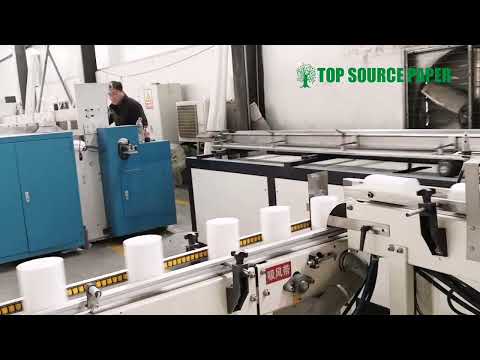
Top Source Paper’s standard loading protocol includes:
- Moisture-proof outer cartons — Heavy-duty corrugated cartons with water-resistant coating on the outer surface.
- Pallet wrapping — Cartons are stacked on standard pallets (1.0 m × 1.2 m or 1.1 m × 1.1 m) and wrapped in PE stretch film to create a moisture barrier around the entire pallet load.
- Desiccant bags — Calcium chloride desiccant bags are placed inside the container to absorb residual moisture during transit.
- Container inspection — Before loading, the container is checked for structural integrity, door seal quality, and floor condition. Any container with holes, rust damage, or a compromised door seal is rejected.
- Strap reinforcement — High-tensile plastic strapping secures the pallet load to prevent shifting during ocean transit.
This loading protocol is standard on every shipment — not an optional upgrade. The buyer resources section includes additional documentation on packing standards and container loading best practices.
Step 9: OEM and Private Label — Building Your Brand
For brand owners and distributors who want to sell tissue under their own label, Chinese manufacturers offer full OEM and private-label services. This includes custom packaging design, branded tissue embossing, printed cores, and custom carton labeling.
At Top Source Paper, the private-label process works as follows:
- Submit your packaging design file (AI, PDF, or CDR format).
- The design team reviews for print feasibility and provides a digital proof within 2–3 working days.
- Plate-making takes 3–5 working days. Plate cost is a one-time charge — plates are stored permanently and reused free on every reorder.
- A 3D packaging mockup or physical sample is provided for approval before production begins.
- Production proceeds once the sample is approved and the deposit is received.
The OEM and private label service covers all product categories — toilet paper, facial tissue, kitchen towels, hand towels, napkins, and jumbo rolls. Brand owners can build a complete private-label tissue portfolio from a single source.
Step 10: Red Flags to Watch For
Not every Chinese tissue supplier is reliable. The following red flags should prompt deeper investigation before committing to an order:
- Prices significantly below market — If a quote is 20%+ cheaper than comparable suppliers, the savings likely come from recycled fiber, short-meter rolls (fewer sheets than specified), or lower GSM than quoted. There is no free lunch in tissue manufacturing.
- Refusal to provide a COA — A manufacturer with nothing to hide will always provide a COA. Refusal or delay is a strong signal that the fiber source is not what was claimed.
- No factory visit option — If the supplier discourages or refuses factory visits (or video tours), they may not own the production facility.
- Vague lead times — A real manufacturer can give specific production timelines. “It depends” without further detail suggests the supplier is brokering the order to a third party.
- No plate storage policy — If a supplier charges plate-making fees on every reorder, they are not a manufacturer — they are placing each order with a different factory.
Summary: The Sourcing Checklist
To summarize the sourcing process into a checklist:
- Verify the supplier is a manufacturer (not a trader) — check business license, address, and technical knowledge.
- Confirm 100% virgin wood pulp fiber source — request COA with every shipment.
- Provide a complete specification before requesting a quote — ply, GSM, dimensions, embossing, packaging, quantity.
- Understand MOQ thresholds — 20GP for white-label, 40HQ for custom print.
- Request and evaluate physical samples — check softness, strength, dust, and print quality.
- Verify the QC process — three-stage inspection with COA, video, and loading documentation.
- Confirm payment terms — 30% deposit, 70% before shipment with QC verification.
- Understand production and shipping timelines — 25–30 days production + 7–40 days ocean freight.
- Verify moisture protection protocol — moisture-proof cartons, pallet wrapping, desiccant, container inspection.
- Watch for red flags — below-market pricing, COA refusal, no factory visits, vague timelines.
Top Source Paper operates as a transparent, integrated virgin pulp tissue manufacturer with 18+ years of export experience. The factory is located in Baoding, Hebei Province, and ships from Tianjin Xingang Port to destinations worldwide. For inquiries, sample requests, or quotation, contact the team directly via WhatsApp (+86-13180210660) or email (info@chinatoiletpaper.com).
Related reading: For tissue paper MOQ and container ordering guide, see our guide on this topic.
For readers at the very start of the reseller journey 鈥?choosing between white-label and custom print, setting up a first mixed container 鈥?the wholesale paper distributor playbook walks through it.
The ten-step flow gets the samples and quotes; the tissue wholesaler evaluation guide is the screen that decides whose answers are worth a container.