Most people who want to start reselling tissue products get the ordering backwards. They ask a supplier for a price list, get confused by container minimums, and give up before they ever place a first order — or worse, they buy a small parcel from a trading company at a price that leaves no room to resell profitably. Becoming a tissue distributor is not about finding the cheapest roll; it is about understanding how a factory actually sells, so you can buy at the volume where your margin exists.
This playbook walks through the real on-ramp: what a minimum order actually costs you in volume, which trade term to buy on, how payment works, and how to build a first mixed container that a market will absorb.
Start From the Minimum, Not the Price List
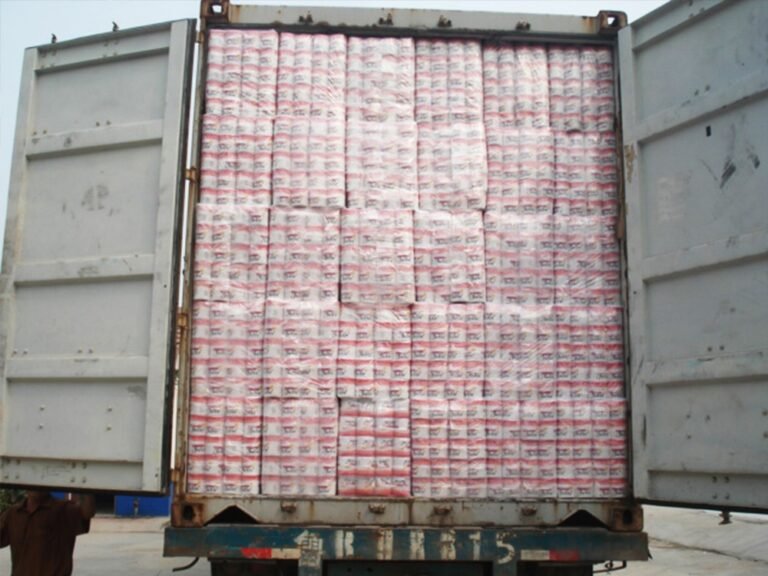
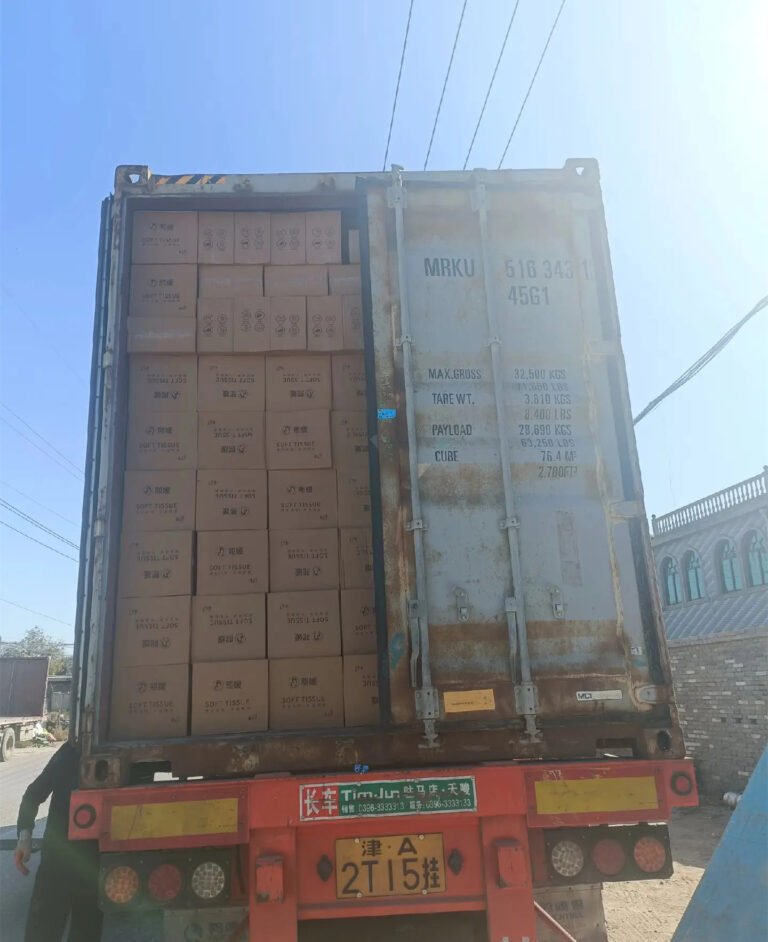
A tissue factory does not sell by the case. The unit of sale is the container, and there are two tiers that decide your entry cost. Plain, unbranded white-label product ships from a shared 20GP consolidated container — this is the low-barrier route where you buy the factory’s standard packaging and resell under your own catalog. A private-label program, where your logo goes on the cartons and outer bags, starts at one full 40HQ container, because custom print runs need their own production commitment.
Those two numbers — a 20GP for white-label and a 40HQ for custom — are the fence you have to plan around. A 20GP carries roughly 33 cubic meters and a 40HQ roughly 76, which is enough room to mix several product lines in one box. The practical implication for a new reseller is that your first move is almost always a mixed white-label 20GP, proving which SKUs your market actually reorders before you commit to a full custom-print 40HQ behind a single private label.
Build a Catalog From One Mixed Container
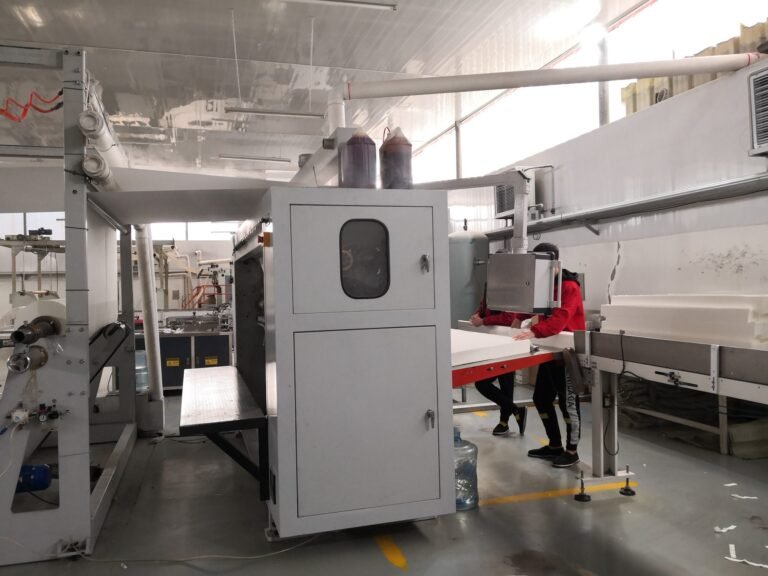
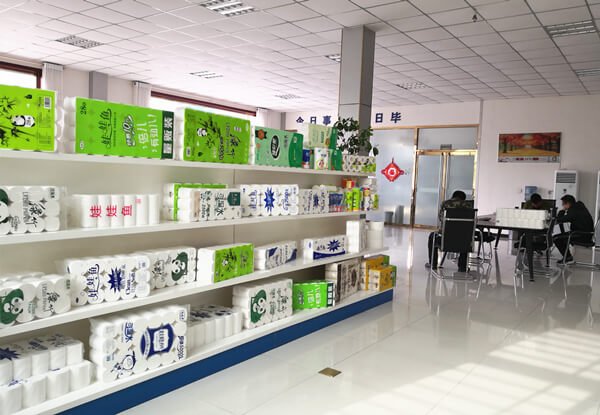
A distributor earns more from breadth than from depth on one SKU, because buyers consolidation-shop: a janitorial customer, a hotel, or a small supermarket wants toilet paper, hand towels, and facial tissue from one supplier, not three. A single factory line covers the whole hygiene-paper catalog — standard and jumbo toilet rolls, folded and roll hand towels, boxed and soft-pack facial tissue, kitchen towels, pocket tissues, and printed napkins — all from 100% virgin wood pulp across a 13 to 45 GSM range.
That breadth is the point of the mixed container. Instead of filling a box with one product and discounting leftovers, spread it across four or five fast lines at white-label volume, sample what moves, and let your reorder pattern tell you where a dedicated private-label 40HQ later makes sense.
Choose the Trade Term Before You Compare Prices
Prices quoted on different trade terms are not comparable, and this is where new importers lose money on a technicality. A factory that ships FOB, CIF, CFR, and EXW is telling you it can hand the goods over at four different points in the journey, and each moves freight and risk onto a different party.
| Term | Factory covers | You cover | Best when |
|---|---|---|---|
| EXW | Goods at the factory door | Pickup, inland haul, ocean freight, insurance | You have your own freight agent |
| FOB | Goods loaded at origin port | Ocean freight, insurance, arrival | You want to control the shipping line |
| CFR | Goods plus ocean freight to destination port | Insurance, arrival | You want freight handled but self-insure |
| CIF | Goods, freight, and insurance to destination port | Arrival, customs, inland | You want the simplest door-to-port handover |
Compare quotes on the same term or you are comparing different products. The fuller walkthrough of FOB vs CIF vs EXW for tissue imports covers the cost-line detail, and understanding the 20GP white-label versus 40HQ custom MOQ split is what makes your first-order volume realistic.
Understand the Payment Structure
Factory terms are almost universally a deposit against a balance. Our structure is 30 percent by telegraphic transfer as a deposit and 70 percent before shipment — and the balance is triggered only after you have seen the proof, not before. Before goods ship, you get a quality inspection report and a container-sealing video so you can confirm the load matches the order with your own eyes. That sequence protects both sides: the factory gets committed capital to start production, and you get verifiable evidence before the remaining money moves.
Plan the Calendar, Not Just the Cost
New resellers budget money and forget time. The factory clock runs on working days: samples and small-shipment dispatch in 1 to 3 working days, a first full production run in 25 to 30 working days (that window includes packaging pre-press, sampling, and carton printing), and a repeat order faster at 20 to 25 working days. Goods leave from Tianjin Xingang port in northern China. If you are stocking for a seasonal peak, back-plan from the container’s arrival, not from when you feel like ordering.
Ask for the deliverables that make your resale defensible: a virgin-fiber COA covering tensile strength and brightness, a wet-strength and burst-resistance test video for the batch, and loading plus moisture-proof packing photos. Those let a distributor prove quality claims to their own customers instead of just asserting them.
Where to Start the Conversation
The first step is a sample order, not a container. Request samples against your target GSM and ply, test dispenser fit and wet performance yourself, then size a mixed white-label 20GP around what your market reorders. The step-by-step guide to sourcing tissue paper from China covers the supplier-audit side of that first order, and the buyer resources hub collects the trade, logistics, and QC references a new distributor needs on hand.
Video: jumbo roll tissue manufacturing process (Top Source Paper)
Frequently Asked Questions on Becoming a Tissue Reseller
How much tissue product do I need to order first?
White-label ships from a shared 20GP container; a custom private-label print run starts at one full 40HQ. Most new resellers begin with a mixed white-label 20GP across several lines.
What payment terms should I expect from a factory?
A 30 percent T/T deposit and a 70 percent balance before shipment, with a QC report and a container-seal video provided before you release the balance.
FOB or CIF for a first order?
If you have a freight agent, FOB keeps shipping under your control; if you want the simplest handover, CIF adds freight and insurance. Only compare quotes on the same term.
How long does a first container take?
Samples in 1-3 working days, first production in 25-30 working days including pre-press and carton printing, reorders in 20-25, shipped from Tianjin Xingang port.
Resellers building a promotional line should read the pocket tissue pack order-sizing guide before quoting a branded programme.
For a new reseller the first channel decision is the pack, not the paper: the wholesale bath tissue and retail pack comparison sets out the two order objects.
Becoming the reseller starts with choosing the wholesaler; the tissue wholesaler vetting guide runs that selection.