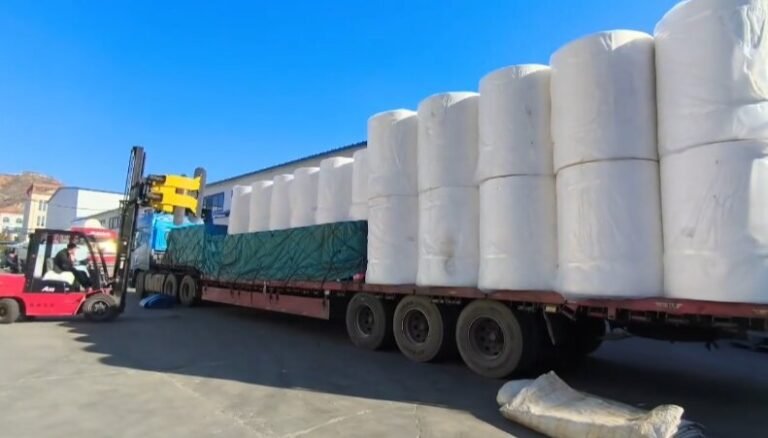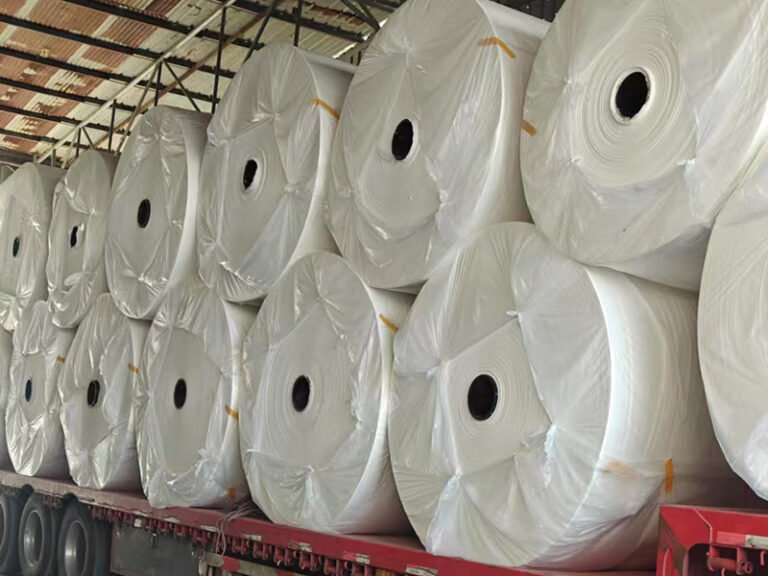
A converting plant does not buy paper. It buys runability. Everything downstream of the parent roll — rewinding, embossing, perforating, slitting, counting, wrapping — is a function of whether a web of paper can be fed through your machine at design speed without breaking, without telescoping, and without arriving at the packer with a dimension you did not order.
Which is why the specification sheet you send a mother roll supplier matters more than the price per tonne you negotiate with them. A roll that costs less and forces your line to run at reduced speed is not cheaper. It is more expensive, and the cost hides in downtime where nobody audits it.
Here is what to define before you order, written from the supplying side. We produce mother jumbo rolls at our own 100% virgin wood pulp mill in Daceying, Mancheng, Baoding, and cut width, weight, brightness and tensile strength to the converting machine they are going to.
What a Mother Jumbo Roll Actually Is
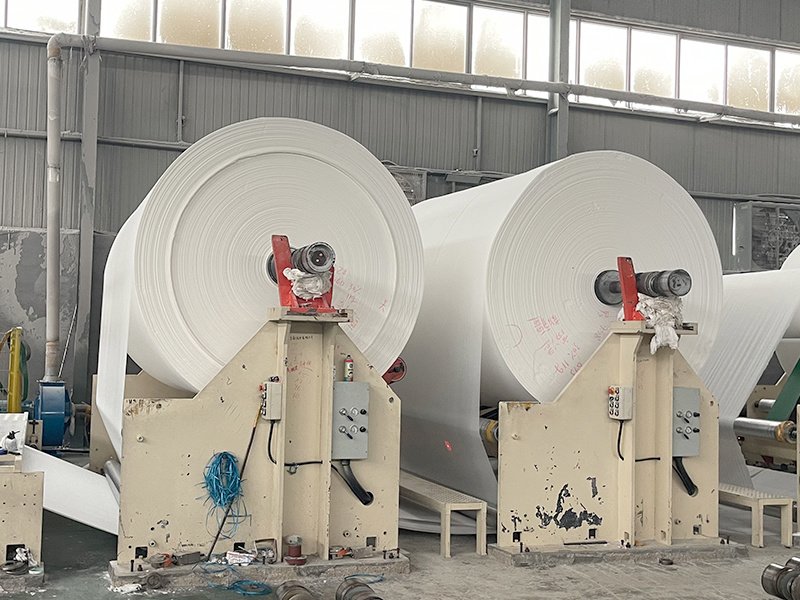
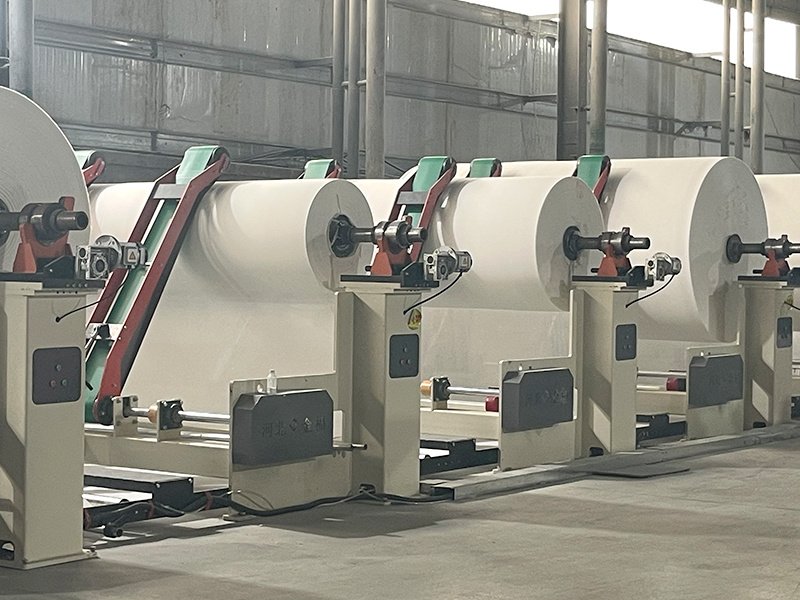
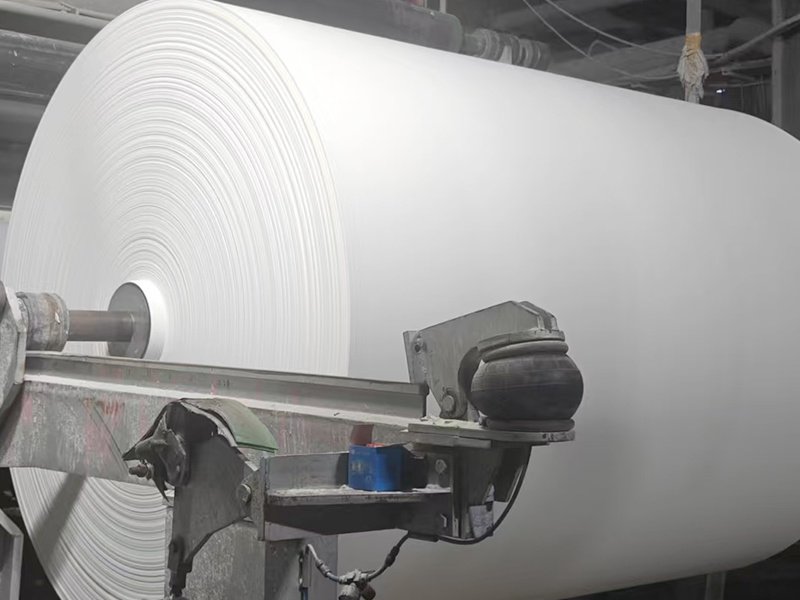
A mother roll, also called a parent roll or jumbo roll, is the unconverted web as it leaves the paper machine: a single continuous length of tissue on a core, before any rewinding into consumer format. It is the only form in which a mill can supply tissue paper to a converter, and it is the form in which every quality characteristic the converter depends on is fixed.
Once the web is rewound into rolls, you can no longer change its fibre, its bonding or its moisture balance. You can only fail to convert it well. That asymmetry is the whole argument for specifying upstream rather than inspecting downstream.
Ours is produced from 100% virgin wood pulp with a balanced long- and short-fibre ratio, with no recovered waste pulp and no low-grade recycled input. For a converter, that choice is not a marketing claim; recycled fibre is what causes dusting on the rewinder, weak spots that snap at the splice, and a grey hand feel you cannot brand your way out of.
The Specification Sheet a Converting Plant Must Define
Send these ten items and a supplier can quote something you can actually compare. Send three and you are buying whatever the mill had running that week.
Web width
State the working width of your rewinder and the number of tracks you intend to run. Width is cut to your machine, and it is the one parameter that cannot be corrected after production — a web that does not match your track geometry is scrap or a downtime event, not a discount.
Base weight (GSM)
Specify the target GSM and the deviation you expect production to hold. Our portfolio runs 13 to 45 GSM across tissue grades, and the tolerance is agreed per order rather than assumed — which is the honest way to do it, because the deviation a mill will commit to is a capacity question, and you should know the answer before you design a product around it.
Tensile strength and ring-crush strength
Two different properties doing two different jobs. Tensile strength governs whether the web survives the machine at speed. Ring-crush strength governs whether the finished roll keeps its shape in the pack, on the pallet, and after ocean freight. We control both, and both appear as measured values on the COA rather than as a promise.
Moisture balance
Moisture is the parameter converters argue about most and specify least. It determines how the web behaves at the embossing roll and how the roll holds shape in transit, and it is the reason our process controls moisture explicitly rather than leaving it to whatever the machine ran at. State the range your line needs and require the figure to be reported per batch.
Brightness and appearance
Brightness is verified on the COA alongside tensile. Specify your target and, if your market rejects optical brightening, say so: our paper is produced without fluorescent brightening agents.
Ply structure and bonding
Single-ply parent reels and laminated multi-ply constructions are both available, including 2-ply and 3-ply composite and adhesive-bonded builds. Where plies are bonded, the bonding strength is the specification — it is what determines whether layers separate on a high-speed converter instead of staying unified through embossing.
Core inner diameter and roll outer diameter
Both are machine-interface dimensions and both must come from your equipment, not from a catalogue. State the core ID your chuck accepts and the maximum OD your stand will carry, and require both to be confirmed in writing before production. Our mother rolls are cut to the converting and rewinding machine they are destined for.
Meterage per roll
Ask for the length on the roll, not just the weight. Rewind tightness and cut length are what we control under High-Yield Meterage Control, precisely because GSM overstated on a label and meterage shortened on the reel are the two failure modes converters bring to a supplier relationship.
Embossing state
Unembossed parent reel for converters who run their own embossing rolls; micro-embossed, edge-embossed or 3D deco/point-to-point patterns where the pattern is meant to travel with the paper. This is a genuine fork in the order and should be decided before quotation, not after.
Reel packing and pallet configuration
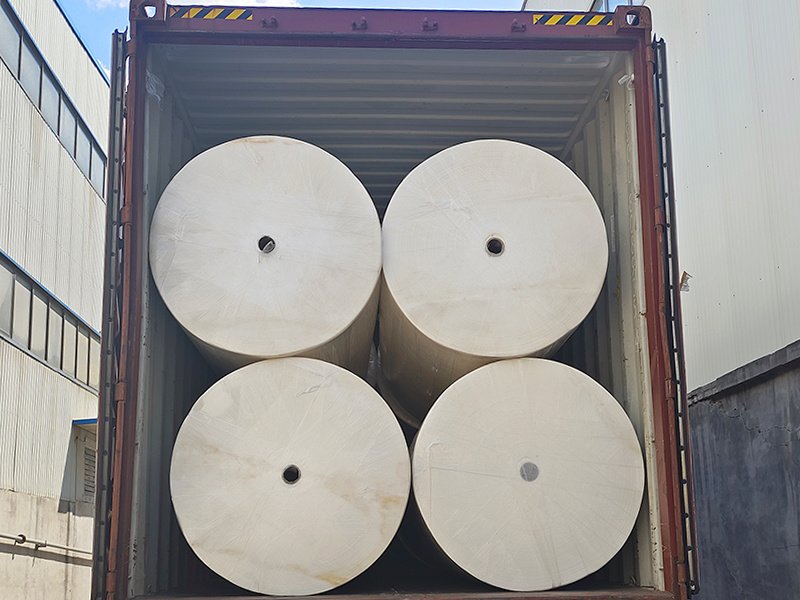
State how your line unloads and what protection you require for the crossing. Our export standard is thickened moisture-proof corrugated outer cartons, fumigation-free pallets and high-tensile strapping, with container airtightness and watertightness checked before loading.
The Specification Sheet at a Glance
The same ten lines, arranged as the document you send. Nothing in it is optional, and every value in it comes from your equipment or your product design rather than from a supplier default.
| Parameter | Where the value comes from | Why it cannot be assumed |
|---|---|---|
| Web width and track count | Rewinder working width | Cannot be corrected after production |
| Base weight (GSM) and tolerance | Your product design and mill capacity | Drives roll diameter, sheet count and pack fit |
| Tensile strength | Line speed and splice load | Determines whether the web survives at speed |
| Ring-crush strength | Finished pack and pallet stack | Determines whether the roll keeps shape in freight |
| Moisture balance | Embossing nip and storage climate | Governs run behaviour and reel geometry retention |
| Brightness and brightening agents | Market expectation and regulation | Visible in the finished consumer pack |
| Ply structure and bonding | Consumer format you intend to convert | Bonding failure appears as plies separating in use |
| Core ID and maximum roll OD | Chuck and roll stand on your machine | A machine-interface mismatch stops the line |
| Meterage per roll | Your yield model | Length on the reel, not weight, is what you sell |
| Reel packing and pallet configuration | Your unloading method | Ocean-crossing damage is a packing specification failure |
Why Virgin Pulp Runs Differently on a High-Speed Converter
Long fibres carry tensile strength; short fibres carry softness and bulk. A blend weighted toward the cheap end gives you a roll that feels good in the hand and breaks at the splice, and a converter’s real cost is the stop-start cycle, not the reel price.
The reason a mill talks about machine runability is specific: the web has to survive acceleration, the embossing nip, the perforation line and the blade without tearing, without dusting the machine, and without telescoping off the core in transit. Telescoping in particular is a roll-geometry and moisture-balance failure, and it destroys the value of a container that arrived on schedule.
Our three-stage inspection is built around exactly those failure points. Stage one inspects the mother roll itself for tensile strength and brightness. Stage two is the in-process patrol during rewinding and converting, checking GSM, web tension and the perforation line. Stage three is the pre-shipment audit of carton specification plus the drop test before sealing.
Documentation to Demand With Every Load
A converting plant that cannot produce a paper trail gets locked out of retail and food-service supply contracts, so the documentation is a product, not a courtesy.
Per shipment we supply a 100% virgin pulp physical COA covering tensile strength, brightness and verification that the fibre is 100% virgin rather than recovered; a wet-tensile and zero-dust test video pack; and loading plus moisture-proof packing photographs or video. The QC report and container sealing video go to you before the balance is called, so that verification happens while the goods are still the supplier’s responsibility.
Ask for batch-level figures rather than a generic sheet. A COA that reports the same numbers for every load is describing a target, not measuring your paper.
Ordering, MOQ, and the First Container
Mother jumbo rolls ship from one 20GP container, consolidated for export. Sampling and small-sample dispatch take 1 to 3 working days. First mass production runs 25 to 30 working days, and repeat orders run 20 to 25 working days. Terms are FOB, CIF, CFR or EXW ex Tianjin Xingang Port, and payment is 30% T/T deposit with the 70% balance before shipment.
Two practical notes for a plant that is starting up. The 20GP threshold is low enough that you can validate a supplier against your own line before committing to an annual contract, which is the correct sequence: run the reel, measure your downtime, then scale. And if you are converting into private-label consumer packaging as well as buying parent reel, our OEM and private label programme runs from a single 40’HQ, so the two lines can come from one mill relationship.
For the downstream side of the same supply chain, the jumbo roll tissue buying guide covers finished-roll sizing and dispenser fit, and 1-ply versus 2-ply versus 3-ply covers the ply decisions your rewinder will be judged on. Our mother jumbo rolls programme page lists the specification range, the 10-step sourcing checklist covers factory audit before your first order, and the factory profile sets out capacity, QC and export terms.
Frequently Asked Questions
What GSM range do mother jumbo rolls come in?
Mother rolls are produced across our 13 to 45 GSM tissue portfolio. The target GSM and the deviation you expect production to hold should be specified per order and confirmed against the COA figures, not assumed from a catalogue default.
What should I verify on the COA before accepting a load?
Tensile strength, brightness and 100% virgin fibre verification are the three reported values, plus moisture balance for your line. Ask for batch-level figures rather than a generic sheet.
Why does moisture balance matter to a converter?
It governs how the web behaves at the embossing roll and whether the roll keeps its shape through transit. We control moisture and ring-crush strength explicitly rather than leaving them to whatever the machine ran at.
What core and roll diameters should I order?
Both are determined by your equipment. State the core inner diameter your chuck accepts and the maximum outer diameter your stand carries, and require written confirmation before production.
What is the MOQ for parent rolls from China?
One 20GP container, consolidated for export from Tianjin Xingang Port, on FOB, CIF, CFR or EXW terms. Samples dispatch in 1 to 3 working days, first production runs 25 to 30 working days, and repeat orders run 20 to 25 working days.
Specifying the reel is one task; choosing and auditing the supplier is another, covered in the mother roll tissue supplier guide.
The virgin-pulp spec sheet is built here; the furnish comparison puts the recycled alternative side by side, including hornification and contaminant load.