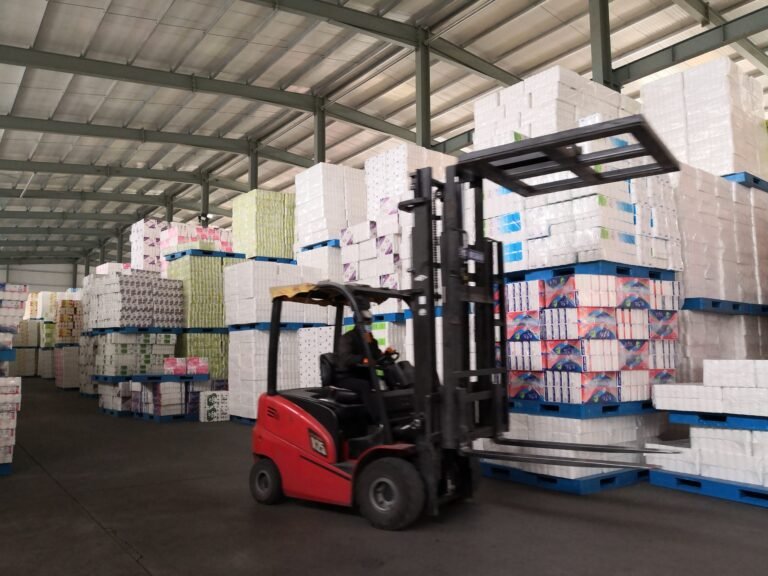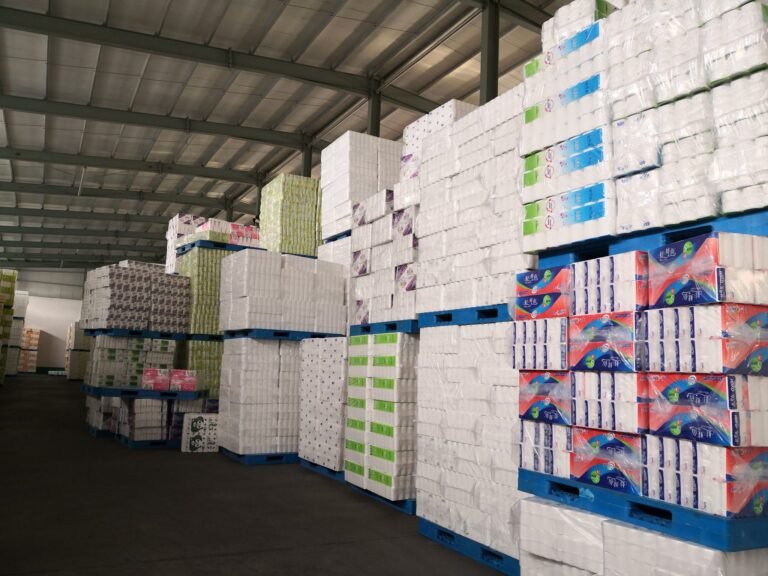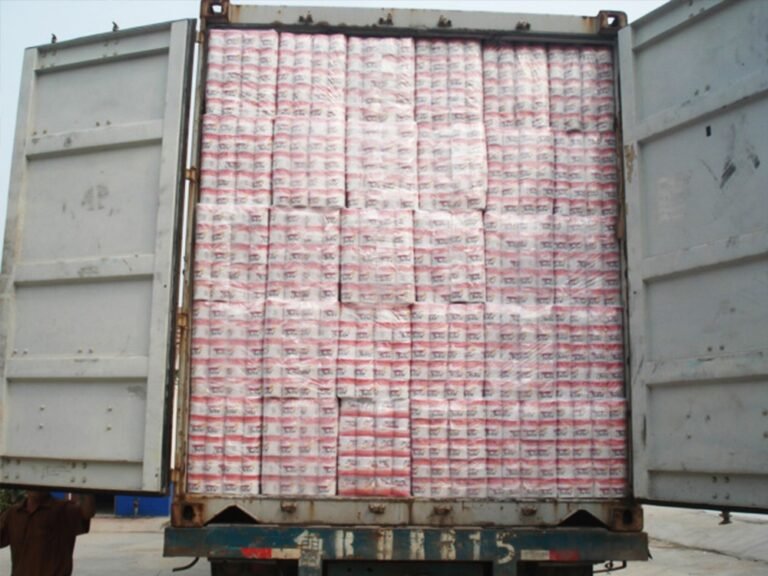
A DDP quote bundles ocean freight, U.S. customs entry, duties and delivery into one delivered number, and that convenience is real. What it changes is not the tariff bill, but who carries it: under DDP the factory’s forwarder usually files as importer of record, which means the entry line the U.S. government actually sees is written by someone whose price you never audit. For low-density private-label tissue, a DDP number often looks cheap because the factory is pricing a tariff assumption from last quarter, or omitting destination charges entirely. Before you compare DDP against FOB plus your own freight, you need four things in writing: the exact HTS code being filed, the duty rate behind it, the named warehouse in the Incoterms clause, and an answer to who buys cargo insurance. This guide walks through the paperwork and the contract lines that make DDP safe for bulky paper, and the situations where it quietly costs you more.
What a DDP Quote Is Actually Supposed to Contain
DDP – Delivered Duty Paid – is the Incoterms 2020 rule that puts the most obligation on the seller. The ICC’s Incoterms rules page defines the shape: the seller arranges carriage to the named destination, handles both export and import formalities, and pays duties and taxes, with risk transferring when the goods are placed at your disposal at that named place, ready for unloading.
Read that back against a factory quote and a proper DDP line for tissue should absorb, at minimum:
- Product, private-label printing, cores, wrappers, cartons and pallets.
- Inland trucking from the converting mill to the Chinese port, plus export clearance and documentation.
- Ocean freight on the named service, terminal handling at origin, and the documentation/security charges most quotes bury.
- U.S. customs entry: the broker fee, the bond, the duties and any Section 301 line layered on top.
- Destination drayage from the port to the named warehouse.
Two items are commonly missing from the bundle even when the quote says DDP: cargo insurance (DDP does not oblige the seller to buy any – our breakdown of marine cargo insurance for tissue shipments covers what a policy does and does not pay), and unloading at your dock, which under DDP stays on you. Ask for the quote to be reissued as an itemized cost stack. A supplier who cannot show the stack is quoting a guess.
The Importer-of-Record Question
Under a normal FOB arrangement you are the importer of record. You choose the broker, you approve the entry summary, and CBP looks to you for classification, valuation and origin accuracy. Under the typical DDP arrangement a Chinese factory sells, your supplier’s forwarder clears the goods, and that forwarder – not you – is the importer of record on the entry documents.
That flips three things most importers never think about until the audit letter arrives:
- Entry records: your supplier’s broker keeps the CBP entry summaries, not your broker. If the importer of record has an entry-quality problem, your cargo can sit while it is sorted, and you may never see the filings.
- Liability for misdeclaration: a cheap DDP quote that assumed the wrong duty rate gets corrected against the importer of record – and when they cannot pay, the exposure gets chased forward along the chain.
- Compliance programs: you cannot claim credit for a partner’s compliance posture. If your retail or government customers ask about supply chain controls, an entry you never filed is hard to evidence.
A legitimate middle path exists: DDP where the factory pays duty and the broker acts on your instruction, keeping you as importer of record. That arrangement is more expensive and rarer, but it is the version that should be quoted, named in the PO, and understood by both sides. Ask directly: who is the importer of record on the entry? Their answer tells you whether you are buying a service or absorbing their risk.
Check the HTS Code and Duty Rate Yourself
Tariff exposure on China-origin tissue has moved repeatedly in recent years, which is exactly why a quote built on last quarter’s rate is a live problem. You are entitled – as the buyer of a landed price – to know which classification is being assumed. Toilet paper falls under HTS heading 4818, and the live rates for paper and paperboard articles of that heading, including sanitary-type papers, are published on the U.S. International Trade Commission’s HTS search. Pull the code yourself for each SKU family: 4818.10 covers toilet paper; towels and napkins of tissue paper fall under neighboring lines such as 4818.20 and 4818.30, and the applicable China-origin duty stacks base rate plus Section 301 layers, which have moved through 2025 and 2026. Any number your supplier quotes has to be rechecked at the port on the day of the entry, not remembered from the quote.
Three checks to run before signing:
- Ask the supplier to state, in writing, the HTS code they will file and the duty rate that rate implies.
- Have your own broker – not theirs – look at that code and the invoice description and confirm the classification is defensible for your product.
- Re-verify the rate yourself at HTS and on any Federal Register notices touching heading 4818 or Chapter 48, the same way you would audit a pulp-driven price increase against a published index.
If the supplier refuses to name a code, treat the DDP number as a placeholder. If they name one you know is wrong – for example filing printed paper towel cartons as 4818.10 to catch the toilet-paper line – walk away: a misdeclared entry is not a cost optimization, it is a compliance event with your cargo attached.
What DDP Does Not Cover Even When the Box Lands
Once the container is emptied, the “delivered” in DDP stops at the named place. Post-delivery, the things still yours are the ones that actually break supply relationships:
- Quality: GSM, ply, sheet count, core diameter, embossing – a DDP price does not inherit your spec sheet unless the PO carries it. Pre-shipment inspection under your AQL terms is still on you.
- Conformity of labels: the retailer-facing artwork, language requirements and lot codes still get audited by your customer, not by the supplier’s broker.
- Traceability records: your recall folder and lot documentation are yours to demand per shipment; the supplier’s forwarder filing an entry does not produce them for you.
- Shrinkage and short-count: the reconciliation duties described in our guide to receipt reconciliation against invoice and packing list sit with you the moment cartons hit your floor.
In short: DDP buys you transport and entry services, not a quality shield. Importers who let the bundled price reduce their own receiving discipline are the ones who discover the trade-off when the shelf audit comes.
The Math: When DDP Helps a Tissue Importer
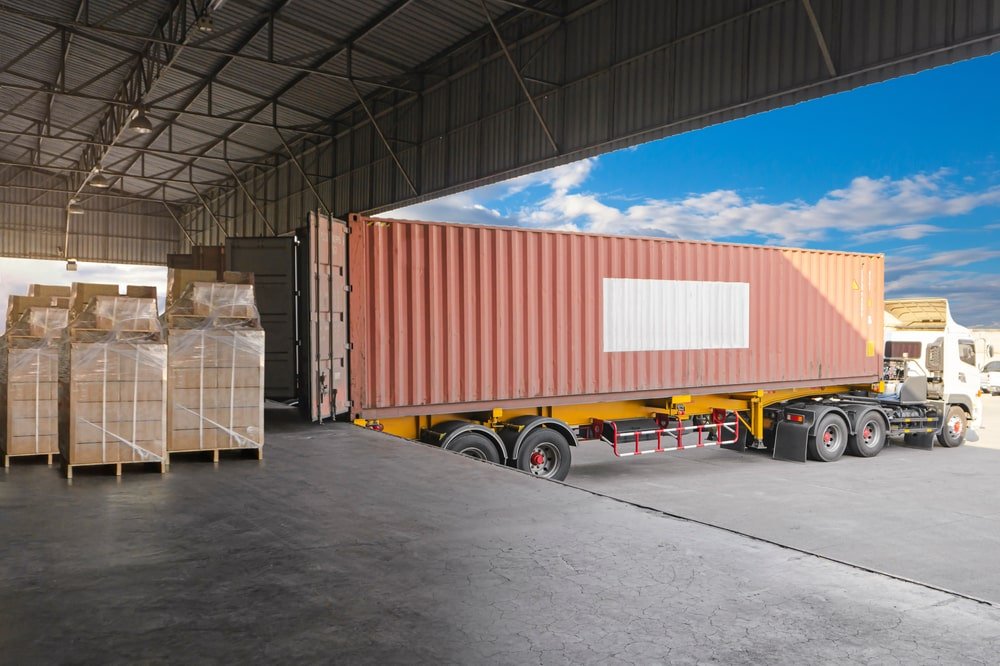
Tissue is a cube-out cargo – a 40HQ fills its volume long before it touches its weight limit, as our landed-cost-per-roll guide lays out. That physical fact shapes the DDP question:
- When it helps: small or medium volume buyers who lack negotiating power on ocean freight; lanes where the supplier’s forwarder consolidates multiple paper customers into one container; volatile rate periods where the all-in number gives you pricing certainty through delivery; and one-off or trial shipments where setting up your own entry is overhead. Here a DDP quote is effectively the factory’s buying power spread across their client base.
- When it hurts: program buyers with predictable monthly volume, because you permanently give up your freight advantage and your quote becomes hostage to the supplier’s consolidation economics. It also hurts when you need clean importer-of-record evidence for customers, or when the SKU mix needs multiple HTS lines and the supplier’s entry process cannot handle your classification.
A practical rule: for the first container of a new SKU, DDP’s simplicity can be worth paying for. For the tenth container of the same program, quote yourself FOB + own freight + own broker and compare against the delivered DDP stack. Importers who skip that comparison are paying their supplier’s margin on freight forever.
Contract Lines That Make DDP Safe
DDP only works when the PO states what the price buys. A short list of lines that turn the buzzword into a deliverable:
- Named destination: “DDP [your exact warehouse address], Incoterms 2020” – not “DDP USA” and not “DDP your door” without the address and delivery-hours constraint.
- Classification and duty warranty: the supplier’s quote states the HTS line assumed, and an amendment clause: duties and taxes change by order of the U.S. government – the party acting as importer of record absorbs classification-driven changes; if classification departs from what you approved, the shipment is rejected and repriced.
- Insurance evidence: if the quote omits marine cargo insurance, the PO says who carries it and requires a certificate before each sailing.
- Document set: commercial invoice, packing list, bill of lading, the entry summary once filed, and the lot/traceability sheet delivered to you with the ASN, so your receiving team can reconcile against what was actually declared.
- Delivery performance: DDP makes delivery the supplier’s obligation; the remedy for failure – re-delivery cost, OTIF credit, or switch-to-FOB at their expense – has to be written down, the same discipline as any OTIF clause you accept from a retailer.
- Exit: a stated right to convert future shipments to FOB at the end of any contract term, at which point your own freight and brokerage take over.
Common Failure Modes
Three patterns repeat across DDP tissue trade. The first is the quarterly tariff-surcharge line that appears on a renewal quote without a stated HTS change – a rate guess being repriced onto you. The second is the broker who files a generic “paper products” entry and the cargo clears until it does not, at which point the importer of record is insolvent and the container sits. The third is the DDP price quietly rebuilt by swapping pallet specs or downgrading the core count, because nobody audited the spec against the golden sample while watching the freight number. All three are prevented by the same thing: itemization. The stack is the audit.
FAQ
Is DDP legal if the factory pays the duty? Yes – DDP is an official Incoterms rule and duty-paid import is a normal trade arrangement. What matters is that the entry is accurate: correct code, correct value, correct origin. A low DDP price built on a wrong rate is not illegal per se but will be corrected at your cargo’s expense eventually.
Can I still be the importer of record under DDP? Only with an arrangement where the factory reimburses duties but your broker files the entry. That is unusual and must be stated explicitly, because Incoterms DDP as written assumes the seller clears import.
Which is safer for a first container, FOB or DDP? If you have a US broker already, FOB is safer long-term because you keep the entry record. DDP is the faster start when you do not. Many importers run DDP on the trial, then quote their own freight stack before the program scales.
Decision Checklist Before Signing
Before any DDP purchase order is sent, confirm six items: the named warehouse address inside the Incoterms clause, the HTS codes on the quote, who is importer of record, whether marine cargo insurance is in the stack, whether the entry documents will be shared with you, and whether the contract states who absorbs a tariff change. Every yes makes DDP a procurement tool. Every unknown is a price you have not yet seen on an invoice.