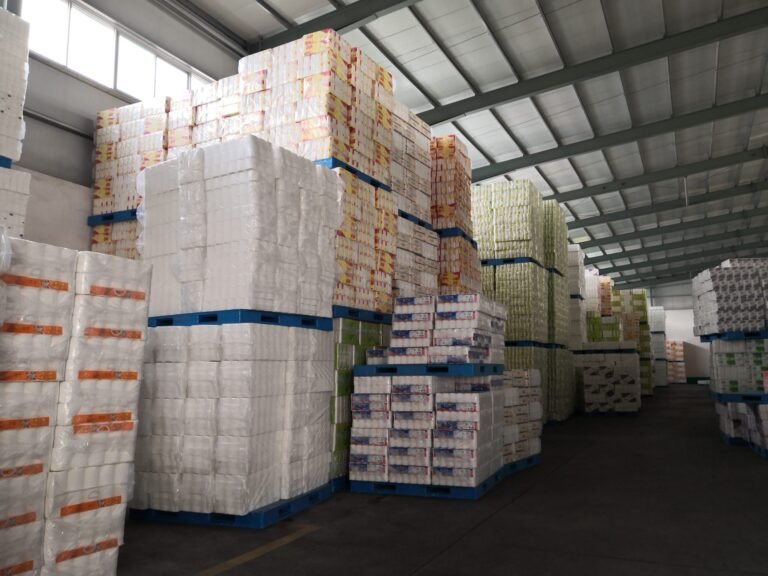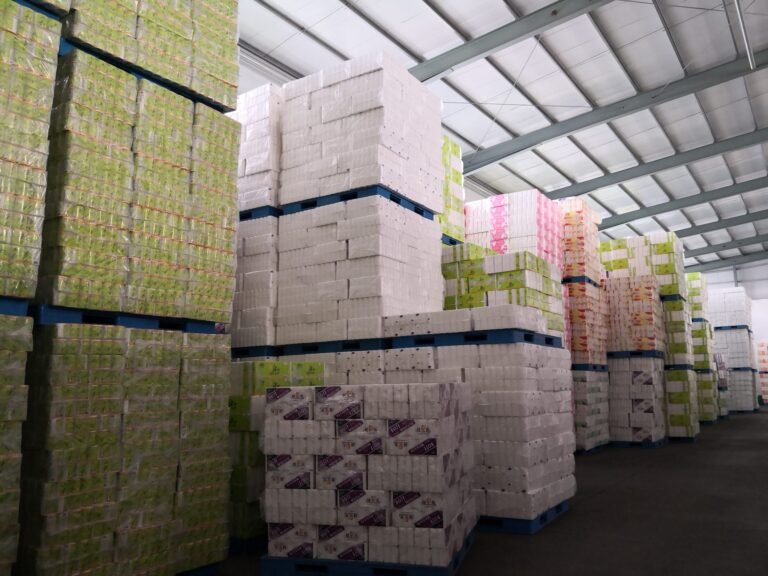
Price tissue freight by weight and you have already misread the cargo. Toilet paper and tissue are cube-out goods: a container fills its interior volume long before the load comes anywhere near the payload limit, so your landing cost per roll is decided by loading volume efficiency, not by kilograms. The reliable method is to take four packaging fields from your purchase order — rolls per carton, carton length-width-height, net weight per carton, and the stacking or nesting plan — pair them with the usable container volume your forwarder states in writing, and run one short chain of arithmetic that ends in freight per roll. Every figure stays a variable, because the right number is computed from your own SKUs, not recited from a competitor’s container. This page walks the whole calculation, the levers that actually move it, and the traps that quietly inflate a per-roll cost before a single carton sails.
Why Tissue Cube-Outs: The Physics Behind the Freight Bill
An ocean container stops accepting cargo at whichever limit it reaches first. Dense freight — tile, metal, liquid in glass — hits the mass ceiling while empty space still stands above the load. Light, bulky freight hits the volume ceiling with the payload barely used, and that second group is exactly where finished tissue lives. Rolls are mostly air: sheet wound around a core, cushioned inside a carton, cartons stacked with interlocking gaps, and even the paper itself is a low-density web, with this mill’s range spanning 13 to 45 GSM in one to three plies. None of it weighs much. All of it occupies space, and space is what the container is rented by.
That asymmetry shapes the whole bill. A full container load is quoted per box, not per kilogram: the same container rate applies whether the stuffing department fills sixty percent of the interior or ninety, so the freight you pay is a fixed number waiting to be divided by however many saleable rolls actually fit. Less-than-container load is even blunter, charged by the greater of actual weight and volumetric weight — the textbook rule that turns air into money when you ship paper. A widely used freight reference from Mighty International’s container-size and load-calculation guide puts the theoretical interior of a 40-foot high cube at roughly 76 cubic meters while warning that practical stuffing lands noticeably lower once wall thickness, door geometry and loading loss are counted. Treat those as one company’s published reference figures, not constants: your working number is the usable volume your own forwarder commits to for the specific container type you book. Who pays which segment of the journey under FOB, CIF, CFR or EXW is a different page’s job — the Incoterms guide for tissue imports owns that split; this page owns the arithmetic that divides whatever freight you do pay by a roll count.
The Four Fields You Must Have on the PO Before You Price a Container
Everything below stands or falls on data that only your own order line can generate. Ask the factory to state these four fields for every SKU you are quoting, and do not accept a carton price without them.
| Field | What it must say | What it decides |
|---|---|---|
| Rolls per carton | Pack size per shrink bundle times bundles per carton, for the exact SKU | The numerator of every per-roll figure you will compute |
| Carton length, width, height | External, packed dimensions — not the flat carton, not the design size | Carton volume, and how many cartons stand along each wall and each tier |
| Net weight per carton | Carton net and preferably gross, so the mass ceiling can be checked | Confirms the cargo is volume-limited, and kills weight-based freight estimates |
| Stacking and nesting plan | How cartons are tiered, whether they interlock or nest, palletised or block-stacked | Whether the volume ceiling is actually reachable without crushing the bottom tier |
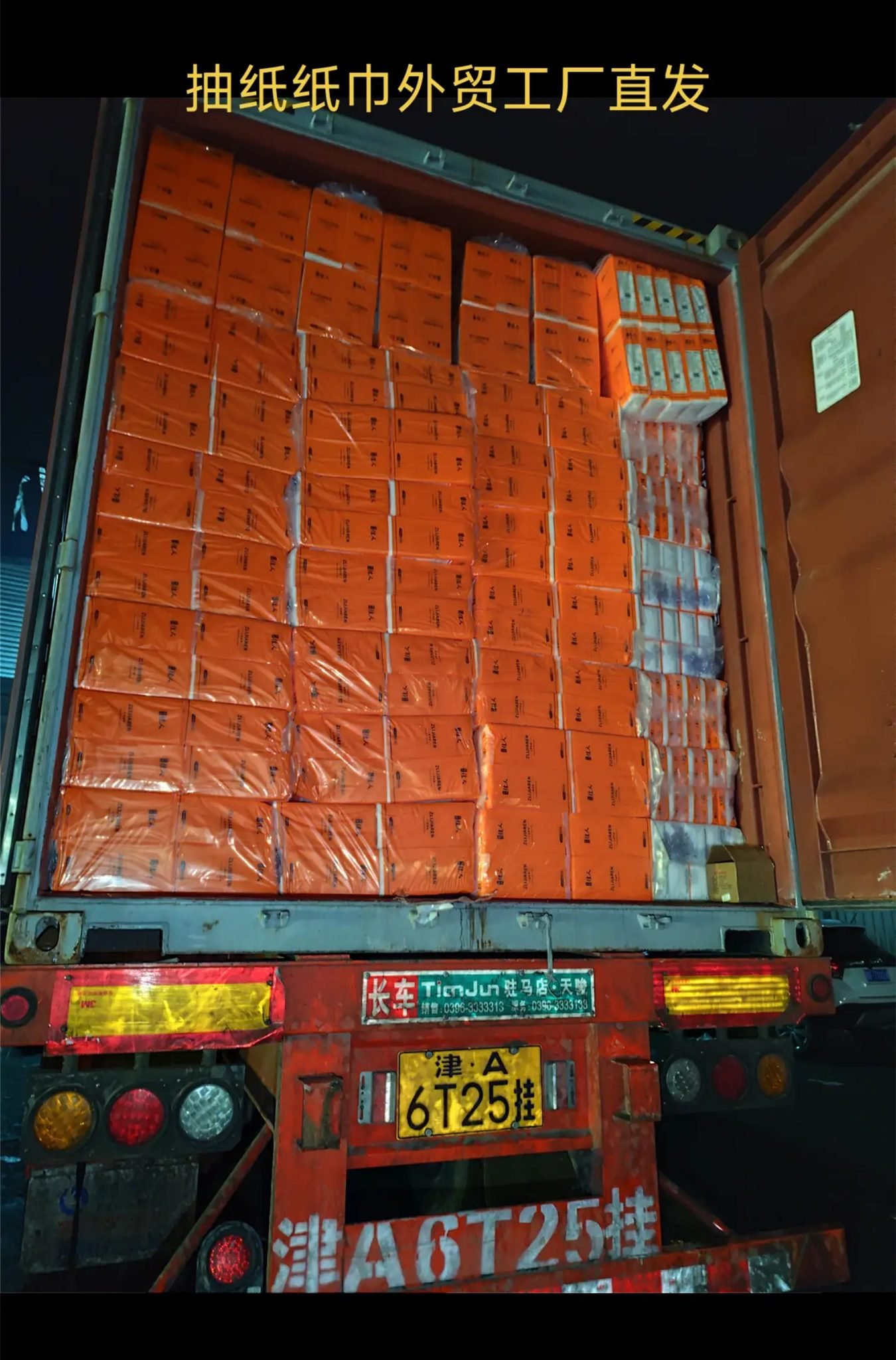
A fifth request does the heavy lifting for you: ask the factory to issue a loading plan for your SKUs — cartons per container and rolls per container, calculated, with the arithmetic shown. A converter that packs for export routinely knows its own cube utilisation per SKU; a converter that cannot produce that sheet is telling you the carton spec on your PO has never been pressure-tested against a container. White-label goods here ship from a shared 20GP, and custom-printed packaging moves from a single full 40’HQ, so the plan should name the container type it is computed for.
The Arithmetic Chain, With Nothing But Variables
Set the calculation out once and reuse it for every quote you will ever compare. Let V be the usable volume in cubic meters that your forwarder states for the booked container type. Let a carton measure l by w by h, so its packed volume is v. Let r be rolls per carton, and let F be the total container-denominated freight and charges you are paying under whatever term you trade on.
The naive first pass is one division: V divided by v, rounded down, gives cartons-per-container as a theoretical ceiling. Do not stop there, because ceiling arithmetic overstates reality — cartons are rectangular, doors are narrower than the box, walls and dunnage eat centimeters, and a tier count has to come out whole. The honest version mirrors the method the container-reference page itself walks: divide the container’s stated interior length, width and height by the corresponding carton dimension, round each result down, and multiply across, testing at least two stacking orientations because which one wins depends entirely on your carton’s proportions. Call the surviving figure C. Rolls per container N equals C multiplied by r. Freight per roll is then simply F divided by N. Add the per-unit duty and destination handling as separate terms, each with its own owner and its own page, and the landing cost is complete. As a sanity check, multiply C by the carton gross weight: with tissue that sum will sit well under the payload limit, which is the arithmetic signature that you are being charged for space, not mass.
Two quotes can now be compared the only way that matters. Carton A may cost more per piece than carton B and still land far cheaper per roll, because a denser pack or a better-nesting format lifts N. Rank suppliers on F divided by their own computed N, not on the carton price your broker first saw.
The Levers That Actually Move Rolls Per Container
Because the container rate is fixed, cost comes down only when N goes up. Four decisions do that, and each already has its own page on this site — this section lists them as levers and does not restate their mechanics.
The first is the roll itself. Coreless packing removes a cardboard tube from every roll’s centre, changes nesting behaviour in the carton, and is worked through — spec by spec, machine by machine — on the coreless versus cored comparison. The second is how the carton sits inside the carton: compression of the bundles, carton size trimmed to the pack, and nesting or interlock patterns that stop the bottom tier from being crushed decide how close to the volume ceiling a stuffing plan can actually get; that physical packing discipline belongs to the container loading and moisture-proof packing guide. The third is branding: printed cartons and printed inner bags arrive in their own formats with their own cube consequences, covered by the private-label carton and inner-bag page and the custom-printed logo packaging page — and note that white-label product ships from a shared 20GP while custom-printed packaging moves from a single full 40’HQ, which is itself a volume-efficiency decision before a single carton is designed. The fourth is order composition: mixing SKUs and choosing the container type against your order size is the subject of the 20GP versus 40HQ MOQ and lead-time guide. None of these levers changes the ocean rate. All of them change the denominator you divide it by.
Four Traps That Quietly Inflate a Per-Roll Cost
The first trap is weight thinking. Buyers fluent in dense commodities compare freight per kilogram, and paper makes that comparison meaningless: two loads of identical weight can differ by thousands of rolls depending on pack density. If a freight estimate reaches your spreadsheet as a per-kg number, convert it back to per-container or refuse it.
The second is the borrowed constant. Any supplier who answers a question about how much tissue fits a container with a fixed roll count is quoting their own SKUs, their own carton and their own stuffing style — not yours. A competitor’s number, or a number recycled from a factory that has never seen your pack size, should be treated as marketing, not data. Make each factory compute the figure on your PO line and put the arithmetic in writing; that single request also exposes whose carton spec is real. The third trap is mistaking brochure volume for usable volume, which the forwarder-letter check above defeats. The fourth is comparing quotes at the carton: rank only after running F divided by N on each.
What This Changes on Your Next Quote Request
Turn the method into a short, repeatable purchase-order routine. Before any freight is booked, require the four packaging fields plus a loading plan computed for your SKUs; require your forwarder’s written usable-volume figure for the booked container type; then run the chain — carton volume into container volume for the cartons ceiling, tiered dimensional fit for the real count, times rolls per carton, into the freight figure, landing at freight per roll. Goods from this mill move out of Tianjin Xingang under whichever of FOB, CIF, CFR or EXW your term is, and the quote-to-landing evidence chain that travels with them — origin paperwork, invoices and duty documents — is worked through on the China origin paperwork and duty chain page, while the hub that collects every buyer-side checklist this site maintains is the buyer resources library, where the PO-field request sheet above lives as a practical companion to this article.
Keep the boundaries honest and the arithmetic stays clean. If the dispute behind a quote is the unit price itself — pulp movement running ahead of a factory’s offer — that is a price-audit problem, answered separately in the pulp-price increase audit; this page is the freight-volume side of the same landed-cost picture and neither one restates the other. Who pays what segment is the Incoterms guide’s territory. The payment-terms risk of the transaction lives on the payment terms page, and the cost of a shipment that fails its promised window lives on the OTIF penalties page — none of those numbers belong inside the cube-out chain above, and a landed-cost model that quietly borrows theirs will double-count the same risk.
Frequently Asked Questions
What does cube-out mean when shipping tissue paper?
It means the container reaches its interior volume limit long before its weight limit. Tissue — rolls that are largely air, packed in cartons that are largely void — is the classic example. The commercial consequence is that a full-container freight rate, which is charged per box, is really being paid for space, so your landed cost per roll is decided by how many saleable rolls the stuffing plan fits, not by how heavy the load is.
What data must the factory provide before I can estimate landed cost?
Four fields per SKU on the purchase order: rolls per carton, external packed carton dimensions of length-width-height, net weight per carton, and the stacking or nesting plan the cartons will actually ship under. A fifth request does the work for you — a written loading plan, cartons per container and rolls per container, computed for your specific SKUs and container type. A quote that arrives without these fields cannot be turned into a per-roll landed cost at all.
How do I calculate the freight portion of landing cost per roll?
Take the usable container volume your forwarder states in writing, divide each interior dimension by the matching carton dimension, round each result down and multiply to get real cartons per container, then multiply by rolls per carton to get rolls per container. Divide your total container-denominated freight and charges by that roll count and you have freight per roll. Add duty and destination handling as separate per-unit terms with their own sources, and never replace the dimensional step with a simple volume division, because the ceiling figure ignores doors, walls and stacking loss.
Can I trust a rolls-per-container number another supplier gives me?
No, and asking that question is itself a negotiating tool. Any fixed number describes that factory’s own pack sizes, carton formats and stuffing style — not yours. Two suppliers whose cartons differ can fit markedly different roll counts in the same container. Make every factory compute the figure against your purchase order line and show its arithmetic; the supplier who cannot generate that sheet has told you something important about their carton spec.
What actually reduces my landed cost per roll on tissue?
Only decisions that raise rolls per container, since the ocean rate itself is fixed per box: coreless instead of cored packing where your dispensers allow, tighter bundles and nesting-friendly carton formats, honest compression to the packing the loading plan supports, the white-label versus custom-printed carton choice with its container minimums, and container-type decisions when one order mixes several SKUs. Each of these is a lever on the denominator — none of them is a discount on the freight invoice, and a forwarder who promises one on cube-out cargo is promising something the rate structure does not contain.
Video: “tissue paper manufacturing process” on the Top Source Paper channel (@topsourcepaper4025). It shows tissue converting and packaging where cartons are formed — not a container-stuffing calculation. Use it as context for where the four PO fields above originate: on this floor, at this line, before the loading plan is ever drawn.