Short answer: air freight tissue paper almost never wins on the numbers, because freight bills on chargeable weight and tissue is so low-density that its volumetric weight dwarfs its real weight. You fly it only when a deadline or a first approved article is worth more than the cargo itself. This page is for the buyer deciding whether to spend the money, not a shipping offer: Top Source Paper exports tissue by container ocean freight, and the air lane below is a decision you price with your own forwarder.
Someone suggests flying the tissue: a shelf is about to gap, a trade show is in three weeks, a buyer wants to hold the approved article before the sea window opens. The instinct is reasonable and the arithmetic usually is not, because tissue is one of the worst commodities ever loaded onto an aircraft and aircraft sell volume at a price that punishes exactly that.
Tissue Is Almost All Air: The Density Problem
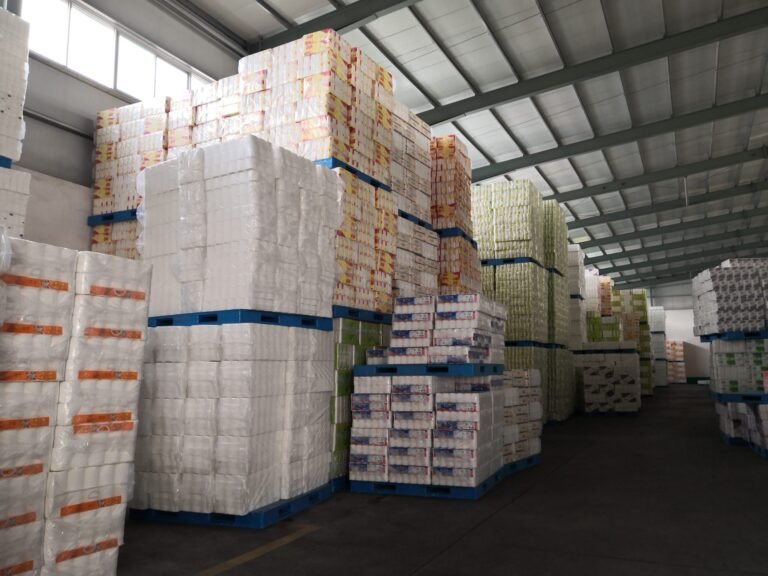
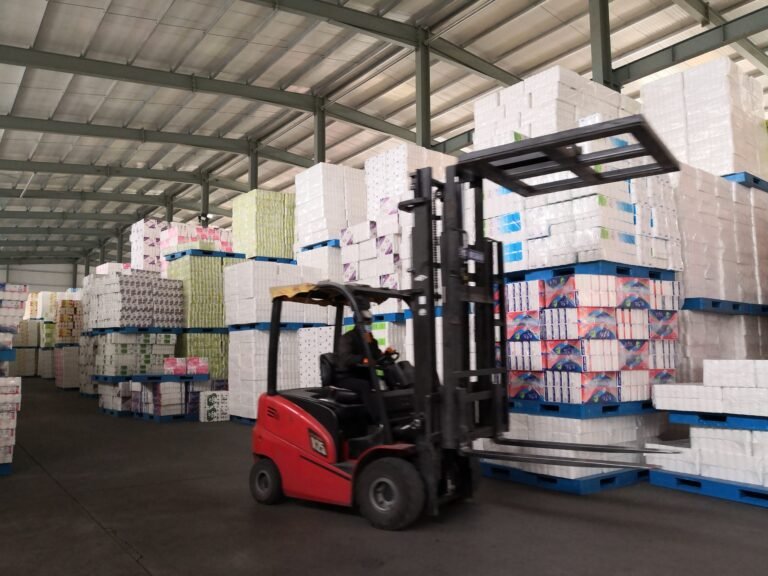
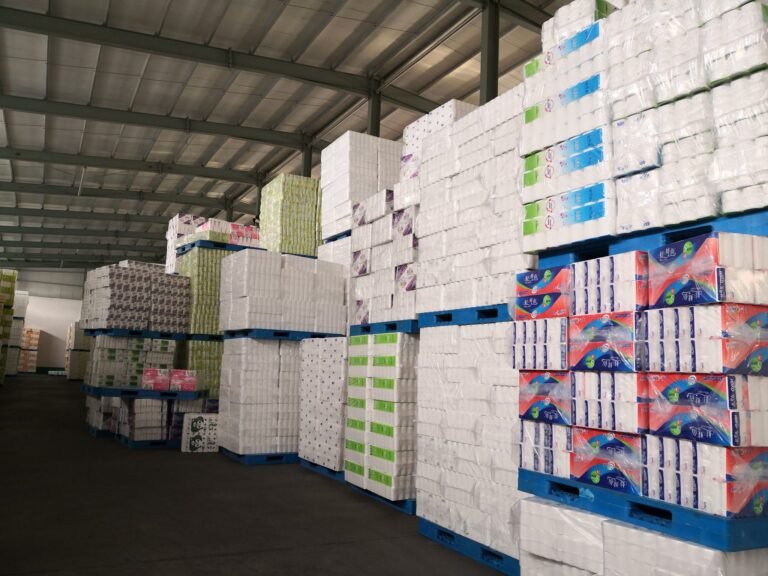
Ocean freight is bought by the box, so a tissue container is full of unused space long before it is anywhere near heavy – and that is exactly the condition an aircraft bills hardest. Every layer of the pack is void: a fibre web of 13 to 45 GSM across this plant’s range (standard toilet paper 13 to 18 GSM) wound around a core, boxed with air around it, palletised with more air around that. None of it weighs much; all of it occupies space. That asymmetry is the whole story: the cargo cheapest per cubic metre by sea, because the ocean rate is fixed per box, is the cargo most punishing per cubic metre by air, because air charges you for space, not mass.
The landing-cost page for cube-out tissue, how tissue cube-outs set your freight per roll, already walks the sea arithmetic: divide usable container volume by carton volume, round each fit down, multiply by rolls per carton, divide container freight by that count. Air freight uses identical physics with a different bill. That page owns the ocean side; this one carries the density logic straight up, where an aircraft applies it without mercy.
Chargeable Weight Without Mysticism: The Air Freight Tissue Paper Math
An airline does not bill the weight a carton sits at on a scale. It bills chargeable weight, the greater of two figures. The first is gross weight, what the platform scale reads with its packing. The second is volumetric weight, a stand-in for the space the shipment occupies in the hold, derived by multiplying the external dimensions and dividing by a volumetric divisor, or multiplying by a dimensional factor. IATA and the forwarders that follow its conventions set that divisor, a carrier-commercial number that moves with the lane and the season. It is not a plant fact; the only reliable version is the one your forwarder puts in writing for your exact cargo on your routing.
Here is the arithmetic in variables, so you can plug in your own figures. Let a packed carton measure length l, width w and height h in metres, so its volume v equals l times w times h. Let the divisor your forwarder states be D, so volumetric weight is v divided by D, and let scale weight be G. Chargeable weight C is the greater of v/D and G, and the invoice is C multiplied by the per-kilo rate the forwarder quotes for your lane, plus any fuel or security surcharges they name. As a clearly-labelled illustration only, not a factory standard: a carton measuring 0.60 by 0.40 by 0.30 metres is 0.072 cubic metres, holds 24 rolls, and weighs 4 kilograms; whether it bills near 4 kilograms or far above depends on the divisor your forwarder applies. The structure is the point: as density falls, v/D grows against G and the volume term starts the bill, so a facial-tissue carton that feels weightless gets billed as though it were heavy.
So the cube-out page’s packaging fields, carton dimensions, weight and stacking plan, are exactly the fields that feed the air calculation, and compression helps on both lanes: a tighter pack lowers v, lowers v/D, and lowers chargeable weight the same way it lowers freight per roll at sea. No air-specific trick, only density.
The Narrow List: When Air Freight Tissue Paper Is Defensible
Once you accept that air freight tissue paper loses on the numbers nearly every time, the honest question is which four situations are worth losing on purpose. The first is an approved first article a customer must physically hold before they sign: when a decision hinges on hand-feel of the actual sheet, the embossing and the printed carton, flying one small set of the real product is cheap insurance against a much larger mistake. This is the same sample that locking the approved sample before production protects, just delivered in days instead of a sea window.
The second is a fixed external deadline: a trade-show stand, a launch shelf date, a buyer’s line that stops without the goods. The third is a genuine stock-out where the lost margin and account relationship clearly cost more than the freight. The fourth is a short replenishment of an in-market custom-printed SKU whose plates are already made, not a first production. What these share: the value protected is a decision, a deadline or a relationship, not the tissue; if the value you name is a lower per-unit freight cost, air has already lost.
Cheaper Alternatives, Ranked by What a Day Actually Costs
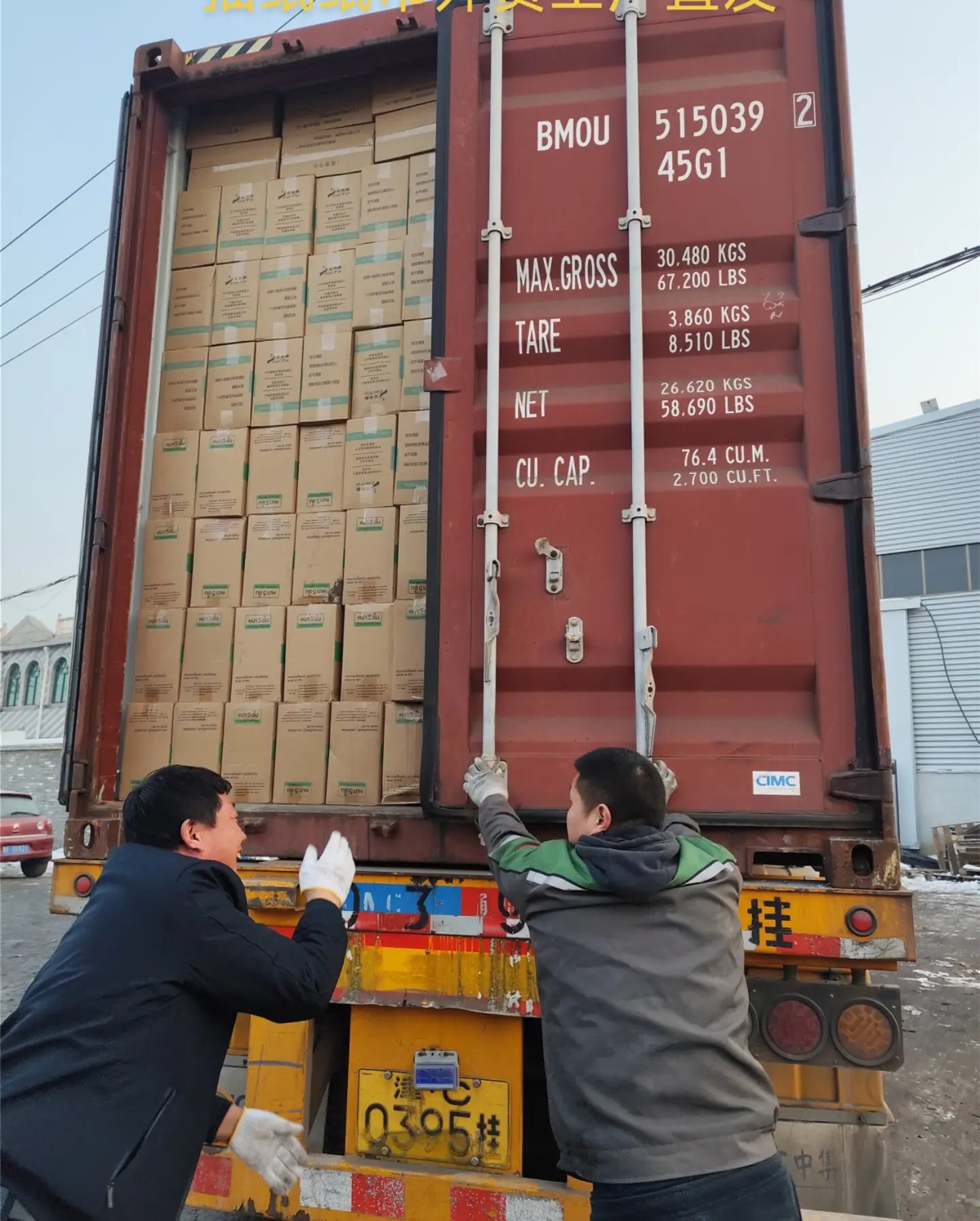
Before you buy speed from an aircraft, buy it from the options that cost less per day saved. Physical samples need no air-waybill conversation: this plant produces samples in 1 to 3 working days and ships them by express courier, the DHL/FedEx/UPS lane the buyer’s guides already publish, and the sample cost is credited against the first production order.
The next tier is time bought inside production, not transport. If the deadline still needs a full container, the move is a faster production slot plus normal sea freight, or expediting the reorder rather than the first run: this mill publishes first production at 25 to 30 working days including packaging plate-making, and reorders at 20 to 25, so a repeat lands earlier without touching an aircraft. Then come load composition and inventory. Several SKUs can share one full container, which this site’s mixed-container guide already works through; buying below a full container instead means less-than-container consolidation, a forwarder service you price with your own forwarder rather than something the mill’s container model publishes. Holding stock at destination is the third lever, and the honest cost of it is on what a distributor’s warehouse does to tissue over months, while the call-off structure decides how much volume you commit to in advance. The table makes the trade-offs explicit.
| Option | Typical use | What you control | What it costs you in risk |
|---|---|---|---|
| Express courier parcel | Samples and a first approved article | Small weight; 1 to 3 working-day production; cost credited to first order | Only covers parcels, not sellable volume |
| Expedited production plus sea | A deadline a full order must still meet | Reorder at 20 to 25 versus first run at 25 to 30 working days | Sailings and port congestion stay with you |
| LCL / consolidated groupage | Urgent partial quantity of an existing SKU | Pay for space, not a whole box | Mixed-cargo handling raises damage and delay exposure |
| Air freight | A decision, deadline, or stock-out worth more than the cargo | Chargeable weight and carton dimensions | Volumetric billing on low-density tissue; high absolute spend |
| Full container ocean | Standing replenishment at best cost per unit | Cube-out and rolls per container | Slowest; lead time is the price you pay |
What Changes in Handling and Paperwork When Cargo Goes by Air
Air changes the physical conversation, and most buyers do not expect it. On an ocean container the plant’s export protection is tuned for the hold: heavy-duty moisture-proof corrugated master cartons, fumigation-free pallets, high-tensile strapping, and a container checked for air- and water-tightness before stuffing. That system is built for a long humid sea passage and is not automatically air-ready. Aircraft and their ground handlers impose their own limits on unit height and weight, on pallet and build-up type, and on how cargo is dimensioned at the terminal. A carton that nests cleanly in a container can cube badly on an air pallet, and a shipment quoted as a loose stack may be re-dimensioned into a build-up that changes the chargeable weight before it lifts. The moisture-proof container packing guide explains why the ocean standard exists; confirm the air build-up with the forwarder, not the factory.
Paperwork shifts too. Air waybills, security screening and destination handling run on a different clock and set of owners than an ocean bill of lading, and who pays which segment is what Incoterms settle. That split is the subject of the FOB, CIF and EXW guide for tissue imports, and it holds whether the box moves by ship or plane. One thing does not change: this plant’s published model is container ocean freight out of Tianjin Xingang on FOB, CIF, CFR or EXW. Air is your forwarder’s service and your decision, not a standard offer here.

Ask the Forwarder and the Factory in Parallel
The mistake that turns a good air decision into a bad bill is quoting the wrong cargo. Run two requests in parallel and book only when both are in writing. To the factory: the four PO fields for the exact SKU you might fly, rolls per carton, external packed carton dimensions, weight per carton and the stacking plan the goods ship under. To your forwarder: the chargeable-weight divisor or dimensional factor for your lane, the per-kilo rate for your volume band, the fuel and security surcharges, the terminal dimensioning method, and the acceptance limits on carton and pallet size.
Then do the arithmetic yourself, factory dimensions on one side, forwarder divisor and rate on the other; the number is trustworthy because every input is yours. Do not accept a per-kilo figure that cannot be converted back to chargeable weight on your carton, and do not trust a divisor a competitor recites, because it was set for their cargo on their routing. The buyer-resources library holds the request sheet that keeps both sides honest.
When to Say No, and How to Write the Rule Before You Need It
Decide in advance, on paper, when flying tissue is off the table, because a decision made under deadline pressure always looks justified. A stock-out is the cheaper answer when the missing quantity is a full sellable volume rather than a sample or short replenishment, when the per-unit freight after volumetric billing exceeds the margin you protect, or when the real problem is that you never reserved capacity or held safety stock. The plane does not fix that planning gap; it just pays for it at a premium every repeat.
Write the rule as a short clause: air freight is approved only when a named, dated external commitment, a customer signature, or a documented stock-out cannot be met by express courier for samples, by a reordered production slot at 20 to 25 working days, or by a consolidated partial load. If none of those cheaper options exists, and the value protected is a relationship rather than a unit cost, the exception is real. If the trigger is only that the goods feel late, decline it and fix the forecast or the destination safety stock instead. For a commodity this light, you almost never fly the tissue; you fly the decision.

Frequently Asked Questions
Why is air freight so expensive for tissue paper specifically?
Because airlines bill chargeable weight, the greater of a shipment’s gross weight and its volumetric weight. Tissue is low-density: rolls are mostly air, packed in cartons that are mostly void, so the volumetric figure calculated from the carton dimensions dwarfs the scale weight. You pay for space, at an air rate, for cargo that weighs almost nothing, which is why tissue that is cheap per cubic metre at sea is punishing per cubic metre by air.
What numbers do I need before anyone quotes an air shipment?
Four fields from the factory for the exact SKU: rolls per carton, external packed carton length, width and height, net or gross weight per carton, and the stacking or nesting plan. Then from your forwarder: the volumetric divisor or dimensional factor for your lane, the per-kilo rate for your volume band, any surcharges, and the terminal dimensioning method. Multiply dimensions, apply the divisor, compare with scale weight, take the greater, times the rate. Every figure is yours or your forwarder’s, not a competitor’s.
When is flying tissue the right call instead of the sea option?
Only when the value protected is a decision, a deadline or a relationship rather than a unit cost. The defensible cases are a first approved article a customer must hold, a fixed trade-show or launch date, a genuine stock-out whose lost margin exceeds the freight, and a short replenishment of an in-market custom-printed SKU whose plates are already made. If the goal is cheaper freight per roll, air has already lost; go back to the ocean cube-out method.
Does this factory offer air freight as a service?
No. The published model is container ocean freight out of Tianjin Xingang on FOB, CIF, CFR or EXW terms, with plain and white-label programs from a consolidated 20GP and custom-printed cartons or outer sleeves from a full 40’HQ. Physical samples go by express courier in 1 to 3 working days production. Any air move is arranged and priced by you with your own forwarder; this page is a buyer’s decision guide, not an air service offer.