Payment Terms for Chinese Tissue Factories: What Importers Actually Negotiate on a First Order
Short answer: the “30% deposit, 70% before shipment” line every Chinese tissue mill quotes is a starting habit, not a law. What protects both sides on a first container is a schedule where the balance releases against evidence you can verify, not against the factory’s say-so. The practical structure experienced importers push for is a smaller deposit (20 to 30 percent), a balance tied to an independent pre-shipment inspection release rather than to the goods leaving the gate, and a written product specification attached to the commercial contract so there is a defined thing the payment is buying. A letter of credit is worth its bank fees only when the order value or the trust gap is large enough that a documentary mismatch costs less than a bad container; on a first small private-label order it is usually overkill.
You have compared five quotes and the factories all want the same money arrangement. That is the point: on payment structure, most Chinese tissue converters default to the same deposit-and-balance rhythm because it is what banks, what their own pulp suppliers, and what a decade of orders have trained them to ask for. Your job is not to beat that default down to zero. It is to move the risk so the part of your money you have not yet earned back is the part tied to a container you can prove is correct before you wire it. This guide walks through the deposit ratio, the balance trigger, when to use a letter of credit, and the contract language that makes any of it enforceable.
The Three Numbers That Define a Tissue Order’s Payment Risk
Every payment discussion collapses to three decisions. The first is the deposit size. The deposit is the factory’s coverage against your walking away while its line is already running your jumbo rolls; it is not a reward for being the bigger party, so a deposit much above one third of the invoice rarely buys you extra security on a repeat-friendly order. The second is what releases the balance. The default answer, “before shipment,” means you pay the bulk while the goods are still on the factory floor and you have no independent proof they are right. The third is how the spec gets into the contract. A payment schedule with no attached technical spec is a payment schedule for an undefined product; you cannot dispute a non-conforming container if the contract never said what conforming meant. The spec language is the same one you settle before production in the approval-sample lock guide, and your minimum-order math in the 20GP versus 40HQ MOQ piece sets the dollar value these percentages sit on.
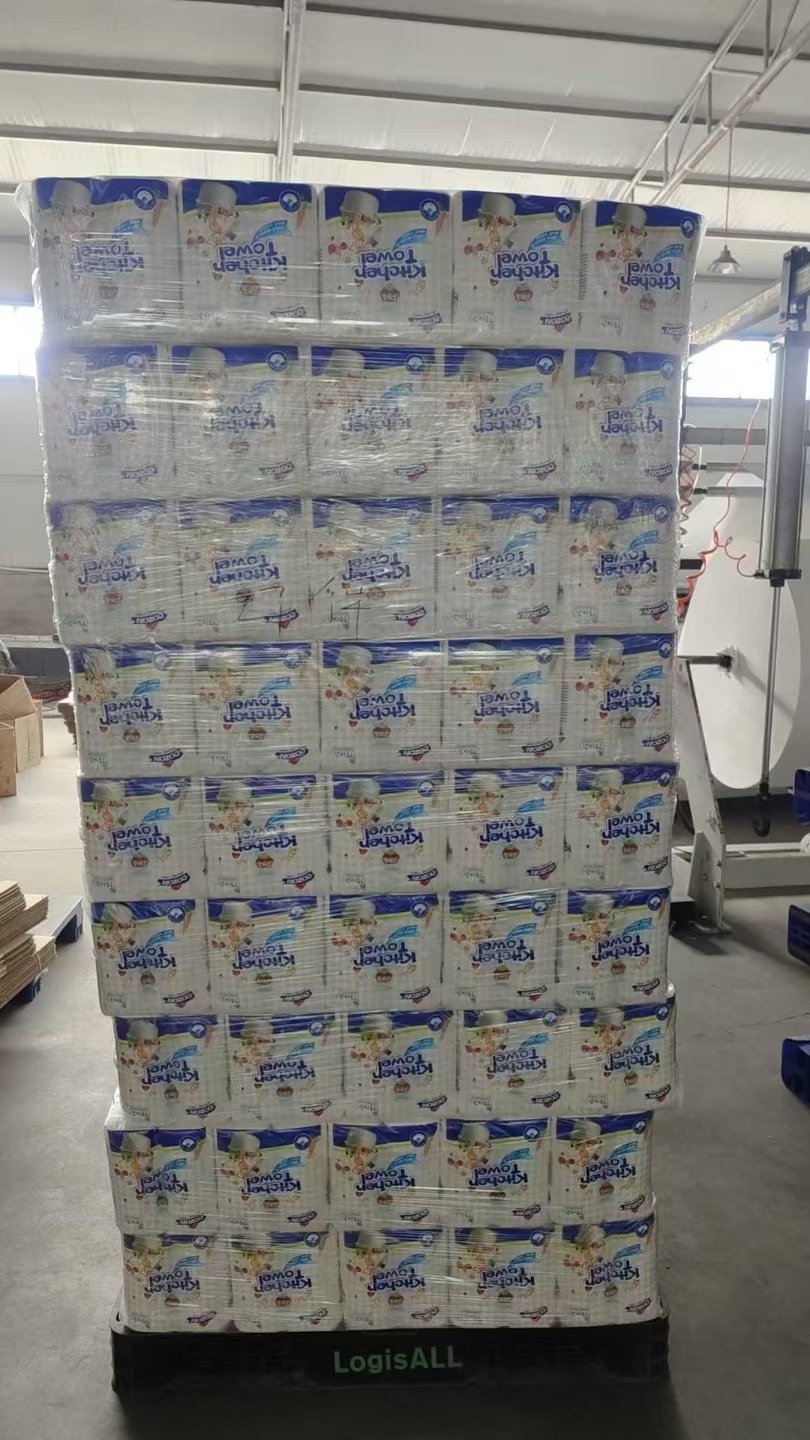
Deposit and Balance: How Experienced Importers Split the Money
For a first private-label container, the structure that holds up in practice looks like this: 20 to 30 percent deposit on the signed contract, and the 70 to 80 percent balance released against a third-party inspection report that matches the spec, not against a bill of lading the factory already controls. The logic is simple. The deposit covers the mill’s committed pulp and production time. The inspection-conditioned balance covers the thing the deposit cannot: the right GSM, the right sheet count, the right packaging, confirmed by someone whose report both sides can point to. If the factory genuinely believes its own production is correct, it loses nothing by tying the balance to a passing inspection; it only gains your trust. If it balks at that specific clause, the balk is a signal in itself, and the way you read that signal is the same way you read factory-versus-trader claims in the paper-specific proofs article.
When a Letter of Credit Earns Its Fees
A documentary letter of credit moves the trust from the factory’s word to a bank’s document check, which sounds safer until the first discrepancy bites your cash. LCs are worth it when the order is large enough, the relationship is genuinely new, or the goods must clear on terms that leave you no local pressure; they are usually poor value on a small first private-label trial where the bank fees, the document-mismatch risk, and the rigidity cost more than the exposure they insure. If your exposure is one container you can afford to lose and one factory you can re-quote next quarter, an inspection-conditioned balance on a straight wire does the same job cheaper. If your exposure is three containers, a signed annual commitment, and a factory you have never met, that is when a credit structured to tolerate small document differences starts to earn its fees. The Incoterms in your quote, covered in the FOB versus CIF versus EXW guide, decide which documents the credit must check, so fix the Incoterm before you fix the LC wording. The official Incoterms 2020 rule set is published by the International Chamber of Commerce at iccwbo.org/incoterms-rules; quote the exact rule (FOB, CIF, etc.) in the credit so the bank and the factory are not each imagining a different term.
The Contract Clauses That Make Payment Terms Real
An informal WeChat agreement that mirrors the 30/70 quote is the most dangerous payment document you can sign, because it is enforceable on the deposit and silent on the inspection. A commercial contract that actually protects the split needs four things written down together: the spec reference (the same approval sample and technical sheet, attached as an exhibit), the inspection clause (who inspects, against what, and what a passing report unlocks), a tolerance and remedy line (what happens if the inspection fails, who reworks, who waits, and at whose cost), and a delivery window tied to the balance, so “before shipment” has a date rather than a vibe. The supplier comparison scorecard is the place to record, SKU by SKU and factory by factory, which terms each supplier actually agreed, because after three suppliers the verbal version will blur. The same clause discipline that locks an OTIF date in the On-Time-In-Full article is what stops the balance from being paid against a late or partial container.
How the Negotiation Sequence Should Run
Order of operations decides whether the terms hold. Agree the technical spec and the approval sample first, because the payment clause needs a defined thing to reference. Agree the Incoterm second, because it decides the documents your release trigger will read. Agree the payment schedule third, as the mechanism that enforces the first two. Factories that start the conversation with the deposit percentage are testing whether you will let the money tail wag the product dog; a buyer who answers “let’s fix the sample and the Incoterm, then we’ll talk money” sets the whole relationship on evidence instead of pressure. Expect the mill to concede the inspection-release point faster than you think, because most established Chinese converters have passed inspections for European and North American chains before and know that a passing report is also proof of their own competence; the clause costs them nothing when their QC is real, and that is precisely why its rejection is information.
There is also a working-capital angle worth pricing consciously. If you can pay a larger deposit (say 40 percent) in exchange for a lower unit price, you are financing the mill’s pulp purchase with your cash; run that trade against your own cost of capital before you accept it, and put any resulting price change through the same quote audit you would use on any discount, the way the low-quote audit guide teaches, so a “better price” is not actually better once the deposit float, inspection fees, and bank charges are all counted.
Three Traps in “Before Shipment” Language
The first trap is that the factory defines “shipment” loosely enough to call the balance due when the goods merely finish, not when they leave, which hands you no buffer. The second is pre-shipment inspection you arranged but never made the contractual release condition; the mill can still demand the balance while your own report sits unanswered. The third is the deposit itself, paid to a trading company whose bank account is not the factory’s, leaving you with a wire to an intermediary and no production claim on the line that actually ran your rolls. Each trap is a wording problem before it is a money problem: name the trigger event, name who performs the inspection that releases the balance, and name the entity the deposit is paid to.
FAQ
Is 30 percent deposit standard for Chinese tissue factories?
Yes, it is the common default across converting and paper trades. You can usually negotiate the balance release rather than the deposit percentage, because the deposit is what protects the mill’s committed raw material, and that is a real cost they will not absorb for you.
Should I pay a balance before or after the goods are inspected?
After a passing independent inspection. The single most useful change you can make to a 30/70 quote is moving the balance trigger from “before shipment” to “on release against a conforming inspection report,” with the spec and tolerance written into the contract.
Is a letter of credit safer than a direct wire?
It is different, not automatically safer. An LC shifts trust to a bank’s document check, which protects large orders but costs you rigidity and fees on small ones. On a first private-label trial an inspection-conditioned wire on a proper contract usually does the job cheaper.
Can a factory hold my goods if I refuse to pay the balance?
Yes. That is the whole reason the inspection clause matters: make the release tied to an objective pass, so refusing to pay becomes about a failed report, not your opinion, and the factory cannot hold conforming goods hostage for a non-conforming complaint.
Does the Incoterm change who bears the payment risk?
It changes which documents prove delivery, so yes. FOB and CIF move the point of cost and risk transfer at different moments, and your LC or wire trigger should match the Incoterm you quoted; read the official rule text from the ICC rather than relying on a quote header.