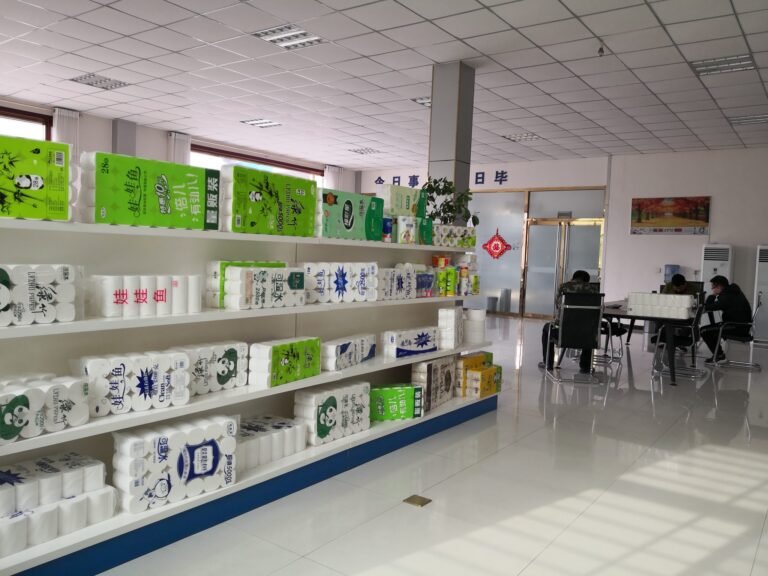
Picture the shelf you are trying to win. A buyer for a regional grocery chain lifts two rolls that weigh the same and feel the same, and chooses the one whose carton looks like a brand rather than a commodity. That decision is made entirely above the paper, in the packaging and the finish, and it is the reason custom printed toilet paper is a private-label conversation before it is a printing conversation. The roll is the product; the print is the position.
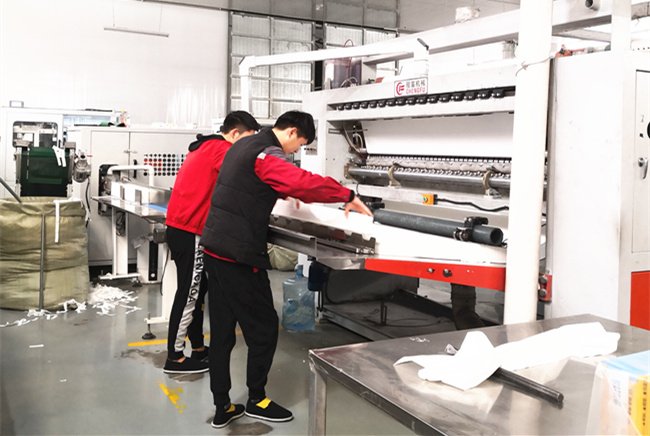
This guide sets out where a logo can actually live on a toilet paper order, what each branding surface costs you in minimum order and lead time, and how to send artwork that survives pre-press without a surprise. It is written from the converting side at Top Source Paper, an OEM and private-label tissue factory running 100% virgin wood pulp at Daceying, Mancheng, Baoding, with more than 18 years in paper-making and converting, shipping containers from Tianjin Xingang Port.
Where a Logo Can Actually Live on a Toilet Paper Order
Branding a tissue order is not one decision but a set of surfaces, each with its own threshold and its own effect at the point of sale. Some are packaging surfaces, some are on the sheet itself, and one is inside the roll. Knowing which is which stops you promising a buyer something the format cannot carry.
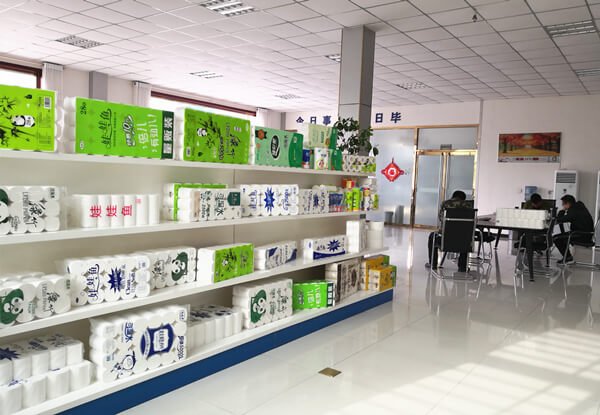
- The master carton. The outer shipping case. Printed cartons are the strongest brand surface in the order because they face the buyer, the warehouse and the shelf-back, and they are a standard part of our custom private-label programme.
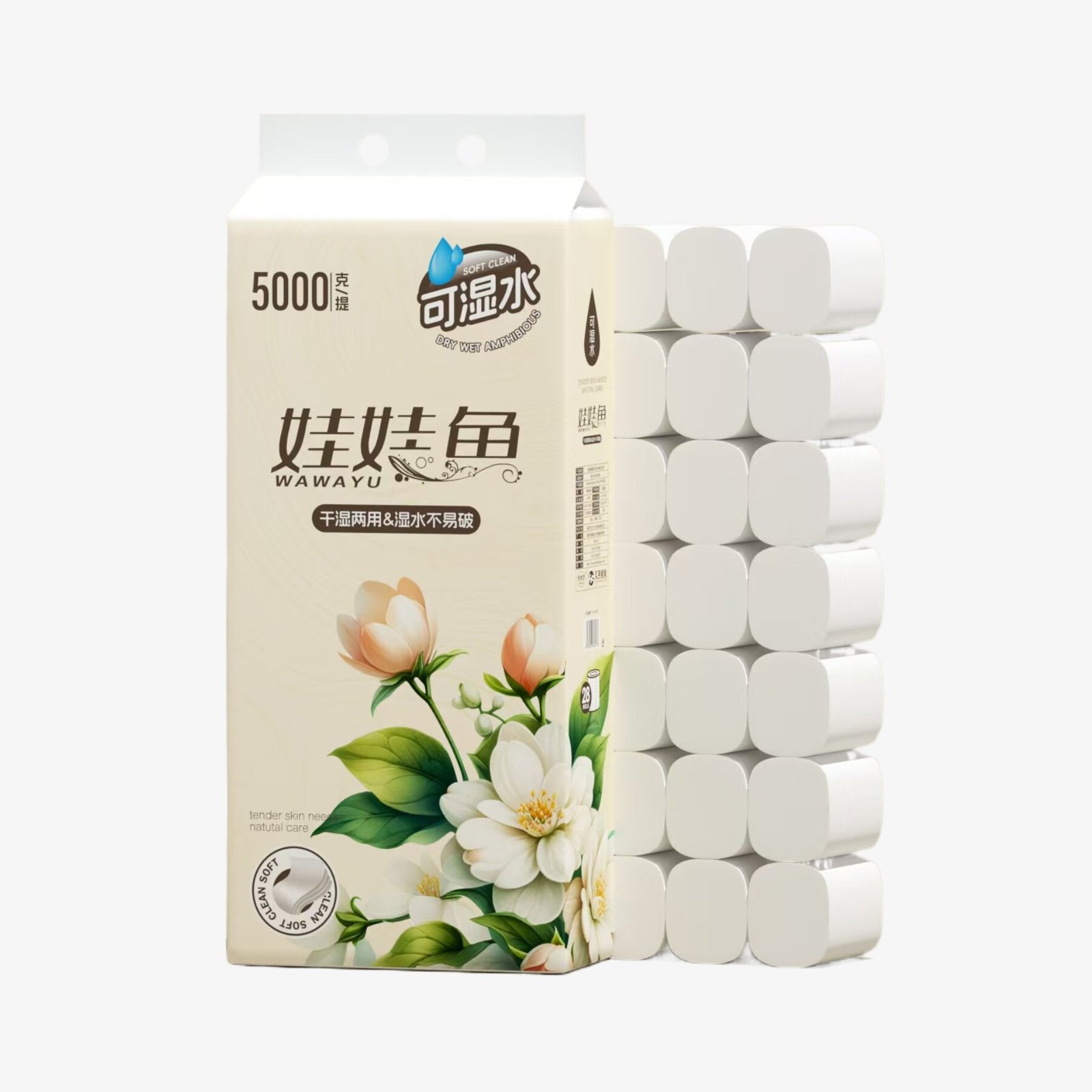
- The inner bag or wrap. The film or bag that holds the consumer-facing multipack. Custom printed inner bags carry the artwork the shopper actually reads, and they are included in the custom-print route.
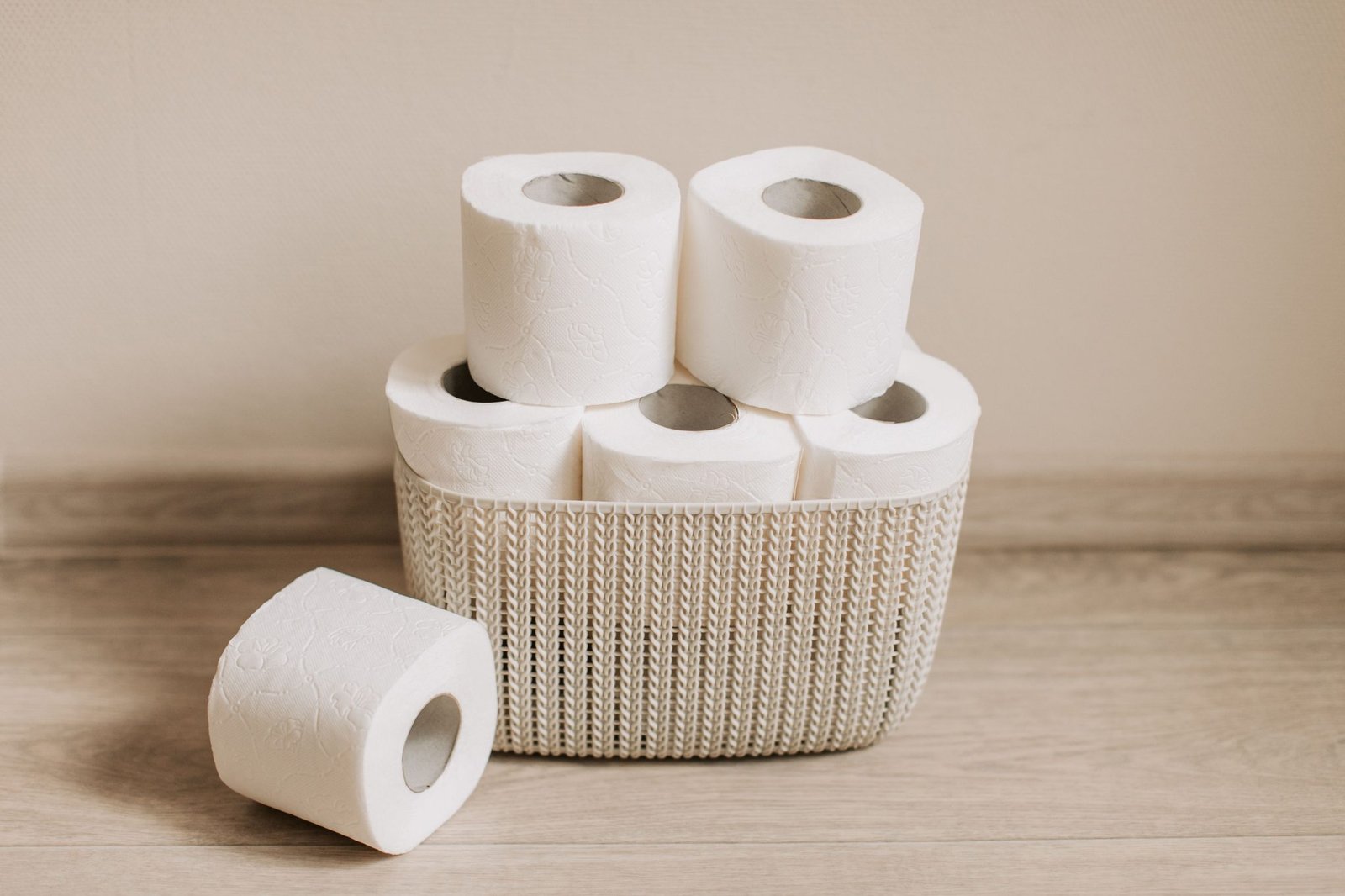
- Embossing on the sheet. A pattern pressed into the tissue itself. This is a brand surface you can own through a proprietary pattern, and it doubles as a performance feature.
- The core. The cardboard tube inside the roll, which can carry print in some builds. Confirm availability with the factory, since core printing is a build-specific option rather than a line default.
- Direct print on the tissue. Ink applied to the sheet itself. This is a specialist option; confirm feasibility, colour count and ink basis with the factory before you design around it, because it is not a standard toilet-paper default.
For most private-label brands the winning combination is a printed master carton plus a printed inner wrap plus a signature emboss. That trio is fully supported on our custom route and gives you brand presence at three touchpoints without betting the identity on a specialist tissue-print process.
Custom Printed Packaging: Carton and Inner Bag
Packaging is where a private label earns its shelf presence, and it is the part of the order with the highest minimum. Plain or white-label product with your own labelling ships from a single 20GP container. Fully custom printed cartons and printed inner bags run at one full 40’HQ container, because the plate-making and the print run only make economic sense at that scale. That threshold is not a hurdle to design around; it is the point at which custom packaging stops being a cost and starts being an asset.
The asset part is the artwork archive. Your carton and bag artwork is sealed and stored as a client-specific file, so a repeat order does not pay the plate cost again and does not wait for pre-press a second time. For a brand that reorders on a cycle, that removes both a fee and a delay from every subsequent container, which is where the custom route pays for itself over a year of orders.
Two practical points on packaging design. First, the carton is a structural component as well as a printed one, so the board specification and the print are decided together; confirm the carton build with the factory rather than assuming a standard case takes heavy artwork without a spec change. Second, on ocean freight the packaging is also your moisture barrier. Our export standard is thickened moisture-proof corrugated cartons, fumigation-free pallets and high-tensile strapping, with container airtightness and watertightness checked before loading, so the print you paid for arrives in the condition it left.
Embossing as a Brand Surface You Can Own
Embossing is the most underused branding tool in tissue, because it is the one a competitor cannot copy from your carton artwork. Our line runs three embossing families. Micro embossing controls surface feel and apparent bulk. Edge embossing keeps the sheet edge from delaminating so the roll does not fray into loose plies. And a three-dimensional deco or point-to-point pattern adds grip, absorbency and a visible signature across the sheet.
A proprietary embossing pattern does two jobs at once. It reads as a brand mark on the sheet the moment a user pulls it, and it changes how the paper performs, since a point-to-point pattern bonds the plies and lifts absorbency. That combination is what separates a private label that looks engineered from one that looks generic. Specify the pattern family you want and ask to see it on a sample under the ply and GSM you intend to order.
The Product Under the Print
Branding cannot rescue a weak sheet, and a buyer who feels a thin, dusty roll once will not reorder the carton however good it looks. Under the print, the specification is the same discipline as any virgin-pulp order. We build 1-ply, 2-ply and 3-ply, including multi-layer composite bonding, and the portfolio runs 13 to 45 GSM across the tissue range, with standard toilet rolls at 13 to 18 GSM. The paper is 100% virgin wood pulp with no recovered content, produced without fluorescent brightening agents and without harmful chemical additives, and it is water-soluble and biodegradable.
Quote ply and GSM together, not separately. A 3-ply built light and a 2-ply built heavy can feel very different, and the number that matters to your buyer is the hand-feel and the sheet count they experience, not the ply name on the carton. Ask the mill what a given ply-and-GSM combination produces before you lock the artwork that describes it.
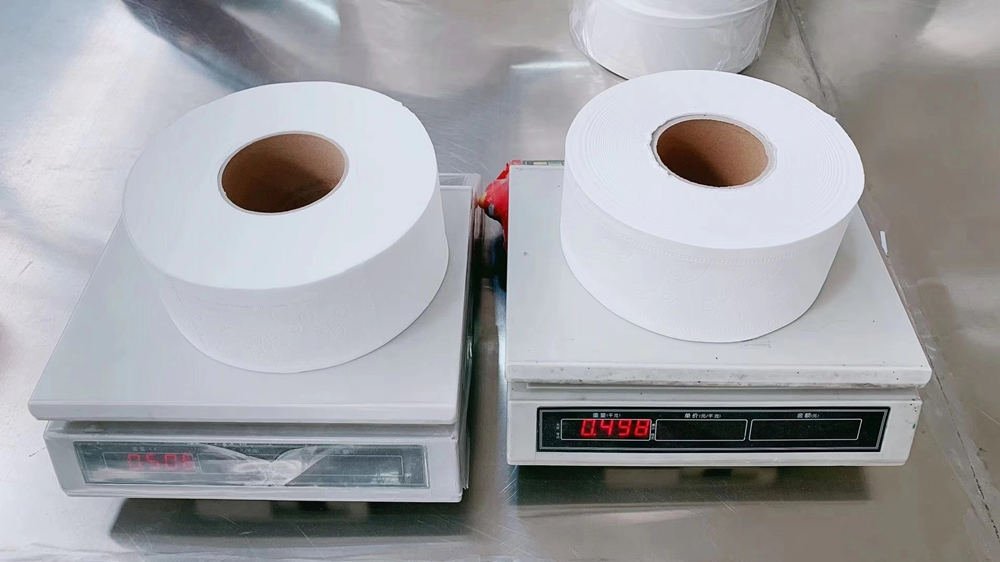
Verification is what lets you print a claim on the carton and defend it. Every shipment carries a 100% virgin pulp COA covering tensile strength, brightness and virgin-fiber verification, plus a wet-tensile and zero-dust test video pack and loading and moisture-proof packing photographs. If your packaging says “100% virgin,” the COA is the document that proves it to a retailer or an auditor.
MOQ, Plate-Making and Lead Time
The commercial frame, stated plainly so you can plan a launch. Sampling and small-sample dispatch takes 1 to 3 working days, which means you can hold a printed sample in your hands quickly even though the full order takes longer. First mass production runs 25 to 30 working days, and that window includes packaging plate-making, sample approval and outer-carton printing, not just converting. Repeat orders run 20 to 25 working days, with plate fees waived on archived artwork. Terms are FOB, CIF, CFR or EXW ex Tianjin Xingang Port, with 30% T/T deposit and 70% balance before shipment.
Read the first-production window as an approval timeline rather than a manufacturing one. Plate-making and proofing sit inside it and wait on your sign-off, so a brand that turns proofs around in a week protects its launch date, while a brand that lets a proof sit for a month loses the window and blames the factory. Build your internal review cycle into the schedule before you commit to a shelf date.
Artwork and Pre-Press: What to Send
Most custom-print delays are artwork delays, and almost all of them are avoidable if you send the right files the first time. This is a buyer-side checklist rather than a set of fixed numbers, because the exact specification depends on the print process the factory confirms for your carton and wrap.
- Supply vector artwork for logos and text so the plate can be made at any scale without softening edges.
- Specify colours against a recognised standard the factory can match, and confirm how many colours your carton and wrap design uses before finalising.
- Include bleed, safe margins and dieline on the carton layout, and ask the factory for their carton dieline rather than guessing it.
- Send a physical or digital reference for any colour that must match an existing brand asset exactly.
- Approve a printed proof before mass production; the 1 to 3 working day sampling window exists for exactly this step.
The proof approval is the gate. Do not release mass production on a screen mock-up, because a screen cannot show you how ink sits on moisture-proof board or how an emboss reads under real light. Ask for the printed proof and the emboss sample together and sign off both.
Your Custom-Print Action Roadmap
Here is the sequence that takes a private-label toilet paper brand from idea to a container on the water, without the usual stalls.
- Step 1 – Fix the sheet first. Decide ply and target GSM, and confirm the hand-feel on a sample. The product under the print is the reorder driver.
- Step 2 – Choose your brand surfaces. Printed master carton, printed inner wrap, and a signature emboss are the supported trio; add core or direct-tissue print only if the factory confirms it.
- Step 3 – Confirm the commercial frame. Custom print runs at one 40’HQ; white-label from one 20GP. Match the order to your launch volume.
- Step 4 – Send clean artwork and get the dieline. Vector files, a recognised colour standard, and the factory’s carton dieline.
- Step 5 – Approve the printed proof and emboss sample. Use the 1 to 3 day sampling window; never skip this gate.
- Step 6 – Schedule first production. 25 to 30 working days including plate-making, with your review cycle built in. Repeats run 20 to 25 days with plate fees waived.
Follow that order and the artwork archive does the heavy lifting on every reorder after the first. For the model decision behind the brand, see our OEM versus private label comparison, and for the full launch sequence the private label tissue launch guide walks it end to end. The OEM and private label programme page sets out the customisation range, the custom printed napkins guide covers the same discipline for food-service branding, and the factory profile covers capacity, QC and export terms.
Roll print is one layer of the brand system; the carton and inner-bag layers are covered in private label tissue packaging.
Frequently Asked Questions
What is the minimum order for custom printed toilet paper?
Fully custom printed cartons and inner bags run at one full 40’HQ container, because plate-making and the print run only make sense at that scale. White-label or plain product with your own labelling ships from a single 20GP container.
Can my logo be printed directly on the tissue sheet?
Direct print on the tissue is a specialist option rather than a toilet-paper default, so confirm feasibility, colour count and ink basis with the factory first. The reliably supported brand surfaces are the printed master carton, the printed inner wrap and a proprietary emboss on the sheet.
How long does a custom printed order take?
Samples dispatch in 1 to 3 working days. First mass production runs 25 to 30 working days including packaging plate-making, sample approval and outer-carton printing. Repeat orders run 20 to 25 working days with plate fees waived on archived artwork.
Do I pay the plate fee again on a reorder?
No. Your carton and packaging artwork is sealed and archived as a client-specific file, so a repeat order does not pay the plate cost again and does not wait for pre-press a second time.
What artwork should I send to avoid pre-press delays?
Send vector logos and text, specify colours against a recognised standard, include bleed and safe margins on the factory’s carton dieline, and approve a printed proof plus an emboss sample before mass production.