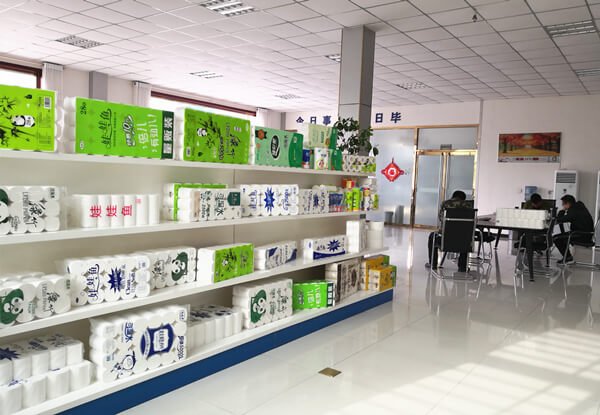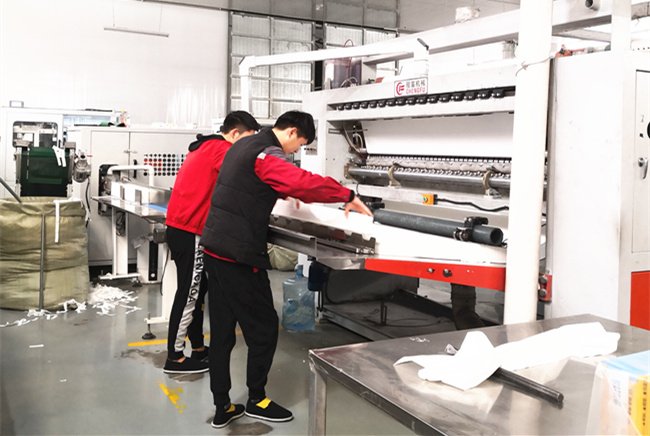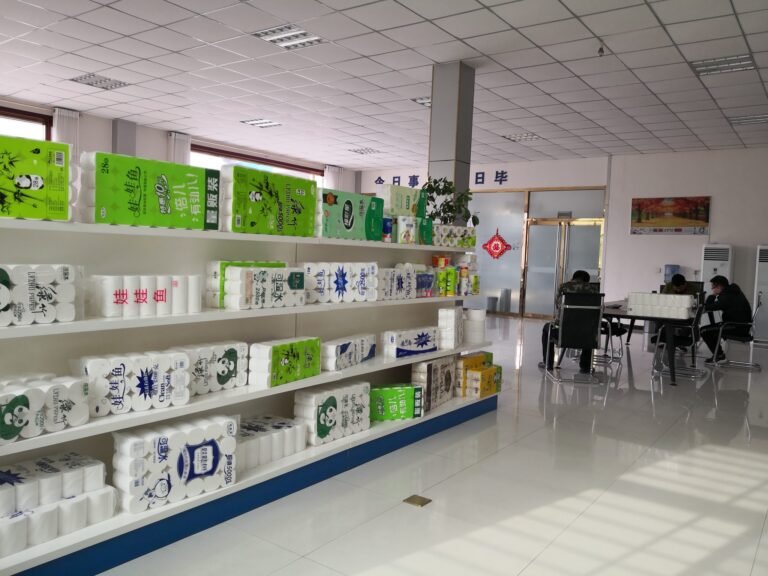
Private label tissue succeeds or fails before the paper is ever unwrapped. The master carton carries your brand through a port, a distribution warehouse, and a retail back room; the inner bag decides whether the product arrives soft or damp; the printed sleeve decides whether a shelf browser picks you up. Most brand owners specify the tissue in detail and leave the packaging to the supplier’s default — then absorb the consequences in returns and reorders that never happen.
This guide takes private label tissue packaging apart layer by layer — cartons, inner bags, print, and pallet systems — from the side of the factory that builds them, including the MOQ, lead-time, and plate-archive mechanics that decide what a first-time importer can realistically order.
The Three Layers of Tissue Packaging
Export tissue packaging is a stack of three decisions. The retail unit (box, soft pack, wrapped roll) faces the shopper. The inner bag or bundle film faces the product and controls moisture and dust. The master carton faces the freight. Each layer carries different specification items, and confusion between them is where quotes go wrong: the factory can print the retail unit, the inner film, and the carton — but they are priced and tooled separately.
Outer Cartons: Board, Print, and Pack Rate
For ocean freight we build on high-strength, thickened, waterproof-treated corrugated board, because a carton that softens through weeks of humid transit is a collapse waiting to happen at the consignee’s palletizer. Print on the outer carton runs full-color, and artwork is accepted in AI or PDF vector format; the factory returns a 3D render for sign-off before plates are cut.
The engineering conversation is the pack rate — rolls, packs, or boxes per carton — which couples directly to your product geometry. During feasibility, GSM, roll size, core inner diameter, and count per pack are evaluated together so the carton cubes out neither too loose nor too tight; a loose carton crushes in the bottom tier, an over-tight one bulges and fails stacking tests. A well-cubed master carton is pure freight margin: same container, more sellable units. A 40HQ holds roughly 76 cubic meters and a 20GP roughly 33; your carton dimensions decide how much of that is product instead of air.
Inner Bags and Soft-Pack Films
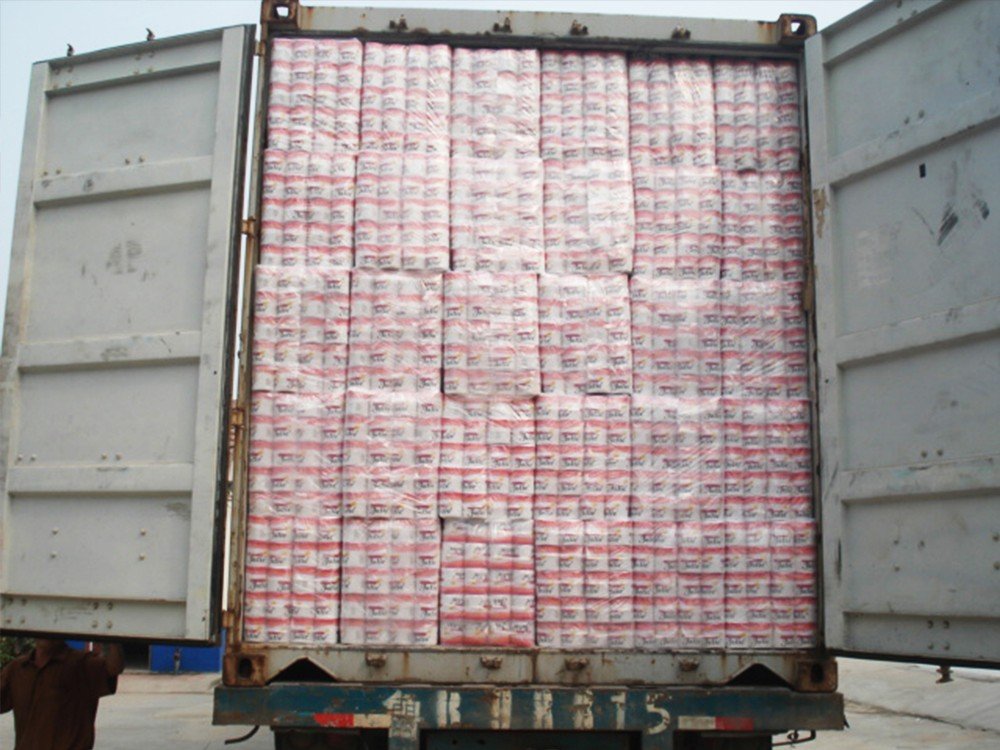
The inner layer is where format follows product. Facial tissue ships in PE soft-pack film or in cube and flat boxes with CMYK-printed box bodies; pocket tissues carry independently printed mini-bags that can themselves be branded; toilet rolls are bundled in printed or plain film at the pack count your shelf plan requires. Against ocean moisture the protection comes from a system, not one magic material: sealed PE inner packaging keeps the humid air off the paper, the treated corrugated carries the stack load, and the pallet pattern with high-tensile strapping keeps individual cartons from abrasion and puncture. Specify the inner type (PE bag, film bundle, boxed), printed or plain, and the per-case count — and require the crating photographs and loading video that document the whole system leaving the plant.
Custom-printed packaging — cartons and outer bags alike — is the item that sets the commercial threshold: private label print programs start at one full 40HQ container. Plain white-label production is available from a shared 20GP, which is how most brands test a market before committing to printed tooling.
Plates, Revisions, and the Packaging Budget
Printed packaging is tooled like any other print job: every spot color on every face that carries art needs its own plate, which is why a two-color carton design is not double the cost of one color — it is a multiple once you count the printed faces. Understanding that structure is what turns “custom packaging” from a scary line item into a calculable one: you control the bill by choosing how many faces carry print and how many colors the mark really needs.
The budget lever that brand owners most often miss sits after the first order. Your plates and artwork are archived at the factory, so an annual reprint runs on tooling that already exists — no new platemaking cost, no new color-matching risk. Change the logo, and you re-enter platemaking and its lead time; keep the design, and the archive is what makes year three look identical to year one. The OEM and private label program lists what is held per client, and the private label tissue launch guide covers the wider brand-launch sequence; here the point is narrower: packaging plate economics reward design stability.
Packaging Systems That Survive Ocean Freight
The packaging program is not finished at the carton lid. Export palletizing uses standard fumigation-free pallets with high-tensile strapping, and every container is inspected for sealing and water-tightness before loading — the factory’s stated standard is zero mold across long-haul ocean transit. Photography and video of the actual crating and loading can be provided with the shipment on request, alongside the product COA and wet-strength test video. If your cargo insurance or your retail customer ever asks what condition goods left in, that file is the answer.
Buyers importing for the first time under FOB or CIF should put the packing standard in the contract explicitly; the FOB vs CIF vs EXW cost guide shows where packing obligations sit under each term.
Format-Specific Packaging Choices
| Product line | Retail unit options | Inner/outer packaging notes |
|---|---|---|
| Standard toilet paper | Printed film multipacks, cored or coreless builds | Edge-embossed rolls bundled; carton print at full color |
| Facial tissue | Cube box, flat box, PE soft pack | CMYK box bodies; soft-pack film sealed per unit |
| Pocket tissue | Independently printed mini bags, multipacks | Branded single-bag print; shelf carton sized to pack count |
| Napkins | 1/4- or 1/8-fold stacks, dispenser boxes | Border emboss; 1–4 color logo print on sheet |
| Jumbo rolls (JRT) | Individually wrapped rolls | Case count per order; printed case panels for distributor handling |
Retail-facing format decisions for facial tissue specifically — which box styles move on shelf and why — are broken down in our guide to six facial tissue packaging formats, and roll-level logo printing options appear in the custom printed toilet paper overview.
Building a Packaging Spec Sheet
Seven lines turn any packaging conversation into a comparable quote: product and pack count per retail unit; retail unit type (film/box/bag) with print colors; inner film type; master carton dimensions with target units per carton; pallet pattern and strapping; artwork format (AI/PDF with PMS references); and container program (first-order quantity versus reorder cadence). Send those seven and every supplier prices the same product.
The commercial frame in one breath: physical samples validate in 1–3 working days; a first printed packaging order runs 25–30 working days because platemaking sits on the critical path; reorders land at 20–25 working days. Payment follows the standard 30% deposit, 70% before shipment, with the balance released against the QC report and container sealing video.
Video: tissue converting and packaging process from parent roll to private label packs (Top Source Paper)
Frequently Asked Questions on Private Label Packaging
What board and print do tissue export cartons use?
High-strength, thickened corrugated with waterproof treatment, printed full-color from AI or PDF artwork. The factory returns a 3D render before plates are cut, and pack rate is engineered so cartons cube tightly without bulging.
How does branded packaging survive ocean humidity?
As a system: sealed PE inner packaging keeps moisture off the paper, treated cartons carry the stack, fumigation-free pallets with high-tensile strapping prevent shift and abrasion, and container seal and water-tightness are inspected before loading, documented with crating and loading media.
Can inner bags and retail wraps carry my brand?
Yes — CMYK-printed facial boxes, PE soft-pack film, printed roll-bundle film, and independently printed pocket-tissue mini-bags. Custom-printed packaging starts at one 40HQ container; plain white-label programs start at a shared 20GP.
What happens to my plates when I reorder?
Plates and artwork stay archived at the factory, so reprints run on existing tooling and identical color. A design change reopens platemaking — and its lead time — which is why stable brand systems are cheaper to maintain annually.
Packaging sits on top of the sheet spec; the custom tissue formulation guide covers the ply, GSM and embossing underneath.
Carton and inner-bag options matter only once the branding route is fixed; the white label and private label tissue guide settles that first.