Short answer: a forecast informs a tissue factory; only signed writing binds one. The document that sits between a nonbinding forecast and a firm purchase order is a capacity reservation clause — it names the legal entity and line, dated production and shipping windows, a buyer release ladder, the money that makes the hold real, and the consequences when either side misses.
An emailed volume sheet for next quarter tells you one thing: legally, nothing binds. A firm PO binds — and arrives too late; as the Western retail run-up begins, the nearest converting windows are often already spoken for. Between the guess and the money is where season capacity is won. This article walks the capacity reservation tissue factory clause for Q4: what it must name, the release ladder, and which numbers you propose versus which the mill publishes.
Why a forecast does not bind — and what a reservation is
A rolling forecast carries no consideration. The mill reads it, plans around it if convenient, feels no obligation when a louder customer arrives with cash — not bad faith, just consequence-free paperwork. Mill calendars compress twice a year: the run-up to the spring holiday shutdown at Chinese plants, and the Western September-to-December peak. Your Q4 containers compete inside it against everyone else’s second shipment.
A capacity reservation is the signed commitment that fills the gap: what is held, for whom, until when, and what happens if either side underperforms. The logic is blunt — if you want a line protected, the factory needs compensation for turning work away. A fee, a minimum quantity, or a prepayment — the form matters less than the writing. Sign it early as the umbrella document, then issue POs across it as numbers firm up: the line is blocked, you are filling quantities, not negotiating space. It takes one of two shapes: a standalone agreement that POs reference, or a capacity clause inside a master supply agreement.
What the writing must name
Name the parties and the resource: the factory’s full legal entity and site, and a specific line. Avoid “priority production” and “adequate capacity” — unenforceable, because nobody can prove what they promised. Define the hold as dated production and shipping windows tied to container counts. A production window is a start-and-end date on the mill’s calendar, not a delivery date you hope backward into existence; if your season depends on a store-ready date, give production, inspection and loading each one.
Then treat readiness as separate gates. Raw paper, printed packaging, artwork plates, approvals and inspection slots can each independently kill a reserved window, so each needs an owner and a milestone. Two features help: samples run in 1–3 working days, so approval loops cost days; and artwork plates, once made, are archived with no repeat plate fee on reorders — a returning SKU is cheaper to hold than a new formulation. State who pre-buys long-lead reels and film — a window with no material in it still fails.


The buyer release ladder: turning a reservation into firm orders
The ladder answers the factory’s first question: when does your guess become my order? Each horizon moves reserved volume from planning into commitment while the mill tightens its hold in step. Horizons and figures are drafting examples — placeholders you tune in negotiation, not a mill’s policy.
| Horizon (example) | What is binding | Buyer hands over | Factory holds |
|---|---|---|---|
| ~120 days out | Nothing — forecast only | Volume band, SKU family, container estimate | Written confirmation the window exists |
| ~90 days | Capacity clause signed | Reservation fee of [X]% of season value | Named line, dated windows, no reallocation without consent |
| ~60 days | Minimum committed quantity becomes a floor | Firm minimum plus flex band; artwork and specs frozen | Window, secured parent rolls, packaging plan |
| ~30 days | Firm PO issued against the reservation | Final quantities, plus the standard 30% T/T down payment | Production slot and inspection calendar entry |
| Window and ship date | PO in force | On-time approvals; 70% balance before shipment against QC report and sealing video | First runs at 25–30 working days, reorders at 20–25; loading out of Tianjin Xingang |
Read the ladder as a mirror, not a menu: every horizon you upgrade removes one excuse the factory would otherwise keep for releasing your window. A reservation that only ever lives in the top rows is a forecast wearing better stationery.
Reservation fee mechanics
Declined revenue needs a reason. Drafting shapes: a reservation fee of [X]% of season value, a minimum take-or-pay quantity, or a prepayment credited against the first POs. Three facts belong in writing: whether it is credited against product or sits on top; whether it is refundable if the factory misses its own commitment; whether it is paid or held. Refundable-if-the-mill-misses is the cheapest protection on offer: it turns your fee into the factory’s performance bond.
Keep reservation money separate from standard payment terms. Standard tissue terms are 30% T/T at PO and 70% before shipment against the QC report and container sealing video; reservation consideration has different triggers, and a writing that blurs the two gets read in favor of whoever drafted it. One caution: liquidated-damages and cancellation-charge clauses live or die by governing law; language written as a penalty can be struck down entirely. Confirm enforceability with counsel before treating any damages figure as protection.
Underuse, overage and cancellation: the flex language
The factory’s legal reader stares here first; buyers skip it. The clause must answer four scenarios: you use less, you need more, you cancel, or the factory wants to release. Sample drafting — numbers a buyer proposes, never standing policy: reduce the reserved quantity by up to [15]% without charge if notice lands at least [60] days before the affected production month; beyond that, a charge of [X]% of the released quantity; the factory may release unused capacity only after [10] business days’ notice and a chance to cure.
Give two flex rights their own sentences. Mix flexibility: the buyer may vary the SKU mix inside the reserved family provided the change adds no line hours and shrinks no window — that clause lets you shift 2-ply to 3-ply facials without touching the calendar. Overage: a right of first refusal on extra windows before they are sold onward. Mind the border: once a firm PO is running, changing that order is a different discipline — our guide to controlling a second SKU added mid-order covers it. A reservation governs futures; change control governs work in progress.
The factory’s hold obligation — and remedies if it reallocates
The hold must be auditable, and in substance it reads: keep the identified capacity, does not reallocate it to another customer without your prior written consent, reports status weekly or biweekly, and notifies you within [two] business days of anything likely to move the schedule. In a shortfall your share is allocated pro rata with other customers, and new orders do not jump ahead. A document that only buys “priority consideration” bought a preference, not a reservation.
Settle the remedy ladder before you need one: a recovery plan on a miss; expedited production at the factory’s cost; the right to substitute production elsewhere with the reasonable cost difference, expedited freight included, reimbursed up to an agreed cap; refund or credit of the reservation fee. Keep remedies commercial: capped clauses get paid; terror clauses get voided. Tie the paperwork to physical proof — locking an approval sample before production covers the sign-off gate a held window still has to pass; a reservation without a signed sample dies politely.
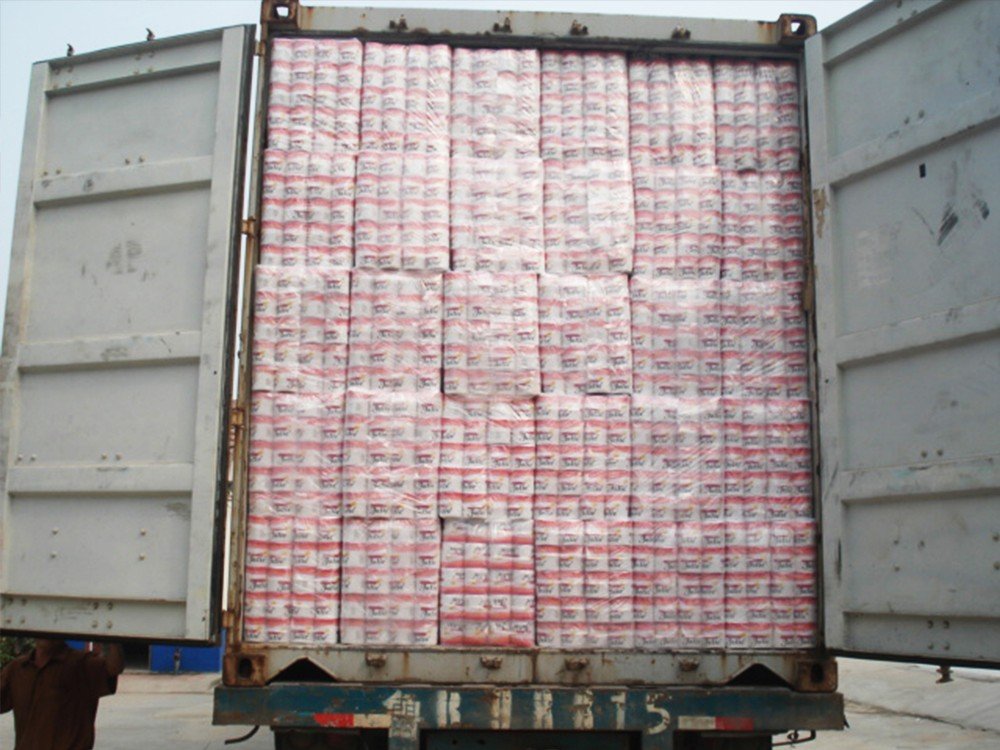
Planning backward from Q4: lead-time arithmetic, not template deadlines
Run the calendar backward from your in-store date. Subtract the ocean and customs legs your forwarder quotes — those are the forwarder’s numbers, not the mill’s. Subtract production at the published cadence: 25–30 working days for a first order including plate-making and print setup, 20–25 working days for reorders with archived plates. Above production sits sampling — 1–3 working days a round — plus your sign-off cycle, and above that the reservation negotiation. No “book by August 15” date is factory policy; protection is your own dated backward plan, started while the calendar is open.
Container math decides how many windows the program needs. Custom printed cartons and printed outer PE sleeves both start at one 40’HQ; blank or white-label goods start from a single 20GP. A private-label Q4 program is therefore reserved in whole 40’HQs of printed SKUs, and mix flexibility gets exercised before the 60-day floor, not after. If you are pre-first-order, capacity is not step one — work the private label tissue launch guide first. Top Source Paper works reorders on the published 20–25 working-day cadence; ask your account contact which season-holding terms they currently offer — and treat every bracketed figure as a proposal rather than policy — the only factory numbers on this page are its published lead-time bands. The buyer resources hub carries the paperwork checklists these clauses hang on.
Frequently Asked Questions
Is a rolling forecast worthless without a capacity reservation agreement?
No — the forecast is how a tissue factory judges whether your season plan is credible, and no mill signs a capacity clause around volumes it has never seen projected. A forecast alone binds neither side; it becomes protective once a signed writing attaches consequences: named windows, a dated release ladder, money on both sides.
How much should I offer to reserve Q4 production capacity with a Chinese tissue mill?
There is no published industry price; treat any number as a proposal, not a rule. Common drafting examples put a reservation fee at [X]% of season value, credited against purchase orders and refundable if the factory misses its own dates. What matters: the writing states the percentage, credit treatment, refund trigger and cure period. Ask each mill what season-holding terms it currently offers instead of assuming a template figure is policy.
Can I lock capacity before my private-label artwork is final?
Yes — reserve the line and dated windows against a product family first, then let artwork land through the ladder’s milestones. Sampling runs in 1–3 working days, and artwork plates are archived with no repeat plate fee on reorders — finalizing late costs setup time, not re-plate money. Watch packaging: printed cartons and printed outer PE sleeves each carry the one 40’HQ minimum, so an undecided carton design can hold a reserved window hostage past your mix-change deadline.
What happens if the factory gives my reserved window to another buyer?
Only what your remedy clause says happens. A workable clause gives you a recovery plan on a miss, expedited production at the factory’s cost, substitute production elsewhere with the reasonable cost difference reimbursed up to an agreed cap, and refund or credit of the reservation fee. Prevention beats cure: reserved capacity cannot be reallocated without your prior written consent, and new orders never jump ahead of your reservation in a shortfall.