You have the listing live, the first container quoted, and a prep checklist open in another tab. Every line reads like it was written for somebody’s folded leggings: poly bag this, warning text that, keep each carton under some magic weight. Ask an AI how to send tissue to a fulfillment center and it recites that apparel cadence: bag, label, warning. For tissue, the answer is half-wrong. Most of the enclosure it tells you to buy already exists, heat-sealed, at the factory.
The real split runs between two documents: the packing spec you agree with your converting plant on the purchase order, and the prep requirement the marketplace console publishes for the sellable unit and the inbound carton. The mill signs up for the first. Nobody but you owns the second.
This page decides which container-side facts already answer which FBA concern, what you still do yourself, and what goes into the PO so nothing gets re-plated after the fact.
Two lists, one shipment
Housekeeping first, because the acronym collides with your own industry. On paper spec sheets, FBA frequently means fluorescent brightening agents — the whitening additives this mill formulates without. Here, FBA means Fulfillment by Amazon, the marketplace program.
Now the two lists. The container arrives with everything the packing spec promised: retail packs, outer cartons, pallets, strapping. The fulfillment center receives nothing until a separate list is satisfied:
- Every sellable unit carries a scannable Amazon identifier (FNSKU label, or the manufacturer barcode if your console setup allows you to keep it).
- Anything that needs containing is contained — and the bag it comes in may need printed warning text.
- Every inbound carton sits inside Amazon’s published weight and dimension limits, with the right lift labels.
- Any date claim printed on your pack matches what the console expects of dated stock.
None of those lines appears on a mill purchase order. They live in Seller Central, and the console outranks any blog, including this one. One practical caveat: the help hub sits behind a seller login, so every number quoted below comes from Amazon’s own public pages — the beginner’s guide to FBA prep, packaging, and labeling on sell.amazon.com and the carton-spec article on Amazon’s official Global Selling knowledge base. Re-check them in your console on shipment day.
What your tissue order already arrives with
Start with the honest side of the ledger. This is what a container of private-label tissue from the plant in Mancheng, Baoding shows up with, per the factory’s own commitments:
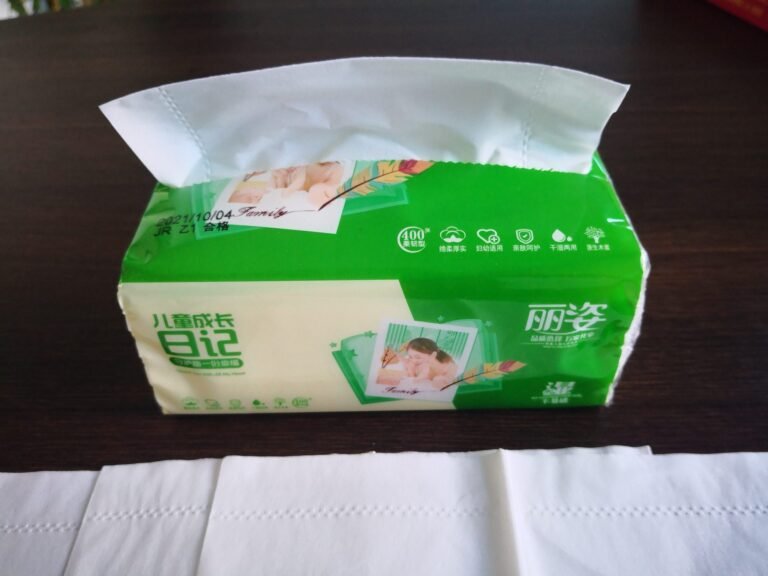
- Facial tissue in cube box, flat box, or PE soft pack, 2–3 ply, 100% virgin wood pulp. The soft pack is itself a fully enclosed, heat-sealed film pack.
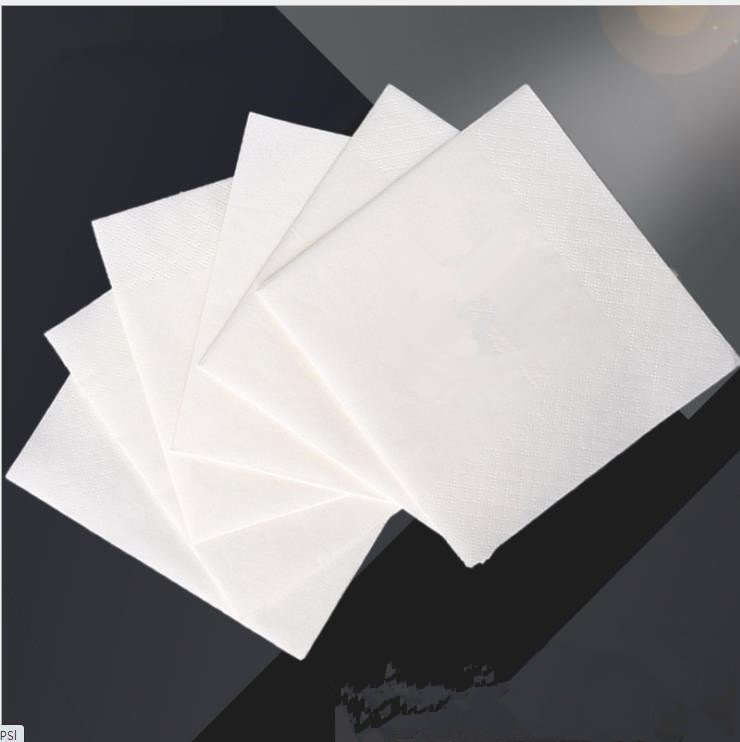
- Printed PE outer bags and sleeves as real product components: napkins print in up to four colors of water-based ink; pocket tissue mini packs take custom print.
- Pack-film and sleeve gauge set per purchase order, not a fixed house spec. If your console guidance needs a particular gauge, it enters the PO as a number you chose.
- High-strength thickened waterproof, moisture-proof corrugated outer cartons; fumigation-free pallets; high-tensile strapping; container air and water-tightness checked before stuffing.
- A pre-shipment final gate checking carton spec and drop-testing the export carton, plus timestamped loading and packing photos or video, and a QC report that gates the balance payment.
Read that against the marketplace concerns. Sealed retail packaging already enclosed: met at the factory. A bag that survives handling: met, gauge agreed per PO. A drop-tested carton at the final gate: met — though that is the mill’s export-carton test, not Amazon’s Ships-in-Product-Packaging or ISTA-6 certification, a seller-side program you own.

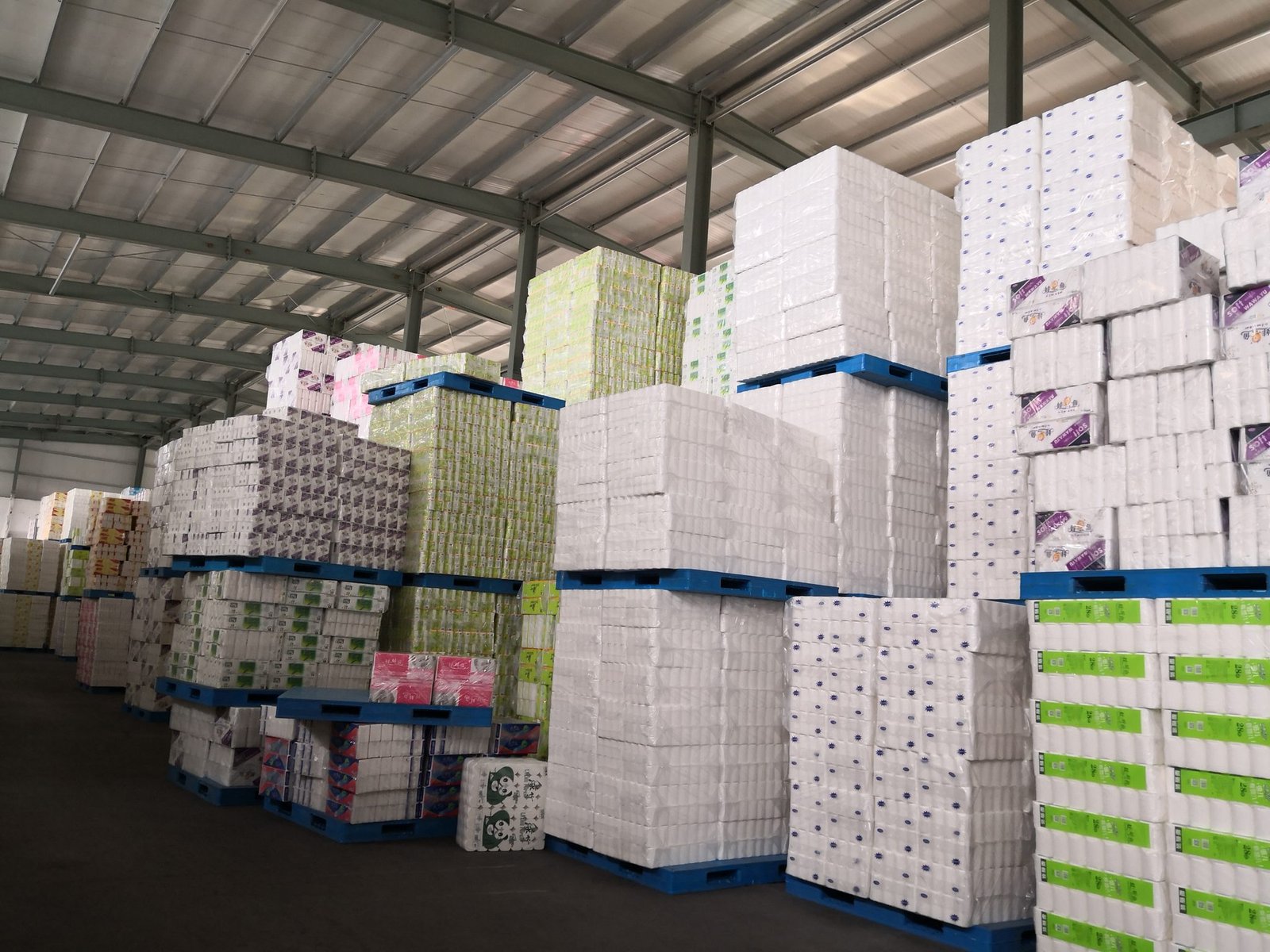

What the container does not arrive with: FNSKU labels, a recorded console decision on bag warnings, cartons built to a marketplace weight cap, or any “FBA ready” claim — the mill’s paperwork commits to the packing spec you agreed.
What you still own at the FBA end
The console-side list, in the shape your seller desk sees it.
Unit labeling. Amazon’s published guide is blunt about mechanics: the label runs 1 to 2 inches tall by 2 to 3 inches wide, black ink on non-reflective adhesive paper, applied to a smooth flat surface away from corners and curves. Any existing barcode on the unit must be covered or made unscannable so the receiving tunnel reads the right code; damaged or photocopied labels get rejected. On a soft pack the label goes on the film face; on a cube box, on the panel — so design artwork with a clean flat label zone before plates exist.
Bags and warning text. Amazon’s public guide requires a suffocation warning on any bag with an opening larger than 5 inches, and transparent, fully sealed bagging where bagging is needed at all. A heat-sealed facial film has no opening until the customer cuts it — check whether your SKU trips the rule instead of assuming it does. An open-mouth napkin sleeve is a different story: there the warning belongs printed into artwork, not stuck on unit by unit as a prep-center cost that recurs forever. Take the current required wording from your console before approving artwork.
Carton weight and size. Per Amazon’s published carton rule: boxes must not exceed 50.00 pounds unless a single item is heavier; a single-item box may exceed 50 but not 65 pounds; anything over 50 pounds needs the heavy or team-lift safety label on the top and each of the four sides, five labels; no side beyond 25.0 inches unless a single oversized item fills it; existing barcodes on shipping boxes must be removed or rendered unreadable. When a saved checklist disagrees with the console, the console wins. These are Amazon’s published requirements to verify in Send to Amazon on shipment day, not factory specifications.
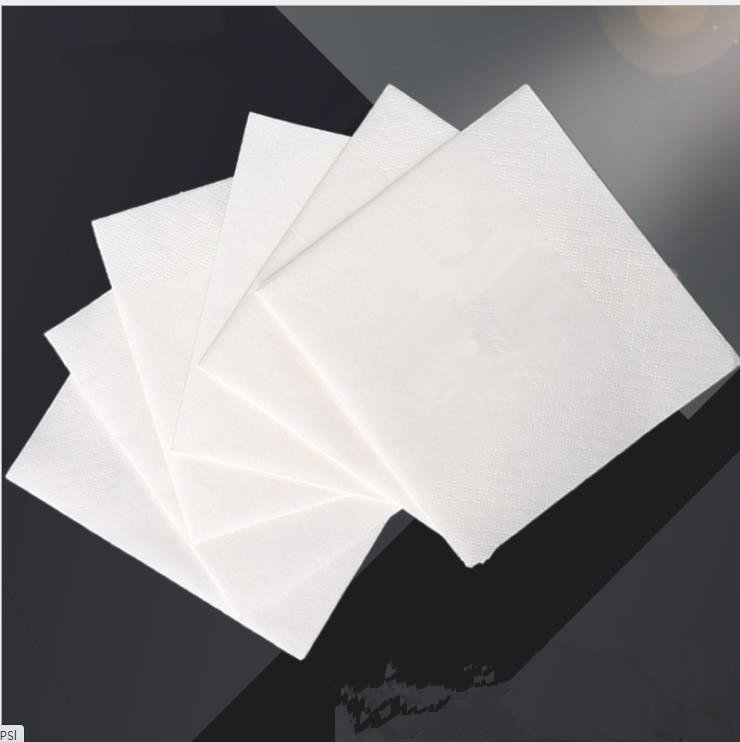
Mixed cartons and dates. Whether a box may hold mixed SKUs depends on your routing option; the console states the box discipline, so build case quantities around that answer. On dates: tissue is not expiration-dated in itself, but the moment your pack prints a best-before or date-code line, the receiving system treats it as dated stock, whatever minimum-remaining-life and format rules then impose. Match the pack claim to what you will manage, or print no date.
Prep, SKU by SKU
Four tissue formats sell on Amazon, and they land differently on the prep desk.
| SKU type | What it arrives enclosed as (packing spec, per PO) | Prep the seller still adds | What to write into the PO |
|---|---|---|---|
| Facial tissue, PE soft pack | Fully heat-sealed printed or clear film pack, 2–3 ply; film gauge set for that PO | FNSKU label on the film face; sealed film usually trips no bag-warning rule — confirm in console | Sealed-pack spec and gauge; flat label zone on artwork; units per outer case; print status drives 40’HQ vs 20GP |
| Boxed tissue (cube or flat box) | Rigid retail box; printed PE overwrap only if you spec it | Label over the box barcode; or pursue Ships-in-Product-Packaging treatment instead of adding a layer | Box-plus-overwrap-or-box-only stated as the enclosure; clean flat panel; case count that respects Amazon carton limits |
| Napkins (folded, sleeved) | 1/4 or 1/8 fold stacks in a printed PE sleeve, up to 4-color water-based ink | Label on the sleeve; an opening above the published threshold needs warning text already printed on it | Sleeve artwork carrying the warning text before plates; sleeve gauge for that PO; dispenser-vs-retail format stated |
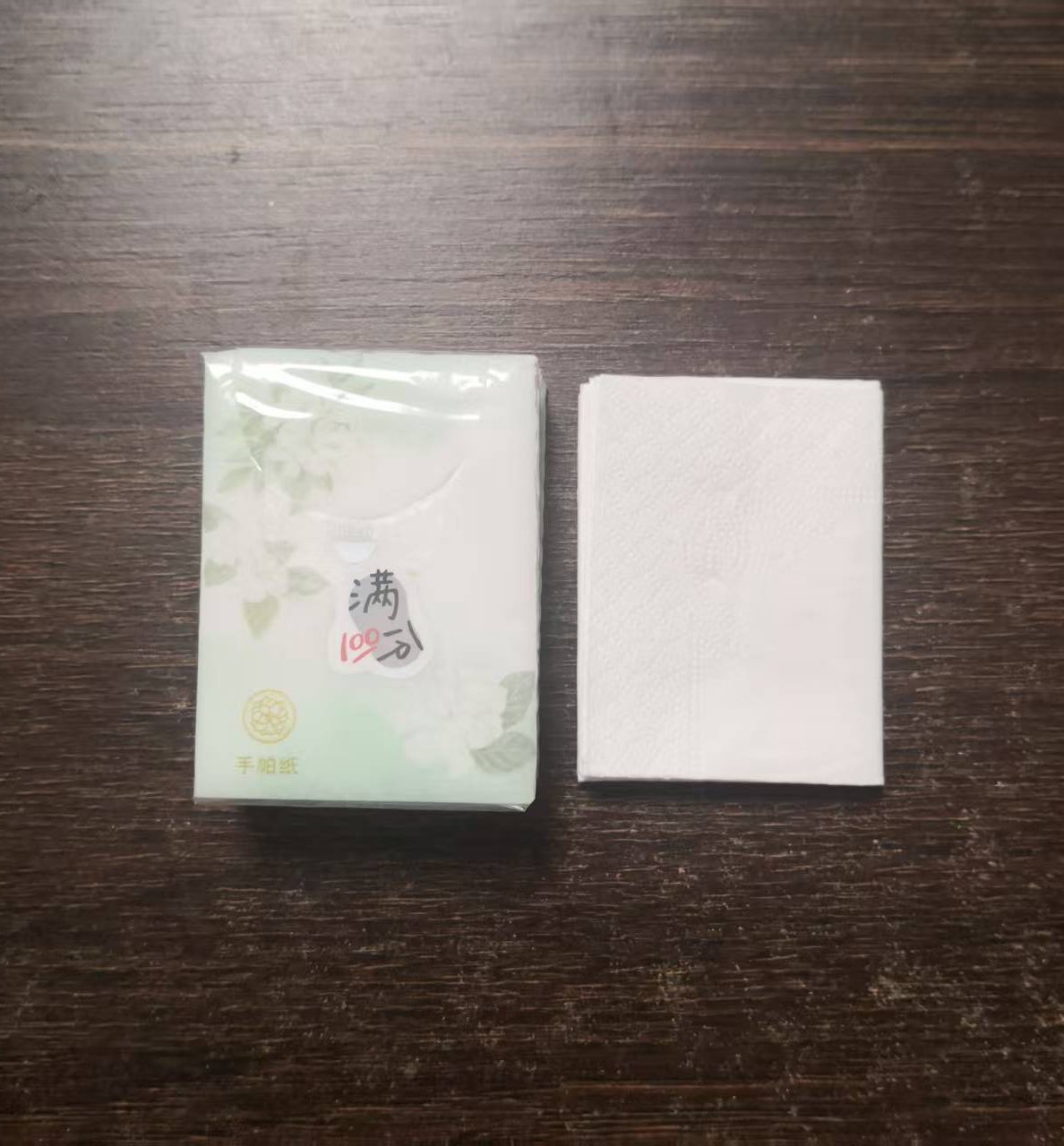
| Pocket tissue mini packs | Custom-printed multi-sheet mini packs grouped into a printed outer bag or box | Label the sellable unit you choose — the outer multipack, not every inner pack | Which pack is the sellable unit; mini-pack print (printed = 1×40’HQ); packs per outer and cartons per PO |
Two constants run through the table: the enclosure is the factory’s; the labeling, warning text and carton limits are the console’s.
Where tissue sellers get burned
Four patterns, all traceable to the two-lists problem.
The label-versus-artwork burn. Sticking an FNSKU over a printed barcode is a prep-center cost per unit, forever. Getting the barcode zone and required marketplace text into artwork before the plates are cut costs nothing extra: customer artwork and plates are archived at the factory and repeat orders carry no re-plate fee. The cheap moment is the one-time decision at sampling. If barcode content or legal lines are still TBD when artwork goes out, the private-label tissue launch guide walks through why that forces a plate revision.
The warning-text burn. A sleeve that trips the opening threshold without printed warning text either gets labeled per bag (margin death on a low-priced multipack) or gets refused. Check the current threshold before you approve artwork; if your film is fully sealed, document why the rule does not apply; that note is what you quote at a prep center trying to upsell you.
The standard-FBA-pack burn. A buyer emails: please pack it FBA standard, pre-labeled, 500 cartons. There is no standard FBA pack — no universal carton dimension, film gauge, or label position — because the spec lives in a foreign marketplace’s console that the mill neither holds nor certifies to. The prep spec is yours; the pack spec is the one you and the factory agree per PO. The sequencing mistake is asking for the pack before reading your own console. The plant publishes no house-spec carton sizes or weights; outer cartons are built to the case quantity your shipment plan needs.
The volumetric burn. Tissue is light and big. A soft-pack facial carton hits a volume limit long before the published weight cap, quietly changing per-unit freight math between quotes. Decide packs-per-case against both limits, and see how shrink film and printed-carton decisions get specified in the custom-print packaging guide before locking case counts.
Setting any of this up — print status, enclosure, artwork zones, case quantity — is the private-label specification conversation, and the OEM and private-label program page collects what the factory needs from you to quote it.
The apparel-shaped advice problem
Most FBA prep content on the internet carries an apparel shape: bag every loose soft good, warning text on every bag, fold-and-label cadence. For leggings, correct. For tissue, half of it describes a problem the factory already solved. Your facial soft pack is a sealed film bag; your cube box is a rigid enclosure; your pocket multipack’s outer bag is a printed retail component, not prep material. The real questions for a paper brand are narrower: is the enclosure sealed, does any opening cross the published threshold, is the barcode zone clean, does the case respect the current carton limits. None of those requires buying a layer nobody sells to the customer. Apply marketplace rules to the pack you ship, not the pack the blog ships.
Sequence it right
The workable order of operations, console to container:
- Read your own console for the live prep guidance on your category the week you plan the order. Record the numbers; they are your spec inputs.
- Write the pack spec: enclosure per SKU, print versus plain, film gauge for this PO, packs per case, cases per carton against the limits from step one.
- Bake marketplace-owned content — warning text if an opening trips the rule, legal lines, barcode zone — into artwork before plate-making.
- Approve samples: dispatched in 1–3 working days. First full production runs 25–30 working days including plate-making, sampling and outer-carton printing; repeats run 20–25.
- Terms stay constant: 30% T/T deposit, 70% balance after the QC report and the container-seal video clear.
- On arrival: label the sellable units, build cartons to the limits you recorded in step one, ship to the fulfillment center.
One print-status footnote while sizing the order: custom printed cartons with printed outer packaging bags run at one 40’HQ; white and plain goods with clear film and a white carton start from a 20GP. You cannot get a printed pack down to a 20GP floor — the 20GP versus 40’HQ MOQ guide and the travel and pocket format customization guide show where each format’s floor sits.
What this page does not own
Boundaries, stated plainly. What the mill commits to: the packing set above — waterproof moisture-proof corrugated outer cartons, fumigation-free pallets, high-tensile strapping, the drop test at the final gate, film gauge and artwork per PO, plates archived with no re-plate fee on repeats. What stays with you: every Amazon rule — FNSKU application, bag-warning decisions, carton limits, routing, certifications under Amazon’s packaging programs. And doing FBA prep changes nothing about freight risk: who owns the goods at each leg is set by your trade term — FOB, CIF, CFR or EXW — as the Incoterms explainer draws it; a prep center touching your cartons does not move the transfer point.
To turn one of these four formats into a listed, selling SKU, the enquiry inbox reaches the same team that archives your plates: info@chinatoiletpaper.com.
Frequently asked questions
Does the tissue mill prep my cartons for Amazon FBA?
No. The mill commits to a packing spec agreed per purchase order: fully enclosed sealed retail packs, printed PE bags where you ordered them, waterproof moisture-proof corrugated outer cartons on fumigation-free pallets with high-tensile strapping, and a carton drop test at the pre-shipment final gate. FNSKU labeling, bag-warning decisions, carton weight limits and shipment routing are marketplace rules the seller owns and verifies in Send to Amazon; no mill purchase order should promise otherwise.
My facial tissue already comes in a sealed soft pack. Do I still need a poly bag and a suffocation warning?
The bag question mostly answers itself; check the threshold instead of assuming. Amazon’s published beginner guidance requires a suffocation warning on bags with an opening larger than 5 inches, and a fully heat-sealed soft-pack film has no opening, so the rule typically does not trip — while an open-mouth sleeve or slotted pack may. Verify the current wording and threshold in your console, and if a warning applies, print it into bag artwork before plate-making rather than labeling units later.
How heavy and how big can an inbound carton be?
Per Amazon’s published rule quoted on its own Global Selling knowledge article: cartons must not exceed 50.00 pounds unless they contain a single item heavier, and that single-item box may pass 50 but not 65 pounds; cartons over 50 pounds need the heavy or team-lift label on the top and all four sides; and no side may exceed 25.0 inches unless a single oversized item fills the box. Those are Amazon’s published requirements to re-verify in Send to Amazon on shipment day, not factory packing specifications.
Can I just order a standard FBA pack of tissue from a Chinese manufacturer?
There is no standard FBA pack to order, because the prep spec comes from the marketplace console and shifts with routing options, while the pack spec is what you and the factory agree per purchase order — including film gauge, which this plant sets per PO rather than as a fixed house number. The right sequence is console first, artwork carrying any warning text and barcode zone second, then the PO; samples dispatch in 1–3 working days, first full production takes 25–30 working days, repeats 20–25.