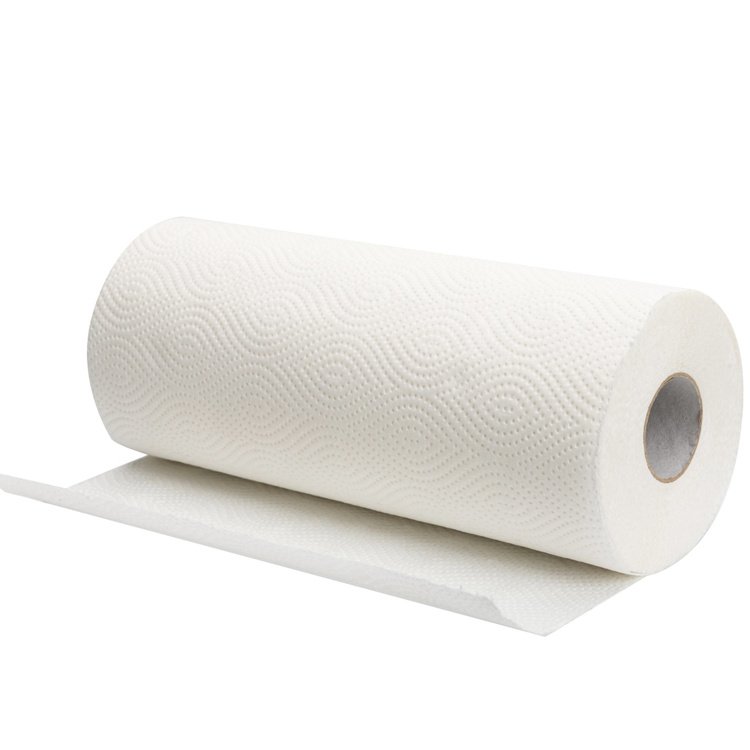
Kitchen roll and standard paper towels are not the same product, even though the terms are used interchangeably in casual conversation. For buyers stocking retail shelves or supplying commercial kitchens, the differences in absorbency mechanism, sheet dimensions, wet-strength construction, and dispensing format determine which product fits which use case.
This comparison breaks down the manufacturing and performance differences between kitchen roll and standard paper towels, so you can specify the right format for your market.
What Distinguishes Kitchen Roll from Standard Paper Towels
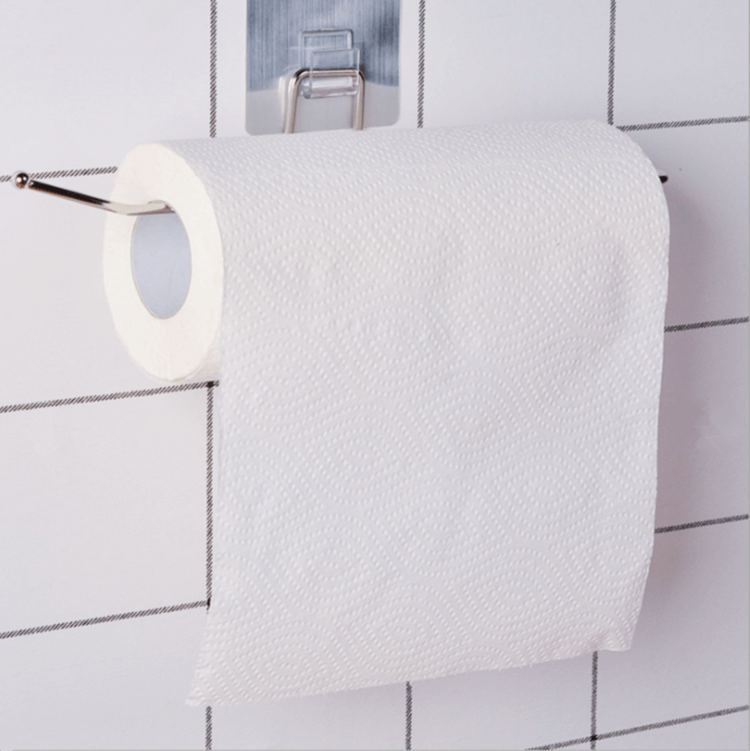
Kitchen roll refers to the perforated roll format designed for tear-off dispensing from a countertop holder or wall mount. Standard paper towels typically refers to pre-cut, folded sheets (multifold, C-fold, Z-fold) designed for commercial dispensers.
The format difference drives everything else: sheet size, how the product is packaged, where it is used, and how it is specified on a purchase order.
| Attribute | Kitchen Roll | Standard Paper Towels (Folded) |
|---|---|---|
| Format | Continuous perforated roll | Pre-cut folded sheets |
| Typical sheet size | 210-230mm x 200-250mm (perforated) | 230 x 250mm (unfolded) |
| Dispensing | Tear-off from roll holder | Pull-from dispenser (V/Z/M-fold) |
| Primary market | Household, food service counters | Commercial washrooms, janitorial |
| Ply options | 1-ply or 2-ply | 1-ply, 2-ply, or 3-ply |
Both formats from Top Source Paper are manufactured from 100% virgin wood pulp. The difference is in how the tissue is embossed, perforated, and packaged after the converting process.
Absorbency: How the Embossing Pattern Changes Performance
The absorbency difference between kitchen roll and standard paper towels comes down to embossing. Kitchen roll from Top Source Paper uses a 3D textured web embossing pattern (also called point-to-point or deco embossing) that creates raised channels across the sheet surface. These channels serve a specific function: they lift liquid and oil off the surface being cleaned and trap it in the pockets between the embossed peaks.
This embossing design, combined with a wet-strength resin formula, delivers a 40% improvement in water and oil absorption efficiency compared to flat-embossed tissue. The wet-strength resin ensures the roll holds together when saturated — critical for kitchen tasks like wiping spills, draining fried food, or cleaning greasy surfaces where a standard tissue would disintegrate.
Standard folded paper towels also use embossing, but the pattern is typically optimized for hand-drying rather than liquid capture. The embossing bonds the ply layers for softness and controlled dispensing, not for the high-capacity liquid absorption that kitchen tasks demand.
Wet-Strength: Why Kitchen Roll Needs a Different Formula
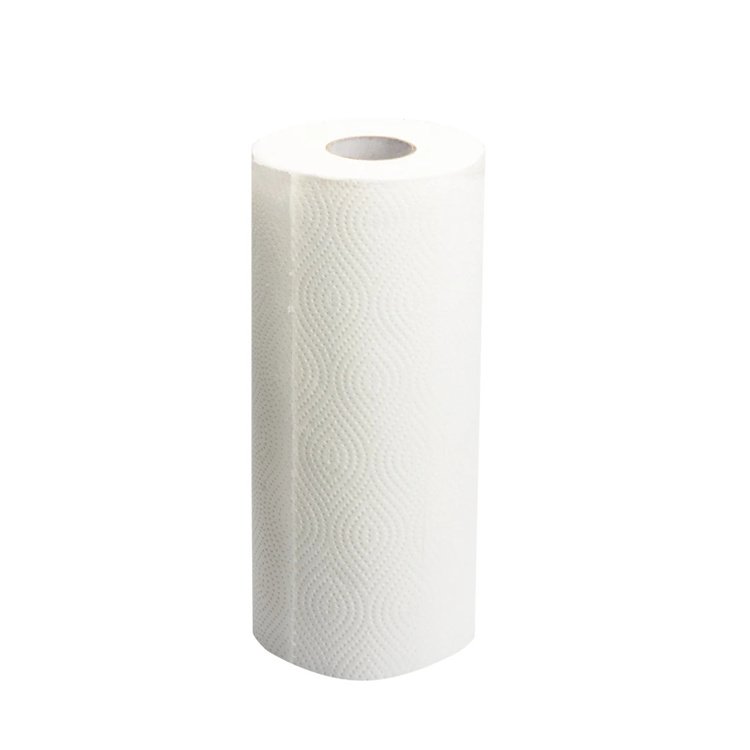
Kitchen roll encounters conditions that hand towels rarely face: hot oil, boiling water, acidic sauces, and prolonged contact with liquid. Standard paper towel fiber bonds break down under these conditions because they are designed for brief water contact during hand-drying.
Top Source Paper formulates kitchen roll with a specific wet-strength resin that reinforces the long-fiber virgin pulp blend. The result is a sheet that maintains structural integrity when soaked, can be wrung out and reused for multiple wipes, and does not leave paper residue on food-contact surfaces.
This wet-strength optimization is part of why kitchen roll from a virgin-pulp manufacturer performs differently from commodity roll products made with recycled or blended fiber. The resin formula is calibrated to the specific fiber length and absorbency profile of virgin wood pulp.
Sheet Size and Perforation: Matching the Format to the Use Case
Kitchen roll sheet size is determined by the perforation interval, which is adjustable during the converting process. Standard intervals range from 200mm to 250mm, producing sheets that are large enough to cover a hand for food handling or fold into a multi-layer pad for heavy-duty wiping.
Standard folded paper towels are pre-cut to fixed dimensions (typically 230 x 250mm unfolded) and folded to fit specific dispenser models. The sheet size is optimized for single-use hand-drying rather than the multi-purpose wiping tasks that kitchen roll handles.
For retail buyers, kitchen roll is typically sold as a single roll or a multi-pack (2, 4, 6, or 12 rolls per pack). For food service buyers, kitchen roll is specified by roll diameter, sheet length, perforation interval, and rolls per case.
Which Format to Stock: A Buyer Decision Framework
The choice between kitchen roll and standard paper towels depends on the end-use environment:
- Retail (supermarket, grocery): Kitchen roll is the dominant format. Consumers buy rolls for household kitchen use. Stock 2-ply with web embossing for the premium shelf position; 1-ply for value tiers.
- Food service / restaurant kitchen: Kitchen roll is specified for food-prep areas where absorbency against oil and water is the primary task. Food-contact safety is essential — Top Source Paper kitchen roll meets food-contact grade standards with no fluorescent brightening agents or harmful chemical additives.
- Commercial washrooms: Standard folded paper towels are the correct format, designed for dispenser mounting and single-sheet hand-drying. Kitchen roll would be impractical here.
- Janitorial supply catalogs: Both formats belong in the catalog. Kitchen roll for cleaning and food-service accounts; folded towels for washroom accounts.
Ordering from a China Virgin-Pulp Manufacturer
Top Source Paper manufactures both kitchen roll and standard folded paper towels from 100% virgin wood pulp. Ordering parameters:
- White-label / standard: minimum 1 x 20GP container
- Custom print / private label: minimum 1 x 40’HQ container
- Lead time: 25-30 working days (first order), 20-25 working days (reorder)
- Samples: 1-3 working days
- Payment: 30% T/T deposit, 70% before shipment
- Trade terms: FOB / CIF / CFR / EXW from Tianjin Xingang Port
Kitchen roll specifications that buyers should confirm on the purchase order include: roll diameter, sheet width, perforation interval, ply count (1 or 2), embossing pattern (web/point-to-point for maximum absorbency), sheets per roll, and rolls per case. Each order ships with a COA, burst-resistance inspection video, and moisture-proof packing documentation.
For inquiries about kitchen roll specifications, absorbency testing, or container loading, contact Top Source Paper via WhatsApp at +86-13180210660 or email at info@chinatoiletpaper.com.
Frequently Asked Questions
Is kitchen roll the same as paper towels?
Kitchen roll and paper towels are related but different formats. Kitchen roll is a continuous perforated roll designed for tear-off dispensing in kitchen and food-service environments. Standard paper towels are pre-cut folded sheets designed for commercial washroom dispensers. They differ in sheet size, embossing, and wet-strength formulation.
Why is kitchen roll more absorbent than standard paper towels?
Kitchen roll uses a 3D textured web embossing pattern that creates liquid-capture channels, combined with a wet-strength resin formula. This design delivers approximately 40% higher absorption efficiency for water and oil compared to flat-embossed tissue. Standard paper towels use embossing optimized for hand-drying, not liquid capture.
Is kitchen roll safe for food contact?
Top Source Paper kitchen roll is manufactured from 100% virgin wood pulp with no fluorescent brightening agents or harmful chemical additives, meeting food-contact grade safety standards. It is suitable for direct contact with food surfaces including draining fried food and wiping food-prep areas.
What is the MOQ for kitchen roll from a China factory?
White-label kitchen roll starts at 1 x 20GP container. Custom-printed or private-label orders require 1 x 40’HQ container. Lead time is 25-30 working days for first orders and 20-25 working days for reorders.
Format decides the build, and ply decides the sheet count: see the 1-ply versus 2-ply kitchen towel comparison.
Choosing roll versus sheet is half the decision; the by-the-case buying guide handles how each format ships and reprices per case.