The question has been put to four AI assistants with web search switched on: how do you tell a real Chinese tissue factory from a trader in factory clothing. The four answers returned one list: legal-entity checks, licence documents, registered address, a video call in which you direct the tour. Not one answer named a tissue producer; not one said anything about paper. The gap a tissue buyer actually needs is what this page supplies.
Related on this site: paper-specific proofs a real mill can show beyond an insurance certificate.
Related on this site: proof of Chinese manufacture for a duty paperwork file.
Related on this site: locking the approval sample before you commit to a supplier.
The generic twelve-method checklist is a floor, and we cite it rather than repeat it. What tissue adds is six paper-specific proofs, all physical: what the licence is allowed to do, what gets bought by the tonne, which machines make the formats quoted, where finished rolls wait, whether capacity answers change per SKU, and who owns the embossing rollers and plates. Run the six in writing before the deposit.
Where the Generic Checklist Stops
The twelve-method list those answers lean on is ChineseCheck’s guide to telling a real factory from a trading company. We opened the page and searched it for our industry. Its worked examples are injection molding for plastics, CNC for metal and sewing lines for apparel; the words parent roll, rewinder, grammage, perforation and embossing do not appear anywhere on it. That is not a criticism. It is a cross-industry floor, correct for any category, which is exactly why we link it instead of rewriting it.
The floor misses what tissue gives away. Paper is heavy, and tissue is bulky volume on top of that weight: nobody moves it economically without touching tonnes, machines, pallets or waste somewhere. A trader in this industry borrows a floor, rents storage and quotes a catalogue, and each of those moves leaves a document or a residue that is checkable from your desk before you commit a container. The general sequence for buying tissue from China is owned by our ten-step buyer’s guide; this page is the industry-specific layer under it, and it does not re-issue the steps.
Proof One: The Licence Has to Say Making, Not Selling
The generic list says read the licence. The paper version sharpens it to one line on the document. The business scope is free to check before you reply to any quote, on China’s National Enterprise Credit Information Publicity System, and what you look for is a manufacturing verb attached to the right noun: scope entries that translate as manufacture of paper products, processing of paper products, or papermaking. The failing shape is an entry that reads only sale, wholesale, or import and export of paper products.
Those words have a physical consequence. A scope that sells only can legally buy finished rolls from somebody else and resell them; a scope that makes and processes is the entity that can run reels through a rewinder and call the output its own. Which one you are talking to is not a moral question. It is a pricing, traceability and lead-time question, and it should be settled before samples, not discovered after a failed lot.
Two sharpening moves make the test harder to fake. Ask when the processing wording entered the scope; the public record carries amendment dates, and a trading name that acquired a manufacturing clause the same month it started quoting factory-direct prices is telling you something in that same record. Then check that the entity named on the licence is the entity that will appear on the commercial invoice and the export documents. A different name is not fraud; it is a second counterparty, and you should know who signs.
Proof Two: Follow the Tonnage and the Invoice Direction
Tissue moves by weight at the input end, and the input leaves paper. Ask for the last quarter’s purchase invoices, redacted as the supplier likes, and read three lines on each: the seller, the goods description, the quantity.
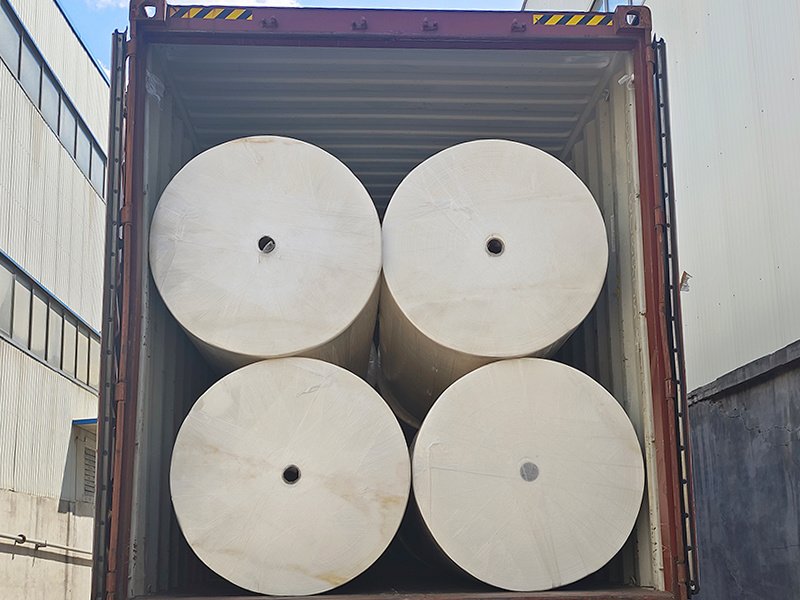
The passing shape depends on which stage the supplier claims. A converter buying input should show reels: tissue stock or parent rolls, bought from a papermaking enterprise, arriving in tonnes. A mill sitting further upstream shows pulp. Either way, the goods-description line names an input. The line that exposes the disguise is a finished-goods description: purchase invoices for completed toilet rolls, jumbo rolls or facial boxes are a reseller’s paper trail. Tonnes in must divide into the meterage out the supplier claims to ship; that division is the yield arithmetic our mother jumbo roll yield article owns, and the same long division catches a shipment claim with no purchase standing behind it.
The input side carries the quality trail as well. A physical-index report on tensile and brightness exists because reels arrive with one upstream, which is why the document list in our certifications and QC reports guide starts at goods-in rather than at the brand. For our own mother jumbo rolls the arithmetic runs the other way, and it is why we sell width rather than a standard: each parent roll is slit to the rewinding machine of the plant that orders it.
Proof Three: Count the Machines Against the Formats Quoted
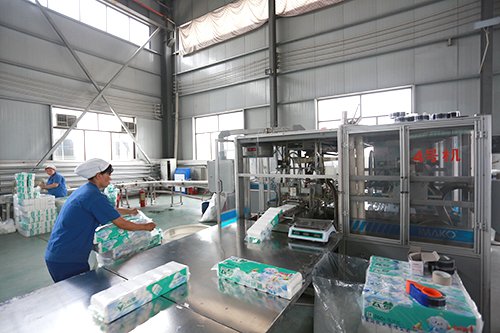
Every finished format inside a quotation exists because a machine class made it. Cored and coreless bath tissue wind on differently set rewinders. Jumbo washroom rolls, specified by dispenser fit, need their own winding. Perforation is a fitted wheel. Micro and edge embossing are rollers. Two-ply and three-ply glue lamination is a bonding unit. Folded napkins and fold towels are folders; cube box, flat box and soft-pack facial lines are wrappers. The SKU list on a quotation is therefore a machine list in disguise, and the check is arithmetic: map each SKU you are quoted to the machine expected to make it, then ask the supplier to confirm or correct the mapping.
What separates the answers is specificity, not quantity. A real converter says which rewinder runs your band, what a format changeover costs the schedule, and which two of your five SKUs share one line. Nobody who owns three rewinders explains two hundred shelf SKUs as all equally in stock, because they live with the changeover minutes. A wide, shallow catalogue, promising any ply, any grammage, any pack format instantly, is a purchasing statement dressed as a production one; our own published envelope is narrow by comparison, one to three plies inside 13 to 45 GSM, because that is what the lines here actually run.
Video: “tissue paper manufacturing process” on the Top Source Paper channel (@topsourcepaper4025). It is converting-line footage showing reels becoming rolls, which is exactly the evidence class a claimed machine list has to match.
Proof Four: The Finished-Goods Warehouse and the Rhythm Around It
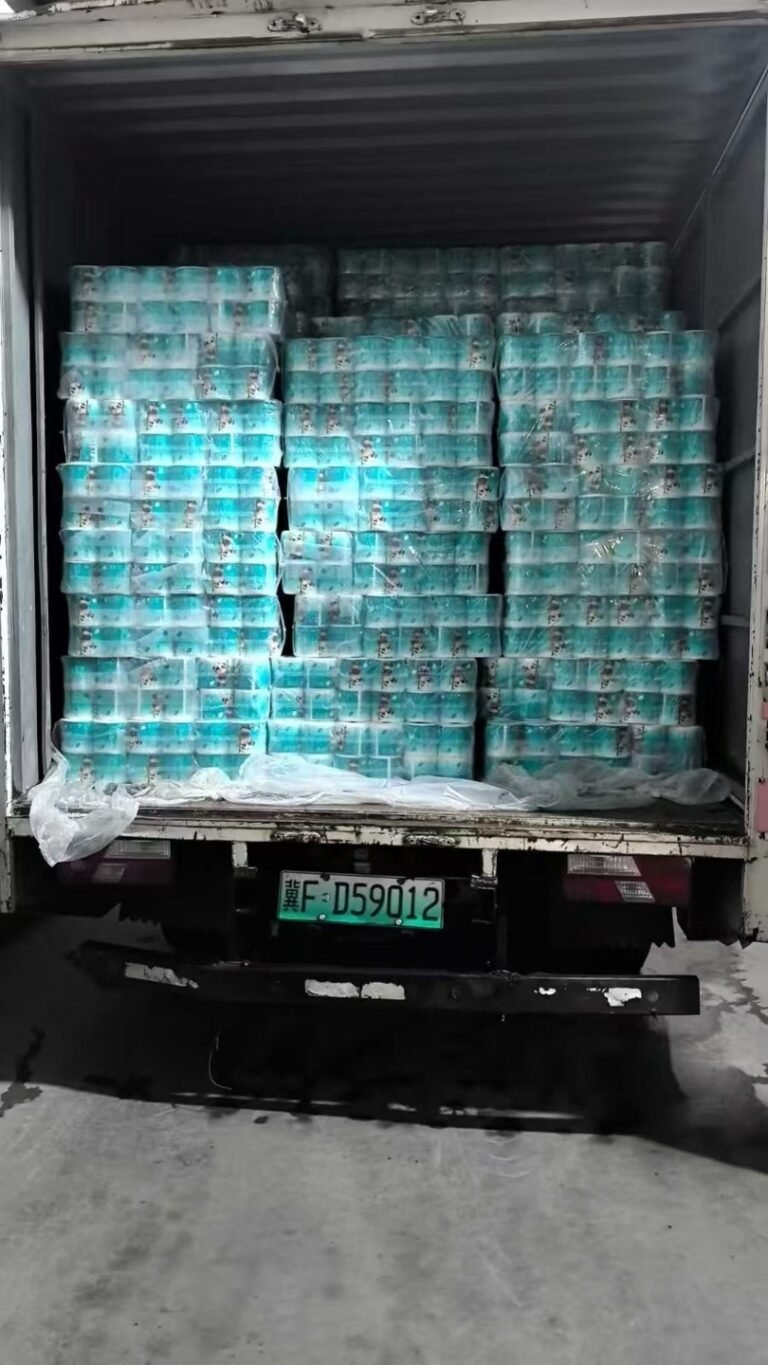
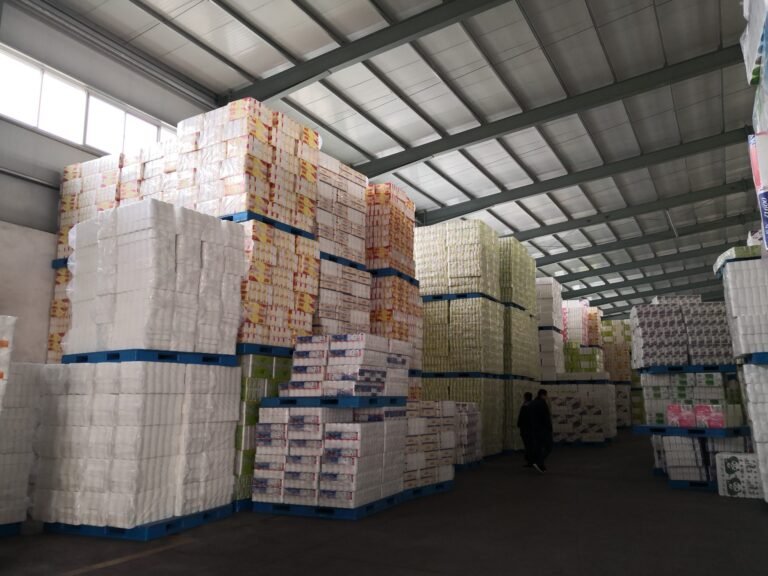
Ask where the finished rolls wait between your order and the container. A producing plant's answer is a warehouse it operates: wrapped pallets, batch cards at the racks, formats matching the catalogue it quoted. A reseller's answer is frequently somebody else's building, and cartons that carry other people's brands. The licence address and the finished-goods address sitting on the same plot is a small fact with a long tail.
Tissue leaves a residue that is hard to stage. Converting runs in shifts, and shift work in paper is dirty in a specific, checkable way: reel-change tails, trimmed edge scrap, short rolls parked to one side, dust on guards, a pallet of spent cores. One continuous take from the parent-reel stand to the finished aisle says more than a cut and narrated tour, because that class of byproduct appears at scale only where a line has actually been running. In the same take, watch the rhythm: a reel change in frame, pallets staged against a booking, the aisle moving while you ask.
Two honesty notes, because the proof cuts both ways. A producing exporter can store outside its fence when volume outruns the yard, and a photographed corner proves less than an invoice does; the test targets the claim-versus-evidence gap, not any single arrangement. And the ocean-freight condition of that stock, pallets, moisture-proof board, strapping, is unpacked line by line in our container loading and moisture-proof packing guide; here it is one thing to glance at during the tour.
Proof Five: Ask for Capacity per SKU, Not per Company
Send the five SKUs from a draft order and ask four columns for each: which machine runs it, its output per shift, the changeover cost against the next format, and where a new order queues today. Producers answer the grid with numbers that differ down the rows, because formats genuinely cost a line different things. Sellers answer with one word: available.
Uniform availability across unrelated format families is the commercial shape of reselling, and it is not a crime. It becomes a problem when it is presented as production, because then your reorder, your quality dispute and your peak-season queue are all addressed to a company whose real capacity is whatever it can purchase that week. The price side of the same breadth pattern is audited in our cheap bulk toilet paper quote audit, and the hours-arithmetic test - how a capacity answer sounds on a live production floor - is owned end to end by our wholesaler capacity and QC evaluation; that page listens, this page collects documents and assets, and the division is deliberate rather than accidental. This page adds the per-SKU grid and re-issues neither test.
Proof Six: Tooling Is the Part Nobody Rents per Order
Embossing rollers, perforation wheels, bonding units, printing plates, the pattern library a shelf item's look comes from. That class of asset exists only where production happens, and it accumulates: a plant's roller library is a record of its formats, and it wears. Ask to see the embossing rollers and the perforation inventory, photographs at a minimum, and ask who re-engraves a pattern when the depth goes.
For a private-label buyer the same question arrives as artwork custody. A converter who holds your plates, your pattern decisions and your formula holds physical continuity. This plant's published policy is that customer private-label drawings and formulas stay archived permanently and reorders carry no duplicate plating charge, which is a tooling fact before it is a pricing favour. The full custom-print path, printed carton and printed outer packaging bag both committed together as one 40-foot high-cube build, is worked on the OEM and private label page. A trader can answer any pattern you like and outsource the plate shop without lying once; the tooling question tests whether your next twelve reorders have a machine behind them or only a phone.
The Six Proofs as One Email
None of the six needs a flight to China. They run as one written request, and the table below is the whole method: the passing shape is the column a supplier either fills or explains.
| Proof | Ask for, in writing | Passing shape | The tell when it fails |
|---|---|---|---|
| One: scope | Business-scope record with amendment dates | Paper product manufacture or processing named | Sales-only wording, or a clause added as quoting began |
| Two: tonnage | Redacted purchase invoices, last quarter | Reels or pulp in, tonnage dividing into claimed output | Finished-goods descriptions, or nothing produced |
| Three: machines | Your five SKUs mapped to named machines | Shared lines admitted, changeover costs named | One uniform in-stock answer across format families |
| Four: warehouse | A continuous take, reel stand to finished aisle | Residue, staged pallets, mid-take activity | Cut tour, clean floor, storage in another entity's name |
| Five: per-SKU capacity | Line, rate per shift, changeover, queue, per SKU | Numbers that differ down the rows | Availability language where production detail belongs |
| Six: tooling | Embossing rollers, perforation wheels, plate archive | Assets that wear, engraving custody named | Any pattern you like, shown as nothing |
Running the Six Against This Plant
The method is only honest if it can be aimed here. Top Source Paper is a 100% virgin wood pulp household-tissue manufacturer with 18+ years of papermaking and tissue deep-processing background, located in Baoding, Hebei and operating strictly B2B. Against the six: the scope claim is making rather than selling; inputs and outputs move as tonnes because papermaking is the front of the chain here; the published envelope is bounded by what the lines run, one to three plies inside 13 to 45 GSM, rather than by whatever a catalogue can source; the photographic class this site carries covers factory floor, machines, warehouse and loading rather than a rented corner; the committed tiers are stated plainly, white-label goods and mother rolls consolidating from a 20GP, a fully custom printed build committing one 40-foot high-cube; and plate custody is published policy. The QC chain behind those statements runs three named gates, reel-in sampling on tensile and brightness, in-process checks on grammage, tension and perforation line, and a pre-shipment check on carton specification and drop test, detailed across the buyer resources hub.
None of that paragraph is exempt from the six proofs. A supplier publishing the right answers on its own website has given you a starting point, not evidence; run the same written request against us that you would run against anyone else, and let the dated documents do the convincing. The hub at buyer resources indexes the companion guides referenced on this page and the rest of the vetting stack.
Once a supplier clears these proofs, the next job is choosing between the survivors. Our guide to comparing and scoring tissue paper supplier quotes on landed cost per unit covers that step.
Frequently Asked Questions
How do you tell if a tissue paper supplier is a real factory or a trader?
The generic checks - legal entity, licence, address, a directed video call - are a floor every industry shares. The tissue-specific proofs are physical and checkable in writing: a business scope naming paper product manufacture or processing, purchase invoices showing reels or pulp arriving in tonnes, a machine list that matches the formats quoted, a finished-goods warehouse carrying converting residue, capacity answers that vary per SKU, and owned embossing rollers and plates. A supplier passing all six is producing; one that routes every question to availability language is trading.
What must a Chinese business licence say for a paper products manufacturer?
The scope must carry a manufacturing verb on the right noun: entries reading as manufacture of paper products, processing of paper products, or papermaking. A scope listing only sale, wholesale or import and export of paper products describes an entity that can legally resell finished rolls. The record is public and free to pull from the national enterprise credit system, amendment dates included, so you can read what the entity registered itself as and when the wording changed. A sales-only scope is not fraud; it is disclosure, and the problem starts when it is presented as a mill.
How do purchase invoices prove a converter really buys parent rolls?
Read three lines: seller, goods description, tonnage. A converting plant's purchase invoices name tissue stock or parent rolls, bought from a papermaking enterprise, in weights that divide into the shipment volume claimed. Finished-goods descriptions on purchase lines, completed rolls, boxes or packs, locate the supplier one stage downstream, which is a reseller's trail. Match the tonnage against claimed containers before signing; that division is the same yield arithmetic this site works on its mother roll page.
Which questions expose a trader quoting a factory's catalogue?
Ask for capacity per SKU rather than per company: for each quoted format, which machine runs it, at what rate per shift, with what changeover cost against the next format, and where a new order queues. Producers answer with different numbers down the rows, because formats genuinely cost a line different things. Uniform availability answers across unrelated format families - bath tissue, jumbo rolls, facials, napkins, all equally in stock - describe purchasing, not production.
Is a trading company always worse to buy from?
No. A disclosed trading company is a service model: mixed containers, wider catalogues, sometimes softer minimums, and for a multi-category restock it can be the right call. The risk in this industry is not trading, it is trading in factory clothing, because then the reorder, the quality dispute and the peak-season queue are addressed to a counterparty whose real capacity is whatever it can buy that week. The six proofs exist to put the model on the record before your deposit, whichever way the answer goes.
The twelve generic methods are a floor; the six paper proofs are the layer every answer was missing. Scope that makes rather than sells. Tonnage on the invoices. Machines that match the formats. Residue around the warehouse and rhythm in the aisle. Capacity that changes per SKU. Tooling that wears. Send the one email, read the shape of what comes back, and let documents decide who is producing.