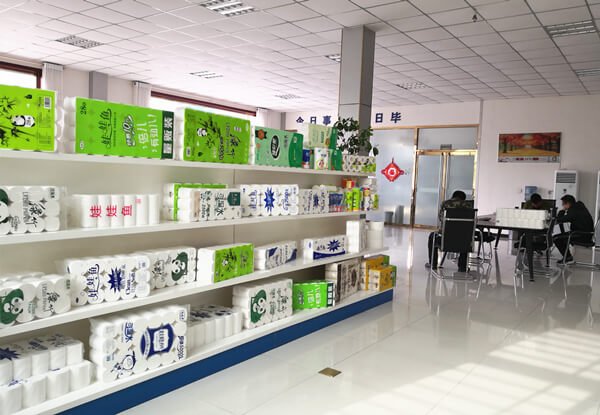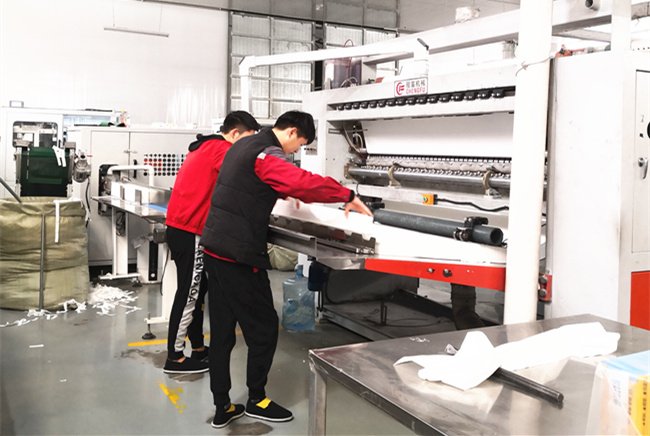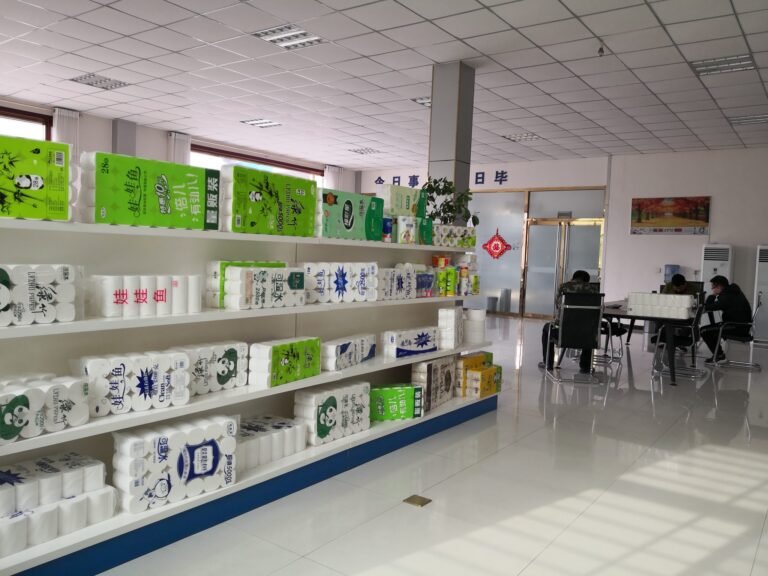
Launching a private label tissue brand is not a sourcing exercise with a logo stapled to it. It is a packaging engineering project that happens to include a paper product. The tissue inside the pack is usually the easier half — a competent virgin pulp factory will give you a consistent sheet. What determines whether your brand arrives on time, looks the way your artwork intended, and can be reordered without paying for plates twice is the pre-press, plate-making and container discipline around it.
This guide walks through what a private label tissue programme actually involves: the minimum order that applies, what you can and cannot customise, why a factory that makes its own parent rolls changes the conversation, the stage-by-stage launch sequence with realistic lead times, and where these programmes most often go wrong.
What Private Label Tissue Involves
Private label means the factory builds a product to your specification and your brand appears on it, while the factory owns the production. It differs from white label, where you buy an existing stock construction and put your packaging on it, and from OEM in the strict sense, where you supply a complete design and the factory simply executes. In tissue, the three terms blur in practice, and most buyers land somewhere between white label and full custom formulation.
The decisions a private label brand owner actually makes fall into two groups. The product group covers fibre furnish, ply, basis weight, embossing pattern, roll geometry and core specification. The packaging group covers the printed carton, the inner bag or film wrap, print colours, and the artwork files themselves. The product group is where quality is determined; the packaging group is where timelines and money are determined, because packaging introduces plate-making and print setup into the critical path.
Top Source Paper runs OEM and private label converting as a core part of its business rather than as an add-on to stock production. The factory is a 100% virgin wood pulp source manufacturer in Mancheng District, Baoding, in northern China’s tissue manufacturing and export cluster, with 18+ years in papermaking and tissue converting for export, operating strictly business-to-business with no consumer retail arm. Private label buyers are supported on high-definition colour printing for cartons and inner bags, custom core inner diameter, and proprietary embossing patterns.
MOQ: 20GP White Label Versus 40HQ
This is the first real constraint, and it is the one that decides whether a launch is viable at your volume.
White-label and plain stock items start from one 20GP container. Custom printed packaging — private label cartons and outer bags carrying your artwork — moves the minimum to one 40HQ container. The reason is not arbitrary. Printed packaging requires plates to be made and a print run to be set up, and those fixed costs have to be spread across enough units to be absorbable. A 40HQ is the smallest quantity at which that arithmetic normally works for both sides.
For a new brand, the practical implication is that you should plan your launch around a full 40HQ rather than trying to negotiate below it. There are two honest routes if a 40HQ is too much inventory for your first order. The first is to launch on white-label stock in a 20GP with neutral packaging, prove the line in your market, then move to printed packaging on the reorder. The second is to consolidate: a single 40HQ does not have to be one product, and a mixed private label container across two or three lines is often a better first order than a deep position in one SKU.
What you should not do is treat the 40HQ as a hurdle to argue down and then discover, after the plates are made, that you cannot sell through the volume. The container minimum is also your protection: it is what makes the unit economics of custom plate-making work, and it is why reorder plate fees can be waived entirely.
What You Can Customise
The table below separates the axes that are genuinely open on this line from the ones a buyer should not assume. Where a value is not published as a standard, it is set per order and must be confirmed in the brief.
| Customisation axis | Available position | What to confirm in the brief |
|---|---|---|
| Fibre furnish | 100% virgin wood pulp, balanced long and short fibre ratio; no recycled or reprocessed pulp | Virgin fibre verification on the COA for every shipment |
| Ply | 1-ply, 2-ply and 3-ply, with multi-ply lamination and adhesive bonding | Ply per product line — jumbo runs 2-ply and 3-ply; napkins run 1-ply and 2-ply |
| Basis weight | 13 to 45 GSM capability across the full range | The GSM figure and whether it is per ply or for the finished sheet |
| Embossing | Micro embossing, edge embossing, 3D web-pattern Deco and point-to-point; proprietary patterns supported | Whether your pattern is exclusive to your brand and how exclusivity is documented |
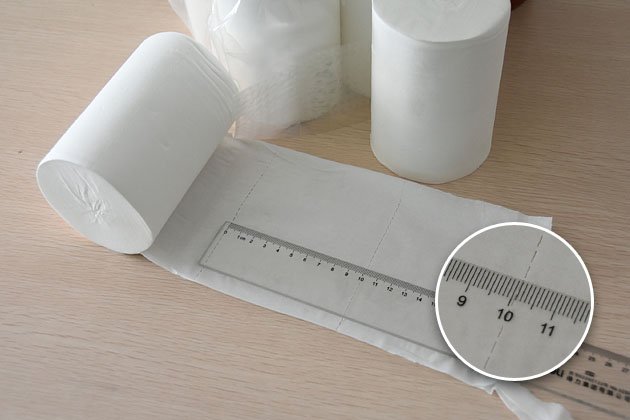
| Core inner diameter | Customisable | The measured value from your own dispenser or spindle hardware |
| Carton printing | High-definition colour printing on outer cartons | Colour count, print process, artwork file format and the dieline |
| Inner bag and film | High-definition colour printing on inner bags and packaging film | Film specification, seal position, and whether the pack is printed all-over or panelled |
| Product range | Toilet rolls, jumbo roll tissue, facial tissue, kitchen towels, hand towels, pocket tissues and napkins | Which lines share the container and how the carton mix is built |
Napkin printing gives a useful reference point for what colour work looks like on this side of the factory: the napkin line supports 1 to 4 colour printing in eco water-based ink, alongside 1/4 fold and 1/8 fold formats and fine border embossing. If your brand is extending into food-service paper, the custom printed napkin guide covers how colour count and fold format are specified together.
Why Parent-Roll Integration Matters
Most tissue converters buy parent rolls from a paper mill and convert them. Top Source Paper makes its own. Mother jumbo rolls are produced on site in 100% virgin pulp, with width, basis weight, brightness and tensile strength slit to the requirements of the converting machine, and with moisture and ring-crush strength tightly controlled.
For a private label brand this changes three things that matter commercially.
Consistency across reorders. A converter buying parent rolls on the open market is exposed to whatever furnish the mill supplies that quarter. A factory making its own rolls controls the furnish at the point where it is decided, which is the reason a reorder behaves like the first order. For a brand, batch-to-batch drift is the fastest way to lose a retail listing.
Specification flexibility. Because the parent roll is made to the converting machine rather than bought to a standard width, the roll geometry downstream can be built around your product rather than your product being built around an available roll. That is what makes custom core diameters and proprietary embossing practical rather than special-order exceptions.
Traceability when something goes wrong. The QC process is three-stage and starts at the parent roll: sampling for tensile strength and brightness, then in-process inspection during converting for basis weight, tension and perforation line, then pre-shipment final inspection of carton specification and drop test. When the first stage is inside the same factory as the last, a quality question can be traced to a specific point instead of becoming a dispute between a mill and a converter. The mother jumbo roll range describes the parent roll side of the operation in more detail.
This is what the factory’s own positioning phrase means in practice: from parent roll to private label, one operation, no handoff.
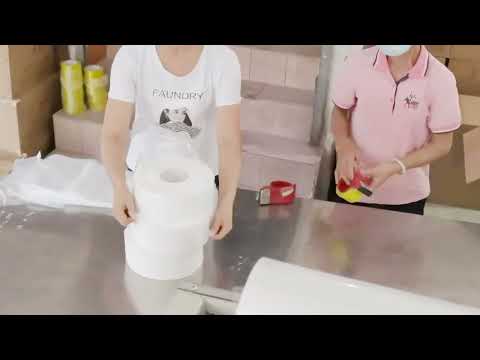
The Launch Sequence Stage by Stage
Private label lead times are the numbers a new brand most often gets wrong, because the packaging stage is invisible until it delays the container. Here is the sequence with the times that actually apply.
- Brief and specification. Define the product group and the packaging group together. Write down furnish, ply, basis weight and its definition, embossing, core geometry, roll or sheet dimensions, pack configuration, carton specification, print colours and artwork files. An incomplete brief slips the timeline, because every gap becomes a question that waits for an answer across time zones.
- Sampling — 1 to 3 working days. Samples are produced and dispatched within 1 to 3 working days per round. That is fast enough to iterate rather than treating the first sample as the approval gate; agree with the factory how many proofing rounds your artwork will need before you commit a container.
- Sample approval and artwork sign-off. Approve the physical sample and the printed packaging proof separately. A tissue sample that is right and a carton proof that is wrong is still a wrong container. Sign off colour against a physical printed proof, not against a screen.
- Proforma invoice and 30% T/T deposit. Payment terms are 30% T/T deposit with the 70% balance before shipment.
- Plate-making and packaging production. This is the stage that puts private label on a different clock from white label, and it is inside the production window rather than before it.
- First bulk production — 25 to 30 working days. This window includes packaging plate-making, sampling and outer carton printing. It is not a converting-only number, and buyers who plan against a converting-only assumption lose roughly the whole packaging cycle.
- QC and pre-shipment documentation. Before the balance is due you receive the 100% virgin wood pulp physical-property COA covering tensile strength, brightness and virgin fibre verification, the wet tensile and dust-rate test video pack, and the container reinforcement and moisture-proof packing photographs and video.
- Balance payment and dispatch. The 70% balance is settled before shipment, and the container departs direct from Tianjin Xingang Port on FOB, CIF, CFR or EXW terms.
- Reorder — 20 to 25 working days. Repeat orders run faster because the plates exist and the specification is archived. This is the number to build your replenishment plan against, not the first-order number.
Add ocean transit on top of the production window when you plan shelf dates. A first private label order realistically needs the 25 to 30 working day production window plus sampling rounds plus transit before product is saleable, and a brand that has not modelled this ends up air-freighting or going out of stock in its first quarter.
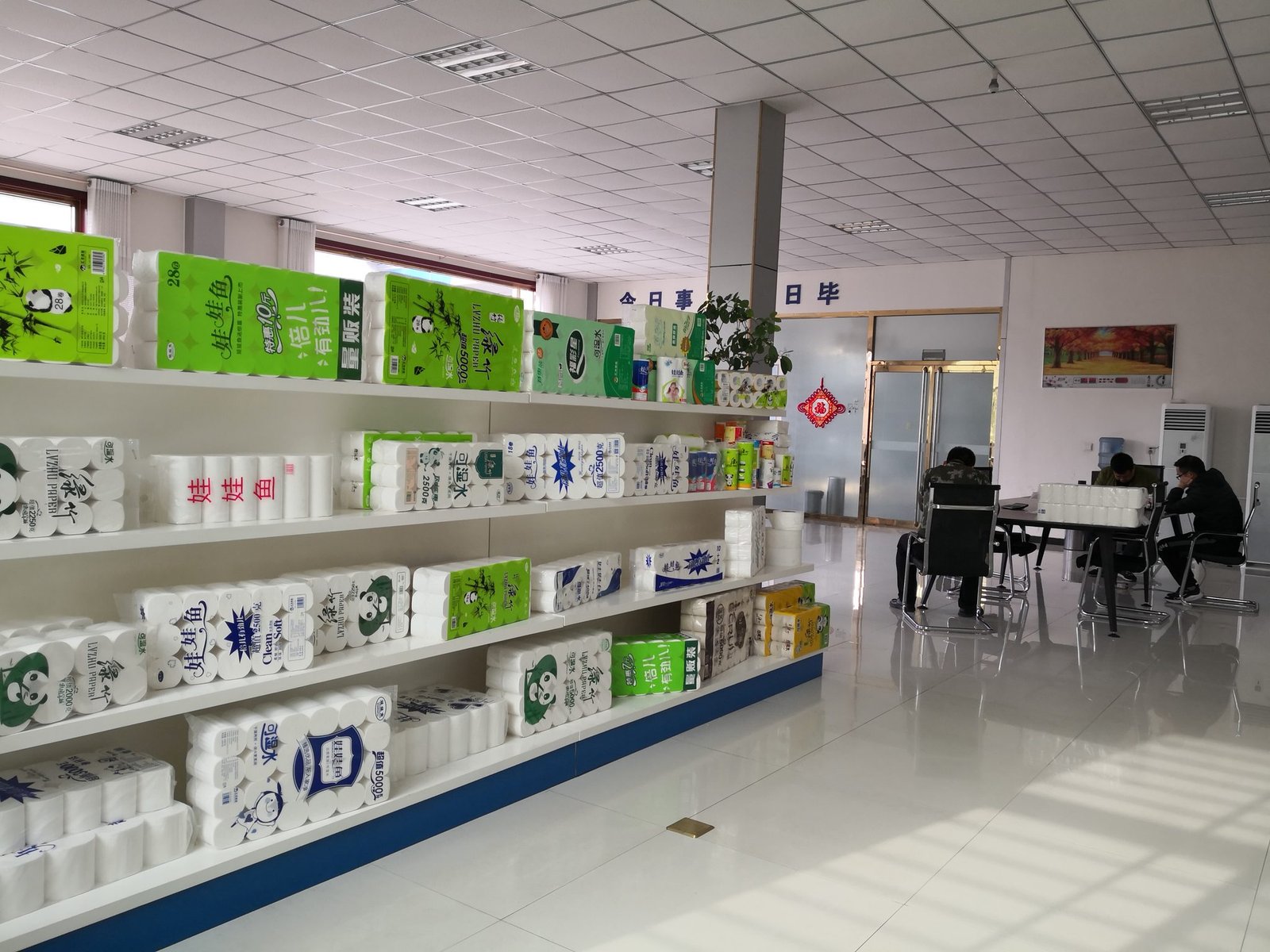
Packaging Pre-Press: Where Private Label Orders Fail
Almost every private label dispute that is not about paper quality is about packaging. The failure modes are predictable and all of them are preventable at the brief stage.
Colour that does not match the screen. Artwork approved on a calibrated monitor and then judged against a printed carton on kraft or coated board will always look different. Require a physical printed proof and sign colour against it.
Dieline and artwork mismatch. Cartons and film packs have fold lines, glue flaps and seal areas that cannot carry critical artwork. Supply vector artwork against the factory’s dieline rather than supplying a finished flat image and asking the factory to fit it.
Legal and barcode content added late. Weight markings, country of origin, barcode placement and any market-specific labelling tend to arrive after artwork sign-off, which forces a plate revision. Assemble every mandatory marking before the first proof, not after it.
Carton specification not tied to the drop test. Pre-shipment final inspection covers carton specification and drop test. If your carton is designed for retail shelf presentation rather than for ocean freight, it will pass the shelf test at home and fail the voyage. Specify the carton for the journey it is actually going to make: thickened waterproof corrugated outer cartons, fumigation-free pallets and high-tensile strapping, with a pre-loading container seal and watertightness check before departure.
Assuming plate ownership. Ask explicitly what happens to your plates, who holds them, and what a reorder costs. On this side of the operation the answer is documented: client private label design drawings and formulations are permanently sealed and archived, and repeat orders carry no duplicate plate-making fee. That is a material line-item saving on every reorder and a reason to compare private label suppliers on total two-year cost rather than on first-order price.
Protecting the Design and the Formulation
Brand owners moving from a domestic supplier to a China factory usually raise confidentiality early and archive practice late. Both matter, and they are different protections.
Archiving is what makes your reorder identical to your first order. Permanently sealed and archived design drawings and formulations mean the specification does not depend on a person remembering it, and it means the plate fee does not recur. Ask any prospective factory how specification continuity is maintained between orders — if the answer is a person rather than a system, your third container will not match your first.
Exclusivity is the separate question of whether your proprietary embossing pattern or your formulation can be sold to another customer. If exclusivity matters to your brand, put it in the agreement in terms that are enforceable and specific, rather than relying on the general expectation that a custom pattern stays custom.
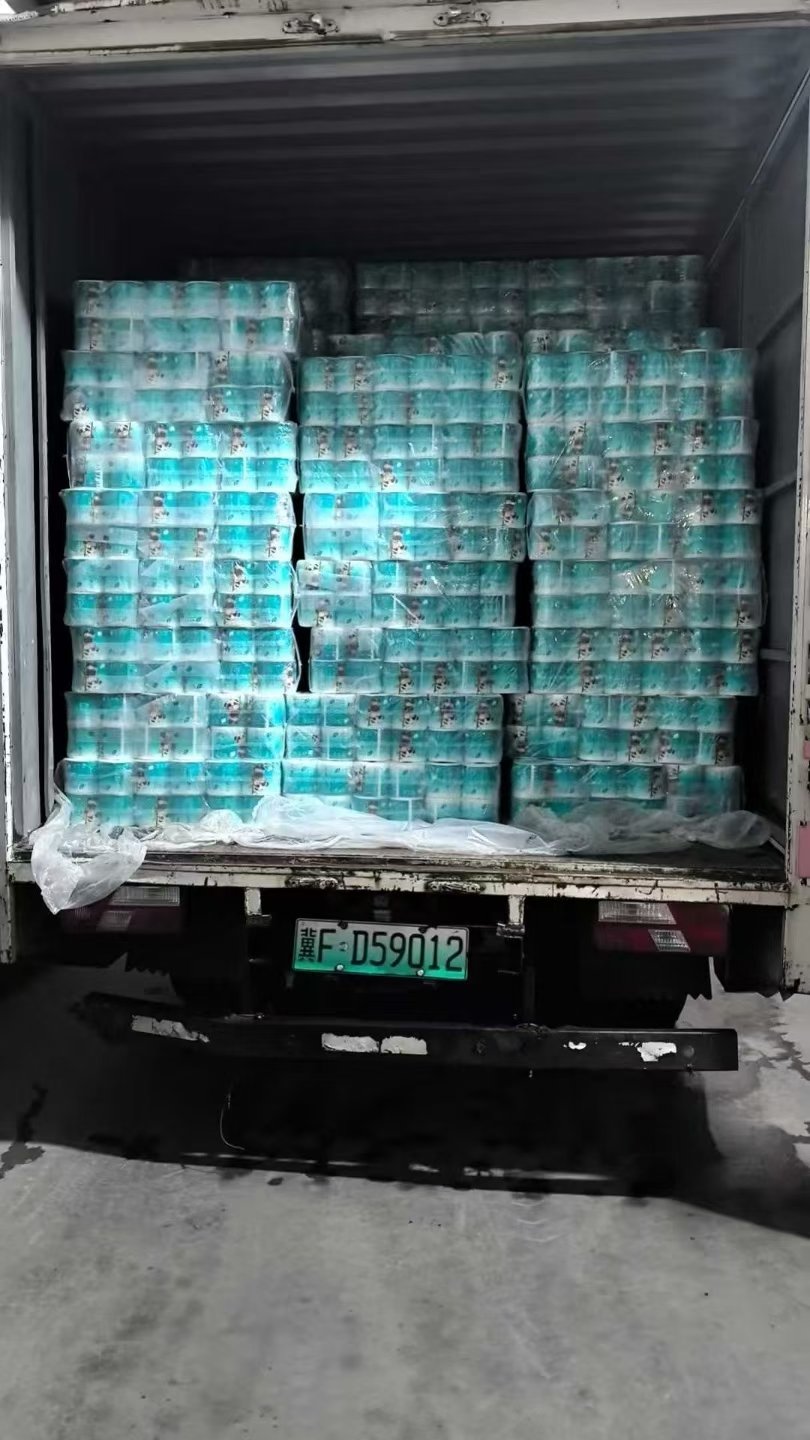
Choosing the Right First Private Label Line
A first 40HQ should go to the line where your brand can win on something other than price. Three questions narrow it quickly.
Does the line let you use a construction difference that a reseller cannot copy? A 3-ply premium bathroom roll with a proprietary emboss is a defensible position; a mid-market 2-ply roll is a price fight. The ply and embossing choices behind that decision are covered in the ply comparison guide.
Is the line repeat-purchase or one-off? Tissue is a consumable, which is exactly why private label works in this category — but only if your channel generates reorders. A line that sells once and stops leaves you holding plate costs and inventory.
Does the container consolidate? A brand launching across bathroom tissue, kitchen towel and napkins in one 40HQ spreads the packaging setup across more units and gives a distributor a reason to take the whole range. Buyers still assembling the wider supplier picture should read the guide to sourcing tissue paper from China before committing to a launch date.
The packaging components themselves, cartons, inner bags, and plate archives, are detailed in our private label tissue packaging guide.
Frequently Asked Questions
What is the MOQ for private label tissue paper?
One 40HQ container for private label with custom printed cartons and outer bags. White-label and plain stock items start from one 20GP container. The higher minimum exists because packaging plate-making and print setup have to be amortised across the container.
How long does a first private label order take?
First bulk production runs 25 to 30 working days and includes packaging plate-making, sampling and outer carton printing. Sampling and dispatch of small samples takes 1 to 3 working days before that. Repeat orders run 20 to 25 working days because the plates already exist and the specification is archived.
Do I pay plate-making fees on every reorder?
No. Client private label design drawings and formulations are permanently sealed and archived, and repeat orders carry no duplicate plate-making fee. Confirm this in writing with any factory before you commit, and compare suppliers on total multi-order cost rather than first-order price.
What can I customise on a private label tissue product?
Ply across 1-ply, 2-ply and 3-ply with multi-ply lamination and adhesive bonding; basis weight within a 13 to 45 GSM range; embossing including micro, edge, Deco and point-to-point patterns, with proprietary patterns supported; core inner diameter; and high-definition colour printing on cartons and inner bags. Fibre furnish is 100% virgin wood pulp with no recycled content.
What are the payment terms?
30% T/T deposit with the 70% balance before shipment. Before the balance falls due you receive the virgin wood pulp COA covering tensile strength, brightness and virgin fibre verification, the wet tensile and dust-rate test video pack, and container reinforcement and moisture-proof packing photographs and video.
Which product lines can go into one private label container?
The range covers standard toilet rolls, jumbo roll tissue, facial tissue, kitchen paper towels, paper hand towels, pocket tissues and napkin papers. A mixed-line 40HQ is often a stronger first order than a deep position in a single SKU, because it spreads packaging setup across more units and gives a distributor a complete range to list.
Plan the Packaging, Not Just the Paper
A private label tissue launch succeeds or fails on the packaging critical path. Fix the product specification and the packaging specification in one brief, sample early and iterate — samples are dispatched in 1 to 3 working days, so there is no excuse for approving on the first round — plan against the 25 to 30 working day first-production window rather than a converting-only assumption, and confirm the plate-fee waiver and archive policy before you sign. Do that and the reorder becomes a 20 to 25 working day routine instead of a second launch.
Further private label, packaging and OEM material is collected in the OEM and private label library. To start a private label brief, request samples, or have an existing specification and artwork set reviewed before your first 40HQ, contact the Top Source Paper team — samples ship within 1 to 3 working days, and inquiries can also go to info@chinatoiletpaper.com or +86-13180210660 on WhatsApp.
For the sheet itself, the custom tissue formulation guide covers how to specify ply, GSM, embossing and purity.
Before any launch sequence starts, the route decision decides the container; see the white label versus private label comparison.
The launch sequence catalogues what a private-label order can customise, and the embossing specification guide covers the pattern line of that list, including how far a proprietary claim can honestly go.