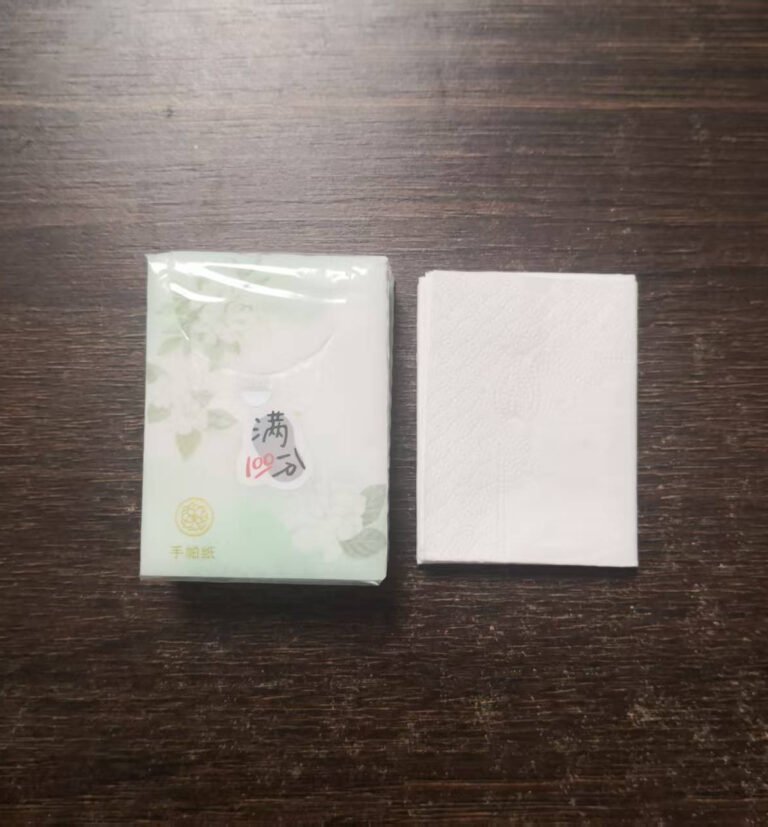
Travel tissue packs sit in an awkward position in a buyer’s catalogue. They are small enough that nobody thinks carefully about specifying them, and they are used in public often enough that a poor one gets noticed. A promotional pack that shreds in a handbag reflects on the brand that printed its logo on the film. A retail travel pack that feels thin on the shelf gets picked up once and put back.
For the underlying numbers, see which pack and case counts fit a hospitality restock plan.
The good news is that the format is genuinely configurable, and most of the configuration costs very little at order scale. Below are the seven options that actually change the product, what each one is worth in a retail versus a promotional context, and the specification and order economics that sit underneath them.
Retail Versus Promotional: Two Different Jobs
Before choosing options, decide which job the pack is doing, because the two jobs pull the specification in opposite directions.
Retail travel packs are sold to consumers through shelf and convenience channels. They compete on hand feel, pack presentation and price per sheet. The consumer holds the pack before buying it, so sheet softness and pack stiffness both register at the point of sale. Repeat purchase is the prize.
Promotional and brand-giveaway packs are bought by enterprises and distributed free — at events, in airline amenity service, in hotel turndown, in conference bags, with a purchase. The pack is a piece of media carrying a logo, and it will be handled by someone who did not choose it. Here the print surface and the pack’s survival in a bag or a pocket matter more than the absolute softness of the sheet, though a pack that disintegrates in use is worse than no pack at all.
Both markets are served by the same product family. Top Source Paper produces pocket tissues as multi-sheet packs or individually wrapped portable packs in high-toughness, ultra-soft virgin wood pulp, supplied into retail shelves, business travel and aviation, and large-enterprise promotional gifting and brand giveaways. The pocket tissue range covers the full format family.
1. Sheet Count and Pack Configuration
The first option, and the one that sets everything downstream. Sheet count per pack determines the pack’s thickness, its retail price point and its perceived value, and it drives how many packs fit into an outer carton and therefore how many fit into a container.
Low sheet counts produce a slim pack that disappears into a pocket or a wallet, which is the right answer for promotional giveaways and for airline amenity service where the pack is one item among several. Higher sheet counts produce a pack that stands up on a shelf and justifies a retail price, which is what convenience and grocery channels want.
Individually wrapped portable packs are the alternative configuration, where each pack is sealed as a discrete unit rather than bundled loose. Individual wrapping matters for hygiene positioning, for aviation and hospitality where packs are handed out one at a time, and for any brand using the pack as a premium giveaway. It also changes the packing line and the carton, so it needs to be decided at brief stage and not retrofitted.
Specify sheet count, sheet size and fold together. They are interdependent: a given pack thickness can be reached by more small sheets or fewer large ones, and the two feel completely different in use.
2. Ply
Travel packs are built across the same 1-ply, 2-ply and 3-ply range as the rest of the tissue line, with multi-ply lamination and adhesive bonding available. Ply is the most visible quality signal to the end user, because it is the first thing they feel when they pull a sheet.
For retail travel packs, 2-ply is the standard position — enough body that the user does not double up, without the fibre cost of 3-ply on a format that sells on unit price. Three-ply travel packs exist in premium retail and in high-end brand giveaways where the pack is meant to feel like a gift. One-ply is used where the price point is the whole proposition, typically in high-volume promotional runs.
Ply cannot usefully be specified on its own, and this is where a travel pack brief goes thin fastest. Two things have to be pinned alongside it. The first is basis weight: capability spans 13 to 45 GSM across the full range, and a 3-ply pack built on a light per-ply weight can carry less fibre than a 2-ply built on a heavier one — so state the GSM figure and whether it is per ply or for the finished sheet. The second is the bonding method, since multi-ply lamination and adhesive bonding produce different bulk and different edge behaviour in a small format. Both are verifiable rather than matters of trust: the in-process inspection stage during converting covers basis weight and tension, so a buyer can ask for those records for their own order instead of accepting a ply claim at face value.
The wider trade-offs between ply levels are set out in the ply specification guide.
3. Basis Weight
Basis weight is the amount of fibre in the sheet, and across the full product range capability spans 13 to 45 GSM. Travel packs sit at the lighter end of that span because the format is small and has to stay flexible enough to fold into a pocket.
Two specification disciplines apply. First, state whether the GSM figure is per ply or for the finished sheet, and require the same basis on the certificate of analysis. A 3-ply travel pack quoted at a per-ply figure and delivered at a finished-sheet figure is a materially lighter product than the one you approved. Second, treat basis weight as the lever it is: on a small format, a few grams per square metre is invisible to the eye and obvious in the hand, which makes it an easy place for a supplier to recover margin without changing anything you can see on a pallet.
4. Embossing Pattern
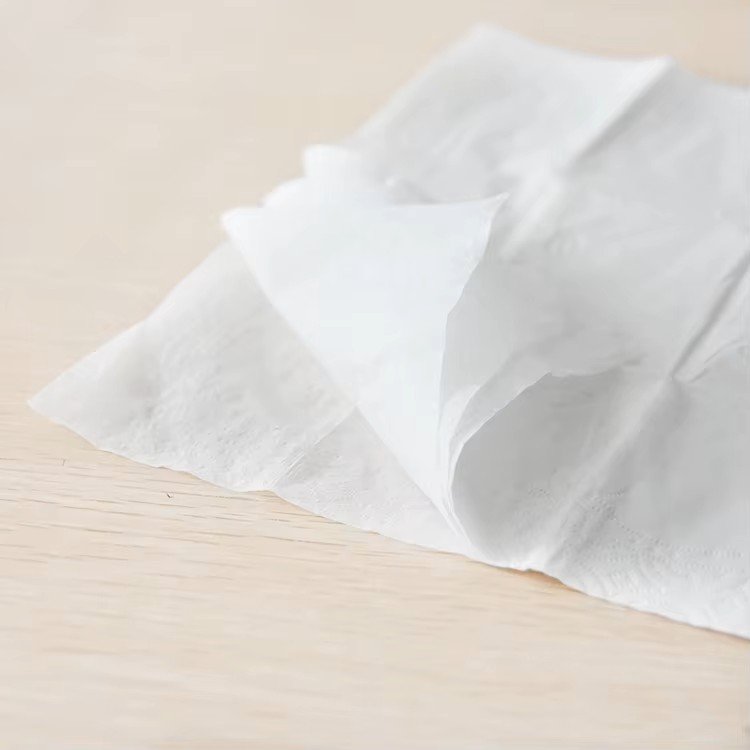
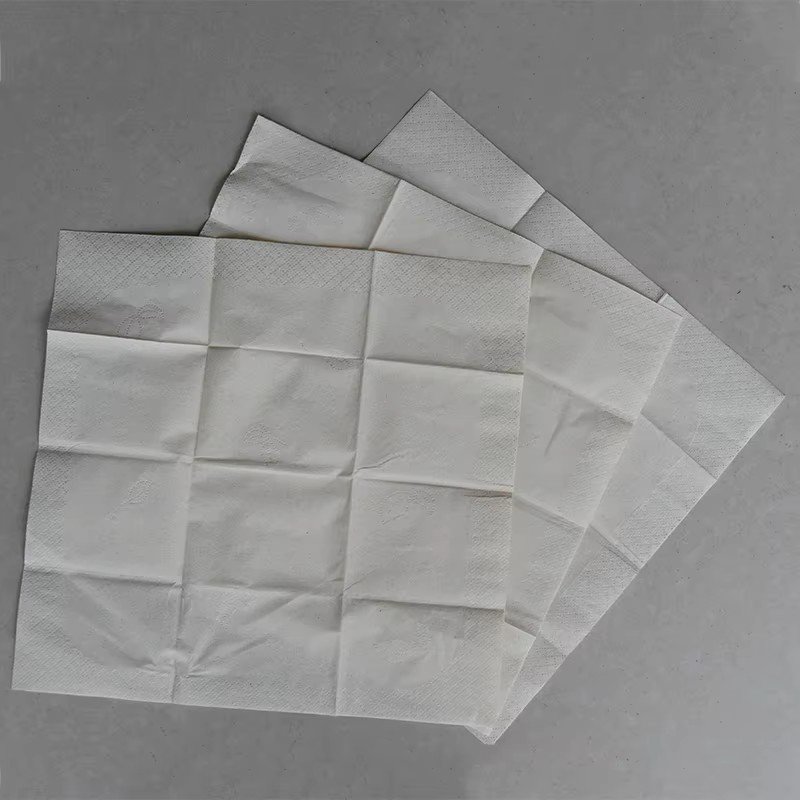
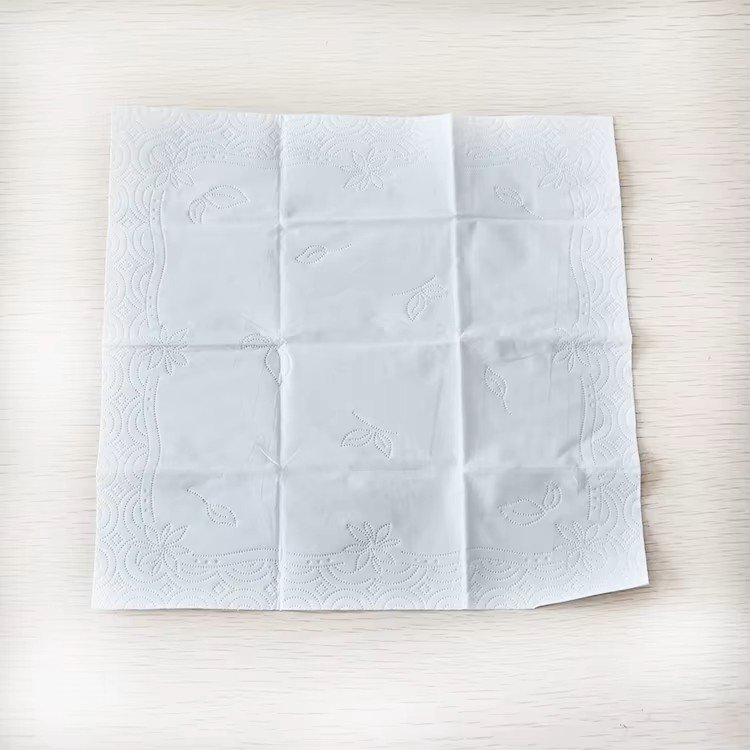
Three embossing processes are available: micro embossing, edge embossing, and 3D web-pattern embossing in Deco and point-to-point forms. On a travel pack, embossing does two jobs at once — it softens the hand feel and it gives the sheet visual texture that reads as quality through a clear film window.
Micro embossing is the usual retail choice: a fine all-over pattern that softens the sheet without adding bulk the pack cannot absorb. Edge embossing defines the sheet perimeter and holds plies together at the edge, which matters on a small format where an unbonded edge looks untidy the moment the pack is opened. Deco and point-to-point patterns are the premium route, adding real bulk and a visible decorative pattern — the right choice for a brand giveaway where the pack is meant to be noticed.
Proprietary embossing patterns are supported on the private label side of the operation, which means an emboss can itself become a brand asset rather than a generic texture.
5. Individual Pack Colour Printing
This is the option that turns a commodity into a piece of brand media, and it is explicitly supported: individual pack colour printing is available on the pocket tissue line, so the film wrap itself carries your artwork rather than a generic neutral pack being labelled afterwards.
Printed film changes the economics of the order, because it introduces plate-making and print setup. It also changes what can go wrong. Three things to fix in the brief:
Colour count and process. Colour count drives plate cost and the achievable artwork. As a reference point for the print capability on the converting side of this factory, the napkin line runs 1 to 4 colour printing in eco water-based ink — the custom printed napkin guide covers how colour count interacts with substrate and fold format. Confirm the colour count and ink system for your specific pack film in the brief rather than assuming it carries across from another product line.
Artwork against the dieline. A travel pack is a small, curved, sealed surface with a fold and a peel-open area. Critical artwork — logo, text, barcode — has to sit inside the printable panel and clear of the seal. Supply vector artwork against the factory’s dieline.
Proofing on the actual film. Colour approved on a monitor and then judged on printed flexible film will not match. Require a physical printed proof on the production film and sign colour against that.
6. Multi-Pack Combination and Outer Carton
Pocket tissues support multi-pack combinations, which means the bundle is itself a specification rather than a packaging afterthought. Bundles decide the retail unit, the shelf facing, the carton count and ultimately the container fill.
For retail, the bundle is the saleable unit: a shrink-wrapped multi-pack that presents as one product on a shelf peg or in a convenience fixture. For promotional orders, the bundle is a distribution unit — how many packs a marketing team hands out per event, per flight, per hotel room — and getting it wrong means loose packs arriving at a venue with no way to count or carry them.
Specify bundle count, bundle wrapping method, bundles per carton and carton specification together. Pre-shipment final inspection covers carton specification and drop test, so the carton should be designed for ocean freight rather than for a shelf. Shipments use thickened waterproof corrugated outer cartons, fumigation-free pallets with high-tensile strapping, and a pre-loading container seal and watertightness check.
7. Fibre Furnish, Softness and Dust Control
The last option is the one buyers most often leave to the supplier, and it is the one that decides whether the pack feels like a quality product or a cheap one.
Pocket tissues on this line are built in high-toughness, ultra-soft virgin wood pulp — the toughness matters because a travel pack is pulled one-handed, often hurriedly, and a sheet that tears during that pull is the failure mode this format is most exposed to. All products are made from 100% virgin wood pulp with a balanced long and short fibre ratio, with no recycled or reprocessed pulp added at any point.
Two further properties are worth specifying explicitly. Zero-Dust Technology — micropore purification that controls the paper dust rate — is what stops a travel pack shedding lint into a handbag, a camera bag or a lapel, and it is the property that makes the format acceptable for sensitive skin. And the additive position: no fluorescent brightening agents, no harmful chemical additives, food-contact safe. For a promotional pack that ends up in a child’s hand at a family event, or for an aviation amenity pack, that position is a procurement requirement rather than a nice-to-have.
Order Economics for Travel Tissue Packs
| Order type | Packaging | Minimum order | Production window | Best for |
|---|---|---|---|---|
| White label / plain stock | Neutral pack and carton | 1 x 20GP container | 20-25 working days on reorder; first order 25-30 working days | Testing a market, distributor stock lines, urgent replenishment |
| Custom printed private label | Printed individual pack film and printed carton | 1 x 40HQ container | 25-30 working days first order, including plate-making and carton printing; 20-25 working days on reorder | Retail brand ranges, promotional campaigns, aviation and hospitality programmes |
Sampling across both routes takes 1 to 3 working days for production and dispatch of small samples, which is fast enough to run several rounds before committing a container. Payment is 30% T/T deposit with the 70% balance before shipment, and the QC documentation — the 100% virgin wood pulp COA covering tensile strength, brightness and virgin fibre verification, the wet tensile and dust-rate test video pack, and the container reinforcement and moisture-proof packing photographs and video — is provided before the balance falls due. Shipments depart direct from Tianjin Xingang Port on FOB, CIF, CFR or EXW terms. For a promotional order tied to a fixed event date, work backwards from the event through transit, then through the 25 to 30 working day first-production window, then through sampling rounds; that arithmetic is where campaign deadlines are actually won or lost.
Client private label artwork and formulations are permanently sealed and archived, and repeat orders carry no duplicate plate-making fee — which materially changes the cost of a second campaign using the same design. The OEM and private label service covers how that archive works across a brand’s product range.

Specification Checklist for a Travel Pack Order
Seven options means seven lines on a specification sheet, plus the packaging and logistics frame. Send all of them in the first inquiry and the quotation that comes back will be comparable to anyone else’s.
- Sheet count per pack, sheet size and fold.
- Pack configuration — multi-sheet bundle or individually wrapped portable pack.
- Ply — 1, 2 or 3, with lamination or adhesive bonding stated.
- Basis weight in GSM, with the per-ply or finished-sheet definition.
- Embossing — micro, edge, or Deco and point-to-point, named specifically.
- Pack film artwork — colour count, ink system, vector files against the dieline, physical proof on production film.
- Bundle count, bundle wrapping method, bundles per carton, carton specification.
- Fibre furnish and dust control — 100% virgin wood pulp, zero-dust micropore purification, no fluorescent brightening agents.
- Quantity and packaging route — 20GP white label or 40HQ custom printed.
- Trade terms and payment — FOB, CIF, CFR or EXW from Tianjin Xingang Port, 30% deposit and 70% before shipment.
Buyers who also carry boxed or soft-pack facial tissue will find the pack-format logic overlaps: the boxed versus soft-pack facial tissue comparison covers how flexible film packaging behaves against rigid formats, which is the same trade-off a printed travel pack film carries.
Frequently Asked Questions
What are travel tissue packs?
Travel tissue packs are small portable packs of virgin pulp tissue, produced either as multi-sheet packs or as individually wrapped portable units, sized for a pocket, handbag or amenity kit. They are supplied into retail shelves, business travel and aviation, and enterprise promotional gifting and brand giveaways.
Can travel tissue packs be custom printed?
Yes. Individual pack colour printing is supported on the pocket tissue line, so artwork is printed directly onto the pack film rather than applied as a label. Colour count, ink system and artwork files against the factory dieline must be confirmed in the brief, and colour should be signed off against a physical proof on the production film.
What is the minimum order for custom printed travel packs?
One 40HQ container for custom printed packaging. White-label and plain stock pocket tissues start from one 20GP container. First production runs 25 to 30 working days including plate-making and carton printing; repeat orders run 20 to 25 working days, and archived artwork means no duplicate plate-making fee on reorder.
Which ply is best for a promotional travel pack?
Two-ply is the standard position for retail travel packs because it gives enough body to stop users doubling up without the fibre cost of 3-ply. Three-ply is used for premium retail and high-end brand giveaways where the pack should feel like a gift; one-ply is used for high-volume promotional runs where price point is the whole proposition.
How long before a promotional order should I place it?
Work backwards from the event date through ocean transit, then the 25 to 30 working day first-production window, then sampling — which takes 1 to 3 working days per round, with the number of proofing rounds your artwork needs to be confirmed against the factory before you commit a container. A first custom-printed campaign realistically needs the production window plus sampling plus transit before packs are in hand.
Are travel tissue packs suitable for sensitive skin?
Pocket tissues are built in high-toughness, ultra-soft 100% virgin wood pulp with no recycled content, and Zero-Dust Technology micropore purification controls the paper dust rate for sensitive-skin and lint-free requirements. The line carries no fluorescent brightening agents and no harmful chemical additives, and is food-contact safe.
Seven Options, One Specification Sheet
Travel tissue packs reward buyers who treat a small format with full specification discipline. Sheet count and pack configuration set the physical product; ply, basis weight and embossing set how it feels; pack film printing sets how it looks; bundle and carton configuration set how it travels; and fibre furnish with dust control sets whether anyone complains afterwards. Put all seven on one sheet, sample it, and the container that arrives matches the pack you approved.
More pocket tissue formats, promotional packaging guidance and container planning material is collected in the pocket tissue library. To request travel pack samples, price a printed promotional run against a fixed event date, or review an existing pack specification, contact the Top Source Paper team — samples are prepared and dispatched within 1 to 3 working days, and inquiries can also go to info@chinatoiletpaper.com or +86-13180210660 on WhatsApp.
Related reading: For pocket tissue sourcing for retail and promotions, see our guide on this topic.
For travel and hospitality amenity buyers specifically, the individual tissue pack sourcing guide covers per-pack printing, MOQ, and format selection in more detail.
Once the options are chosen, order size and timing decide the buy: the pocket tissue pack ordering guide works through quantity maths and the campaign calendar.
Customization options are catalogued here; the promotional pocket tissues campaign guide decides which of them a first campaign should commit to.