Search “personalized toilet paper” and the first page is a gift shop. A roll printed with somebody’s face, sold one unit at a time, sent by parcel. That is not the buy discussed here. The buy discussed here is a hotel group’s procurement file: a guest-room standard, a wordmark on the inner bag, and a container that lands with the same white and the same print as the container before it.
Hospitality buys paper as a consumable, not as a souvenir. The line behind this article runs 1-ply to 3-ply at 13-18 GSM, cored or coreless, with edge embossing and a water-soluble formula, and its stated applications include hotel guest-room batch replacement. Personalization sits on top of that paper as a packaging and core decision. That is why format, artwork and goods-in proof belong in one purchase order instead of three email threads.
Key Takeaways
- A hospitality order fixes three layers at once: the paper spec, the printed surface, and the paperwork that proves the container. A novelty gift fixes the printed surface only, for one unit.
- Guest rooms sit on the standard roll line — 1, 2 or 3-ply, 13-18 GSM, cored or coreless, edge embossing, water-soluble. Lobby and public restrooms sit on the jumbo line, 18-28 cm diameter, 2 or 3-ply, long-fibre tensile.
- Colour-printed cartons and outer packaging bags are the stated private-label print objects. Core inner diameter is a customizable dimension; a printed core is quoted separately.
- Colour count is a purchase-order decision, not a catalogue value. The mill’s printed napkin line states 1-4 colour eco water-based ink; on a roll order the count follows the artwork and the quote.
- White-label and unprinted starts at a 20GP, consolidatable across formats. Custom colour print starts at 1×40′HQ.
- Artwork and formula are archived under encryption, and reorders carry no repeat plate fee. Samples go out in 1-3 working days, first bulk takes 25-30, reorders 20-25, all out of Tianjin Xingang.
What Personalized Toilet Paper Means in Hospitality
Three things travel together in a hospitality order, and keeping them apart is the whole discipline of specifying one.
- The paper spec. Ply, position inside the 13-18 GSM band, cored or coreless, embossing, and whether the sheet is water-soluble. The executive housekeeper owns this layer, because it is their staff handling it twenty times a day.
- The printed surface. Which layer carries the mark, at what colour count, on which packaging object. Brand or marketing owns it, and they usually want more of it than the container plan can carry.
- The paperwork. Inspection report, test video, loading photographs. Procurement and finance own it, because the 70% balance is released against those documents.
A novelty purchase fixes the second layer for one unit. A hospitality purchase fixes all three, then repeats them. The repetition is the product; the print is only the visible part of it.
The commonest failure is a supplier who treats the artwork file and the paper spec as one conversation. The sample arrives looking exactly right and feeling wrong: correct print, a different ply than the tray standard, and housekeeping rejects it. The clock restarts at 25-30 working days, and a property that opened on schedule now has rolls on a service trolley instead of in the guest-room tray.
Two adjacent decisions are documented elsewhere on this site and are not reopened here. Ply, scent and embossing formulation belongs to the private-label formulation page. The generic logo and packaging option set for printed rolls belongs to Custom Printed Toilet Paper: Logo and Packaging Options. This article stays on the hospitality scenario: which format goes on which floor, where the print attaches, what a reorder costs, and what gets signed at the dock.
Here is the test for which buy you are actually in. If the order can be re-placed eighteen months from now and the guest cannot tell the difference, it is a hospitality buy. If it cannot, you ordered a gift.
Choosing the Roll Format by Floor
A hotel does not buy one toilet paper. It buys three, and the container plan turns expensive when a group pretends otherwise.
Guest rooms take the standard roll line. Its stated range covers 1, 2 and 3-ply at 13-18 GSM, cored or coreless, with edge embossing and a water-soluble formula, and hotel guest-room batch replacement is one of the applications written against it. Cored and coreless are both on the line; which one your holder takes is a fixture question, settled with a sample inside 1-3 working days rather than with an argument. Roll geometry for that fixture is on the toilet paper roll dimensions page.
Lobby floors and public restrooms take the jumbo line, whose stated diameter band is 18-28 cm in 2 or 3-ply, built for long metreage and high tensile strength from a long-fibre ratio. Its written applications are office towers, airports, hospitals and factories — the same duty cycle as a lobby washroom at checkout hour or a banquet restroom on event night. The existing dispenser cavity decides where inside that band you sit; measure the holder before anyone quotes.
Banquets and events are usually not a roll decision at all. Folded napkin formats and printed small packs are where event branding earns its keep, and the boxed guest-room and lobby-tissue side of that hospitality split is covered in Hotel Facial Tissue: Specifying Guest-Room and Lobby Boxes at Scale.
| Floor | Format on the Line | What the Line Specifies | Where Personalization Attaches | What You Verify First |
|---|---|---|---|---|
| Guest room | Standard toilet paper | 1-3 ply, 13-18 GSM, cored or coreless, edge embossing, water-soluble | Inner bag and carton; core diameter is a spec choice | Holder fit and how the roll presents in the tray |
| Lobby and public restrooms | Jumbo roll (JRT) | 18-28 cm diameter, 2-3 ply, long-fibre tensile, long metreage | Wrap and carton, matched to the dispenser core | Cavity depth of the dispenser already installed |
| Banquet and event floors | Napkin and small-pack formats | Fold styles, dispenser refills, printed individual packs | Sheet print and pack print | Whether event print is a standing item or a one-off |
| Staff and back-of-house | Standard or jumbo, unprinted | Same paper classes, white-label packaging | Carton marking only | Cost in use, not brand presentation |
One discipline the table protects: no gram value inside that 13-18 GSM band is a personalization specification. GSM belongs to the paper, is fixed on the PO, and is checked at the in-process gate. Anyone who quotes a “hotel-grade GSM” as though branding the packaging changed the sheet is selling a number, not a product.
Our reading for a group running both a guest-room standard and a high-traffic public floor: split the container plan instead of forcing one format to do both jobs. A jumbo roll presented in a guest-room tray looks like a cost-cutting decision to every arriving guest, and a small cored roll in a lobby dispenser doubles the restock labour that a long-metreage format exists to remove.
Where the Print Sits on Core, Wrap and Carton
The documented print object on a private-label order is the colour-printed carton and the outer packaging bag, at the 1×40′HQ tier. The decision criteria written for brand owners on this line also name a custom core inner diameter and a proprietary embossing pattern. Five attach points, in the order people usually see them:
- Outer carton. Receiving docks and storeroom shelves see it; no guest ever does. Its practical job in a hospitality order is a sort key — floor, room type, property code — so the housekeeping team can split a pallet without opening it.
- Inner bag or packaging bag. The layer a guest finds in the tray. This is the highest-value print position in a guest room, because it is the only one the guest touches.
- Individual roll wrap. Visible in a public restroom where rolls are stacked or displayed. It adds a packaging design to the same volume maths as every other design.
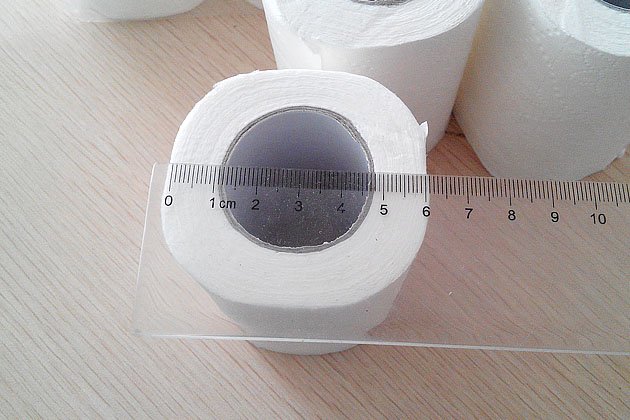
- Paper core. Nobody reads the core until the last two metres of a roll. What is documented as customizable about it is the inner diameter, which matters because the holder decides whether the core even shows.
- Embossing pattern. A tactile brand mark on the sheet itself. It is a formulation and pattern decision, documented on the embossing specification page, and it is not reopened here.
Setup follows the number of designs, not the number of properties. Each printed packaging object needs its own plate and proof cycle, and the custom-print minimum is quoted per container. Whether one 40′HQ can absorb two carton designs is a question for the quote, and the answer changes the group’s whole artwork strategy — so ask it before marketing commissions a different bag per property.
| Print Layer | What Is Documented | Who Sees It | Setup Consequence | Hospitality Read |
|---|---|---|---|---|
| Outer carton | Stated print object on a private-label order | Receiving dock, storeroom | One plate per design; custom-print tier | Use it as a sort key, not as branding |
| Inner bag | Stated print object alongside the outer bag | The guest, in the tray | Its own plate and proof cycle | Best guest-facing value per plate |
| Roll wrap | Quoted per artwork; confirm on the PO | Guests in public restrooms | Another design in the same volume maths | One colour unless the mark needs more |
| Paper core | Inner diameter is a customizable dimension | Nobody until the roll runs out | A diameter change is a spec, not a plate | Match the holder first, print last |
| Embossing pattern | Micro, edge and deco patterns on the line | The guest holding the sheet | A dedicated pattern is a brand decision | Owned by the embossing page |
Where a group insists on one compromise, put the guest-visible mark on the inner bag and hold the carton to a functional one-colour marking. Carton decoration is bought for a storeroom nobody photographs, and every extra design on it multiplies the volume commitment without touching what the guest actually sees.
Colour Count and Artwork Decisions per Format
Colour count is a purchase-order decision on a roll order, not a value in a catalogue. The clearest documented figure in the portfolio belongs to the printed napkin line, which states 1-4 colour eco water-based ink; read that as evidence of what the mill’s printing units do, and not as a toilet-paper specification. For guest-room or lobby rolls, the count follows your artwork and comes back in the quote, so confirm it against the proof rather than against an article.
Why the count costs time and not only money: each colour is another pass through the print unit, and the first bulk window of 25-30 working days already absorbs packaging plate-making, sampling and outer-carton printing. Extra colours consume slack from that same window. A reorder at 20-25 working days has less slack to give, which is one reason hospitality groups decide the colour count once and then defend it.
What the safety standards actually cover: the portfolio is 100% virgin wood pulp with a balanced long and short fibre ratio, no recycled fibre, no fluorescent brightening agents, no harmful chemical additives, food-contact safe, and flushable. The water-based ink statement sits on the napkin line, where paper touches lips. On a guest-room roll the guest-facing properties are the zero-dust micro-pore purification and the edge embossing, because loose fibre shows on dark furniture and on white linen.
Artwork discipline that pays for itself in proof cycles:
- Test the mark at printed scale. A wordmark that reads clearly in a PDF can collapse into a grey block at 12 mm on a curved wrap. Ask for the proof at finished size, not a screen mock-up.
- Decide reverse treatment early. A light mark on a dark bag needs a solid background pass, which is a colour decision, and it is cheaper to change on day two than after the plate is cut.
- Keep property-specific variation off the print. Put the property code on the carton as a one-colour marking and keep the guest-facing artwork identical across the group; the archive then serves every site.
- Write the colour count into the PO next to the artwork file name, so goods-in can be judged against a stated number instead of an expectation.
A buyer’s note on cost: personalization setup is not priced per colour in any published figure here, so treat colour count as a timing and repeatability decision, and take pricing from the quote.
The Reorder Economics of the Plate Archive
The stated policy: a client’s private-label design drawings and formula are permanently sealed and archived under encryption, and reorders are not charged a repeat plate fee. For a hospitality group, that single sentence changes the shape of the cost curve.
Run the arithmetic on a five-year program reordered twice a year. That is ten production runs. The plate and formula are paid for on run one; the nine reorders that follow are setups avoided. Nobody can price the saving without your quote, but the count is fixed by the policy, and it is why a group with a settled guest-room standard should settle it before the first container rather than during the third.
The second effect is qualitative and matters more to a general manager. The archived formula is the mechanism behind consistency: the same artwork, the same printed colour count, and the same paper recipe are what make year three look like year one to a returning guest. Consistency is not assumed on the line, it is measured — the first QC gate tests tensile strength and brightness on the incoming virgin mother roll of every run, which is how a whiteness drift gets caught before it reaches a tray.
Three caveats worth writing into the PO:
- The free archive serves identical artwork. A revised wordmark is a new design, a new plate and a new proof cycle; a brand refresh is not discounted by an archive built for the old mark.
- The archive is held as client-specific, under encryption. If your standard is commercially sensitive, ask for that wording stated on your order rather than assumed.
- Volume planning still rules. An archived plate removes a fee, not the custom-print container minimum, which stays at 1×40′HQ; the tiers are compared in Tissue Paper MOQ: 20GP vs 40HQ.
If the group is deciding whether to brand at all, the route-to-market choice is a separate question, answered for launch-stage brands in Private Label Tissue Paper Launch Guide, and for the white-label versus private-label split on the OEM page below.
Specify the guest-room standard once, then let the archive carry it.
The OEM and private label programme is where a hospitality buyer fixes ply, GSM position, core choice and the printed packaging object on one order. Samples go out in 1-3 working days from the same line that runs the container, and the artwork filed with your first order is the artwork your reorders draw on.
100% virgin wood pulp | Custom printed carton and bag | Tianjin Xingang, FOB / CIF / CFR / EXW
Timeline From Sample to Ship for a Hospitality Order
Hospitality calendars are unforgiving: a renovation wave, a contract renewal, a property opening on a date someone else chose. Every one of them is a reverse-calculation problem, and the working-day figures below are the numbers you calculate backwards from.
| Stage | Working Days | What Happens | Hospitality Consequence |
|---|---|---|---|
| Sample and proof | 1-3 to dispatch | Samples made and sent; artwork proof returned | Fixes the tray standard before a plate is cut |
| First bulk run | 25-30 | Includes packaging plate-making, sampling and carton printing | The number to count back from an opening date |
| Reorder | 20-25 | Plate and formula already archived; no repeat plate fee | Reorder at two pallets low, not two weeks low |
| Port and transit | Set by your lane | Ex-Tianjin Xingang on FOB, CIF, CFR or EXW | Transit sits after the mill’s clock, not inside it |
Worked example, using only the published working-day figures and a self-set opening date. Target: guest-room rolls in the tray for a 1 December hand-back. Place the order so the 25-30 working day run finishes with slack, allow the 1-3 day sample round to happen before the plate is cut rather than alongside it, and add ocean transit from your own forwarder’s schedule — nobody’s mill data covers your lane. A buyer who starts the sample and the PO in the same week will discover that approval of a hand feel takes a floor walkthrough, and a floor walkthrough takes a manager with time.
Payment timing is part of the schedule. Terms are a 30% T/T deposit with the 70% balance before shipment, and the inspection report plus the container sealing video are provided ahead of that release. The documents therefore arrive while you still have commercial leverage, which is exactly the order of operations a hospitality procurement file wants.
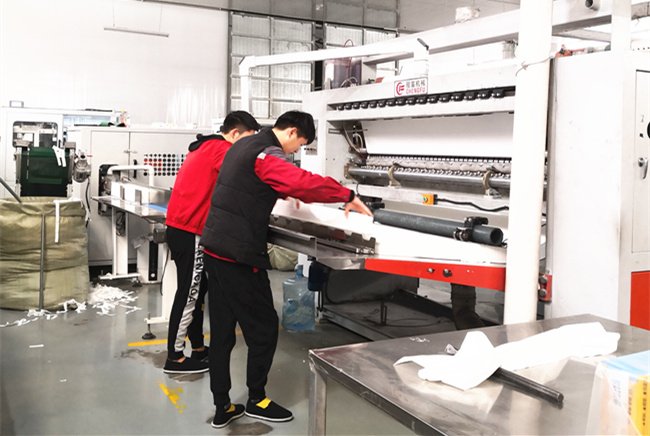
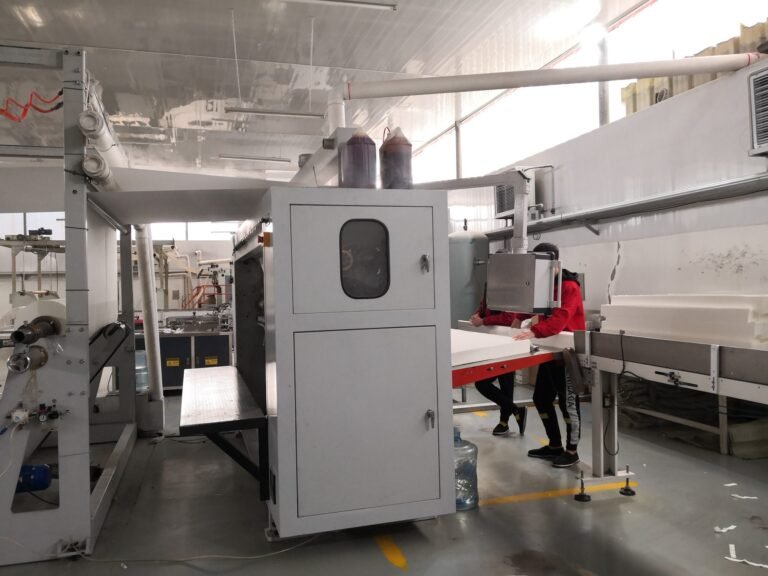
The converting line where a container like this is built runs continuously, and seeing it once is cheaper than arguing about it after a container lands.
Video: “toilet tissue paper manufacturing process” on the Top Source Paper channel (@topsourcepaper4025). It shows the tissue converting line — rewinding, embossing and cutting. It is not a personalized print run, and the printed packaging objects discussed above are produced on the printing units, not in this clip.
What a Hospitality Buyer Signs Off at Goods-In
A branded container is only finished when someone at the property's dock can prove it matches the order. Three quality gates run inside the factory, and each answers a different question the receiving team will ask.
- Gate one, mother-roll sampling. Tensile strength and brightness are tested on the incoming virgin parent roll. This is the gate that predicts whether the white in this container matches the white in the last one — the drift a returning guest notices as "they changed the paper".
- Gate two, in-process rewind inspection. GSM, web tension and the perforation line are checked while the roll is rewound and cut. Tension drift is how a roll that should last a week lasts four days, and short-metreage claims die here.
- Gate three, pre-shipment total check. Carton specification and drop testing are verified before sealing. For a hospitality buyer this is the gate that protects the printed carton itself: the marking a housekeeping team reads has to survive pallet stacking and a dock fork.
Three artefacts travel with the shipment, and a procurement file should name them rather than request "quality documents": the 100% virgin fibre COA covering tensile strength and brightness with virgin-fibre verification; the burst-resistance inspection video; and the photograph or video set showing container reinforcement and moisture-proof packing.
The third artefact deserves hospitality attention. Guest-room stock usually lives in a basement store beside a service lift, and printed cartons sitting on a damp floor are the first thing to fail. The stated protection is a high-strength, heavy-gauge waterproof corrugated outer carton, standard fumigation-free pallets with high-tensile strapping, and a container integrity inspection: sealing and water-tightness are checked before loading, so the long ocean leg arrives without mould. Verify the loading photographs against your own pallet plan, because "reinforced" is a claim until you see the strapped stack.
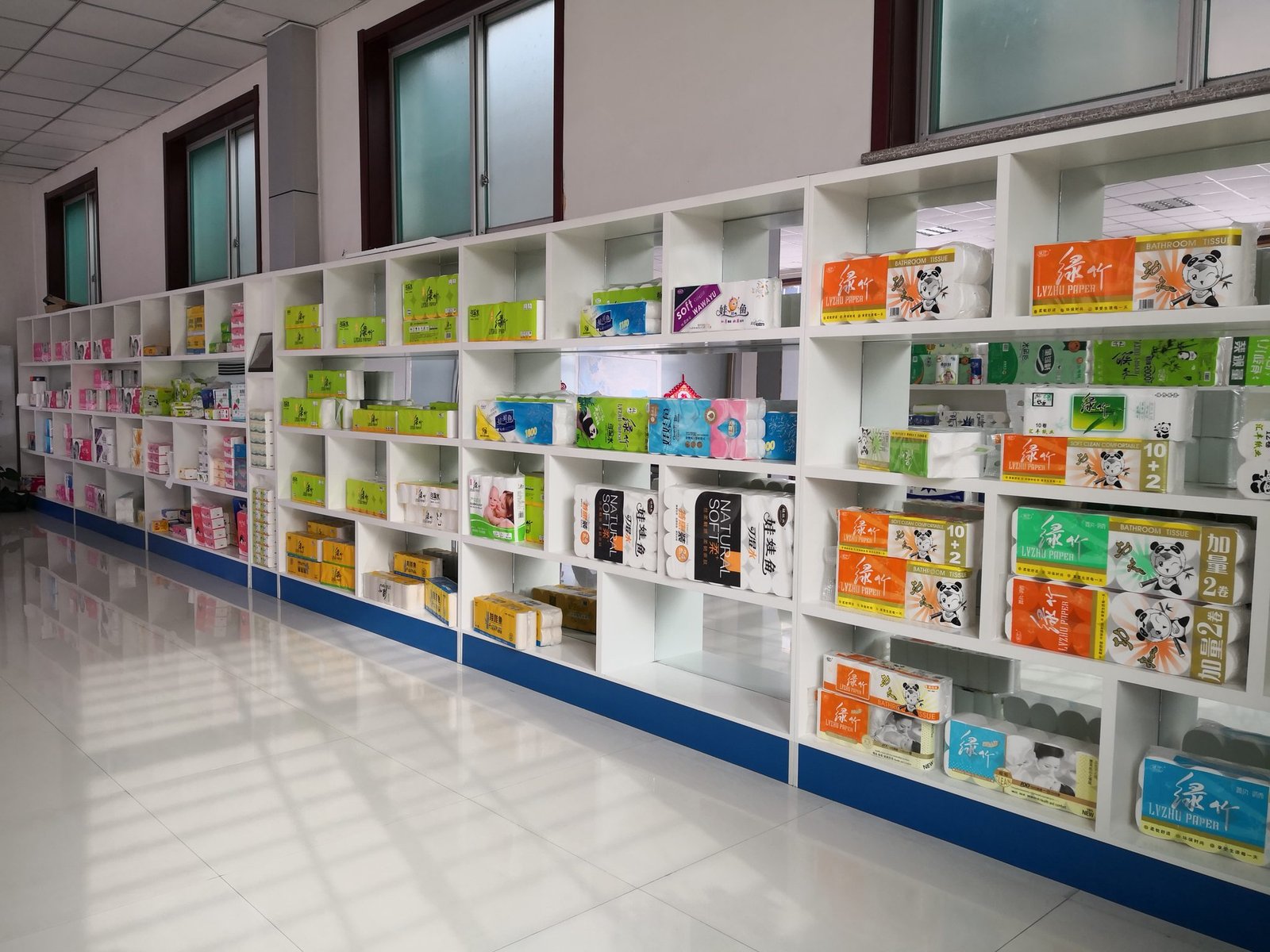
The receiving routine we recommend for a group property: count cartons against the figure printed on the carton and repeated on the PO, check the guest-facing bag's print registration against the retained proof, pull two rolls and place them in the actual holder, and file the three artefacts in the procurement record before the property accepts delivery. Six minutes at the dock, and a mismatch becomes a conversation about a document instead of a conversation about a feeling.
One more proof point, on the paper side rather than the print: a water-soluble guest-room roll is a stated property of the standard line, and it matters in old plumbing and in low-flow fixtures. Test it yourself on the sample — a sheet dropped in a bowl of water should break down within the behaviour your plunger-free maintenance policy assumes. Buyer verifies; no published breakdown time is claimed here.
Personalized Toilet Paper for Hotels FAQ
Is personalized toilet paper only a novelty gift item?
No. Hotels order it as a private-label standard: their own packaging and roll format for guest rooms, lobby floors and events. A novelty print sells one unit; a hospitality order repeats the same standard from an archived plate, season after season.
Can I personalize guest-room rolls without a large MOQ?
Not for print. Custom colour-printed packaging starts at 1×40′HQ, while unprinted white-label rolls start at a 20GP that a group can consolidate across formats. If your volume cannot reach a 40′HQ, fix the paper standard on the 20GP tier and brand the packaging once consumption justifies the container.
Do I pay the plate fee again when I reorder?
No. The client's design drawings and formula are archived under encryption, and reorders carry no repeat plate fee. That applies to identical artwork; a revised wordmark is a new design and should be quoted as one.
Which roll format suits a hotel guest room versus an event?
Guest rooms take the standard roll line, cored or coreless to match the holder. Public restrooms take the jumbo line, whose 18-28 cm diameters fit commercial dispensers. Events are usually a napkin or printed small-pack decision rather than a roll one.
What documents prove a personalized private-label container arrived correct?
Three named artefacts travel with the shipment: a 100% virgin fibre COA covering tensile strength and brightness, a burst-resistance inspection video, and a photograph set of the moisture-proof palletised loading. Add the gate-three carton and drop-test record, and a mismatch is challenged against documents.
Conclusion and the Six Decisions to Settle Before Ordering
Personalized toilet paper becomes a hospitality product the moment three layers are fixed together: the paper, the printed surface, and the proof. Format, artwork and paperwork decided in one conversation cost one plate; the same decisions made in three conversations cost three containers of rework.
Settle these six on the purchase order before anyone cuts a plate, in this order:
- Walk one guest room and one public restroom, and write down the holder in each — cavity depth, core fit, how the roll presents. Format follows the fixture.
- Fix the paper spec inside the line's published range: ply, position in the 13-18 GSM band, cored or coreless, edge embossing, water-soluble where plumbing needs it.
- Choose one printed object for the guest and one functional marking for the storeroom. Fewer designs means one archived artwork serving the whole group.
- Decide the colour count against the proof at finished size, and write the count next to the artwork file name.
- Confirm the MOQ tier honestly: a 20GP white-label consolidation now, a 1×40′HQ custom print when the group's consumption supports it.
- Name the three goods-in artefacts on the order, and release the balance only after the report and the sealing video arrive.
Reorders then run on the archived plate at 20-25 working days, and the guest sees the same paper in the same bag for years. Send the holder details, the artwork and your target opening date, and we will confirm which roll format and which printed packaging object the line can hold inside your container plan.