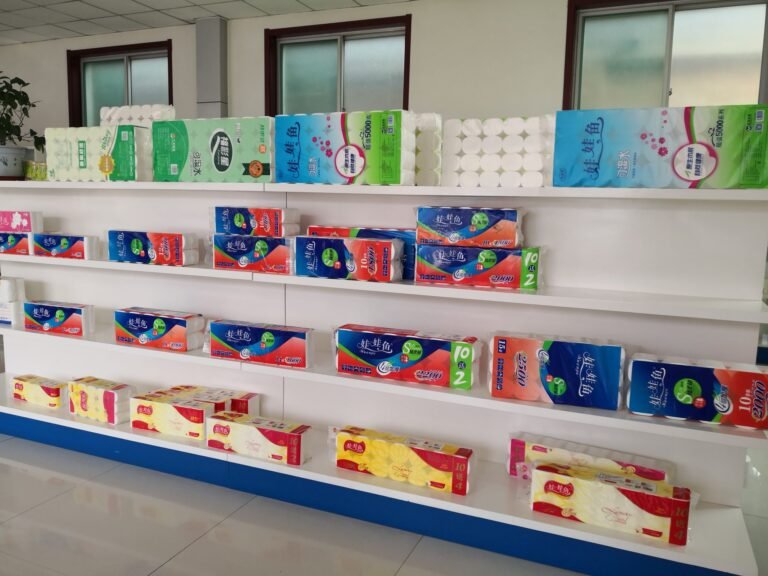
When a rival supplier’s number for cheap bulk toilet paper lands well under your current landed cost, the question is not whether the price is possible. It is which of four specification valves was turned to make it so. Every container from our Baoding Mancheng mill is priced by four dials: grammage inside the published 13–18 GSM band, ply count, the slit metreage on each roll, and whether the roll is cored or coreless. Turn the right dial and a low quote is honest economy you should take; turn the wrong one and it is an under-specified roll that fails your goods-in check and costs you the reorder. This guide is that audit: what a low number is made of, the questions that separate cheap from under-specified, a ten-minute no-lab triage on a sample, and where a cheap container loses its edge after landing. We publish trade-offs, never a currency figure.
Related on this site: verifying a declared sheet count on wrapped rolls at arrival.

What a Low Toilet Paper Number Is Actually Made Of
A quotation for container-quantity bath tissue is four lines every buyer already fills in: grammage, ply, metreage per roll, core type. Turn any one down and the number falls; turn the wrong combination down and the roll stops being the product you agreed to shelf. Read a cheap quote line by line, asking which valve the seller moved, since each has a different consequence at goods-in.
Here is the trade-off to check before you commit a 20GP. The first column is the valve, the next two what turning it down buys and costs, the last whether a low number is legitimate economy or a defect dressed as price. Read it against the rival sheet.
| Spec valve | What turning it down saves | What it gives up | Economy or defect? |
|---|---|---|---|
| GSM at the low end of 13–18 | Fibre per square metre, straight off the parent roll | Bulk hand-feel and wet strength; more give when a roll is handled damp | Legitimate economy when the low end suits the venue |
| Ply count (3 to 2 to 1) | A whole layer of web and the bonding step | Perceived thickness; edge integrity under a pull | Economy if the shelf story matches 1-ply, defect if it is sold as 2-ply |
| Slit metreage per roll | The single biggest material lever on a roll | Nothing, if it is stated honestly; everything, if it is shorted | Economy when declared, the classic defect when disguised |
| Core: cored vs coreless | Cardboard tube and a little machine time | Dispenser fit and how the last metres unwind | Economy for the right fixture; a mismatch, not a saving, for the wrong one |
Three of the four valves shrink something real; one — metreage — shrinks nothing so long as the sheet’s number is the roll’s number. That is why the valve, not the number, is the whole audit: a currency figure says nothing about which one moved. Grammage is a whole-portfolio 13 to 45 GSM range, but the working band for standard bath tissue is the tighter 13–18, where a cheap quote almost always sits.
Reading the Spec Ladder Line by Line
Start with grammage, the line buyers argue about and suppliers quietly satisfy. Inside 13–18 GSM, the low end gives up two things a purchasing officer feels: bulk, dense hand-feel and some wet handling — a 13 GSM web tears across a damp pull sooner than an 18. What it does not automatically give up is whether the fibre is virgin. Our standard is 100% virgin wood pulp with blended long- and short-fibre furnish and no reclaimed waste paper at any grammage, so a cheap GSM number is not evidence of recycled stock. Grammage and furnish are separate dials.
Ply is the second rung, mostly a perception lever dressed as a structural one. We do not re-argue ply mechanics; our piece on 1-ply vs 2-ply vs 3-ply toilet paper owns that. What matters at the quote table is whether the stated ply matches the sold thickness story, because a 1-ply roll embossed to look like 2-ply reads “cheap” on the pallet and disappoints on the shelf.

The third rung, slit metreage, is what our quality clause names as a fraud target: we hold rewind tightness and cut length so neither grammage is overstated nor metreage runs short. That is the High-Yield Meterage Control clause: “short metres at a stated weight” is how an otherwise honest sheet becomes a dishonest roll. A buyer comparing two quotes at the same GSM and ply should ask what metreage each one contains; that number can be worth more than the headline price.
The fourth rung is core type, treated only as a length-buying question, not tube-weight arithmetic. Our coreless vs cored toilet paper article covers which fits which dispenser and budget. For the audit, dropping a core lowers cost but only helps you if the receiving fixture was built for coreless.
Three Questions That Separate “Cheap” From “Under-Specified”
Hand any supplier’s low number three questions and the answer usually reveals itself in the phrasing.
Question one: what was removed to reach this price? A mill with nothing to hide points at a valve from the table (“the 13 GSM end, single core”). A mill under-specifying points at nothing, or answers with an adjective — “premium economy,” “best seller.” The absence of a named valve is the signal.
Question two: which of our three QC gates would have caught it if the roll were worse? Our inspection runs three fixed checkpoints: a parent-roll spot check on tensile and brightness, an in-process rewind check on grammage, tension and perforation line, and a pre-shipment total check on carton spec and a drop test. A too-light web and a roll cut short on length are both caught at checkpoint two. If a seller cannot name which gate their goods pass, the odds one exists drop sharply.
Question three: which COA line would show it? Every container ships with a physical-indicator report covering tensile strength, brightness and 100% virgin-fibre verification. A furnish problem surfaces on the virgin-fibre line; a strength shortfall on the tensile line. Brightness has its own treatment here and we will not re-run that test — see our toilet paper brightness guide — but a low number should trace to a line on the paperwork, not a claim in an email.
The 10-Minute Goods-In Triage (No Lab)
You do not need a laboratory to falsify a suspicious pallet. Three tests on a finished roll, ten minutes at the dock, map one-to-one onto our published checkpoints.
The first test is a dust shake. Unwrap a roll, shake it three times over a dark surface, look at what settles. Fine powder means something: reclaimed or short-fibre furnish sheds, and we add no recycled waste pulp at all. A clean shake does not prove virgin fibre on its own; it tells you to check the COA virgin-fibre line, the same thing our parent-roll gate checks.
The second test is a wet pull. Damp one edge of a finished sheet and pull slowly. A web at the low end of the GSM band gives sooner than a heavier one — that is the expected trade-off, exactly what the grammage valve bought you. What should not happen is a clean tear along a bond line, which points at the layer story, not the weight.
The third test is a ply-separation count at the perforation. Tear along the perforation line and count how many layers come apart. If a sheet sold as 2-ply separates into one, you have a defect priced as economy, and you can hold it against the spec line you signed off.
Record the result not as an argument but as a reorder term. A pass means you book the next container; a named fail means the spec line it touches, not the price, becomes what you renegotiate.
| Goods-in test | What a fail reveals | Matches which mill gate | Reorder term if it fails |
|---|---|---|---|
| Three-shake dust test over a dark card | Shedding furnish; a reason to verify the virgin-fibre COA line | Gate 1, parent-roll spot check | Re-open the furnish spec, not the price |
| Wet pull on a finished sheet | A bond-line tear rather than an expected low-GSM give | Gate 2, in-process rewind (tension, perforation) | Re-spec bonding / ply, hold grammage |
| Ply-separation count at the perforation | Sold ply does not match delivered layers | Gate 2, grammage and ply control | Re-declare the ply line before the next run |
Mapping Each Test Back to the Three QC Gates
The triage is worth ten minutes because its three tests mirror a sequence the mill already runs, and each checkpoint is a document you can ask to see.
Gate one, the parent-roll spot check, tests tensile and brightness on the incoming furnish — the incoming-materials gate, and what your dust shake and the COA virgin-fibre line speak to. Gate two, the in-process rewind check, measures grammage, tension and perforation line. It is where metreage fraud surfaces: a roll rewound loose or cut short fails here, so your wet-pull and ply-count land on the same checkpoint. Gate three, the pre-shipment total check, verifies carton spec and runs a drop test — the warehouse-survival gate, and the one your shelf crew’s crushed-corner complaints correspond to.
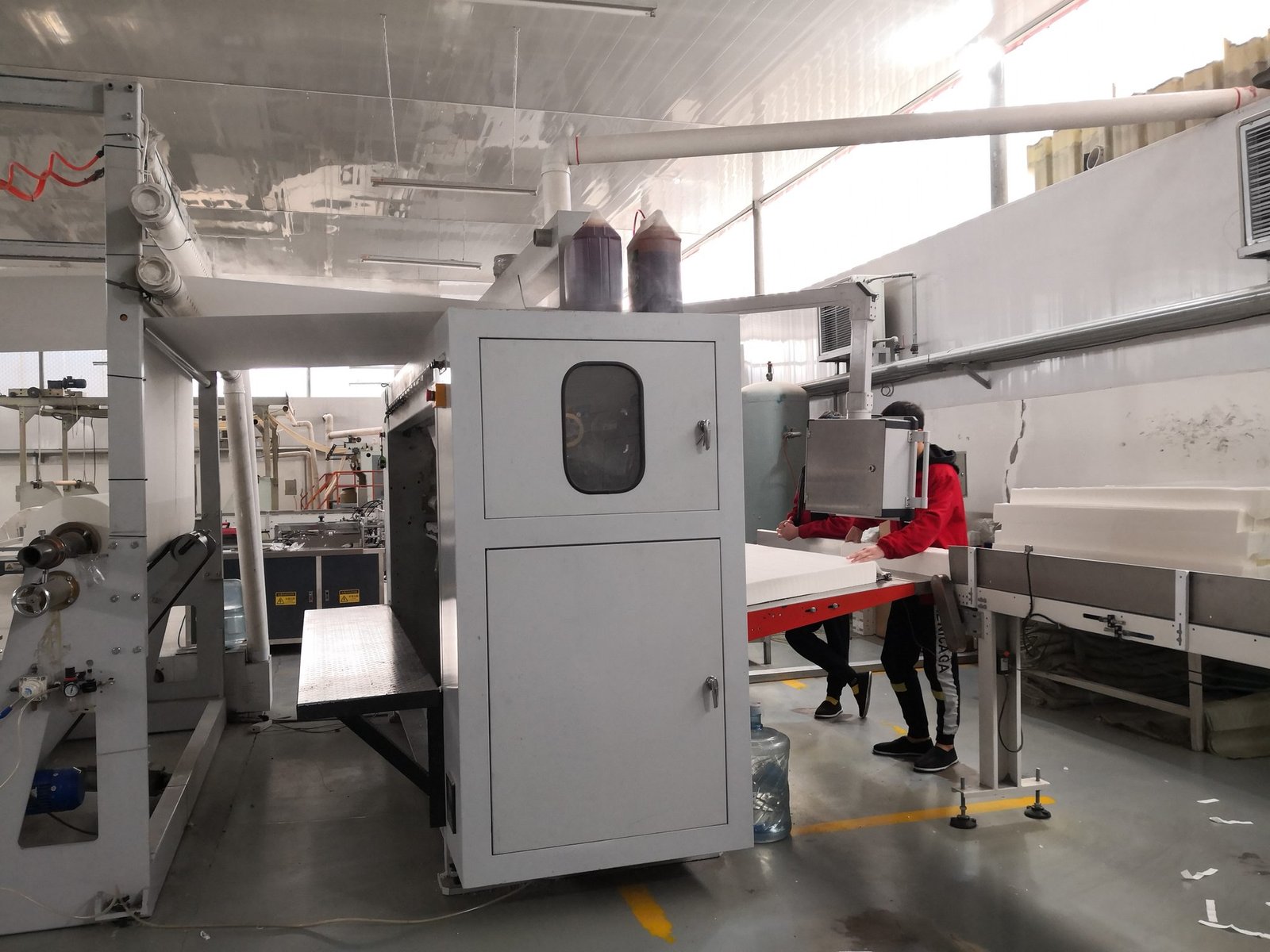
What you can demand at each gate, in order: the COA extract at gate one, the in-process grammage and meterage record at gate two, the packing list and drop-test note at gate three. For the wider picture of which finished roll format those gates protect, the toilet paper category on this site is the reference for the line.
Where a Cheap Container Loses Its Advantage After Landing
The quote is won at origin; the margin is won or lost after the container opens. Three failure modes eat a cheap pallet: crush, damp and short count. Crush turns sellable rolls into damaged ones before the shelf. Damp is an ocean-freight problem — mould and a musty hand from condensation in a container never checked for water-tightness before loading. Short count surfaces only when the pallet is broken down.
The number that decides whether the deal was cheap is sellable-roll yield — how many undamaged, in-spec rolls survive to the shelf, a count you own, not one we assert. We hand you two of the three evidence items you need to claim it: the goods ride in a thickened water-resistant corrugated outer carton on fumigation-free pallets bound with high-tensile strapping, and we photograph and film the reinforced, moisture-proof loading itself, so you hold a claim document, not a promise. The third item, your own receiving count, is yours.

How the packing layers are stacked and strapped is in our container loading and moisture-proof packing article; we will not rebuild it here.
The Order Shape That Fits a Budget Build
If the audit says the low number is honest economy, the next question is how to order it without tripping a threshold. Minimum order, stated once: plain or white-label goods (clear film, unprinted carton) ship from a 20GP container; a fully custom printed build — printed carton and printed outer packaging bag both together — starts at one 40-foot high-cube container, 1×40’HQ. There is no version where a custom-printed line runs on the 20GP; a rival quoting a small custom print on a 20GP is the audit flag, not a bargain. Our MOQ: 20GP white-label vs 40HQ custom print article owns the tier logic, and the OEM / private-label page owns the printed-build path.
The cheapest audit you can run is a sample, not a container. Sampling and dispatch takes 1 to 3 working days — a full round of the three goods-in tests for a courier charge. First full production runs 25 to 30 working days because it absorbs plate-making, sampling and outer-carton printing; a routine repeat runs 20 to 25. Goods move out of Tianjin Xingang on FOB, CIF, CFR or EXW terms, payment is 30% T/T down with 70% settled before shipment, and we release the quality report and container-seal video so you can verify the load against your spec lines before the balance clears.
What This Page Will Not Tell You
Four things, deliberately withheld, because publishing them would undercut the audit.
First, no unit price, per-roll cost, or savings percentage. A cost-per-use model is another job, in our jumbo-roll vs standard cost-per-use piece; this page’s argument is that the spec line, not the number, decides value. Second, no rolls-per-carton default. Rolls per carton, film thickness, board grade and transit days are PO lines you set and verify at goods-in; a mill that “usually” fills them in is doing it on your invoice, not for you. Third, no certificate claim — we describe a furnish standard and shipped test records, not a label. Fourth, destination-market rules such as food-contact or fibre regulations are for you to check with your own broker in the market you import into; that verification is yours.
Frequently Asked Questions
Is cheap bulk toilet paper always recycled?
No. A low grammage inside the standard 13–18 GSM band is a fibre-weight choice, not proof of recycled stock, and a low ply or a shorter metreage is likewise a spec line, not a furnish. The recycled question is answered at the material level by the COA 100% virgin-fibre verification and, at the loading dock, by a three-shake dust test over a dark card: powder on the card is a reason to pull the virgin-fibre line, not a verdict on its own. Our own position is 100% virgin wood pulp with no reclaimed waste paper added at any grammage.
What GSM is bulk toilet paper?
Standard bath tissue converts in a 13–18 GSM working band; the whole portfolio across our tissue lines runs 13–45 GSM. A cheap container quote almost always sits at the floor of the 13–18 band, which lowers bulk hand-feel and some wet handling but does not change the furnish. We cite the band only; a specific SKU’s exact grammage is a PO line the buyer sets, not a default we publish.
How do I check quality before the first order?
Run the ten-minute goods-in triage on a sample, not a container: a three-shake dust test over a dark surface, a wet-pull test on a finished sheet, and a ply-separation count at the perforation line. Each maps to one of our three published QC gates (parent-roll spot check, in-process rewind check, pre-shipment total check). Sampling takes 1–3 working days, so a full round of the three tests costs a courier charge and settles the spec before production.
Does lower GSM mean fewer metres?
Not automatically — grammage and metreage are separate valves. Lower GSM thins the web per square metre; short metreage reduces the length cut onto the roll. A roll can be honest at low GSM, or honest on length at high GSM, or be under-specified on both. The reason buyers confuse them is that “short metres at a stated weight” is a real defect, which is exactly what our High-Yield Meterage Control clause holds rewind tightness and cut length against, refusing overstated grammage and shortened metreage.
What is the minimum order for a budget build?
Plain or white-label toilet paper (clear film, unprinted carton) starts at a 20GP container. A fully custom printed build — printed carton and printed outer packaging bag together — starts at one 40-foot high-cube container, 1×40’HQ; there is no smaller tier for custom print. The tier logic is owned by our dedicated MOQ article rather than restated with any arithmetic here.
Read the low quote for the four valves behind it, falsify it with three tests at the dock, and hold the result against three named documents. Do that and “cheap bulk toilet paper” stops being a number you hope is real and becomes a specification you checked. The container that survives your shelf is worth more than the one that survived the quotation.
Video: “toilet tissue paper manufacturing process” on the Top Source Paper channel (@topsourcepaper4025). It shows the converting and rewinding line, not the specific roll discussed above; use it as process context.