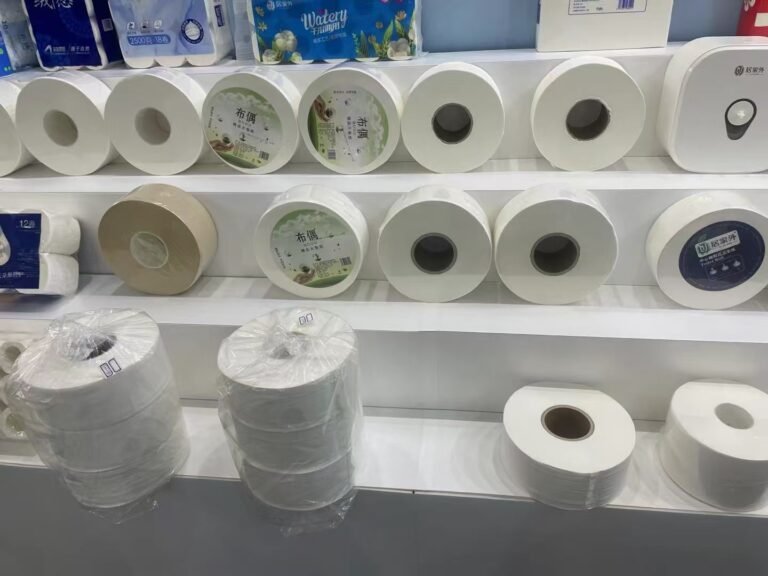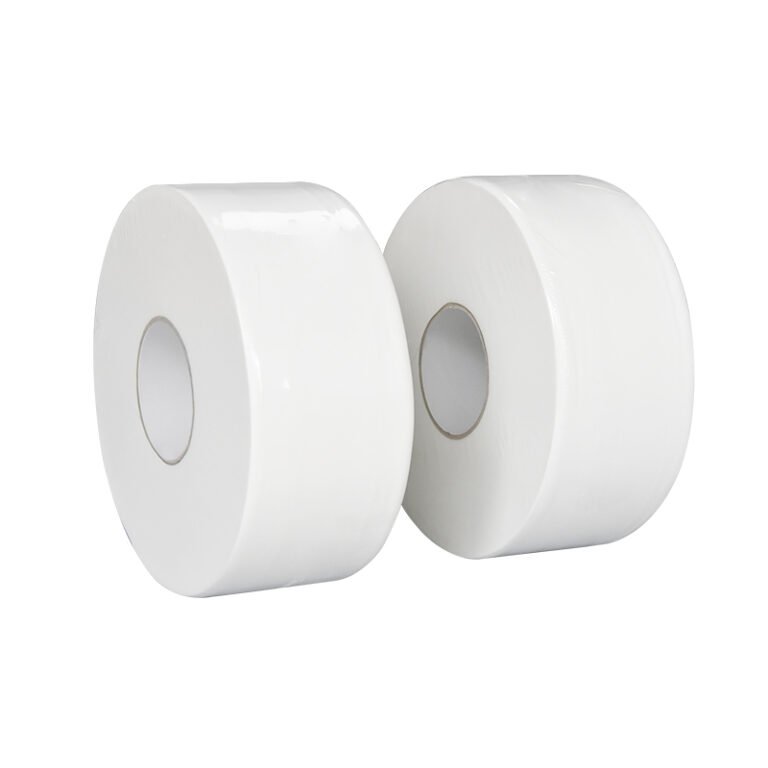
A purchase order for jumbo roll toilet paper and one for standard rolls arrive as two numbers, and the smaller usually gets signed. That comparison is broken at the unit level. A building does not consume rolls. It consumes sessions: one use event at one fixture. Paper inside a session, the labour touching the fixture and stock binned before anyone uses it are three lines a per-roll price hides.
The format question, which roll physically suits your dispensers and your traffic pattern, is already answered on this site in jumbo toilet paper versus standard rolls. This article does not re-open it. It owns the arithmetic underneath: a cost-per-session model, what each term does to the two formats, and the facility condition that flips the verdict.
Four numbers come from you: sessions per fixture, restock interval in weeks, minutes per changeover and delivered price per roll. The mill supplies metreage, plus checks that decide whether invoice metres are carton metres.
Key Takeaways
- A roll is a purchase unit; a session is the consumption unit. Cost per session adds paper, changeover labour and discard, then divides by sessions served (arithmetic).
- Cost per metre prices paper and nothing else, so two formats at identical cost per metre can still diverge per session.
- Changeover visits fall roughly with roll capacity; minutes fall less, because each visit carries a fixed walk-up floor (arithmetic).
- The saving appears only once a fixture empties a roll between scheduled visits. Below that, your calendar sets visit count and capacity buys nothing.
- JRT runs 18-28 cm diameter in 2-ply or 3-ply, long metreage on high-tensile long fibre; standard rolls run 1-3 ply at 13-18 GSM, cored or coreless, water-soluble.
- Container terms sit behind the per-session number: white-label from a 20GP, custom colour print from 1×40′HQ, 25-30 working days first bulk, 20-25 on reorders, out of Tianjin Xingang.
Two Cost Models, Not Two Products
Most tissue procurement is argued in one of three units, and only one matches how a building spends paper. The unit-of-purchase model divides delivered price by rolls shipped. It is the easiest number to see on an invoice and the least useful for a decision. It treats a 28 cm virgin-pulp JRT and a small retail-style roll as comparable objects.
The unit-of-length model divides price by metres. That corrects the size distortion and is the right first filter, since the mill’s quality language is built on metreage and gram-weight control, not roll count. It still stops short. Metres do not restock fixtures, and metres do not get discarded half-used.
| Cost Model | What It Divides | What It Misses | Verdict |
|---|---|---|---|
| Per roll | Price ÷ rolls shipped | Capacity, labour, discard, actual metreage | Freight and customs arithmetic only |
| Per metre | Price ÷ contracted metres | Changeover time and half-used rolls | Correct filter, incomplete decision |
| Per session | Paper + labour + discard ÷ sessions served | Nothing structural; inputs stay yours | The model this article runs |
Committing to the third unit changes who wins. A format that looked expensive per roll can be cheapest per session, and one that looked cheap per metre can be the one your cleaners visit twice as often.
The Cost-Per-Session Model Term By Term
Write the model as three terms over one denominator. Paper cost per session is roll price divided by sessions per roll. Labour cost is changeover minutes per period at your loaded minute rate, divided by sessions served. Discard cost is paper thrown away per period at your cost per metre. Sessions served is the shared divisor, which makes a traffic count the first input.
The table below is the spine of the decision: each row is a model term, not a product claim, and every verdict names a condition instead of a winner.
| Model Term | Jumbo Roll Toilet Paper | Standard Rolls | Per-Row Verdict |
|---|---|---|---|
| Meterage per roll basis | 18-28 cm, long metreage, fewer rolls per fixture-week | Short run, 13-18 GSM, many units per fixture-week | Jumbo carries more paper per touch |
| Changeover frequency | Visits fall with capacity, if rolls empty | Visits scale with sessions per roll | Jumbo, but minutes fall slower than visits |
| Roll-storage footprint | Fewer, denser units; more weight per pallet | More cartons, more shelf and trolley volume | Jumbo where storeroom volume binds |
| Labour per restock | One touch serves many sessions | One touch serves few sessions | Jumbo on dense routes; near-tie on weekly calls |
| Waste on short roll | Large remainder if swapped before emptying | Small remainder, small loss | Standard where restock is calendar-driven |
| Price-per-session driver | Verified metres and core weight | Consumption per use event, including over-pull | Verify inputs before ranking either format |
| Best-fit traffic level | Roll empties before the next scheduled visit | Fixtures that rarely reach a roll’s capacity | Traffic decides; the break-even is a ratio |
Six of seven rows favour a format only under a condition you can measure. The seventh, storage, turns on whether a site lacks shelf volume or labour hours.
Where Jumbo Roll Toilet Paper Wins
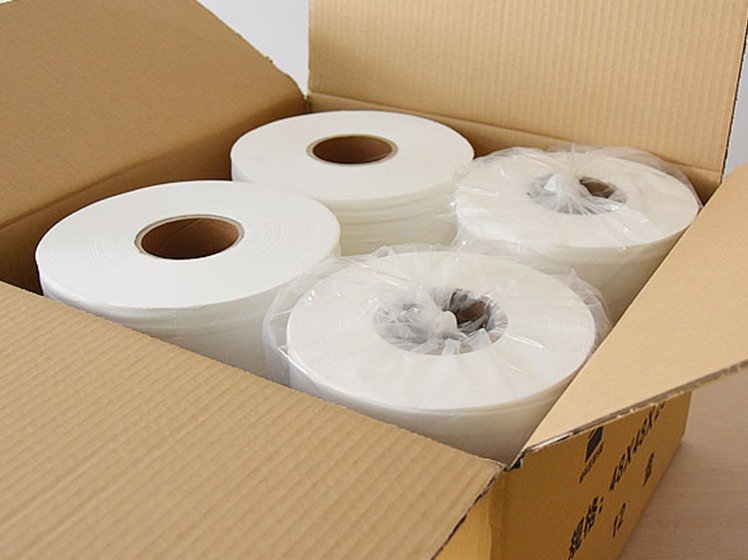
Choose the larger format when fixture access is the bottleneck, not paper price. Three terms collapse at once when one roll covers the interval between visits, and that compounding is the case for jumbo in towers, transit halls and plant floors.
- Visits. Capacity sets how often a fixture is touched. Halve sessions per roll and you roughly halve the touches, if the roll empties first.
- Handling. Fewer units received, fewer carried to a trolley, fewer cartons opened.
- Call-backs. An empty dispenser generates a request that is not in your consumables budget; long rolls push that failure past the route interval.
Suppliers oversell the first term. Visits fall with capacity; minutes do not, because a restock touch has a fixed floor: walk, open the housing, check the mechanism, close, log. If a changeover costs six minutes and four are walking and admin (an illustrative split, not a benchmark), doubling capacity removes two minutes, not six.
So the honest position is narrow. Jumbo is not a labour miracle per fixture; it is a route-density instrument. Saved minutes become money only when multiplied by fixture distance: forty restrooms on one tower floor, a hundred across airport concourses, a plant on three shifts. A compact floor turns that positive quickly; two fixtures per storey across a dispersed site turn slowly, and the paper term must carry the argument.
High-traffic capacity sizing is a separate question, settled in jumbo commercial toilet paper sizing.
Where Standard Rolls Still Win
Standard rolls win where the route, not the roll, sets frequency. If a cleaner attends weekly whether or not the fixture is empty, capacity removes no visits and only raises the chance a part-full roll is binned. There the discard term outruns the labour saving, and the larger format becomes the costlier one per session.
Three facility conditions reliably produce that outcome.
- Calendar servicing with no content check. The remainder charged against a low session count is the most under-modelled line in tissue procurement.
- Thin, lumpy traffic. Conference suites, clinic back rooms and seasonal wings never reach a roll’s capacity, so you pay for unused capacity.
- Storerooms measured in shelf metres. A large-format commitment is a volume commitment before it is a paper commitment.
Construction decides the same way in some rooms. Standard tissue is offered cored or coreless, with edge embossing and a water-soluble, flushable sheet. The JRT format is a long-fibre, high-tensile roll built for dispenser meters, not low-volume waste bins. Where plumbing constrains, model the paper the building can actually dispose of, using the roll dimension reference as input.
One scoping note before the arithmetic. Buying direct is a container business, white-label from a 20GP and custom print from 1×40′HQ, so most single-building end users consume jumbo bought through a distributor. The model still holds at fixture level: the price you enter comes from whoever broke the container.

Run The Arithmetic On Your Numbers
Substitute letters first, numbers second. P is delivered price per roll, C sessions per roll, V changeover visits per fixture-week and m minutes per visit. Then w is your loaded cost per labour minute, D metres discarded per fixture-week and c your cost per metre. Sessions served per fixture-week is S, so cost per session equals (P ÷ C) + (V × m × w ÷ S) + (D × c ÷ S).
The trap sits in the second term. V is not automatically S ÷ C, because a route has a calendar floor. V equals whichever is larger: the visits your capacity math implies, or the visits your schedule runs regardless. Below the point where a roll empties between visits, capacity is inert and that term will not move.
The table works the model on declared placeholders. Sessions per standard roll is 400 and per JRT 3,200, an eight-times relationship used only to show structure. Six minutes per changeover and the weekly route are assumptions too. Nothing in these rows is a quote or a measured product figure; substitute your own PO and rota.
| Illustrative Model Step | Thin Fixture | Busy Fixture | Dense Fixture |
|---|---|---|---|
| Sessions per fixture-week (placeholder) | 40 | 320 | 1,600 |
| Capacity-driven visits/week, standard | 0.10 | 0.80 | 4.00 |
| Capacity-driven visits/week, JRT | 0.01 | 0.10 | 0.50 |
| Route floor, visits/week scheduled anyway | 1.00 | 1.00 | 1.00 |
| Visits/week required, standard | 1.00 | 1.00 | 4.00 |
| Visits/week required, JRT | 1.00 | 1.00 | 1.00 |
| Minutes saved per week at 6 min/visit | 0.0 | 0.0 | 18.0 |
| Labour saving per session (1,080 s ÷ 1,600) | 0.00 s | 0.00 s | 0.68 s |
Read the last row: the conclusion is uncomfortable for anyone selling jumbo on labour alone. At the dense fixture the saving is two-thirds of a second per session; below it, exactly zero, because the route was happening anyway. No plausible price difference per roll is settled by two-thirds of a second.
It is, though, a building-level argument. Forty dense fixtures turn 18 minutes each into roughly twelve hours of labour per week (arithmetic on the same placeholders). Twelve hours is a roster line your contract cleaner recognises immediately. Where the arithmetic favours the larger format, the jumbo toilet paper line page specifies diameter, ply and construction for container supply. Jumbo wins on the route; per session it wins only when the paper or discard term moves too.
Watching a roll get built is cheaper than arguing about it after a container lands.
Video: “tissue paper manufacturing process” on the Top Source Paper channel (@topsourcepaper4025). It shows papermaking and converting behind both formats, not the cost model, a roll changeover or any timed labour measurement; those inputs come from your own schedule and quote.
What Container Terms Do To Cost Per Session
The paper term looks like a unit price and behaves like a purchasing decision, because the minimum order is a container. White-label and unprinted jumbo toilet paper ships from a 20GP; custom colour print on the packaging takes a 1×40′HQ. Both sit upstream of cost per session and can move it the wrong way if ignored.
Divide container quantity by consumption rate and you get weeks of cover, the variable deciding whether a good unit price is a good purchase. Deep cover adds costs the model omits: capital tied up before use, floor space held idle, handling exposure once a carton opens. The mill's moisture-proof loading and pallet protection works at sea, not in your storeroom. A per-session figure built on six months of stock can lose to a shallower buy at a higher headline price.
Lead time sets the reorder point, not the order size. First bulk production runs 25-30 working days including plate-making and outer-carton printing; reorders run 20-25 working days out of Tianjin Xingang. Pipeline cover of five to six weeks is therefore unavoidable on a direct programme (arithmetic on the stated windows), and any projected saving must survive carrying it.
One asymmetry favours the second container. A private-label customer's artwork and formula are archived with no repeat plate fee, so the plating term inside the first 1×40′HQ does not reappear in the second. Spreading that one-off across sessions improves every repeat order without changing the paper.
Everything above rests on verified metreage. Three gates sit behind mill control: mother-roll sampling for tensile and brightness, in-process rewind inspection for GSM, tension and perforation, then a pre-shipment check of case count and drop test. Deliverables include the virgin-fibre COA, a burst-resistance inspection video and a moisture-proof loading photo set. Enter contracted metres only after those checks exist for your lot; the physical cross-check sits in how to audit a wholesale jumbo roll quote.

Which Facility Profile Breaks Even Where
Aggregated averages hide the decision. A portfolio modelled at one blended traffic number looks jumbo-positive while two building types lose on the same contract. Model per fixture type, then sum. Five profiles below are where the terms diverge hardest, each verdict naming the input that decides it.
| Facility Profile | Dominant Term | Where The Model Lands | Input To Verify |
|---|---|---|---|
| Office tower, daily route, dense floors | Visits and route minutes | Jumbo favourable if rolls empty between calls | Rolls discarded part-used per route week |
| Airport, stadium or mall concourse | Call-backs and over-pull | Jumbo favourable; capacity choice is a sizing question | Metres per use event at peak, not average |
| Clinic, boutique or seasonal wing | Discard and cover | Standard favourable; capacity is inert at low traffic | Whether swaps follow content or calendar |
| Warehouse or plant, mixed shifts | Distance between fixtures | Split by zone; one answer rarely fits both | Walk time per stop, shift by shift |
| Multi-site portfolio, one contract | Blended averages | Model each type then sum; averages mislead | Sessions per fixture per site, not per brand |
The break-even is a ratio, not a traffic figure lifted from a brochure. Jumbo pays when removed route minutes plus avoided discard cost exceed the paper premium per session plus whatever remainder gets binned. Both sides are numbers you already own and have probably never divided.
Cost Per Session Model FAQ
Which five inputs do I need before comparing jumbo roll toilet paper with standard rolls?
Sessions per fixture per week, minutes per changeover, loaded cost per labour minute, delivered price per roll and sessions per roll from verified metreage. Add metres discarded per route week at low-traffic sites. All five come from your rota and your quote.
Why does cost per metre fail to settle a cost-per-session comparison?
Because it prices only paper. Formats at an identical cost per metre still differ in visits per week, remainder discarded on a calendar swap and storage volume. Use cost per metre to make prices comparable, then add the labour and discard terms.
How do I convert saved changeovers into money rather than adjectives?
Multiply visits removed per route week by minutes per visit and your loaded minute cost, then divide by sessions served that week. Compare that per-session figure against the paper-price difference per session. Subtract visits your calendar runs regardless first.
At what traffic level does the jumbo saving actually appear?
Where a fixture empties a roll before its next scheduled visit, not at a universal session count. Below that your calendar sets frequency, so capacity is inert. Divide sessions per roll by the route interval in weeks to find your threshold.
Do the 20GP and 1×40′HQ minimums change cost per session?
They move the paper term and the cover term together. A container minimum lowers price per roll but raises weeks of cover: capital, floor space and handling risk held before use. Divide container quantity by consumption before trusting the discount.
Conclusion: Work The Model Before You Order
Format arguments end at the dispenser; cost arguments end at the arithmetic, and the two are often won by opposite products. The model above is deliberately unforgiving about jumbo, because a case that survives the route floor, the discard term and container cover is worth signing. Work the checklist in order, recording each answer against a fixture type rather than a site.
- Count sessions per fixture per week from a two-week sample, split by zone rather than averaged across the building.
- Time one changeover end to end, including walk-up, and price it at your loaded minute cost, not a headline wage.
- Record whether rolls are swapped empty or swapped on schedule, then value the remainder at your own cost per metre.
- Compare cost per metre on verified metreage, leaving the format-fit question to the comparison already published here.
- Run ply as its own sensitivity, since a third ply changes yield per diameter in 2-ply versus 3-ply jumbo roll tissue.
- Divide container quantity by consumption into weeks of cover, then test that figure against 20-25 working-day reorder lead time.
If you want the model populated rather than described, the JRT buying guide covers how metreage and dispenser fit get specified. The toilet paper range lists the standard-roll side of the same arithmetic. Send sessions per fixture, route interval and quote, and the model finishes against your build sheet.