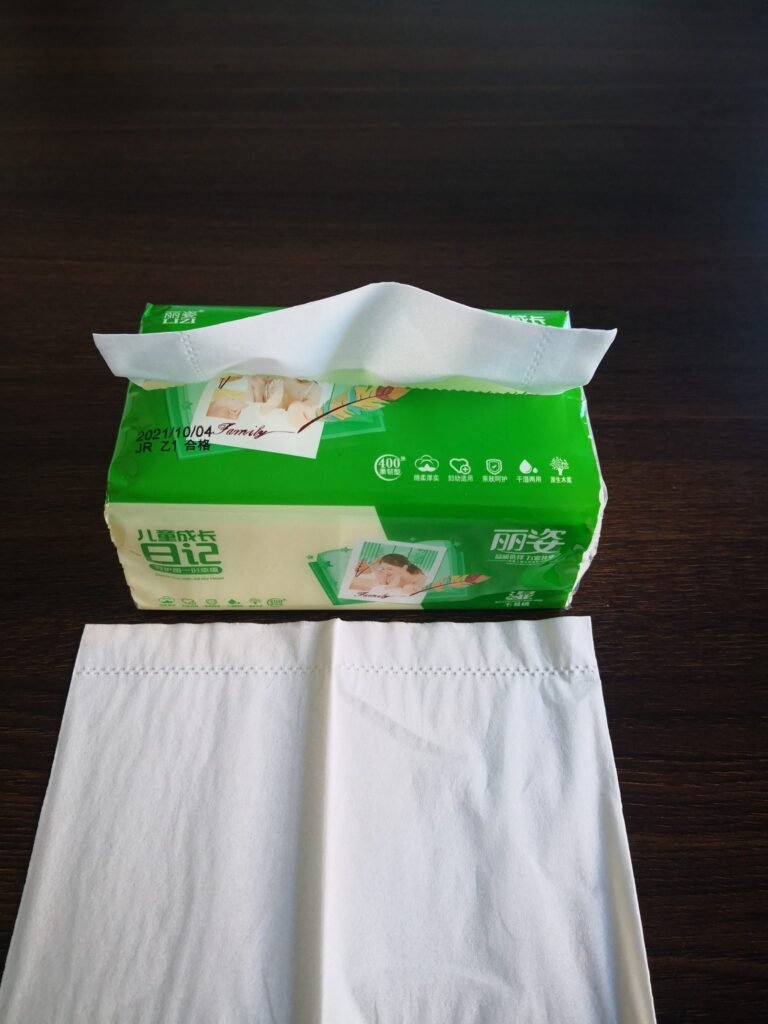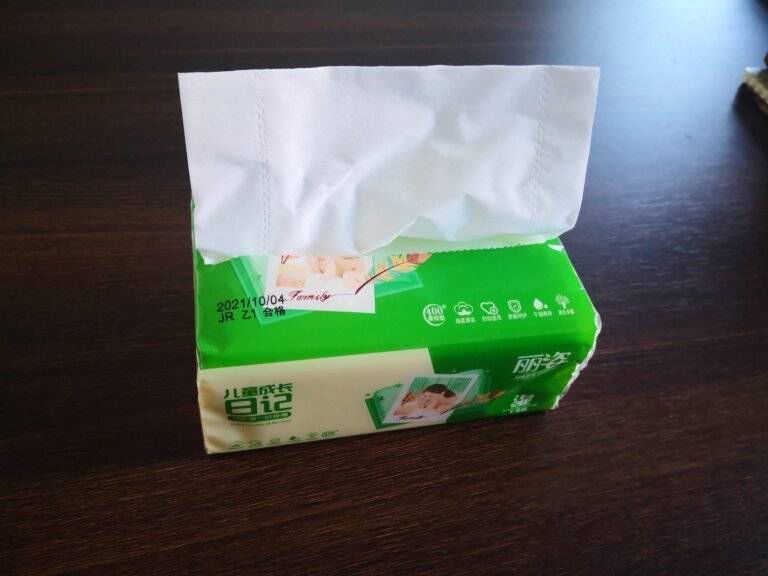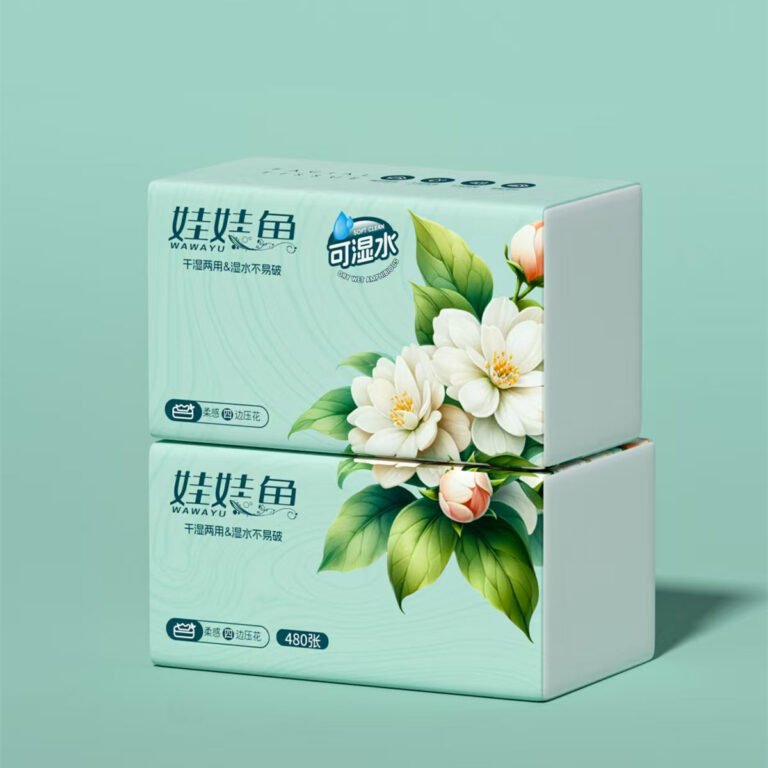
One box of facial tissue and two rolls of toilet tissue per room. That is the guestroom amenity quantity China’s tourism-industry specification sets at its fourth and fifth-star level, and it is a useful number not because every hotel in the world should copy it, but because it shows what a tissue requirement looks like when it is actually written down: a quantity per room, tied to a star band, with a quality description attached that a supplier can be tested against.
Most hotel buyers cannot produce that sentence for their own property. They reorder whatever the distributor had, absorb a format change when a stock number disappears, and discover in peak season that the box on the desk does not fit the cover housekeeping was told to refill. Hotel facial tissue is a specification problem dressed up as a commodity purchase. This guide sets a spec per zone, turns it into an order quantity, and lists what belongs on the purchase order.
Why A Published Standard Beats A Rule Of Thumb
Hotels argue about amenity quantities in the abstract; they settle them with a documented floor. LB/T 003-1996, the Chinese tourism-industry guestroom supplies specification issued by the national tourism authority in 1996, defines guestroom supplies as single-use, per-guest or daily-change items and then states its quantities per room, written against the property type it calls the representative standard twin room. The tissue lines scale with star band:
| Star band | Facial tissue | Toilet tissue |
|---|---|---|
| One and two star | Not in the amenity list | One roll per room |
| Three star | Optional, listed as may be provided | One roll per room |
| Four and five star | One box per room | Two rolls per room |
The quality clause describes the facial tissue as white, soft and convenient to take. The full text is published by the Shanghai culture and tourism authority (LB/T 003-1996 guestroom supplies specification); the star classification itself sits under GB/T 14308.
You do not need to operate in China to borrow the method. Write down, for each zone of your portfolio, the quantity that must be present for your service promise to hold, and the adjectives a supplier can be tested against. A buyer holding that sheet stops negotiating on price per box and starts negotiating on specification, refill burden and delivery cadence.
Treat a standard like this as a floor, not a target. Serviced apartments where guests cook, beach resorts where sand comes in with the guests, and clinic-adjacent business hotels all consume more than one box per room. Only your own housekeeping data knows how much more, and that is the number a supplier should be asked to design around.
Turning Rooms Into An Order Quantity
The arithmetic is simple enough that nobody runs it before the first order, which is how properties end up holding too much stock in a corridor and running short in peak season. Work it with your own inputs, in five steps.
First, count rooms by type, not in total; a suite with two bathrooms consumes differently from a standard twin. Second, set your change frequency per zone: the amenity must be replaced when partly used at every service, or topped up only on checkout, and that single policy choice moves the annual figure more than price does. Third, fix the sheet count each box holds with the supplier, because a per-box price is meaningless until you know what is inside the box. Fourth, divide your monthly sheet requirement by that agreed sheet count to get boxes, then add the public zones. Fifth, convert boxes into cartons and cartons into the delivery cadence your store room can physically hold.
Illustrative structure only, with inputs a buyer substitutes: rooms x replacements per room per month = monthly box demand; monthly box demand x 12, divided by boxes per carton, gives cartons per year, and the container you buy is whatever fits that number with a lead-time buffer. Two properties with identical room counts can land on very different containers under this model, which is precisely why a distributor quoting from a “standard per-room rate” is guessing.
Public zones are the smaller quantity and the larger reputation risk. A lobby box that runs out at check-in is visible to every arriving guest, and meeting-room tissue is used by people who did not ask to be there. Specify them separately rather than as an afterthought on the room order.
Assign A Specification To Each Zone
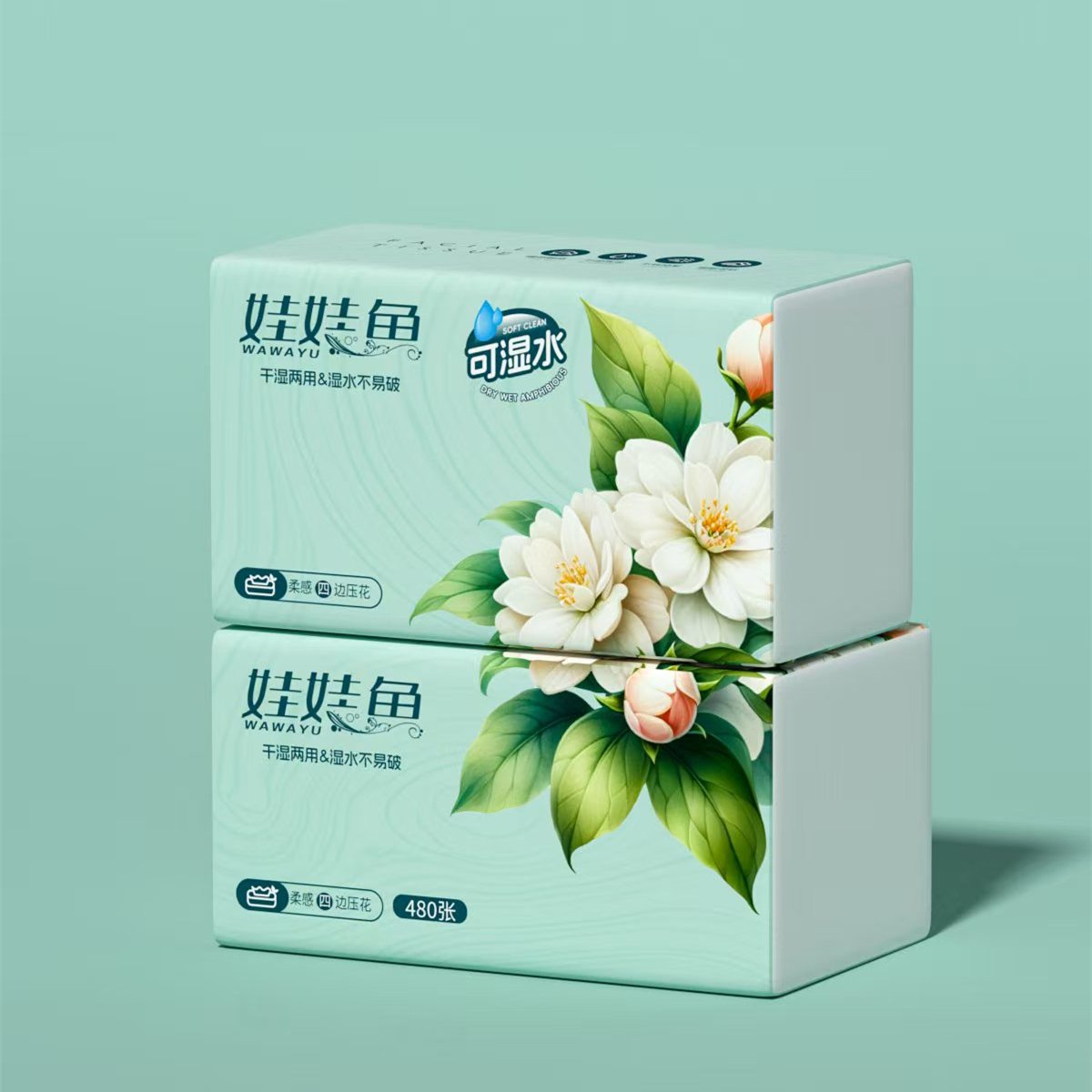
Guest rooms, lobby and spa are different products wearing the same name. A guest-room box is judged on softness and on whether it fits the cover already on the desk. A lobby box is judged on appearance. A poolside pack has to survive a humid environment without turning the box into a handling problem. Buy one format for the whole building and you over-spec three zones to satisfy one.
| Zone | Format that works | What to specify |
|---|---|---|
| Guest room | Cube box or flat box | Ply, sheet count, footprint matching the installed cover |
| Lobby and reception | Cube box with printed sleeve | Branded sleeve, white sheet, consistent embossing |
| Meeting and executive floor | Flat box | Low profile, sheet count, matched desk furniture |
| Spa, pool and gym | PE soft pack | Film wrap integrity for humid storage, single-pack quantity |
| Back of house | Flat box or PE soft pack | Same spec as rooms, bulk carton quantity |
The footprint test comes before the paper test. Measure the tissue cover, holder or recess already installed in each zone and give the mill the internal dimensions, because a box that will not seat in the cover becomes either waste or a second furniture order. If you have not decided between cube, flat and soft pack yet, the bulk facial tissue sourcing guide for hotels already covers that format decision, and the packaging formats breakdown covers shelf-facing formats.
Food service belongs in the same conversation but not the same order. Table napkins for restaurant and banquet use are a separate line with a different fold and print specification, under our napkin papers programme.
What The Sheet Has To Do In A Guest Room
Housekeeping notices three things about facial tissue that procurement never sees on an invoice. The first is dust. Facial tissue made without controlled purification sheds fine paper particles that settle on dark furniture and on a polished desk, and it reads as a dirty room even after the room has been cleaned. Our facial tissue runs a micro-pore purification step that holds paper dust down for this reason, and it is also the property that matters for guests who describe themselves as sensitive.
The second is edge delamination on multi-ply sheets. A 3-ply sheet that separates into layers in the hand feels cheaper than a 2-ply sheet that holds together. We bond the layers with multi-layer composite heat embossing and control the edge so the plies do not split at the perimeter, which is exactly where a guest pulls.
The third is furnish honesty. The whole range runs on 100% virgin wood pulp with a controlled long- and short-fibre ratio and no de-inked recycled furnish, with no fluorescent brightening agents and no harmful chemical additions, in 2-ply and 3-ply across cube box, flat box and PE soft pack. Ask any supplier how brightness is achieved: fibre and process, or optical brightening. That question separates two different products that are sold under the same word, and the ply and embossing detail behind it is set out in our soft facial tissue ply and embossing guide and on the facial tissue line page.
On wet use, be precise about what a facial tissue is for. Our wet-strength reinforcement is specified on the kitchen and hand towel lines, not on facial tissue, so a pool or gym application should be tested on a physical sample against your own requirement rather than bought on a claim.

Ordering At Container Scale
A single hotel rarely buys a container. A group, a management company or a hospitality distributor does, and that is where both the price and the supply risk are actually won. Plain, unbranded tissue built to a group specification ships from a shared 20GP container, so several properties or several zones can combine into one order. Tissue carrying your own printed sleeve or printed carton starts at one 40’HQ, because the packaging is produced in a single print run against your artwork and the tooling behind it is committed at once.
Plan against the production calendar rather than the purchasing cycle, and build the buffer from the numbers the factory will give you: samples of the real box and sheet go out in one to three working days, first production runs 25 to 30 working days including packaging pre-press and carton printing, and reorders run 20 to 25 working days. Ocean transit and your own port-to-store handling sit on top of that, so a branded group programme needs to be committed well before the season it serves. The reorder and format mechanics are already worked through in the hotel bulk sourcing guide, and the sleeve route in the box customisation guide.
What Belongs On The Purchase Order
Amenity specifications fail silently. Nobody retests tissue after the first month, so drift that starts at the third container surfaces as a guest review. The fix is contractual rather than hopeful, and the line items are short: the sheet count and ply per box, the box footprint your cover takes, the furnish and brightness basis, the documents that travel with every shipment, and the cadence the reorder will follow. Our shipment documents and three-stage QC gates are detailed in the bulk facial tissue guide for hotels; what matters here is that each of them is named in the order before the deposit is paid, so evidence is a delivery term rather than a favour.
Two of those items deserve a line of their own on a tissue order specifically. First, packing: tissue is a hygroscopic load, and a container that sweats at sea arrives with softened carton corners and crushed box edges, so require moisture-proof packing records with the load. Second, storage discipline at your end: a specification that assumes a dry store is only honest if the property can produce one, which is the question to answer before buying a full container instead of a shared 20GP.
The short version: a documented per-room quantity, a zone-by-zone format and footprint, a sheet count agreed in writing, and delivery evidence named on the order. That is the whole specification, and it is what a supplier who quotes only a price per box cannot answer.
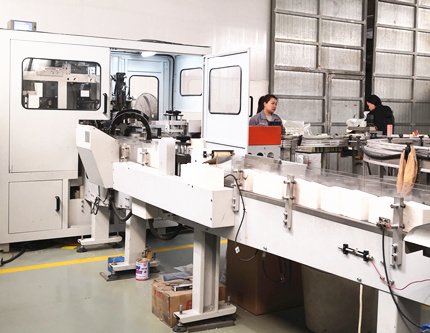
Video: tissue paper manufacturing process, Top Source Paper own channel
Frequently Asked Questions On Hotel Facial Tissue
How much facial tissue should a hotel guest room have?
China’s star-rated guestroom specification LB/T 003-1996 sets one box per room at fourth and fifth-star level, and optional at third star. Use it as a documented floor and raise it from your own occupancy.
Which facial tissue format fits a hotel guest room?
Whatever seats in the cover already installed. Cube boxes and flat boxes cover rooms, lobby tables and meeting rooms, and PE soft packs suit humid storage such as spa, pool and gym areas.
Is 2-ply or 3-ply better for hotel facial tissue?
Three ply reads as premium only if the plies stay bonded. A 2-ply sheet with heat-bond embossing beats a 3-ply sheet that delaminates at the edge when a guest pulls it out.
Can a hotel group buy branded facial tissue from a factory?
Yes. Plain group-specification tissue ships from a shared 20GP container, and a printed sleeve or printed carton starts at one 40’HQ, with samples of the real box in one to three working days.
What should the purchase order name for tissue?
Sheet count and ply, box footprint, furnish and brightness basis, the documents travelling with each shipment, and moisture-proof packing records.
The hotel recommendation answers which ply per zone; the 2-ply vs 3-ply facial tissue guide covers the layer-count arithmetic and the sheet-count trap behind that decision.