Two buyers arrive at the same factory with the same container budget. One wants tissue running off our lines under a brand she owns. The other wants our existing white-label product, repackaged into his own cartons, and wants it moving quickly. Both conversations get described as “OEM” and both get described as “private label,” which is why the first RFQ a buyer sends a Chinese tissue mill is usually built on a misunderstanding of what either word means.
The difference is not quality, and it is not price per kilo. It is who owns the specification: the formula, the ply structure, the embossing pattern, the artwork, and the paper core. That single question decides your minimum order, your lead time, your documentation package, and how much of your second container is already paid for by the work you did on the first.
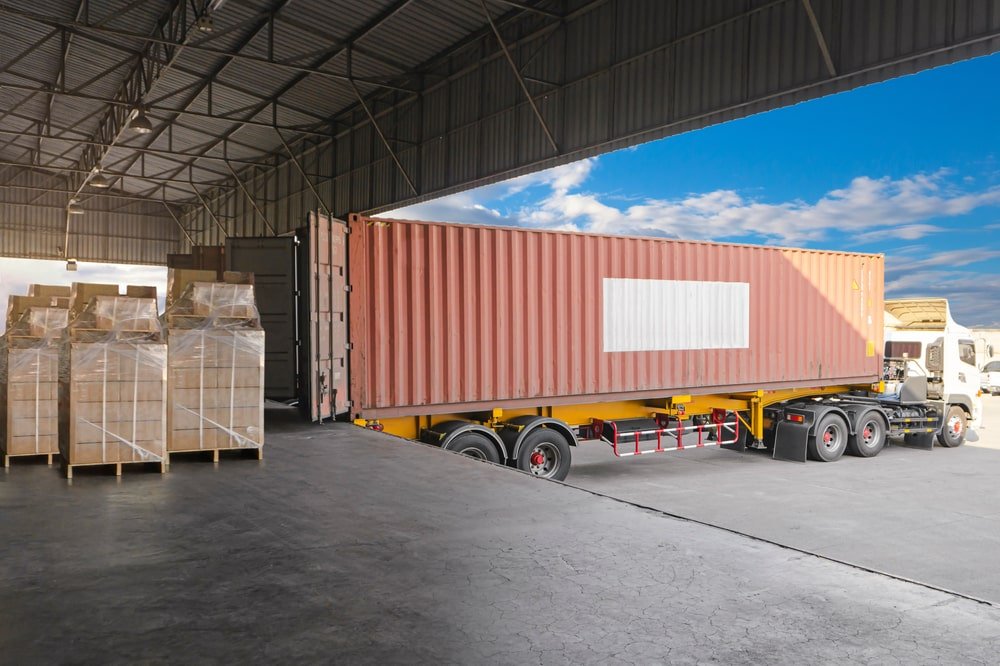
Below is how both models actually run at Top Source Paper — a 100% virgin wood pulp tissue manufacturer in Daceying, Mancheng, Baoding, Hebei, with 18+ years of paper-making and export behind the lines, shipping containers from Tianjin Xingang Port under FOB, CIF, CFR and EXW terms. We do not sell to consumers, so everything here is written for the buyer who is placing a container order.
What OEM Tissue Manufacturing Means at a Paper Mill
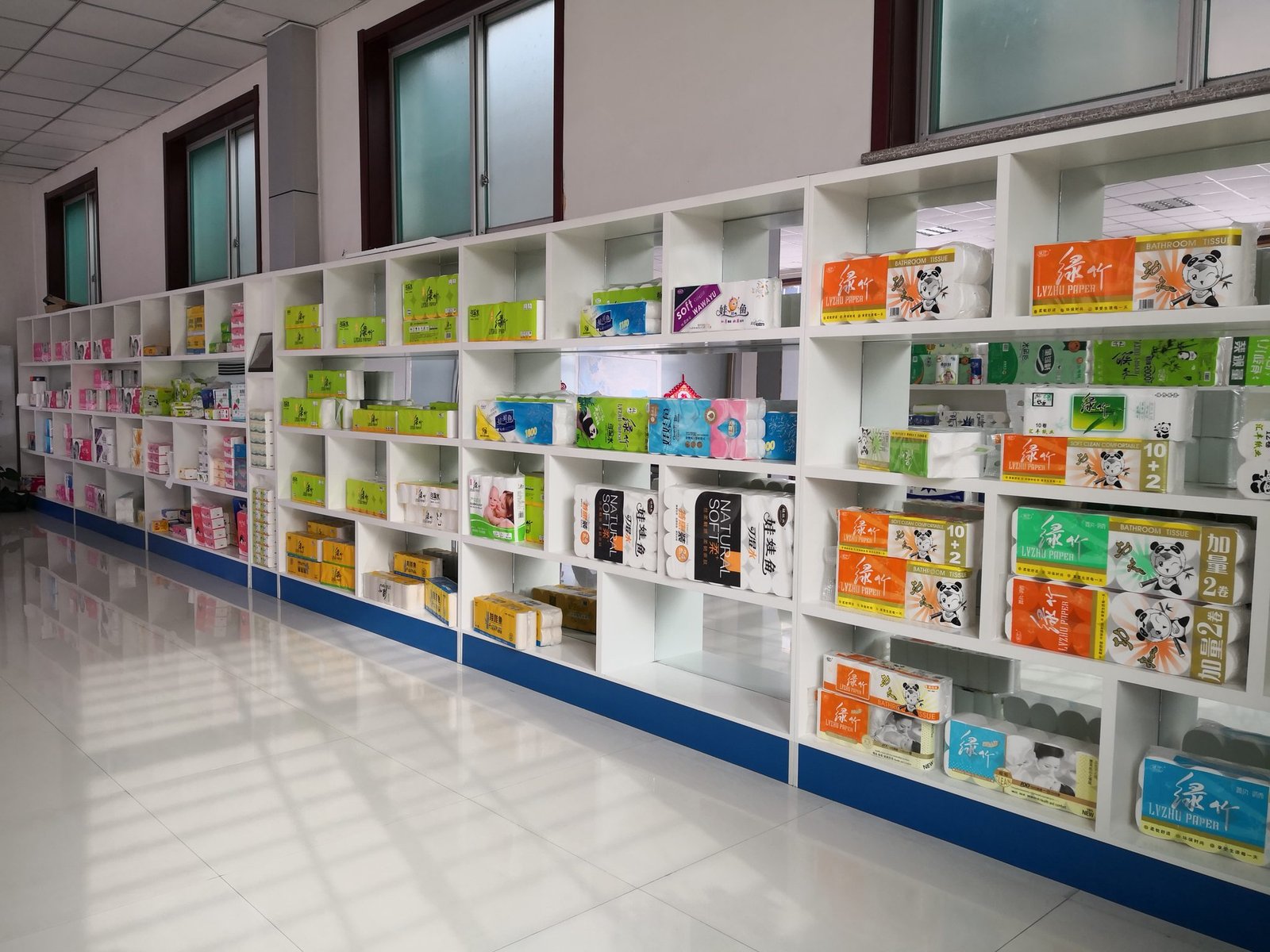
In the tissue trade, OEM is the route where you take a product the factory already makes and put your commercial identity on it. The paper is ours: the fiber blend, the ply count, the embossing roll and the converting geometry are already running, already validated, and already loaded into containers for other markets.
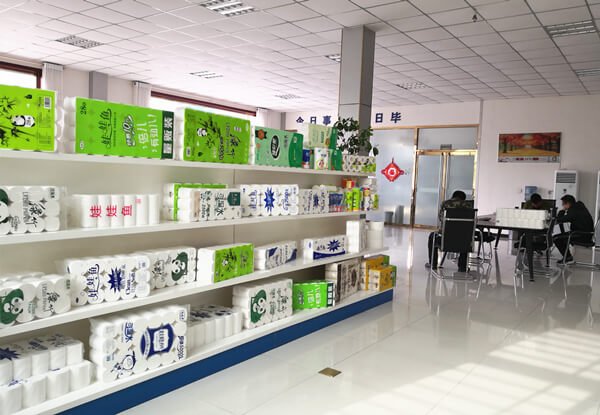
What changes is the presentation. Custom outer cartons, printed inner bags, wrapper printing, and labelling. This is the path most importers and janitorial distributors take for a first order, because the engineering risk sits with the factory rather than with you, and because the commitment threshold is lower: plain and white-label goods ship from a single 20GP container.
Two specification levers remain genuinely open even on the OEM path, and buyers routinely forget to use them. The paper core inner diameter can be tailored, which matters the moment your product has to fit dispensers your customers already own. And ply structure is selected from our 1-ply, 2-ply and 3-ply catalogue, including multi-layer composite and adhesive-bonded construction, across a 13–45 GSM portfolio range.
The practical constraint is the embossing roll. Standard patterns are available immediately. A proprietary pattern is not an OEM decision — it belongs to the second model, because a pattern that only your brand uses is intellectual property, and IP is what private label is actually built to protect.
What Private Label Tissue Manufacturing Means
Private label is the route where the product is defined by you and held by you. The formula, the ply build, the embossing pattern, the artwork, and the packaging structure are created for one client, then archived as that client’s file. It is the model that the private label industry body, PLMA, exists to represent: goods developed to a buyer’s own brief rather than bought off a manufacturer’s shelf.
At our mill the difference is what happens to your paperwork. Client-specific private label artwork and formula are permanently sealed and archived in our system. Because that file exists, a repeat order does not require a new plate and does not attract a repeat plate charge. The first order pays for the tooling; every container after that carries no tooling cost at all. That is the mechanic that makes private label economics improve with each reorder rather than staying flat.
The trade-off is the entry threshold. Custom-printed cartons and custom-printed packaging bags are ordered at one full 40’HQ container. If you are testing a market, that is a real commitment. If you already know your volume, it is the cheaper long position.
Where the Two Models Actually Diverge
Set them side by side and the decision gets shorter.
| Parameter | OEM / white label | Private label |
|---|---|---|
| Who owns the paper specification | Factory catalogue build | Client-owned formula and structure |
| Minimum order | From 1×20GP container | 1×40’HQ container (custom print) |
| Sampling | 1–3 working days to dispatch | 1–3 working days to dispatch |
| First production | 25–30 working days; the plate-making and print-proofing components below do not apply where no custom print is ordered | 25–30 working days including packaging plate-making, sampling and outer-carton printing |
| Repeat orders | 20–25 working days | 20–25 working days, plate fee waived |
| Ply and weight | 1/2/3-ply, 13–45 GSM portfolio | Same range plus multi-layer composite and bonded build to your target |
| Embossing | Standard micro and edge patterns | Custom micro, edge or 3D deco pattern held in your file |
| Packaging | Factory wrappers and cartons, your label | Full custom: outer carton print, inner bag design, branded structure |
| Core inner diameter | Selectable to fit your dispensers | Specified in your archived file |
| Artwork and formula storage | Not applicable | Permanently sealed, no re-plate fee on reorder |
| Documentation available with each shipment | COA: tensile, brightness, 100% virgin fiber verification | Same COA plus your file’s specification record |
Read the table for what it says about risk, not just about terms. Most of the commercial frame is shared: the same production windows, the same ply and weight range, the same inspection and the same documentation. Two rows decide the model — who owns the specification, and what you have to commit before production starts.
Cost Structure: Plate Fees, Artwork, and Reorder Economics
Buyers ask for a price per unit before the specification is closed, and that is the wrong order, because the cost structure of these two models is not a single number — it is the shape of a curve over several orders.
On the OEM path your cost is close to flat. You pay for product, for packaging, for freight from Tianjin Xingang, and you pay it again on every container in roughly the same proportion. Nothing accumulates. Nothing compounds. That is an advantage when you are still learning which SKUs your market actually repeats.
On the private label path the first order carries a tooling block that does not reappear: plate-making for the carton, print proofing for the inner bag, and the embossing work if your pattern is proprietary. Your artwork and formula are then sealed into a permanent client file. The reorder pays for the same plates, the same pattern and the same file at zero additional tooling cost, and it runs inside the shorter 20–25 working-day window because none of that lead time is being consumed by preparation.
The crossover is therefore not a volume number — it is a reorder question. If you expect a single container and no follow-up, the tooling block never amortises and OEM is the rational choice. If you expect to sell the same SKU repeatedly, the tooling cost is spread across each subsequent container, so the model that looks expensive on the first order becomes the cheaper one over the life of the SKU. Work it on your own order count: divide the first-order tooling cost by the number of containers you realistically expect to ship.
One structural note on payment that applies to both paths and is worth planning around: terms are 30% T/T deposit with the 70% balance settled before shipment, and we provide the QC report and the container seal video for your confirmation before the balance is called. Buyers who treat that balance window as dead time, rather than as the point where documentation arrives, end up rushing their own goods inspection at the worst possible moment.
Quality Control: Same Line, Same Standards
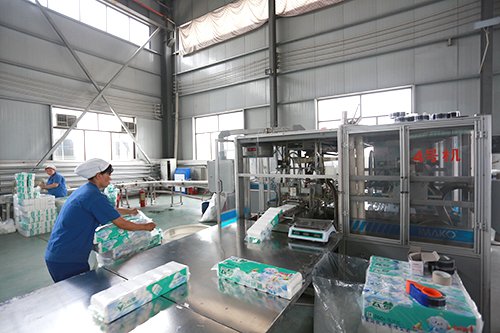
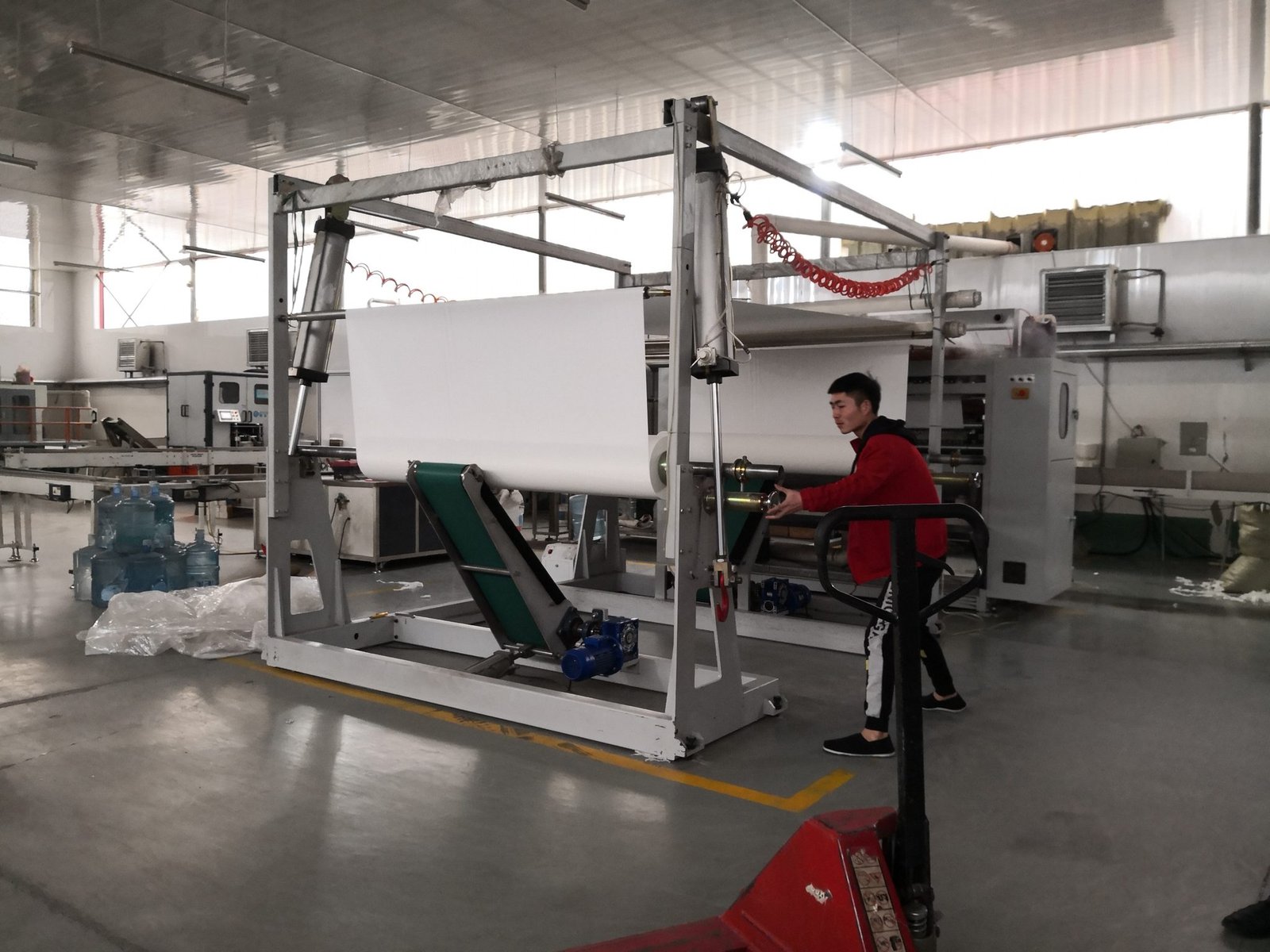
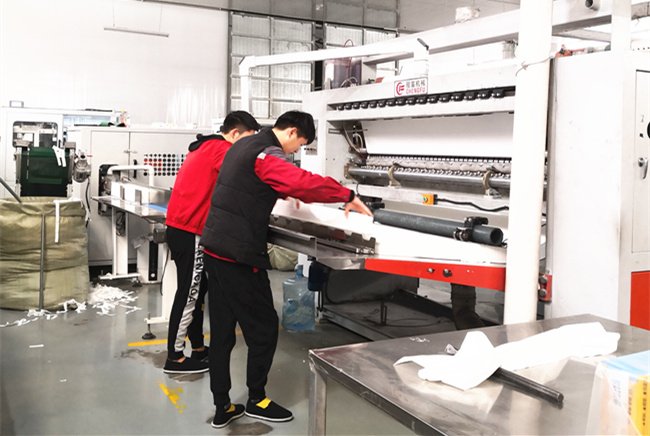
The most common objection to white label is a suspicion that the unbranded container gets worse paper. It does not, and the reason is structural: both models are converted on the same rewinding and slitting lines, from the same parent rolls, and they pass through the same three-stage inspection.
Stage one inspects incoming virgin pulp mother rolls for tensile strength and brightness. Stage two is the in-process patrol during rewinding and converting, checking GSM, web tension and perforation line. Stage three is the pre-shipment audit of carton specification and the drop test before the container is sealed.
Three performance characteristics are also shared across both paths, because they are mill-level controls rather than brand-level ones. Zero-Dust micro-pore purification keeps the paper-dust rate down, which is what a sensitive-skin or clean-wiping buyer is actually paying for. Wet-Burst Strength optimisation on the kitchen and hand towel lines, built from the long-fiber ratio, keeps the sheet from falling apart wet or leaving lint behind. And High-Yield Meterage Control governs rewind tightness and cut length, which is our direct answer to the two problems importers complain about most in this category: GSM overstated on the carton and meterage quietly shortened.
Documentation supplied with the shipment is the same under either model, and it is the part of the file your own quality system will want: a 100% virgin pulp physical COA covering tensile strength, brightness and virgin-fiber verification; a wet-tensile and zero-dust test video pack; and loading plus moisture-proof packing photographs or video. Where the models differ is only in what the specification sheet says the paper is supposed to be.
A Decision Framework: Which Model Fits Your Brand
Choose OEM when the market test comes first
You are entering a market where you do not yet know which format repeats. You want a lower commitment threshold, which the 20GP minimum gives you, and you want to avoid paying for tooling that may sit on a SKU you discontinue in a year. Take our validated build, put your label and your core diameter on it, and let the reorder data decide where the private label budget goes.
Choose private label when the brand is the asset
You already know the specification, because your retail channel or your contract told you what it has to be. You need a formula and an embossing pattern that competitors cannot reorder from the same mill, and you need the artwork protected rather than reused. The 1×40’HQ threshold is the price of that exclusivity, and the archived file makes every container after the first cheaper than the first.
Run both when your portfolio has two speeds
This is the arrangement most distributors land on and it is the one buyers least often plan for at the start: a private label core line that your channel repeats, plus OEM white-label formats for the SKUs you are still proving. The core line absorbs the tooling; the test line keeps the entry threshold at 20GP. Our OEM and private label programme covers mixed programmes like this in a single account file, and the private label launch guide walks the launch sequence in order.
What to Send the Factory Before You Ask for a Price
A quote that ignores specification is a number you cannot compare with anyone else’s. Send six items and the reply becomes comparable line by line:
- Product line and format: cube box, flat box, PE soft pack, roll, multifold, napkin fold, pocket pack.
- Ply and target GSM — and the tolerance you are willing to hold production to, agreed with the mill rather than assumed.
- Sheet size, core inner diameter and meterage or sheet count per unit, since meterage is what your customer actually receives.
- Embossing requirement: standard pattern, or proprietary pattern for the archived file.
- Packaging: label on factory carton, or fully custom printed carton and inner bag.
- Container plan for the first year, because that single line decides whether OEM or private label is the cheaper model, not the unit price.
Closed those six and the factory can quote against a real specification instead of a guess. If you are still deciding how to vet the mill behind the quotation, the 10-step sourcing checklist covers factory audit, sample evaluation and container loading, and our factory profile sets out capacity, QC and export terms.
Whichever model you choose, the branded packaging system is specified in the private label tissue packaging guide.
Frequently Asked Questions
What is the real difference between OEM and private label tissue?
Ownership of the specification. OEM applies your branding to a product built to the factory’s existing formula, ply structure and embossing. Private label develops the formula, structure, pattern and artwork against your specification, then archives them under your name.
What is the minimum order for private label tissue?
One full 40’HQ container, because custom-printed cartons and inner bags are produced at that scale. White-label and plain goods ship from a single 20GP container.
Is private label production slower?
The first order carries the same 25–30 working-day window, but inside it sits packaging plate-making, print proofing and outer-carton printing. Reorders on both models run 20–25 working days, and private label reorders have the plate fee waived.
Is private label better quality than OEM?
No. Both are converted from the same 100% virgin pulp mother rolls on the same lines, and both pass the same three-stage QC. What changes is who defines the target specification, not the standard the line holds.
Can I move from OEM to private label later?
Yes, and it is the normal sequence. Start on OEM inside a 20GP to prove the SKU, then move the proven format to a private label file at 40’HQ. The format you validated on OEM becomes the specification your archived private label file is built against.
Once the model is chosen, the custom tissue formulation guide shows how to spec the actual sheet.
Manufacturing model and branding route are separate axes; the white label vs private label route guide keeps them apart.