Hotel buyers rarely have a facial tissue problem. They have a facial tissue specification problem that shows up as a complaint: a box that shreds when the housekeeping team opens it, sheets that come out in clumps, a lid that tears instead of lifting, a carton of 2-ply that the guest reads as economy stock in a premium room.
None of those are price failures. They are the result of a purchase order that said “facial tissue, 2-ply, bulk” and left every variable that actually determines guest experience open to interpretation. Facial tissue is one of the few amenities where the buyer, the person who installs it, the person who uses it and the person who pays for it are four different people with three different quality definitions.
Here is how to close that gap before you get a quote, written from the converting side — Top Source Paper makes cube box, flat box and PE soft-pack facial tissue from 100% virgin wood pulp at our Daceying, Mancheng, Baoding plant, and ships container orders for hotel, retail and commercial channels from Tianjin Xingang Port.
The Three Formats, and What Each One Is Actually For
Our facial tissue line runs in three packaging formats, all of them available in 2-ply and 3-ply, and each of them solving a different operational problem rather than a different quality problem.
Cube box. The upright carton, sheet presented from the top. It is the guest-room default because it stands on a nightstand or desk without dominating it, and because a top-pull presentation reads as deliberate rather than utilitarian. When a housekeeping team replaces boxes daily, the cube is also the easiest format to restock without touching the surrounding surface.
Flat box. The low-profile carton for horizontal surfaces: reception counters, boardroom tables, lobby side tables, and any place the box has to sit beside signage, a brochure stack or a decorative object without becoming the object. It is the format buyers choose when the tissue has to disappear into the room design.
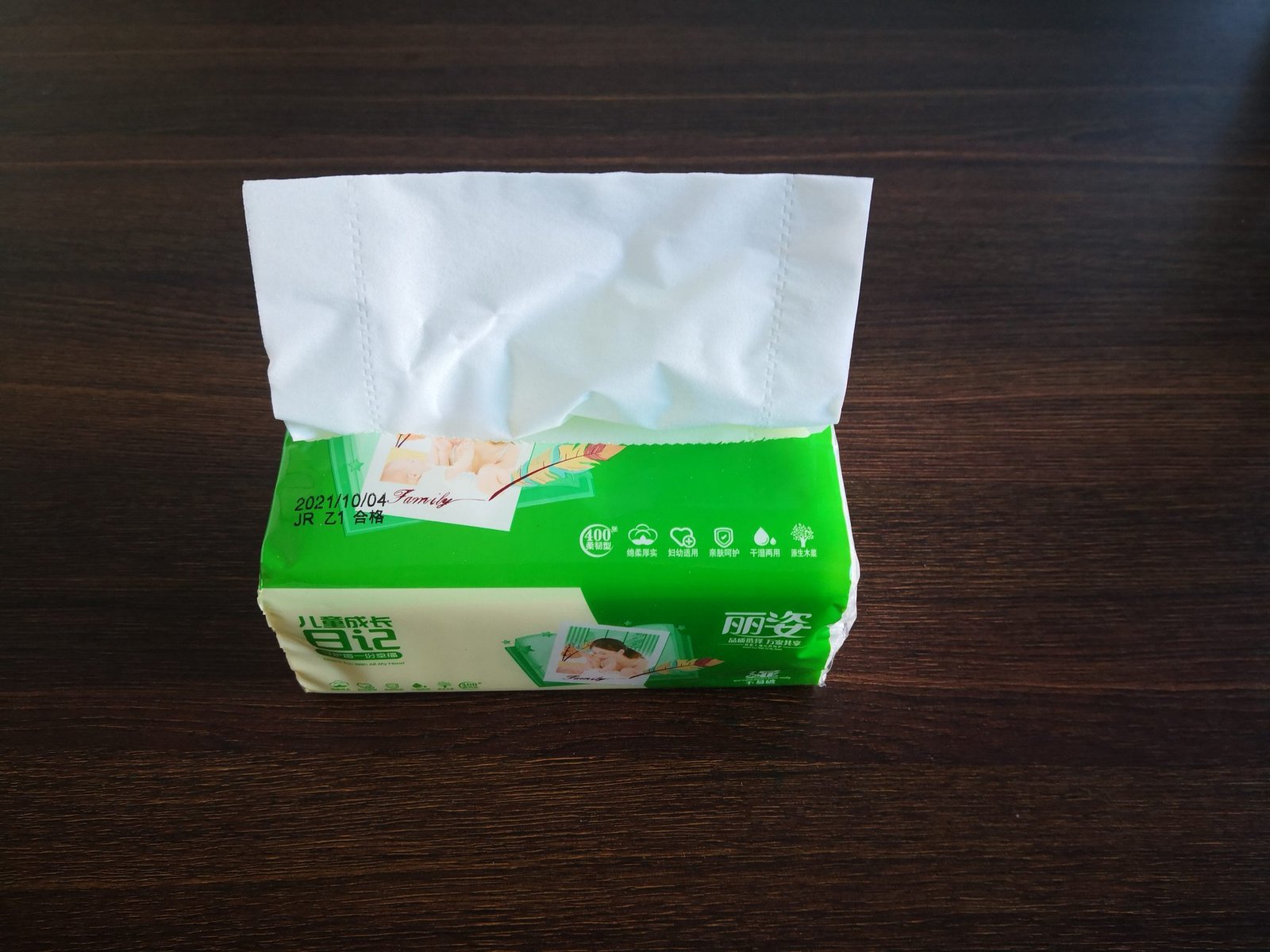
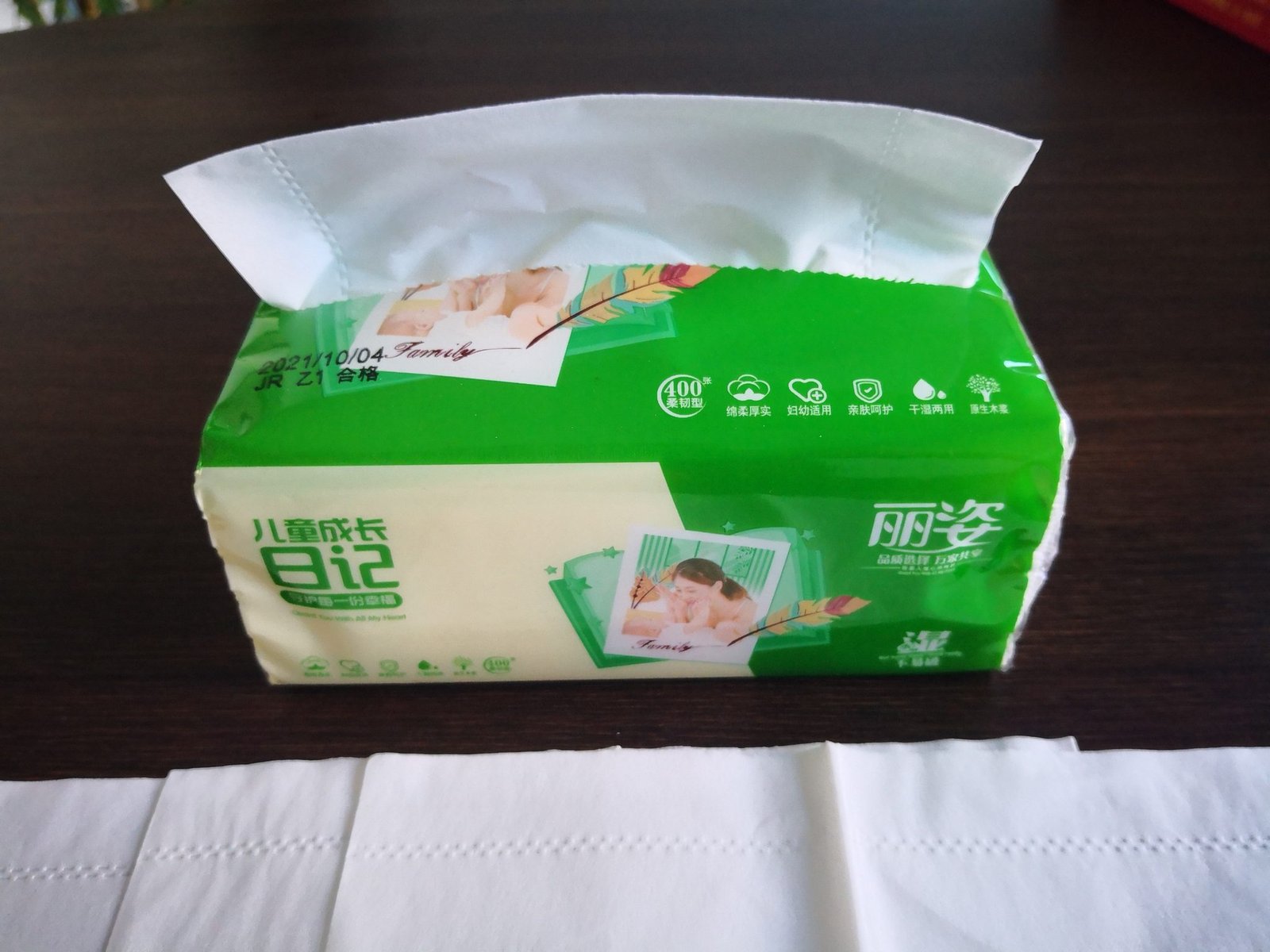
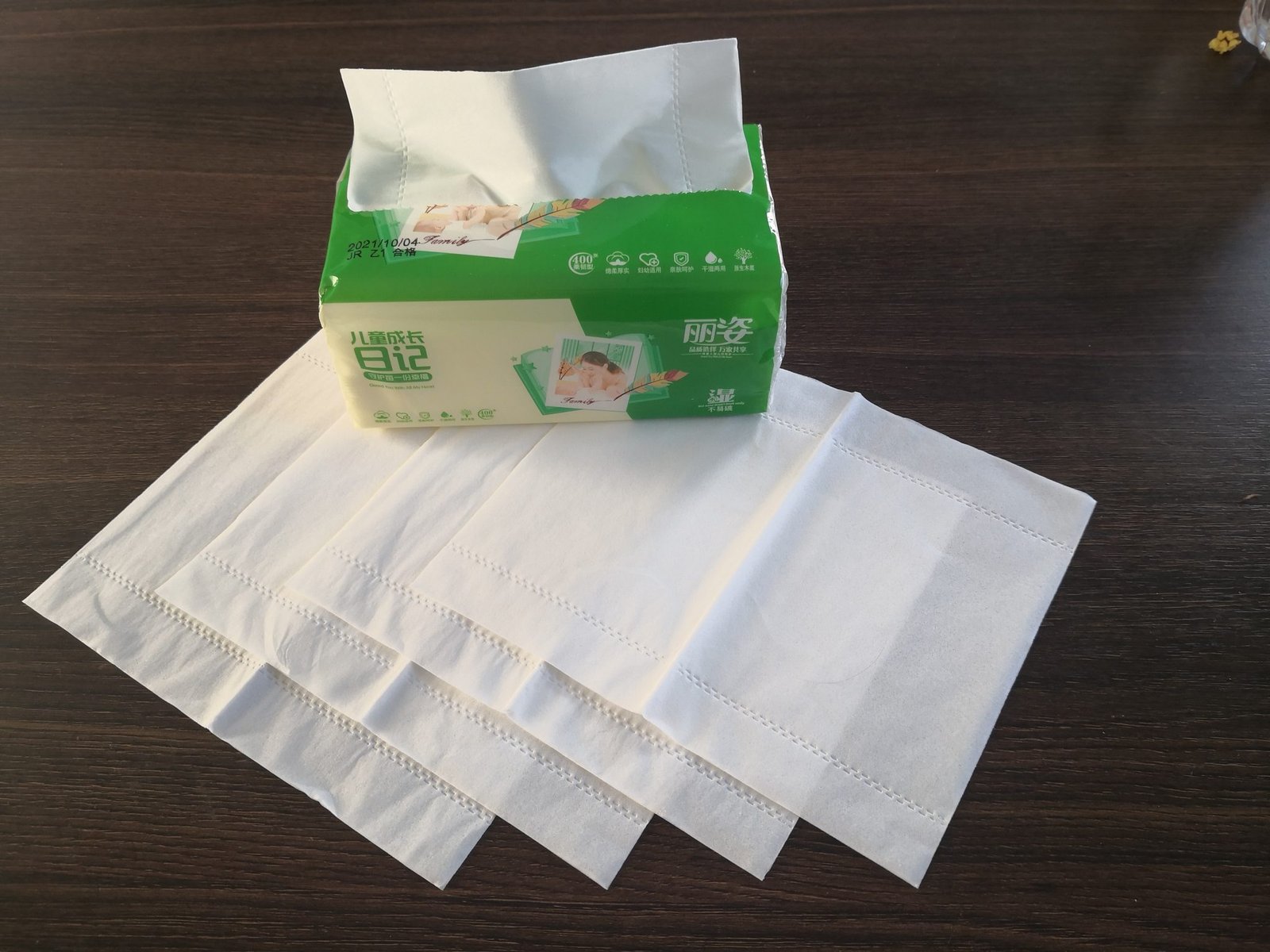
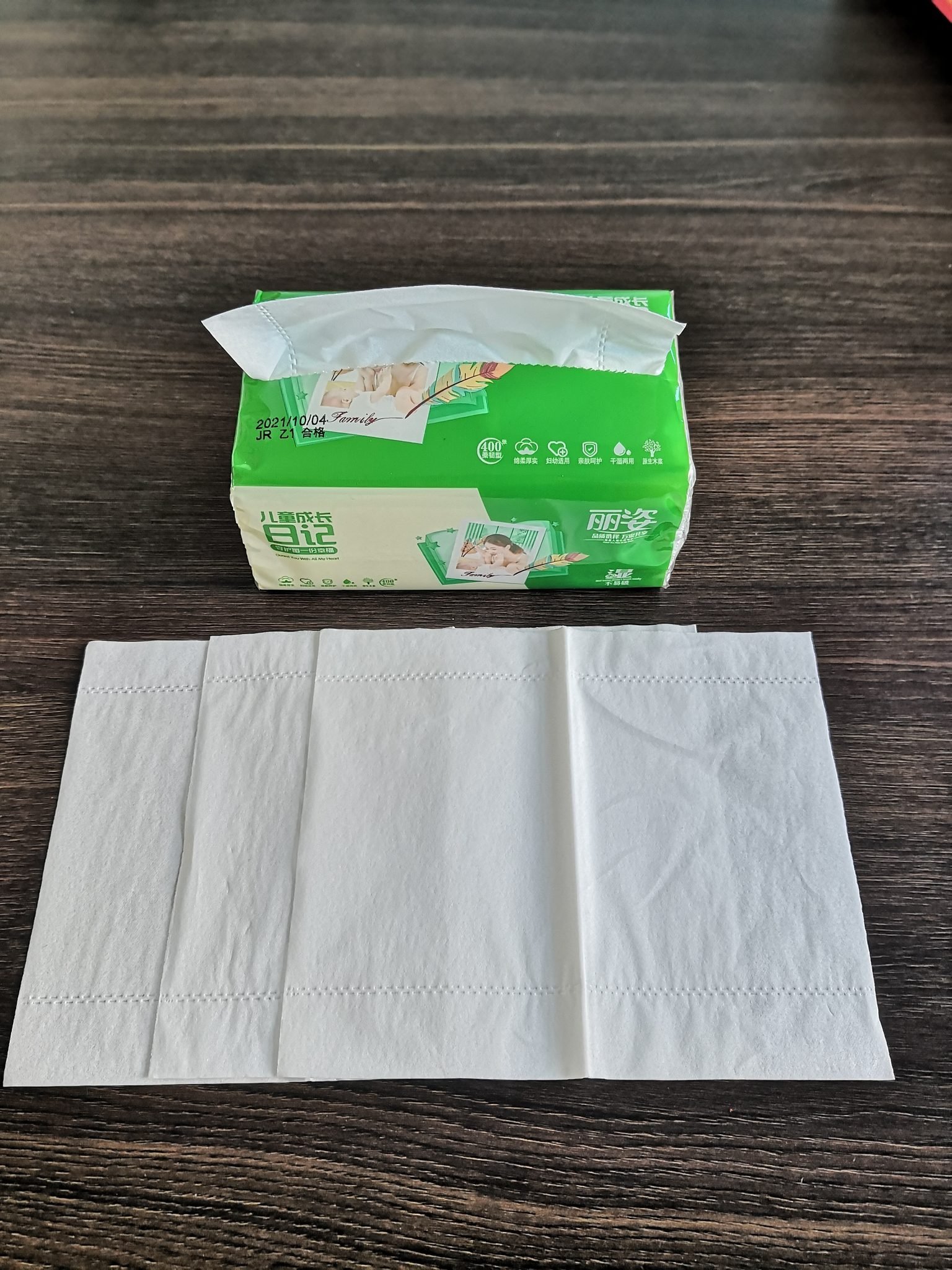
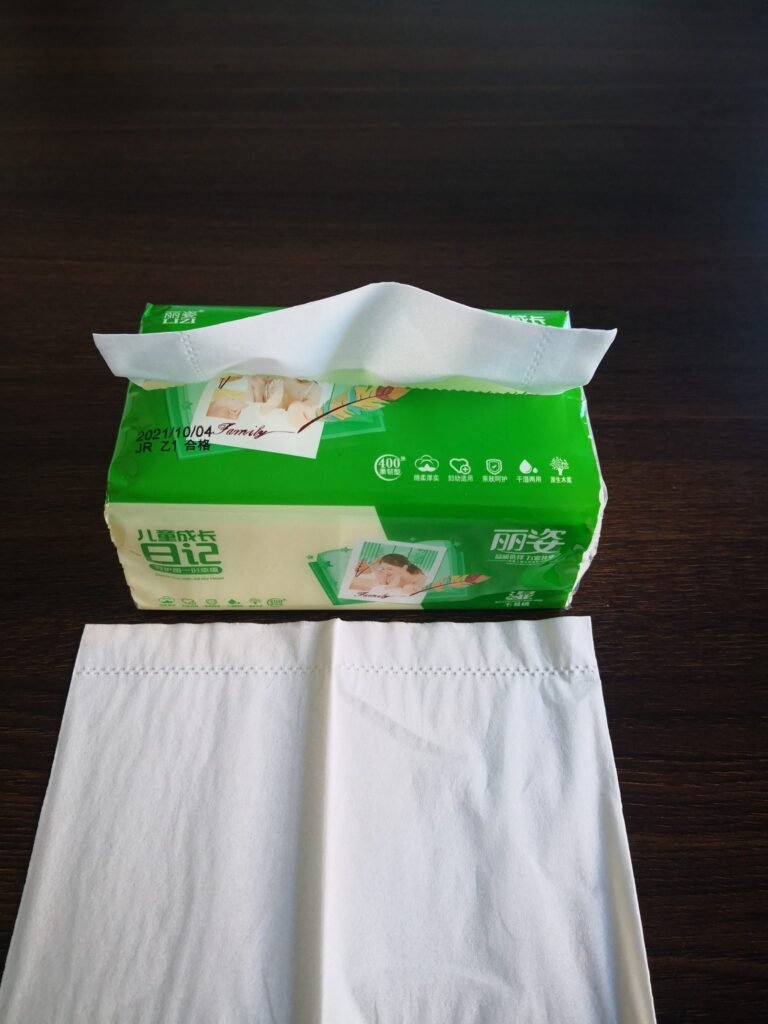
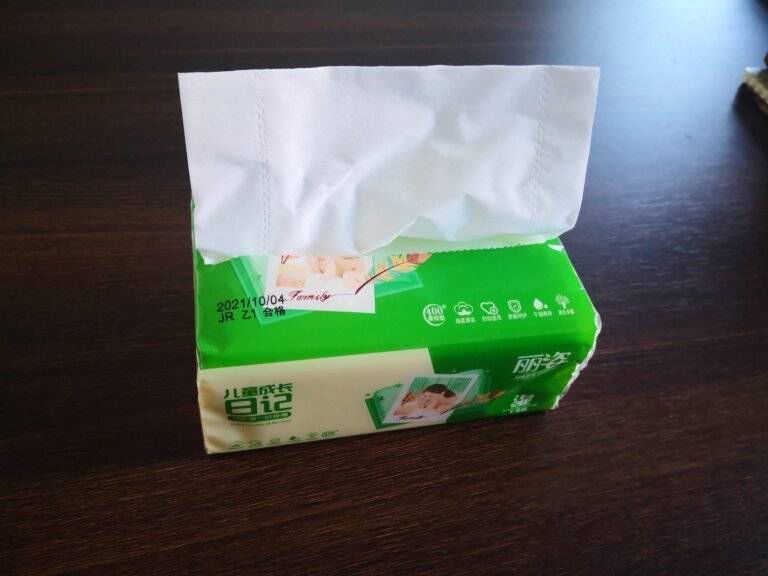
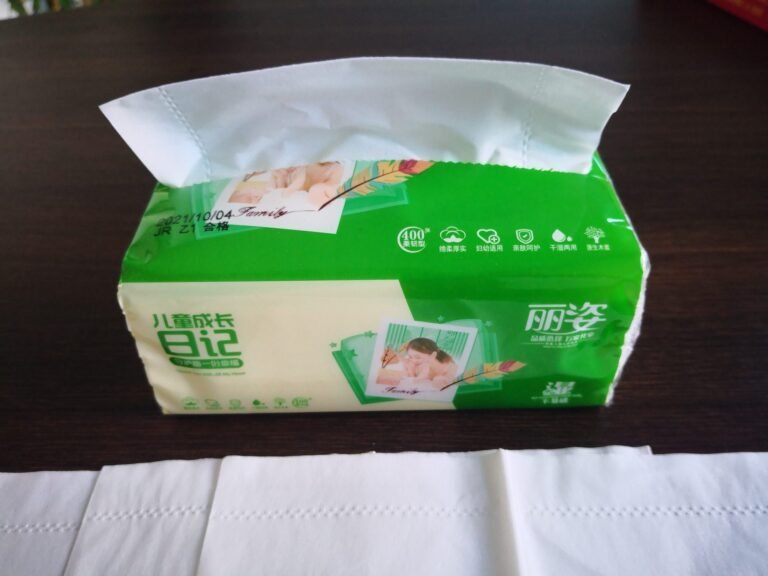
PE soft pack. The polyethylene-wrapped pull-out pack, including the pop-up presentation. It is the highest-density format to ship and store because the pack compresses, and it is the natural choice where the tissue travels: spa treatment rooms, gym floors, airline and lounge service, and conference gift bags. It also takes print directly on the film, which a cardboard carton cannot.
The mistake is treating the format as a branding decision. It is a deployment decision, and it should follow the room, not the logo.
| Attribute | Cube box | Flat box | PE soft pack |
|---|---|---|---|
| Primary placement | Guest room desk, nightstand | Reception counter, boardroom, lobby table | Spa, gym, lounge, travel and gift sets |
| Profile on the surface | Upright, top presentation | Low and horizontal, unobtrusive | Compact, compressible |
| Ply build | 2-ply or 3-ply | 2-ply or 3-ply | 2-ply or 3-ply |
| Print method | Custom printed carton | Custom printed carton | Print on the PE film |
| Storage and freight density | Moderate | Lower, wider footprint | Highest |
| Moisture sensitivity in transit | High: cardboard carton | High: cardboard carton | Lower: film wrap |
| Restocking pattern | Daily replacement per room | Periodic, public-area volume | Continuous, high-turnover areas |
What to Lock on the Purchase Order
Six parameters decide whether the container matches the sample. Write all six into the order, and do not accept a quotation that answers fewer.
Ply and target GSM
2-ply and 3-ply are both standard on our facial line, and the portfolio runs from 13 to 45 GSM across the tissue range. The important point is that GSM and ply interact: a 3-ply built at a lower GSM per layer can feel softer and dry out faster than a 2-ply built heavier. Specify the ply and the target GSM together, then ask the mill what hand-feel that combination produces — not the other way round.
Sheet dimension and sheet count
State the finished sheet size and the count per box. These are the two figures your housekeeping cost model actually runs on, and they are the two that get quietly shortened most often in this category. Our High-Yield Meterage Control governs rewind tightness and cut length specifically to stop GSM overstatement and short-meterage shrinkage; the corollary is that you have to tell us the number you want held.
Embossing and layer bonding
Facial tissue on our line uses multi-layer composite heat-seal embossing, which is what keeps the plies bonding through use rather than separating into single leaves when a guest pulls and wipes. Edge embossing is the finish that stops the sheet edge from delaminating. Micro embossing controls hand feel and surface area. Say which you want; “embossed” is not a specification.
Dust and brightening agents
Zero-Dust processing is a micro-pore purification step that controls the paper-dust rate. For hospitality it is the difference between a tissue a guest uses on a face and one they hesitate over, and it is the reason our facial line is specified for sensitive-skin use. Our paper is also produced without fluorescent brightening agents and without harmful chemical additives, and is food-contact safe as a material standard.
Box construction and opening method
Specify whether the carton opens by tear perforation or by lift tab, and whether the sheet presentation is centre-pull or corner-pull. Both are converting decisions made upstream of printing, and both are invisible on a sample until someone opens one in anger.
Carton packing and moisture protection
State boxes per master carton and whether inner poly bags are required. On ocean freight this is not optional detail: our export standard is thickened moisture-proof corrugated outer cartons, fumigation-free pallets and high-tensile strapping, with container airtightness and watertightness checked before loading. Cardboard facial tissue boxes are one of the most moisture-sensitive items in a container, and the packing specification is what protects them.
Matching Format to Area
The practical build for a property is not one SKU but a small set, deployed where each format performs best.
Guest rooms take the cube box: top presentation, daily replacement, smallest visual footprint on the desk. Public restrooms and lobby powder rooms take the flat box or the PE soft pack depending on the dispenser or tray they sit in. Spas, gyms and treatment rooms take PE soft packs, where the pack has to survive humidity and travel to a robe or a bag. Conference and banquet service takes the flat box, because it lies flat under a programme or a glass without tipping. Ply is a parallel decision and it is yours, not ours: we build 2-ply and 3-ply as standard, and buyers commonly reserve the heavier heat-bonded 3-ply for the rooms where hand feel is part of the product, then run 2-ply through the areas where volume drives replacement. Write that split into your own property standard rather than adopting a default, because it is the line item your guest notices and your cost model absorbs.
That structure also changes your container maths. A single 40’HQ can carry mixed formats and mixed SKUs, so the property portfolio does not have to be consolidated into one box type to hit a minimum — see the cube versus soft-pack format comparison for the trade-off between the cardboard and PE presentations.
Private Label Artwork on the Box
Two routes exist for branded boxes, and they have different thresholds.
Plain or white-label product with your labelling ships from a single 20GP container. Fully custom printed cartons, with the property’s artwork printed on the box itself and custom inner bags, run at a minimum of one full 40’HQ container, because the plate work and print run only make sense at that scale.
The custom route is where hotel-group branding becomes an asset rather than a cost. Your carton artwork is sealed and archived as a client-specific file, which means a repeat order does not pay for the plate again and does not wait for it. Sampling and small-sample dispatch takes 1 to 3 working days either way, so the artwork route is not slower to prove — it is slower to commit.
For procurement teams running this across several properties, the private label launch sequence covers the order of operations, our facial tissue programme page sets out the line’s full specification range, and the factory profile covers capacity, QC and export terms.
MOQ, Lead Time and the Reorder Cycle
The commercial frame, stated plainly, because it is where most hotel tissue projects lose time:
- White-label and plain product: from one 20GP container.
- Custom printed cartons and printed packaging bags: one full 40’HQ container.
- Sampling and sample dispatch: 1 to 3 working days.
- First mass production: 25 to 30 working days, which includes packaging plate-making, sample approval and outer-carton printing.
- Repeat orders: 20 to 25 working days, with plate fees waived on archived files.
- Terms: FOB, CIF, CFR or EXW, ex Tianjin Xingang Port. Payment: 30% T/T deposit, 70% balance before shipment.
Read the first-production window as an approval timeline, not a manufacturing one. Plate-making and proofing sit inside it, and those steps wait on your sign-off, not on the mill’s capacity. Groups that set an internal review cycle of one week protect the launch date; groups that let proofing sit for a month lose the window and blame the factory.
Documentation That Should Arrive With the Container
Hotel procurement increasingly has to answer an auditor, an insurer or a group quality standard, and tissue is a consumable that rarely gets a file. Every shipment from this line leaves with three things that belong in that file.
A COA for 100% virgin pulp physical indicators: tensile strength, brightness, and verification that the fiber is 100% virgin rather than recovered. A wet-tensile and zero-dust test video pack. And loading plus moisture-proof packing photographs or video, which is also your evidence if a carton arrives compromised and you need to establish whether the failure happened at the port or at the property.
Before the balance is called, the QC report and the container sealing video go to you for confirmation. That is the moment to check your specification against the produced goods, not after discharge.
The Four Failure Modes Worth Preventing in Writing
Plies separating during use. A bonding failure, not a softness failure. Order multi-layer composite heat-seal embossing and edge embossing explicitly, and reject samples where a dry pull separates the layers.
Dust on the dark tray. Visible lint on a black lacquer surface is a Zero-Dust process question. Ask for the dust test video pack before the first order rather than after the review.
Soft or collapsed boxes on arrival. Almost always packing and pallet specification, sometimes carton grade. Fix the boxes-per-carton figure and the strapping standard on the order.
Short-sheet complaints. The sheet count you wrote on the order is the sheet count that must be produced; ask for the counted check inside Stage 2 of QC, which is where GSM, web tension and perforation line are verified during converting.
All four are specification gaps, and all four are closed on the purchase order rather than in a claim.
Frequently Asked Questions
What ply should a hotel specify for facial tissue?
Both 2-ply and 3-ply are standard builds on our facial line; neither is a category default. Buyers typically place the heavier heat-bonded 3-ply where hand feel is part of the guest offer and run 2-ply in higher-volume areas, but that split should come from your own property standard and cost model, quoted together with target GSM rather than as a ply name.
What is the minimum order for custom printed facial tissue boxes?
One full 40’HQ container for custom printed cartons and printed inner bags. White-label product with standard packaging ships from a single 20GP container.
Can one container hold cube, flat and soft-pack formats together?
Yes. A 40’HQ can carry mixed formats and SKUs as long as the total volume meets the minimum, which is how a property group covers guest rooms, lobby and spa from one order.
How long does a hotel facial tissue order take?
Samples dispatch in 1 to 3 working days. First production runs 25 to 30 working days including plate-making and print proofing. Repeat orders run 20 to 25 working days with plate fees waived.
Does facial tissue from a Chinese mill meet food-contact and hygiene standards?
Ours is produced from 100% virgin wood pulp without fluorescent brightening agents or harmful chemical additives, is food-contact safe as a material standard, and ships with a COA verifying tensile strength, brightness and virgin-fiber content.
If a buyer is weighing facial tissue against toilet paper for the same program, the manufacturing differences comparison clarifies the design targets behind each line.
Format is only half the decision; the hotel facial tissue specification guide turns room counts into an order quantity.
For a mixed portfolio the industry fit comes before the bulk order; see the commercial facial tissue spec guide for room-by-room format and ply.
Ply and target GSM are order-lock lines here; the facial tissue ply comparison shows how to check the ply half of that line on delivery.