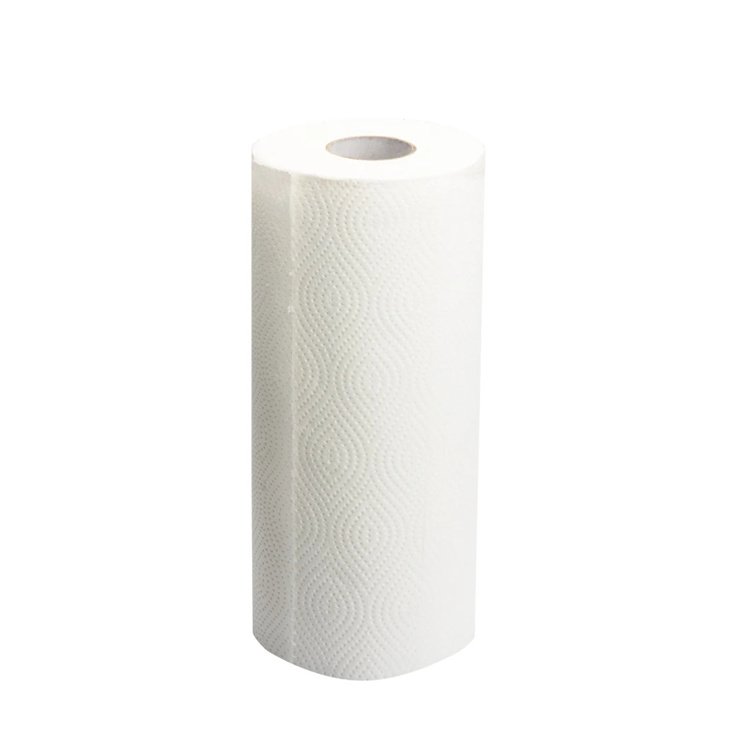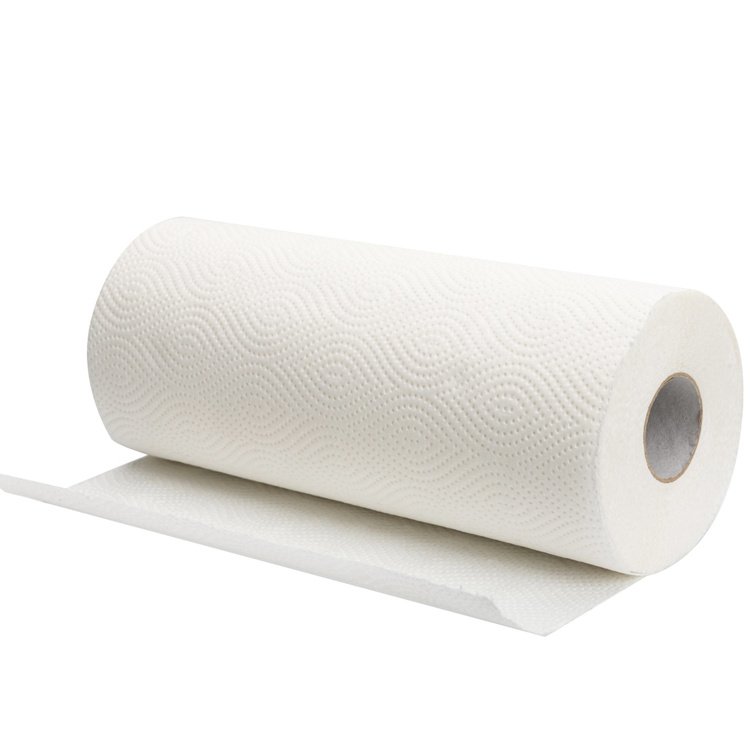
The complaint arrives as a photograph. A roll of paper kitchen roll on a sample table, sheet torn diagonally across the middle, the perforation beside it unbroken. Nothing is wrong with the paper. What failed is the feature nobody wrote on the purchase order.
A perforation is a row of controlled breaks cut into the web while it is rewound. Machinery sets it, blade wear and web tension move it, and it is checked or ignored depending on what the buyer asked for. One plant can ship a lot that separates cleanly and a lot that shreds: an order that never names the tolerance inherits whatever the machine was doing that week.
A Tear Line Is A Machined Feature
A sheet leaves the rewinder as a continuous web, which has no reason to break where you want it to. The perforation gives it one: a line of openings concentrating the pull into a narrow band of remaining fibre, so the tear runs along the line instead of wandering. Get that band wrong and the intent disappears while the paper stays identical.
Published test work on perforated tissue, in this case toilet paper, is blunt about the mechanism: perforation is what facilitates the detachment of consecutive sheets by the user, and the study analysed how the distance between cuts changes that behaviour. Its authors reported that perforation efficiency increased with the cut distance, regardless of the number of plies, and that the stress concentration factor has a limit value of 0.11, above which papers tear at the perforation line as desired. Treat it as a way of thinking, not a specification: it is toilet paper on their test bench. A tear line is a ratio between the strength of the line and the sheet, and changing the sheet without the line changes the ratio.
Three Failure Modes You See At Goods-In
The first mode generates the claim. The perforation is too weak relative to the sheet, so the pull finds a path of its own through the middle of the paper. The consumer loses half a sheet to a spill and the rest goes in the bin; the roll reads as cheap even when the grammage is honest.
The second mode is quieter and more expensive. The perforation is too strong, so the sheet does not separate cleanly, the user saws at it, or the break starts and runs off at an angle leaving a flap. Nothing looks damaged in the carton. The product behaves badly in the hand, a fault that survives your inspection and dies on the shelf.
The third mode is the cascade. The break is so shallow, or the ply bond so complete at the line, that the pull drags the next sheet partway out with it. In a retail roll that is a slow leak of product; in a box or dispenser the operator pulls with both hands and takes three. Same defect class as an over-strong perforation, opposite error, both set at the same machine.
What Moves The Tear Point
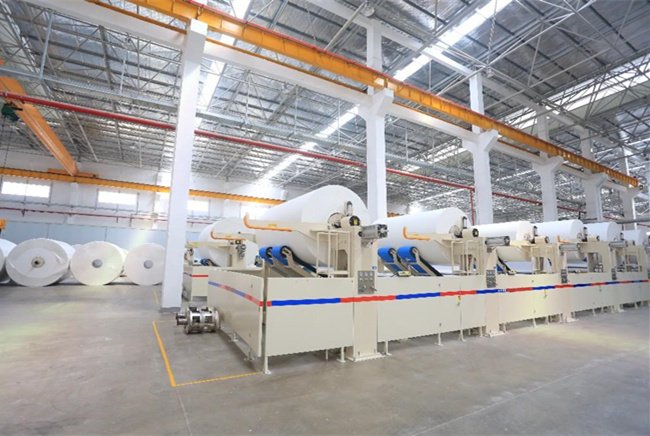
Cutting unit geometry and depth. The break line comes from a punching or cutting unit whose engagement with the web is adjustable: shape, depth of penetration, how much uncut fibre bridges the openings. Too shallow and it leaves bridges the consumer cannot break. Too deep, or loaded with fibre dust from a wet-strength sheet, it stops cutting cleanly and bruises the web. Blade wear is a drift, not an event: the failing lot is often the one run at the end of a unit’s life.
Embossing interaction. This kitchen line carries 3D high-absorbency net-pattern embossing from the deco, point-to-point family, and that pattern is not decorative: it is what the stated 40 percent improvement in water and oil absorbency is attributed to. Embossing compresses and displaces fibre, so wherever the net lands relative to the perforation, local strength changes: a pattern on the break line thickens it, one running between the breaks offers the tear a competing path. You cannot trade the embossing away to fix a tear line without touching the absorbency behind it, so the practical adjustment is relative placement.
Ply bonding. The line runs 1-ply and 2-ply thickened. In a 2-ply sheet the perforation has to sever, or dominate, two leaves and the bond between them. Where lamination is heavier near the line, the leaves separate from each other before the sheet separates from its neighbour, and you get a corner that delaminates or a pair that comes together. A tear line approved on 1-ply says little about the same setup at 2-ply, which makes a ply change a re-sample event, not a paperwork change.
Grammage and furnish. Heavier web needs different engagement than lighter web; the setting that cuts a light sheet cleanly can leave bridges in a thickened one. The portfolio runs 13-45 GSM, this page publishes no grammage band of its own, and the light-duty and heavy-duty kitchen ranges are published on how kitchen paper towels are made, so target grammage is a number you set on the purchase order and verify. Long and short virgin fibre ratio decides how a tear propagates once started. Grammage and wet-strength selection is a separate decision, covered in the kitchen towel GSM and wet-strength guide; each of those choices moves the tear line.
Web tension at rewind. Tension decides how the sheet is supported when the break is cut and stored in the roll. High tension packs the sheet tight and can close up a marginal perforation; low tension gives a soft roll whose outer layers have been flexed more than its core, which is why the first sheets often behave differently from the ones nearest the core. Meterage runs on the same lever: rewind tightness and cut length keep a roll honest about the metres it holds, and a setup drifting on tension shows bad breaks and short yield together.
Where The Perforation Line Gets Caught
The last gate looks at the carton. The quality sequence this plant publishes looks at the break line while the roll is still being made: gate one samples the mother reel for tensile strength and brightness, gate two patrols the rewind, gate three checks the finished carton specification and runs a drop test before shipping.
The middle gate is where the list puts your problem. During rewinding there is an in-process patrol check covering grammage, tension and the perforation line: the same station where the sheet is embossed, cut to length and wound, so the parameter deciding whether a sheet separates on the line or across it is looked at while it can still be corrected. The site’s process walkthrough, how kitchen paper towels are made, says where a perforation-quality check sits inside its own stages; nothing here claims the rewind patrol is the only point the line is looked at. The line and its formats are listed on the kitchen paper towel product page.
A patrol check is a pass-or-stop judgement against the running setup, made at the machine, not a per-roll tear-force certificate. What you can require is that the perforation line appears as a named row in the paperwork travelling with the container: shipped orders can carry a 100 percent virgin pulp COA covering tensile strength, brightness and virgin-fibre verification, a wet-strength, burst-resistance and zero-dust inspection video pack, and packing photos. Add your own tear criterion to the approved sample and you have a goods-in standard built on a check that already happens.
A Goods-In Check You Can Run Without A Lab
You do not need equipment to catch this defect; you need a protocol a warehouse person will follow. Sample size is yours, so treat any figure as arithmetic, not a factory rule: 100 cartons at one in ten is 10, a lunchtime; 1,000 cartons at the same ratio is 100, which nobody runs, so buyers cap it, say one in twenty with a floor of five and a ceiling of fifteen. Illustrative numbers. The real rule: sample across more than one pallet, because a bad cutting unit is a position in the run, not a property of the container.
Then run each sampled roll the way your customer will: detach sheets in sequence, in the direction the pack tells them to pull, counting over a fixed run. Record three outcomes: clean separation on the line, separation leaving a tail or flap, and any sheet arriving with a second attached. Note whether the failure sits on the outer layers, the middle or the core: that pattern points at tension rather than at the cutting unit.
Two additions catch faults that only appear in service: repeat the run on a roll flexed and re-wound a dozen times, which ages the break line the way a shelf does, and repeat it after humidifying, since a wet-strength sheet behaves differently damp than dry. Write the acceptance line as your own number against your own count, and put it in the order terms before the container is booked.
What Belongs On The Purchase Order
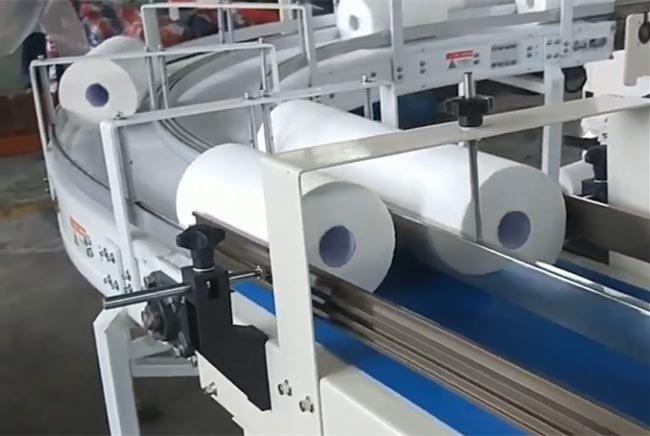
A perforation clause that says “clean tearing” is not a clause. Write the fields a machine can be set to and a person can be held to.
| PO field | What you write | Why it earns its place |
|---|---|---|
| Build | 1-ply or 2-ply thickened, target grammage inside the 13-45 GSM portfolio | A tear line approved at one ply or grammage does not transfer |
| Break line | Position across the sheet, breaks per sheet, direction the sheet must separate | Geometry plus behaviour; either alone is unenforceable |
| Yield | Sheets per roll and metreage per roll, verified at goods-in | Rewind tension drives break quality and short yield together |
| Sample | Pre-production sample approved and retained, production judged against it | Turns a subjective complaint into a comparison |
| Pack | White-label clear film and plain carton, or printed carton and printed outer PE bag | White label starts at a consolidated 20GP; custom colour printing on either the carton or the outer bag is a 1×40’HQ minimum |
Timing belongs in the same document. Sampling and small-sample dispatch run 1-3 working days, first bulk production 25-30 working days including packaging plate-making and outer-carton printing, and routine reorders 20-25 working days, so a tear-line correction after a failed container is a 20-25 working day conversation at best. Freight moves from Tianjin Xingang on FOB, CIF, CFR or EXW terms against a 30 percent deposit and 70 percent balance before shipment, with the QC report and container-seal video supplied before the balance.
Change The Pack, Change The Tear
The same sheet can be right in one pack and wrong in the next, because the perforation only has to win against how the sheet is held. A retail roll in a printed sleeve is braced by a knee or a holder, so the pull is sharp and a firm break line is fine. A roll standing in a box, sheet fed through the mouth, is held differently: a perforation crisp in the hand can be strong enough to tear the sheet inside that box. Centrefeed and food-service formats reverse the pull direction and add wet hands, where a wet-strength sheet is least forgiving of a marginal break.
Pack count moves the requirement twice. More sheets per roll means more revolutions of stored tension and outer layers flexed before the core; more rolls per carton means corner rolls arrive compressed, a carton problem that presents as a tearing problem. Format choice is decided in kitchen roll versus standard paper towels and case arithmetic in buying paper towels by the case; the ply decision behind both is 1-ply versus 2-ply kitchen towels.
Where This Page Stops And The Next One Starts
This page owns the perforation as a specification: what the break line is, what moves it, how it is caught, and what you write on the order. Grammage and wet-strength selection belong to the GSM and wet-strength specification guide; the build of the sheet to how kitchen paper towels are made; the ply choice to 1-ply versus 2-ply; format comparison to kitchen roll versus standard paper towels; case arithmetic to paper towels by the case. Two limits stated plainly: this page publishes no perforation pitch, depth or tear-force standard of its own, and no grammage band of its own. Interval figures sit on more than one article named above, not in one settled place, while the light-duty and heavy-duty kitchen ranges and the placement of a perforation-quality check inside the production walk-through are that build article’s account rather than this one. Every number here is arithmetic, an attributed external finding, or a buyer-set line you verify yourself.
Frequently Asked Questions
Can I actually specify the perforation on a kitchen roll purchase order?
Yes. Write it as a behaviour you will accept plus the geometry that produces it: where the break line sits, breaks per sheet, which way the sheet must separate, and the pull direction your customer uses. Then approve a pre-production sample, keep it, and inspect incoming goods against that sample rather than against a line in a catalogue.
Why does my paper kitchen roll split in the middle instead of on the line?
Usually because the perforation is now weaker than the sheet beside it. A blunt or packed cutting unit leaves bridges, the embossing can land on the break line and thicken it locally, and web tension at rewind changes how the sheet is supported when the break is cut. A grammage change made without re-setting the cutting unit gives the same complaint.
Is a weaker perforation safer than a strong one?
No. Too strong wastes product and generates shelf complaints; too weak drops sheets into the box and lets two sheets come with one pull, which your customer pays for twice. Both directions are cost. Set an acceptance band on your own goods-in count and hold the supplier to it.
Does the tear line change how absorbent the sheet is?
Not directly. On this kitchen line the 3D high-absorbency net-pattern embossing carries the stated 40 percent improvement in water and oil uptake; the wet-strength resin is a separate mechanism; the perforation is only a mechanical break line. The indirect risk is real though: move the embossing to fix a tear path and you move the mechanism behind the number.
How many cartons should I test when a container lands?
The size is arithmetic you set, not a factory rule; judge it by what a find costs. If a sampled roll fails on the line, quarantine that pallet and widen the sample into nearby pallets before touching the lot, then decide against the retained pre-production sample: re-setting a cutting unit mid-order is a reorder conversation, not a container fix.
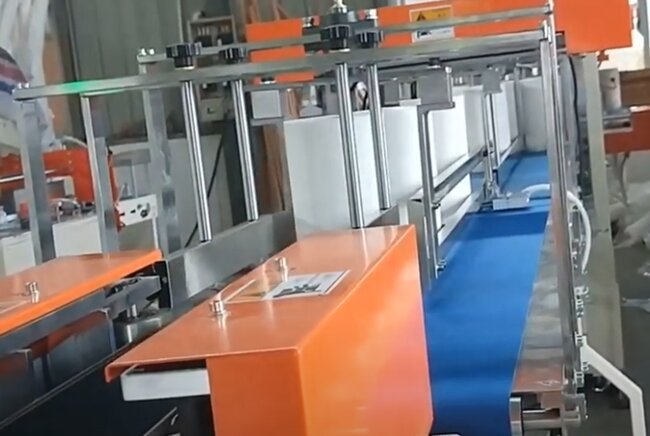
Video: “tissue paper manufacturing process” on the Top Source Paper channel (@topsourcepaper4025). The title is all this page can vouch for; it is not a perforation-unit close-up and shows no tear-line test, so treat it as manufacturing context, not evidence of a kitchen roll setting.