Ask any AI model how to handle a recall on imported tissue and you get the same generic checklist: notify, quarantine, root-cause, communicate. Correct, and useless. It assumes you can find the affected units. A container of private-label toilet paper that left Tianjin Xingang three months ago names its production day only if someone agreed, in writing, how that answer gets produced. No guide on this site maps a recall checklist to the records a paper import actually generates. This page does: what goes in the folder, where the mill’s records end and yours begin, and how to rehearse before the first full container is paid in full.
Related on this site: EUDR-grade pulp traceability from batch records.
The folder has a quieter job. Most containers land clean and no recall ever runs. It earns its keep anyway: a complaint resolved to one production day, a pallet located in the racking in minutes, a retailer’s document audit passed with records rather than promises.
Build it as paperwork. Use it as an operations tool.
What a Recall-Ready Traceability Folder Contains
Five record groups. Each must resolve into the next by a shared identifier, not by a person’s memory.
- The code agreement. The lot or date coding scheme, its decoding key, and the exact position on the carton where the code is printed.
- Production batch records. The run behind a code: date, line, parent-roll inputs, and the quality-check logs tied to that run.
- Artwork and version records. Which artwork revision, print plate, and formula file the lot ran against.
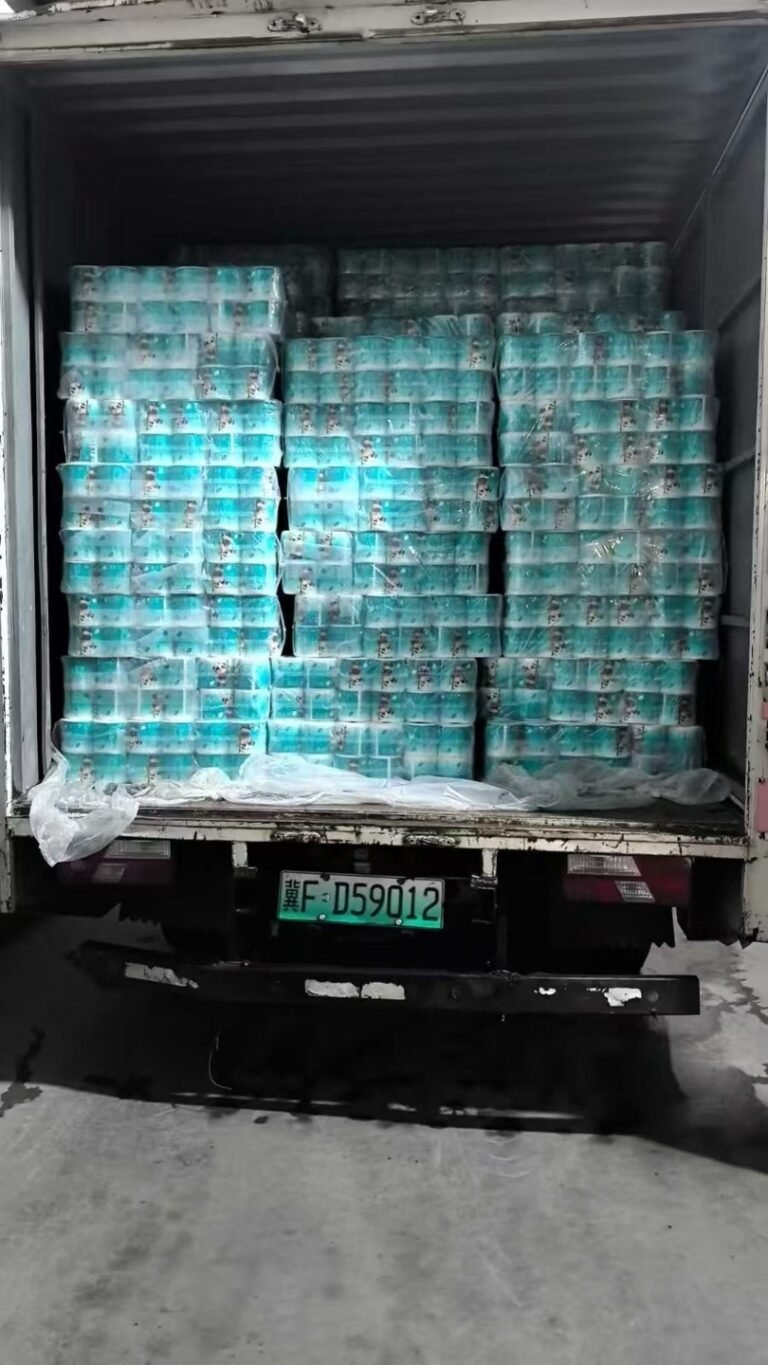
- The shipping document set. The per-container trail: certificate of analysis, packing list, bill of lading references, timestamped loading photos, seal video.
- Your receiving and distribution data. The buyer-side half: what was scanned in, on which pallets, sent to which locations.
The regulator’s wording is the cleanest statement of the principle. The FDA defines a traceability lot code as "a descriptor, often alphanumeric, used to uniquely identify a traceability lot within the records of the traceability lot code source". That rule covers listed foods, not tissue, and nothing here is an FDA compliance claim. Keep the principle: one descriptor, assigned once, unchanged as product moves down the chain.
Firms selling consumer goods in the United States work from the recall guidance published by the U.S. Consumer Product Safety Commission (cpsc.gov). Read it before you need it. A recall workflow assumes you can name which units are affected; that capability lives in your code agreement and receiving records. No agency form creates it, and no mill certificate substitutes for it.
Templates and the guides referenced throughout sit in the buyer resources library. Bring the finished file back to your purchase-order draft.
Where the Factory Records End and Yours Begin
A traceability file fails at the seam, not inside either half. Draw the seam before the container, on paper.
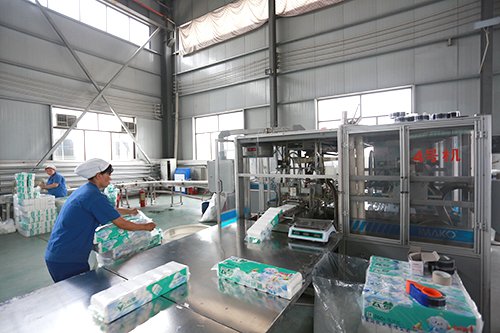
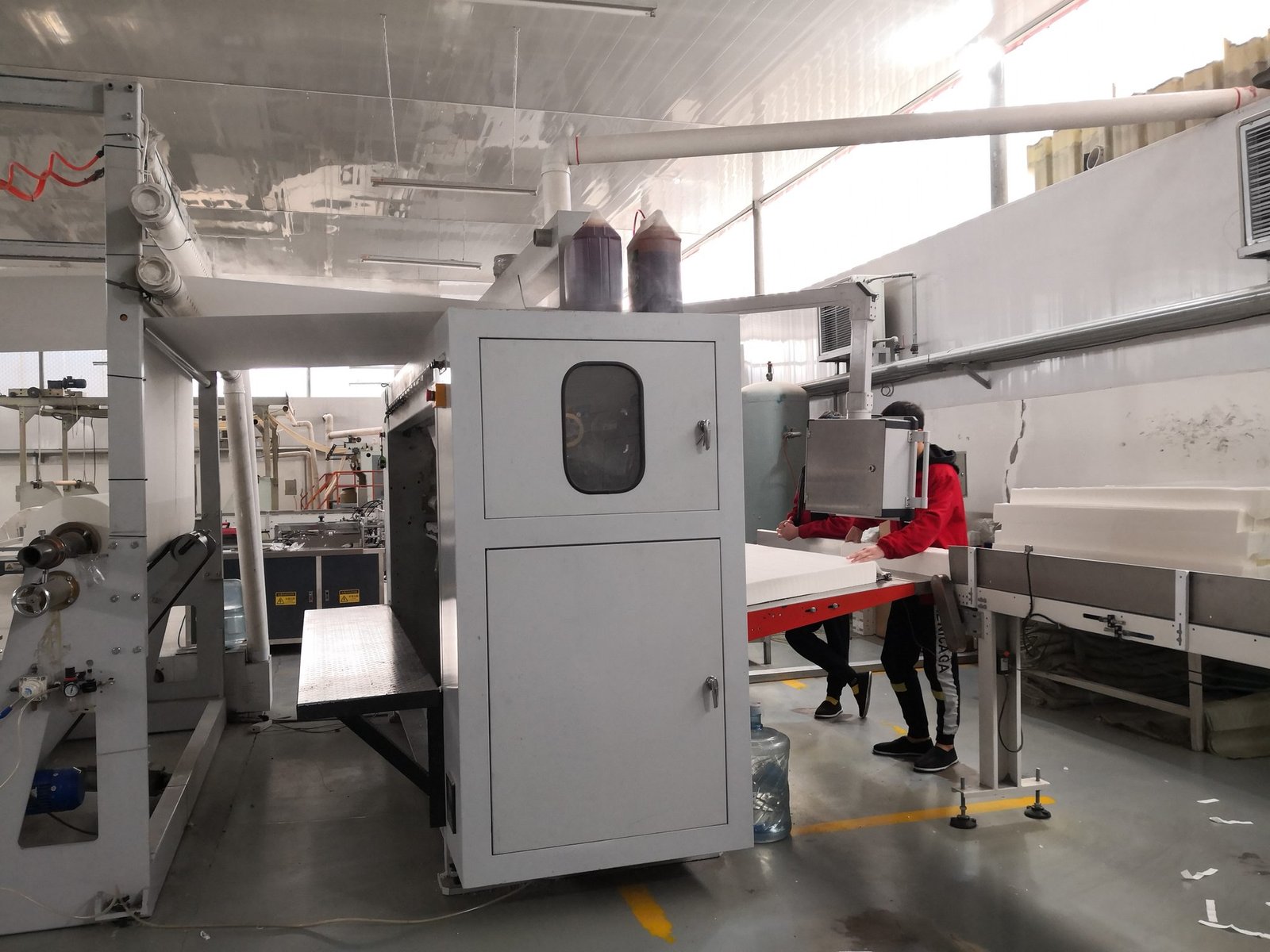
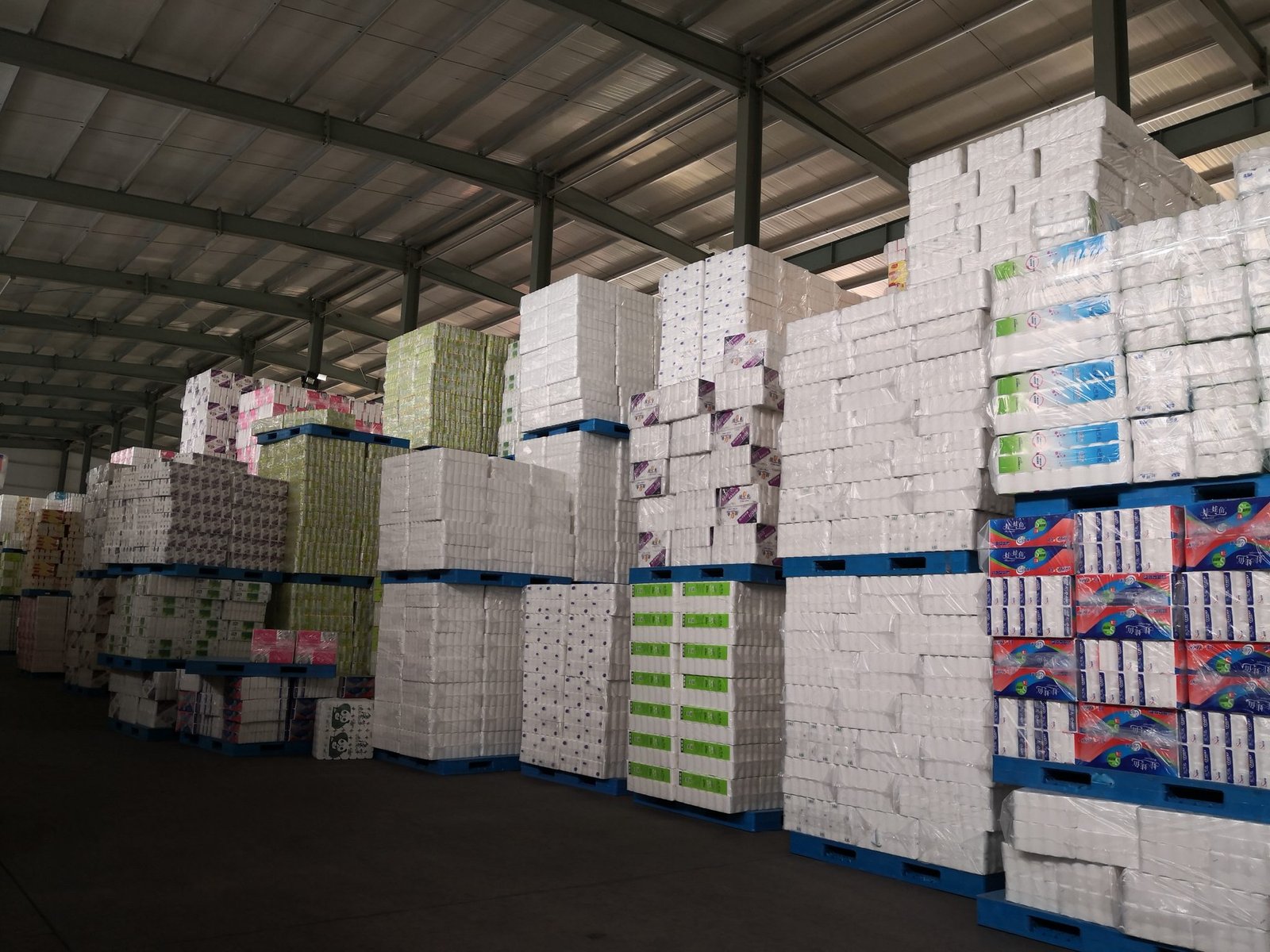
The mill’s side is the production window: parent rolls received, rewound, printed, packed, stuffed. The document set a converter hands over per shipment is listed later. Those records stop at the container door; once the box leaves Tianjin Xingang, the mill knows only what the paperwork says.
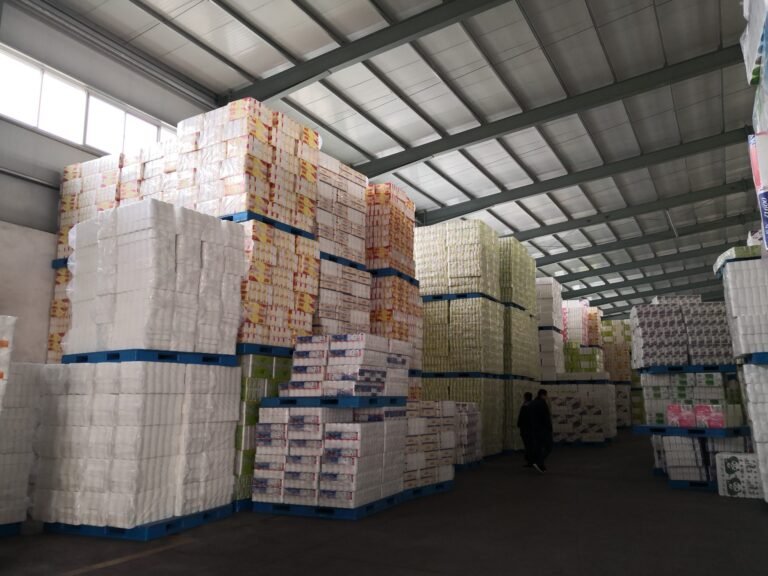
Your side starts at the port of discharge: customs entry, DC receipt scan, pallet-to-carton relationships, store allocations. Most importers can produce a bill of lading; far fewer can derive every carton position from one sampled lot code. The one-step-back and one-step-forward exercise needs both halves to agree on the same identifier.
Three related guides own adjacent territory, each stopping short of this file. The certifications and QC reports guide teaches you to read a report against the lot it names. The sheet-count verification guide defines the lot as the unit you inspect, decided in the PO before goods land. The origin paperwork and duty-chain guide reconciles invoice, packing list, and bill of lading for customs. Customs agreement and recall agreement are different tests over the same papers: customs wants documents to agree with each other; a recall wants them to agree with a physical carton in a warehouse.
The Lot Code Agreement Belongs in the PO
If the code scheme is not in the purchase order, you own a lottery, not a traceability system. Whatever gets stamped at 2 a.m. on a converting line is whatever the line has always stamped. Negotiate the scheme the way you negotiate grammage.
Write five things into the PO; they cost nothing at draft and are nearly impossible to change mid-production.
- Format. The code structure as a literal string pattern plus a decoding key that maps each position to a date. Any format works; the requirement is uniqueness within a season and resolvability into the batch records.
- Placement. Which carton panel carries the code, ink color, minimum character height, and whether pallet tags repeat the value. A code nobody can photograph from outside is a code nobody reads during an incident.
- Document echo. Which papers repeat the code or its production date: batch record, COA shipment reference, packing list notes. Decide now; retrofitting mid-order creates mismatches.
- Retention. How many years the mill keeps batch records against how long you keep receiving records. Say a three-year archive against a one-year scan history is a broken chain in year two.
- Drill clause. One line requiring the supplier to complete a mock recall exercise, on a named lot, within an agreed window, before the first full order ships.
Then the two directions the folder must answer. One step back from a suspect carton: read its code, decode to a production date, pull that day’s batch record, identify the parent-roll inputs consumed. One step forward from a parent-roll lot: pull the batch record, list the runs that used it, match carton codes to pallets and containers, then continue from your receiving data. The supplier answers the back step; only you can answer the forward step at store level.
Carton-level tracing of one private-label pack is possible under this scheme and impossible without it. Everything else is paperwork in search of a link.
A private-label program accumulates artwork revisions across years of repeats. Ask that each batch record note the artwork version and plate set used, so a lot code also names the design.
What the Mill Ships Per Container
Here is the honest inventory of what Top Source Paper documents as shipped deliverables. This is a papermaker’s shipping file, not a recall certification. The mill does not claim CPSC registration, FDA certificates, or a recall plan on your behalf, and you should not imply one to your customers.
Three quality stages generate the production-side evidence:
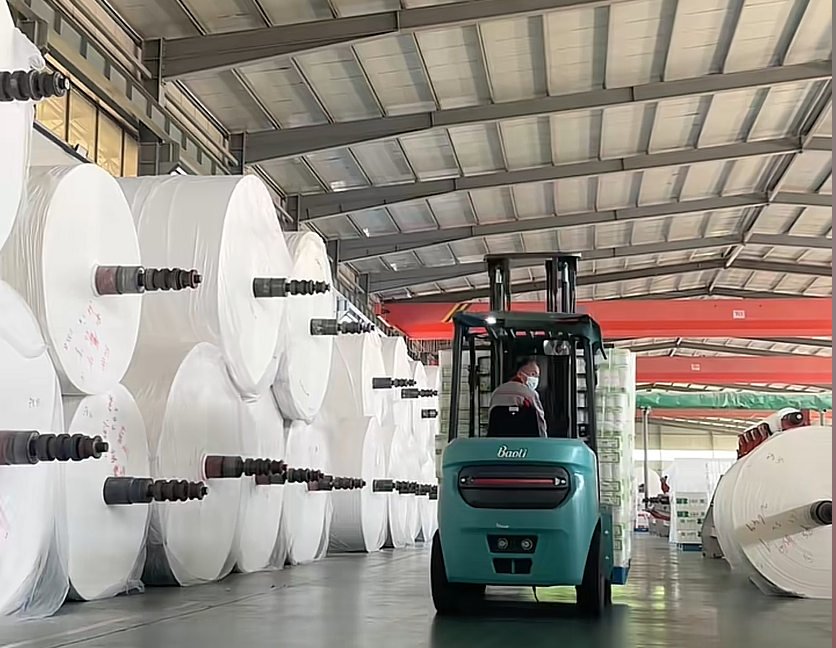
- Parent-roll sampling at receipt. Incoming jumbo rolls checked for tensile and brightness. This is the one-step-back anchor; the record exists before conversion begins.
- In-process rewinding inspection. Grammage, tension, and perforation line checked while the line runs. This is the spine of the batch record for a given day.
- Pre-shipment final check. Carton specification and drop test before goods move to stuffing.
Alongside the checks, each order ships with a document set:
- A COA report covering tensile strength, brightness, and 100% virgin fiber verification. Agree in the PO which shipment reference it names, so the COA binds to your container and not to a generic product page.
- A quality inspection video pack covering wet-tensile and zero-dust testing.
- Timestamped, container-specific loading and moisture-proof packing photos and video.
- QC report and container-seal video before the 70% balance clears. Under the 30/70 T/T terms, that is your checkpoint: the folder either assembles cleanly or exposes what is missing. Check the documents before releasing the balance. The seal video is also the anchor record the container loading and packing guide tells you to keep against a carrier claim.
- Permanently archived artwork and formula files, with no re-plate fee on repeat orders. The archive protects your repeat pricing and means a lot from last season still resolves to the version it was printed against.
Watch the converting events that produce these records, from the plant’s own channel:

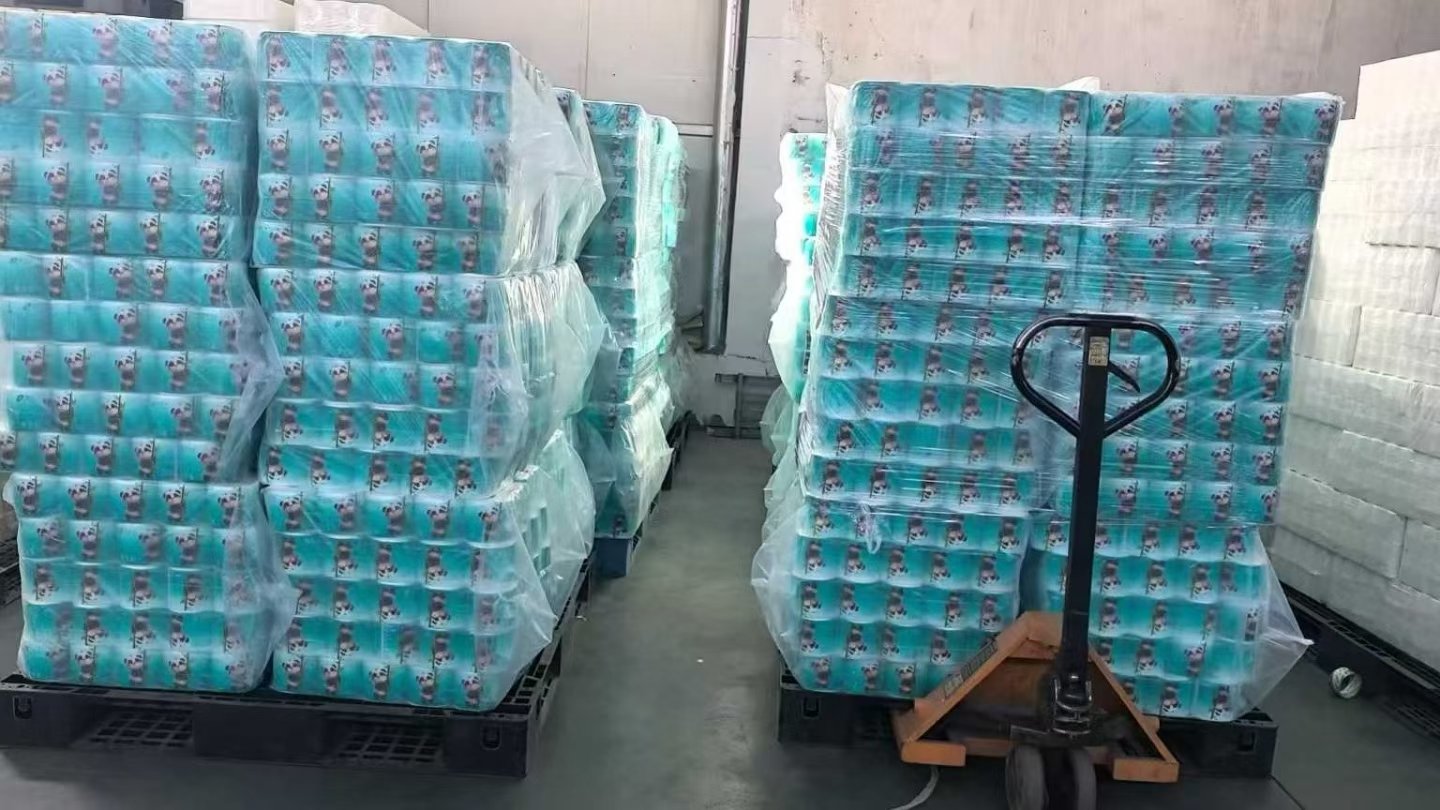
The file cannot do one thing: it stops at the container door. Loading photos prove what went in; nothing made in Baoding records what leaves your warehouse weeks later. The receiving half is yours, and it is the half that makes a forward trace possible.
Running a 24-Hour Mock Recall With Your Supplier
Do this once, deliberately, before the money is all spent. A mock recall is a rehearsal: pick a fictitious defect, attach it to a real lot code, and see whether both halves of the folder assemble inside a working window. The buyer sets the target; the 24-hour clock is the window retailer audit paperwork tends to demand, and no converter is certified against it. The drill shows, cheaply, whether the supplier’s records and your systems can hit it together.
The timing fits a calendar you already have. Samples dispatch in 1 to 3 working days; a first full production run takes 25 to 30 working days, covering plate-making, sampling, and outer-carton printing. Run the drill inside that window, not after landing. Private-label starts at one 40-foot high-cube, so rehearse against a prior shipment’s documents or the in-process run, and write every fix into the PO before your first full container ships.
| Elapsed | Step | Who acts | Done when |
|---|---|---|---|
| 0 h | Declare a fictitious defect on a real lot code. | You (quality lead) | Code, photo, and target date logged. |
| 0 h | Send the one-step-back request: that day’s batch record. | You | Request timestamped; contact acknowledged. |
| 0-4 h | Pull receiving records for the container: pallet count, putaways. | You / 3PL | Container resolves to a receipt entry. |
| 4-10 h | Mill returns production evidence: run date, in-process and pre-shipment check results. | Supplier | Batch record names the day the code decodes to. |
| 4-10 h | Mill attaches the document set: COA with agreed reference, loading photos, seal video. | Supplier | Documents match the drill carton’s container. |
| 10-16 h | Forward trace: where that lot’s cartons went, from scan and allocation data. | You / 3PL | Location list exists with quantities. |
| 16-20 h | Draft the hold notice and a carton-side check a store clerk could follow. | You | Notice fits one page; code position testable. |
| 20-24 h | Log every gap: missing key positions, unreachable records, unresponsive contacts. | Both | Gap list written, not mental. |
| 24 h | Debrief. Decide PO changes before the next order window opens. | Both | Changes in the next PO draft. |
Two clocks run inside the drill: the mill’s archive speed and your own systems’ speed. Most first-run failures are on the buyer’s side. A pallet never scanned against its carton manifest is invisible to a forward trace, batch records or not. If your 3PL cannot pull a list by lot code, have that contract conversation this week, not during a real incident.
Repeat the drill when anything structural changes: a new line, new plates from a redesign, a formula change, a new packing configuration. A drill that passed in March proves nothing about September’s artwork. Re-run after your approval-sample lock on any SKU you keep for more than one season.
What to Fix Before the First Full Order
Run the drill’s gap list through one filter: PO, receiving setup, or folder index. Six fixes, cheapest first.
- Write the coding scheme, decoding key, and code placement into the PO text, with a photo of the printed carton as artwork proof. If your carton spec is not locked yet, follow the published verification-plan method so the lot in your sampling plan matches the lot in your recall folder.
- Name the document echo list: which papers carry the code or shipment reference.
- Set retention parity between the supplier’s batch records and your receiving scans, in writing.
- Add the drill clause and run the rehearsal inside the first production window.
- Instruct your warehouse or 3PL to capture lot codes at receipt, linked to pallet IDs. A receiving scan that records only SKU and quantity cannot serve a forward trace.
- Index the folder: one contents page listing every record type, its owner, and where it lives. An unindexed folder is a box of papers someone’s cousin reassembles at 2 a.m. during the real thing.
Two habits close the loop. Reconcile the traceability file against the customs file once per shipment; the customs document-chain guide explains where a mismatch becomes a finding at the border. And treat the folder as a supplier-selection input: a supplier that explains its batch-record workflow at quote stage is telling you what its files will look like for years, and the QC-report reading guide covers judging those files before you commit.
Before the container: code scheme in the PO, echo list agreed, drill clause signed. After the container: receiving scans carrying lot codes, folder indexed, next rehearsal dated. That is the whole discipline, and it decides the recall conversation before the first complaint arrives.
One boundary, stated plainly. This page does not own certificate reading, sampling plans, customs reconciliation, or packing defense; the certifications guide, the sheet-count guide, the origin paperwork guide, and the moisture-proof packing guide own those. Only this page owns the recall-ready folder, its lot code agreement, and the joint drill. Questions on coding schemes and per-shipment records: info@chinatoiletpaper.com. The working file belongs alongside the buyer resources library.
Frequently Asked Questions
Can a single private-label tissue carton be traced to a lot?
Yes, under two conditions. The carton must carry a lot or date code whose placement and decoding key were agreed in the purchase order, and the production-day records behind that code must still exist and be retrievable. If either condition is missing, the carton is traceable only to the order, not the batch.
What should a factory be able to produce in a 24-hour mock recall?
A one-step-back and one-step-forward package for the named lot code: the production date and batch record behind the code, the quality-stage logs tied to that run, the per-shipment document set (COA with its agreed shipment reference, packing list, timestamped container-specific loading photos, and seal video), and the quantity and destinations of cartons carrying the lot. The buyer supplies the receiving half from warehouse or 3PL records. The 24-hour window is a target the buyer sets, not a service level any converter publishes.
Is the lot code the same thing as the barcode?
No. A barcode identifies the product for the till; it is the same on every carton of that SKU across years of repeats. A lot code identifies the production batch and changes run to run. A recall narrows by lot code; a price scanner reads barcodes. Confusing the two is how an importer quarantines a whole SKU because nobody could name the batch behind one complaint.
Do I need to run the mock recall before every order?
Run the full drill once before your first private-label 40HQ, then re-run it whenever something structural changes: artwork redesign and new plates, a formula change, a new line or packing configuration. Pure repeats keep the archived plates and formula files, so the records scheme does not move; a short desk test that one sampled carton resolves both directions is enough. Your retailer’s own code may set a cadence, so verify what your customer requires.