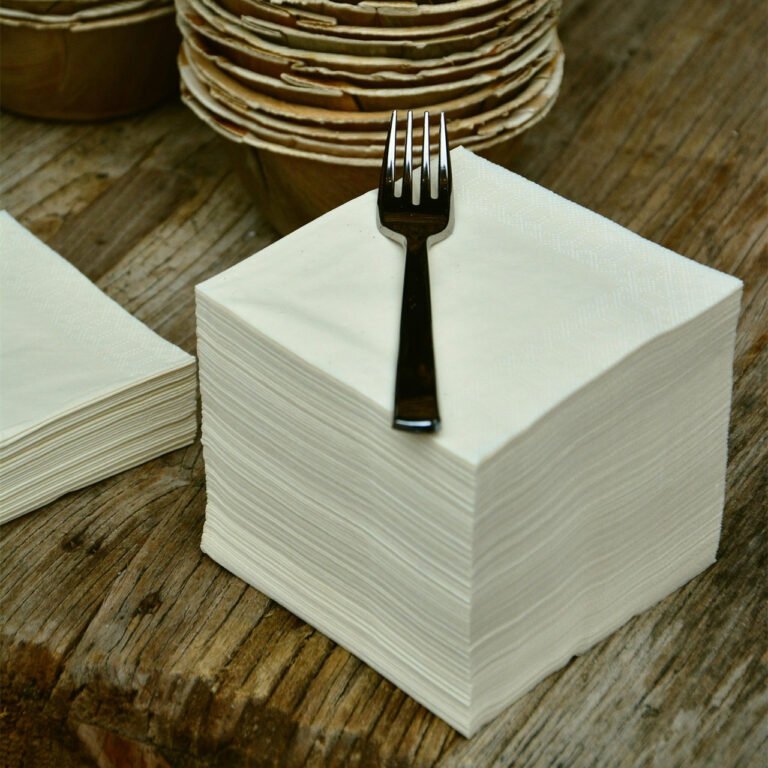
Before you quote a napkin, someone has already decided which napkin you are allowed to buy. Not in a spec sheet or a sample box — on a counter, inside a wall, or on a table, by hardware mounted months before anyone talked about paper. Once it is mounted, the format argument is over. The only question left is whether the paper you order matches the fixture you own.
This guide is for food-service and facility buyers restocking dispenser napkins at volume, and for brand owners running a chain’s private-label napkin. It explains what an installed unit rules out. Folded dimensions, sheets per pack and cases per container are not here as factory facts — they are PO lines you set, not defaults we invent.
The Fixture Decides Before the Supplier Does
A mounted dispenser is not a passive holder. Its housing fixes three things before you send an enquiry: the folded length and width the cavity accepts, and the draw direction the mechanism expects. Order against a guessed format and the mismatch is felt by the room, not by the invoice: a banquet turn that stalls, a queue at a quick-service counter, or a self-serve station left half-used because nobody wants to fight it again.
The classic purchaser’s mistake is to read this as a brand-substitution problem: “this competitor’s napkin is cheaper, switch to it.” It is a format-matching problem — the competitor’s product works only if it presents the same folded geometry to the same housing. Two napkins identical on a spec page can behave nothing alike in one drawer, because the drawer is a tolerance, not an opinion.
The one-sentence version to paste into an email today: “We are buying to an installed dispenser — confirm you can supply the format it accepts, and we will specify the rest on the purchase order.” That flips the burden: the buyer states the constraint, the supplier proves the match, nobody pretends a catalogue number decided it.
Facility and janitorial buyers come to this from a dispenser culture — restocking folded hand towels teaches you to think in fixtures and draw direction — and bring that instinct to the napkin line. We are describing how they buy; we do not import a hand-towel property onto a napkin.

Format Lock: What the Installed Dispenser Rules Out
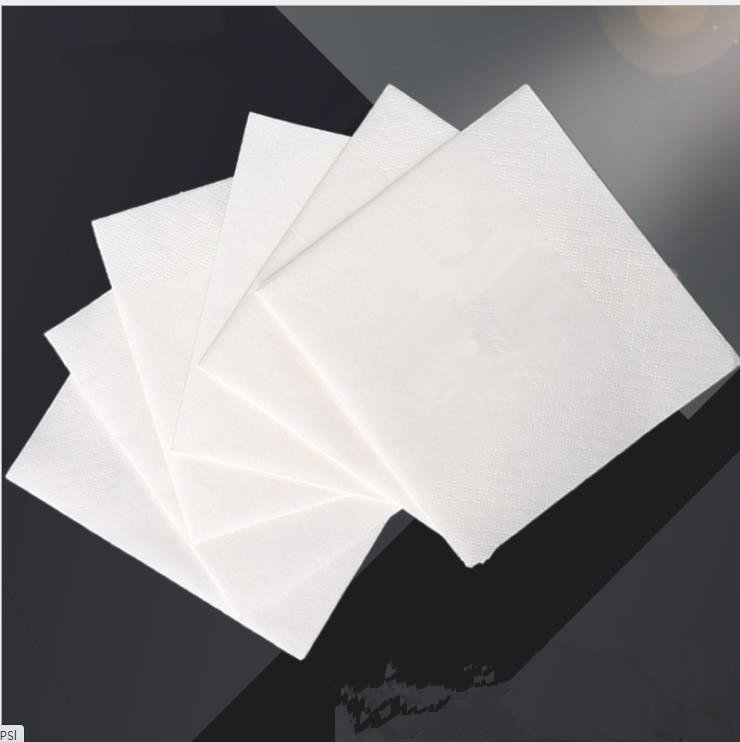
Our napkin line publishes three formats, named and not dimensioned: quarter-fold, eighth-fold, and the dispenser interfold format — what other pages here call a commercial dispenser pull-through, or draw-off. Ply options are one-ply and two-ply. The omission of measurements is deliberate, and is the point of a later section.
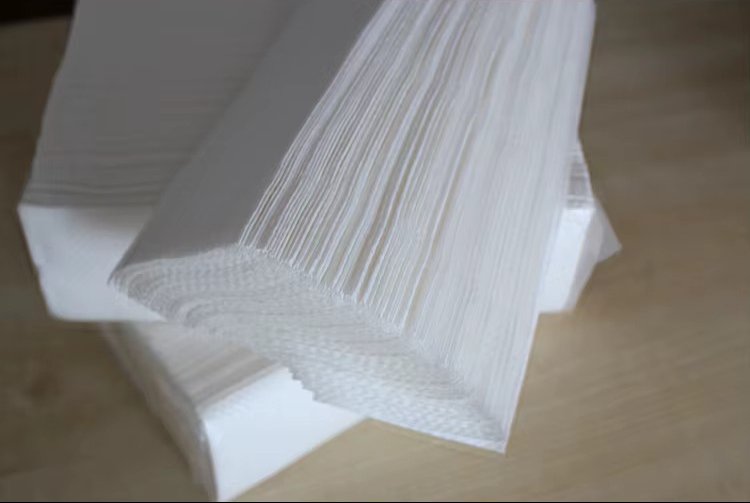
What a housing is sensitive to is physical behaviour, not a label: stack depth decides whether a refill seats fully or bridges, embossing grip decides how the sheets present to the throat, edge stiffness decides how the first sheet behaves at the opening. A format failing any one is wrong for that fixture even if its folded size technically fits.
The fine border embossing loads all three tolerances at once, which is why it belongs to draw behaviour and not to decoration. Judge it from the housing outward: embossing that grips too hard gives up a chained bundle at the throat, embossing that grips too little drops a second sheet into the cavity with the first, and a stack seated at the last refill is suddenly proud of the rim.
If you want the fold geometry, the sizes behind each style, or the pre-set banquet line, they are already here and we will not restate them: quarter-versus-eighth-fold in Dinner Napkins: Quarter-Fold and Eighth-Fold Sizes for Catering and Banquets, which also publishes how the edges of a folded sheet engage so that one comes per pull; cocktail-versus-dinner in Cocktail Napkins vs Dinner Napkins: Sizes, Folds, and Use Cases; sizes-by-service-style in Custom Paper Napkins: Sizes and Folds for Food Service. One pointer each — the format-as-commitment angle is unique here.
| Format (named, not dimensioned) | Who actually fixes it | What it rules out | Which number stays the buyer’s |
|---|---|---|---|
| Quarter-fold | The installed drawer’s cavity and throat | A feed that wants a different folded geometry | Folded length/width, packs per carton |
| Eighth-fold | The table-side or counter holder already bought | A stack that bridges or jams at that depth | Sheets per pack, case size |
| Dispenser interfold | The shared unit fixed months earlier | Any format whose edge or grip will not feed alone | Refill cadence, covers per case |
Video: “tissue paper manufacturing process” on the Top Source Paper channel (@topsourcepaper4025). It shows the paper converting line, not a napkin folding machine or any dispenser model; use it as process context only.
Loan and Branded Dispenser Programmes as a Purchasing Constraint
A “free” or heavily discounted dispenser is rarely free. It is a loan: the hardware lender supplies the unit cheaply and recovers it through a paper commitment written around it. What it quietly fixes is not just the format but a minimum volume and a switching cost you feel only on trying to leave. Three constraints dressed as one gift.
The one most buyers miss is the re-quote window. In an open-market format you re-tender whenever a better supplier appears; under a loan programme the fixture is proprietary enough, or the volume commitment binding enough, that your next real negotiating position is scheduled by someone else. Price leverage becomes a contract date, not a market moment — and it bites harder where restock runs on a drumbeat, a hotel breakfast room or an airport washroom station, than where it arrives in bursts, a banquet hall or a cafe with table-side holders.
We should be blunt about where this article sits. We sell napkin paper; we do not sell, lend, or lock you into dispensers, which puts our interest opposite the machine lender’s. The lender profits from the lock; we profit when paper matches the unit you own, because a match is a repeat order and a mismatch is a returned pallet. This advice comes from the side that wants your format right, not the side that wants your volume captive.
That is also why there is no brand-compatibility chart here: listing which named dispenser programs our napkin “fits” would be a guess dressed as a spec. Brand names appear only as generic examples of how a loan programme works, never as a compatibility promise. If a fixture is on your counter, measure it and specify it.
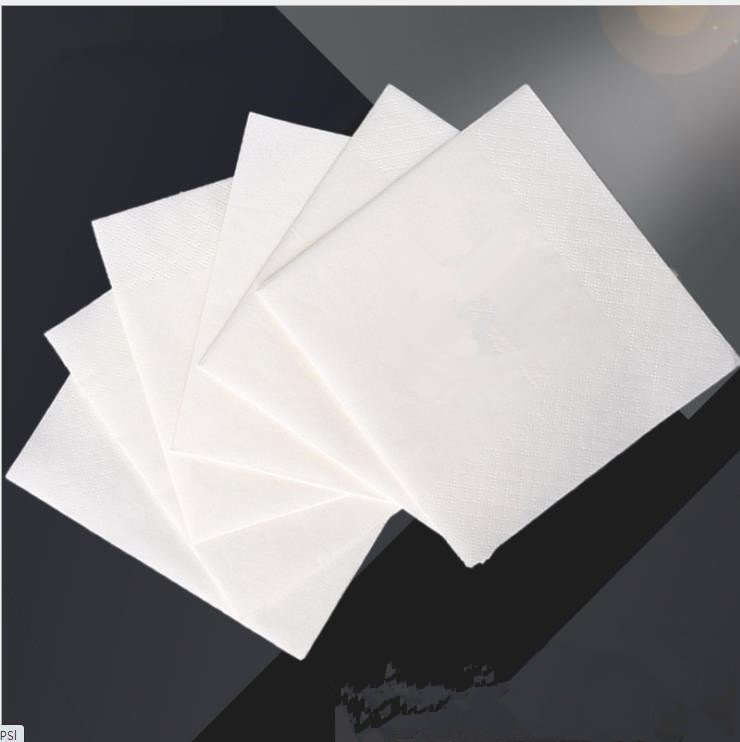
Proving “One Sheet at a Time” on Your Own Floor
Every buyer has read it: a dispenser napkin cuts usage because you pull one sheet instead of grabbing a handful. In distributor catalogues this arrives as a number — a reduction of “at least 25 percent” is the sort of figure quoted. Treat that as their statement, printed in their catalogue, not ours. A claim you cannot reproduce on your own floor is a slogan, not a specification.
Marketplace listings add third-party figures from the other direction — a folded sheet around 14–25 gsm, 500 pieces per pack, 12 packs per carton, 570 cartons in a 20GP, case sizes of 8,000 / 4,320 / 10,800 sheets, or 1,400 cartons in a 40HQ. Those are the listing’s numbers, shown so you can see what a brochure asks you to swallow, not facts this mill publishes. The moment one turns up in your PO as though it came from us, the purchase quietly breaks.
A buyer can count two numbers instead. Covers per case tells you how many seated guests one case serves in a real venue; refills per shift tells you how often staff touch the unit. Both are reproducible without a lab, and both turn a marketing percentage into something auditable.
Design a two-week single-venue test: one scene, held constant — a quick-service counter, a hotel breakfast room, an airport washroom station, a cafe with table-side holders — because restock cadence belongs to the scene, and two venues at once measure the venue, not the paper. Change nothing else: a staffing or menu change poisons the count. Log the baseline date, the case open-rate before the new format, and refills per shift, then compare against the brochure.
| Worksheet line | What to write down | Why it beats a brochure percentage |
|---|---|---|
| Baseline date | The day counting starts, before the new format lands | Fixes a starting point you both agree is real |
| Covers per case | Guests served before a case is exhausted, at one venue | Converts “usage” into something you can reorder against |
| Refills per shift | Staff touches to keep one unit stocked over a shift | Turns the labour claim into a countable number |
When your own count contradicts the brochure, plan for it: record the gap instead of absorbing it into the reorder. The claim was the seller’s; the count is yours. Whether a destination market regulates this, or expects a certificate, is a question for your own rules; this mill ships virgin-pulp napkin stock and asserts no compliance certificate on a napkin listing.
What We Publish About Napkin Formats — and What Stays on Your PO
A catalogue publishes everything it can; a factory publishes what it controls. That boundary is already drawn here by the quarter-fold and eighth-fold dinner napkin guide, which lists the published scope — one and two ply, the three folded formats, the fine border embossing, 1–4 colour eco water-based ink on napkin stock, and the order tiers — and tells you to put a size that matters on the purchase order and get it made. This page adds the dispenser half: what changes when an unset number is defaulted into a mounted housing. The full range sits on the category page: Napkin Papers.
What stays on your purchase order: folded dimensions, sheets per pack, packs per carton, cases per container. We refuse to default them, and the reason is specific to this line. In most categories a wrong default is a wrong price. Here it is paper that will not present itself to a cavity you fixed to the wall months ago, discovered at the busiest hour by whoever is standing at the unit.
So the order document carries the geometry, in four fields: folded length, the depth the cavity accepts; folded width, what clears the throat; draw direction, which edge the mechanism feeds from; stack depth, the height a full refill presents. Record each as a measurement, with the fixture’s location and the date taken, and the supplier quotes against your hardware rather than their habit.
Then close the substitution door. A clause that survives a dispute says three things: the format is buyer-specified against an installed fixture, not a supplier recommendation; no substitute enters production without written approval against those four fields; and the approved sample is the reference, so a shipment that feeds differently is a variance you can name. Delete similar napkin accepted from your template — it is how a different folded geometry arrives at the same price.
Sampling settles what documents cannot: one to three working days to make and dispatch, short enough to prove a format in the venue before it is fixed on paper. The specification conversation itself is owned by Custom Printed Napkins: A Buyer’s Guide to Specifications, Printing, and Sourcing, and we point there rather than rebuild it.
Print, Ink and the Formats They Can Be Applied To
One to four colour eco water-based ink is offered on napkin stock only, applied to the line described here. We do not borrow a print story from the toilet-paper or kitchen-towel lines to make a napkin sound more capable than it is. Ink chemistry and its process are explained once on this site — Printed Napkins: 1-4 Colour Water-Based Ink Printing Explained — and not restated here.
For a multi-site chain the mechanic that matters is the artwork archive. A private-label customer’s drawings and formula are sealed and stored permanently, and repeat orders carry no re-charging of the plate — the policy that stops a printed dispenser napkin repricing every time you restock.
Where the printed mark sits once the napkin is folded — placement, coverage, what survives a fold — is a separate question already answered here: logo placement in Branded Napkins: Where the Logo Sits Once the Napkin Is Folded, logo napkins as a product in Custom Napkins with Logo: Branding for Restaurants, Cafes, and Caterers. We link and add nothing. The OEM and private-label route, including the archive clause, is at OEM & Private Label. Plate and first-order timing sits inside the 25–30 working-day window below.
Switching Paper Supplier Without Switching Hardware
Switching napkin suppliers while keeping the same dispenser is a measurement job, not a taste test. Take the four numbers off the installed unit before you ask anyone for a sample: folded length, folded width, draw direction, stack depth.
In the RFQ, write the anti-substitution clause the section above sets out — format buyer-specified against the fixture, the four measurements listed, a sample run against your actual unit before any volume quote. A supplier who will not do that is telling you the match is unproven.
Run one case through a full service week before any container quantity is booked — the white-label tier is small enough to allow it. A case that disappoints costs a store-room shelf; a container that disappoints costs a season of workarounds. The equivalent fold-to-dispenser mapping for hand towels is worked out in C-Fold, Z-Fold, and Multifold Hand Towels: Dispenser Compatibility Guide; we reference it as a method from an adjacent category without cloning it.
If a claim is ever filed and the format was buyer-specified, that record is your position: the buyer named the fixture, took the four measurements, and required a sample, so a downstream complaint about draw behaviour has a documented owner.
Order Shape: MOQ, Sampling and Reorder Timing
State the tiers once, precisely. White-label and plain napkins in transparent film over a plain box start at a 20GP. Custom-printed napkins — where the printed carton and the printed outer PE sleeve both carry your artwork — start at 1×40′HQ; the gap between the tiers follows plate minimums, charged per artwork rather than per case. The full tier logic is owned by MOQ for Tissue Paper Orders: 20GP White-Label vs 40HQ Custom Print; one verbatim line here, that link for the rest.
Sampling runs one to three working days to make and dispatch. First bulk production is 25–30 working days, plate-making and artwork proofing included; a regular repeat drops to 20–25 working days, helped by that no-repeat-plate policy. Those windows turn “we match your format” into a date you can plan a restock round around.
On the commercial edge: export ships from Tianjin Xingang, terms are FOB / CIF / CFR / EXW, and payment is 30% T/T down plus 70% before shipment. The mill has run papermaking, converting and export from Baoding Mancheng for 18+ years; three QC gates stand behind those terms — a virgin parent-roll spot check on tensile and brightness, an in-process rewinding patrol, and a pre-shipment final check on carton specification and drop test — and three records travel with each shipment: the virgin-fibre COA, the packing and loading photographs, and the pre-shipment quality report with the container-seal video. No case-count model opens here: consumption planning for multifold is a hand-towel conversation kept in Multifold Towels Case Counts: Planning Bulk Restroom Supply.
Frequently asked questions. The five below are what a restocking buyer sends a supplier when a dispenser napkin decision has to be made against hardware already installed.
What napkin size fits my dispenser?
The size that fits is decided by your installed fixture, and you measure it — folded length, folded width, draw direction — then write it onto the purchase order. That number is not ours to publish; it belongs to your unit. Fold geometry and sizes-by-service-style are answered in the dinner-napkin, cocktail-napkin and custom-napkin guides, but none substitute for measuring the fixture already on your counter.
Do dispenser napkins really cut usage by 25%?
That claim is not owned by us or by any responsible supplier. The “at least 25%” figure lives in third-party distributor catalogues, and a usage percentage you cannot reproduce on your own floor is a slogan, not a spec. The falsifiable substitute is a two-number floor test: count covers per case and refills per shift in one venue over two weeks, change nothing else, and compare against the brochure.
Can I switch napkin brands without changing dispensers?
Yes, as a measurement job. Take the four numbers off the installed unit, put them in the RFQ as buyer-specified constraints, and require a loaded sample in your real dispenser before any volume quote. For hand towels, the equivalent fold-to-dispenser mapping is on this site; we point to it as an adjacent-category method, not copy it, because a compatibility chart nobody was asked to measure is not worth trusting.
What is the MOQ for custom-printed napkins?
White-label and plain napkins in transparent film over a plain box start at a 20GP; custom-printed napkins, where the printed carton and printed outer PE sleeve both carry your artwork, start at 1×40′HQ. The tier breakdown is owned by the MOQ guide, and the print process by the water-based-ink article.
Can you print our logo on dispenser napkins?
One to four colour eco water-based ink is offered on this napkin line, and your artwork is archived permanently with no repeat plate fee on reorders. Where the mark sits once the napkin is folded is already answered by the logo-placement and logo-napkin articles, so this page only confirms the ink capability and links on.
To keep it practical: identify the fixture you own, buy paper to its constraints, prove any usage claim by counting covers per case and refills per shift in one venue, run a single case through a service week before booking volume, and let the folded size and pack counts be numbers you set on the PO. A napkin that matches your hardware is worth more to both of us than a brochure that matches a search term.