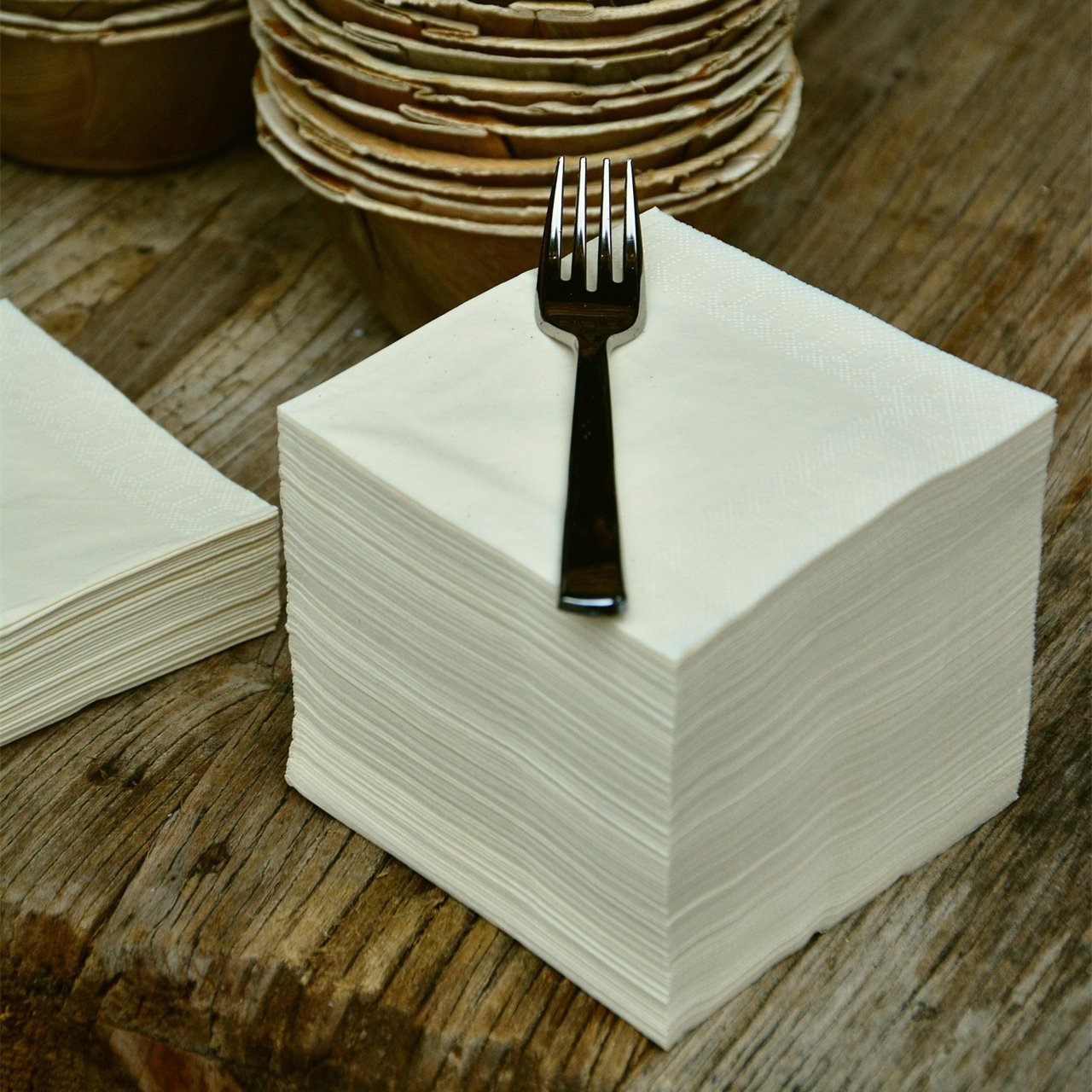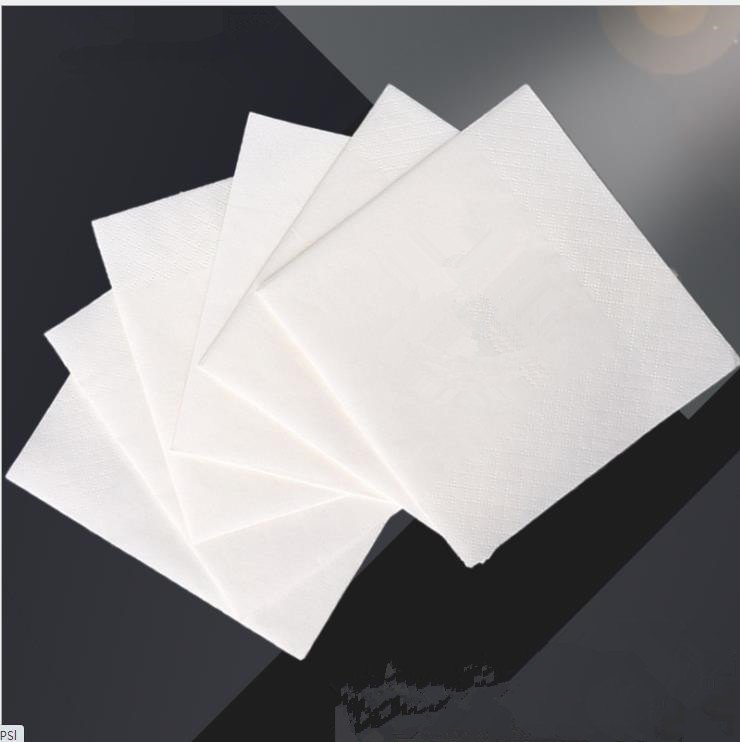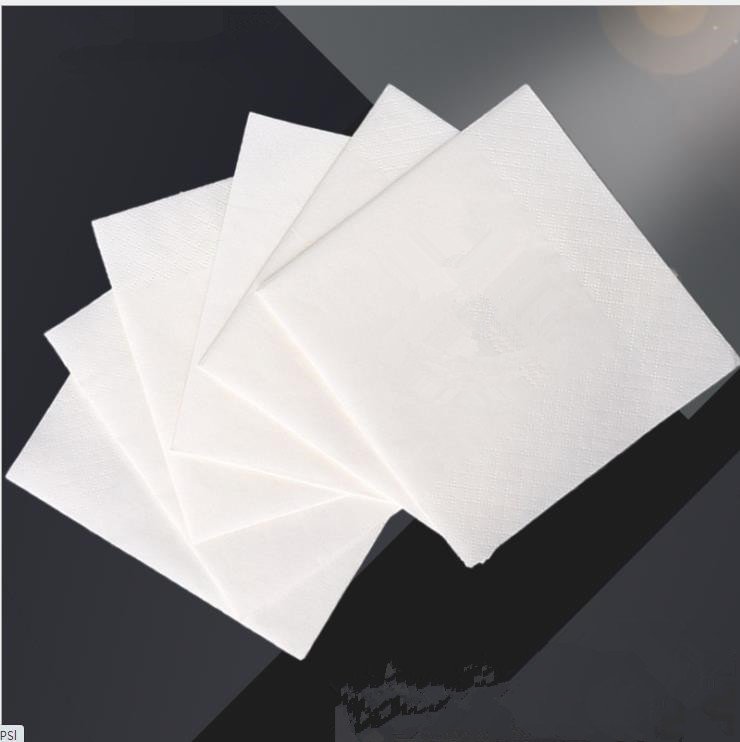
Printed napkins are napkin papers carrying a logo, border or pattern in one to four colours of eco water-based ink, printed on the sheet before it is folded and packed. That single sentence contains the four decisions that govern the whole order: how many colours, what ink basis, what the sheet is underneath, and how the artwork is plated. Get those four right and a printed napkin is one of the cheapest brand touchpoints a restaurant, cafe or caterer owns. Get one wrong and the print rubs, bleeds or fails a food-contact check.
This guide explains the printing itself rather than the buying decision. It covers what water-based ink means on a product that touches food, how the colour count changes the result, how plates and registration work, and what artwork the factory needs from you. It is written from the converting side at Top Source Paper, where napkin papers are produced from 100% virgin wood pulp and printed with one to four colour eco water-based ink, shipped in containers from Tianjin Xingang Port.
What “One to Four Colour Water-Based Ink” Actually Means
Two specifications are packed into that phrase. The colour count tells you how many separate inks are laid down, and the ink basis tells you what carries the pigment. On our napkin line the range is one to four colours, printed with eco water-based ink. One colour is a single-ink logo or border. Two to four colours let you reproduce a brand mark with more fidelity, but each additional colour is a separate plate, a separate print station and a separate registration to hold.
Water-based means the carrier is water rather than a solvent. The pigment sits in a water-borne system, which is why water-based ink is the standard choice for paper that contacts food: it avoids the solvent residue question entirely and it suits the absorbent, low-density surface of tissue. Our napkins are produced from 100% virgin wood pulp without fluorescent brightening agents and without harmful chemical additives, and they are food-contact safe as a material standard. The ink basis and the sheet standard are two halves of the same food-safety story.
Do not confuse colour count with print quality. A clean one-colour logo, well registered on a good sheet, reads sharper at a table than a four-colour mark printed on a thin, dusty napkin that soaks the ink. The colour count is a design and budget decision; the sheet underneath it is a quality decision.
Water-Based Versus Solvent Ink on a Food-Contact Product
The reason the industry moved napkin and tissue printing toward water-based ink is straightforward: the product ends up on a plate, next to food, and sometimes in a child’s hands. Solvent-based systems carry volatile carriers that raise residue and odour questions on a food-contact article. Water-based systems sidestep that, which is why eco water-based ink is the expected basis for printed napkins and why a buyer should treat it as the default rather than a premium upgrade.
There is a trade-off, and an honest supplier will name it. Water-based ink on an absorbent tissue surface behaves differently from ink on a coated board: the sheet drinks a little of the carrier, so very fine detail and heavy solid coverage both need the right sheet and the right plate. This is a converting-skill question, not a reason to avoid water-based ink. It is a reason to approve a printed sample on your actual napkin specification before you commit a container.
If a buyer’s compliance team asks for documentation, request the ink’s food-contact status and any certification the factory holds, and match it against your market’s requirement. We supply a 100% virgin pulp COA with tensile strength, brightness and virgin-fiber verification, plus a wet-tensile and zero-dust test video pack; ask any supplier for the equivalent ink and sheet paperwork rather than accepting a verbal “food safe.”
How the Print Is Applied: Plates, Stations and Registration
Napkin printing is a rotary process built on plates. Each colour in your design is separated onto its own printing plate, the plate is mounted on a print station, and the napkin web or sheet passes through the stations in sequence, picking up one colour at a time. A four-colour job runs four plates and four stations. Registration is the alignment that keeps those four colours in the right place relative to each other, so a logo does not arrive with its colours shifted.
Three consequences follow for a buyer. First, every colour you add is a plate and a station, so colour count drives both cost and setup time. Second, registration is what separates a crisp brand mark from a muddy one, and it is judged on a physical printed sample, never on a screen. Third, plate-making is a step inside your lead time, which is why first production is measured in weeks rather than days.
On our side, client-specific artwork and formula are sealed and archived, so a repeat napkin order does not pay the plate cost again and does not wait for pre-press a second time. For a chain that reorders a branded napkin on a cycle, that archive turns the first order’s setup into a one-time cost rather than a recurring one.
Choosing the Colour Count for a Logo
The one-to-four colour range covers almost every napkin branding job, and the right number depends on the artwork rather than on ambition. A single-colour mark is the most economical and the most robust on tissue, because there is one plate and no registration to drift. Two or three colours handle a logo with a distinct secondary element or a coloured border. Four colours support a fuller brand mark, but they add three more plates and three more registration relationships to hold on an absorbent sheet.
Two design rules keep the result clean. Simplify the artwork to flat colours rather than gradients and photographic detail, because tissue does not reproduce a smooth gradient the way coated board does, and a gradient is really many colours pretending to be one. And keep critical detail away from the fold lines, since a napkin is folded to a quarter or an eighth and a logo placed across a fold disappears into the crease.
If your brand mark is genuinely photographic or needs more than four flat colours, that is the moment to talk to the factory about feasibility rather than to assume the napkin format will carry it. Confirm the achievable result on a printed sample of your actual artwork before you finalise the design.
The Napkin Under the Print
The print only looks as good as the sheet it sits on. Our napkin papers are built in 1-ply and 2-ply, folded to a quarter or an eighth, and available in a commercial dispenser pull-out format, with decorative border embossing as an option alongside the print; the full format range is set out on our napkin papers programme page. The portfolio runs 13 to 45 GSM across all tissue categories; the specific basis weight for your napkin depends on the ply and the hand you want, so quote ply and target GSM together and confirm the result on a sample rather than naming a ply alone.
Embossing and printing are separate brand surfaces and they can work together. A decorative border emboss adds texture and a raised edge that reads as quality, while the ink carries the colour and the logo. Used together they give a napkin a designed look that a print-only sheet rarely achieves. Specify both explicitly, because “embossed” and “printed” are two different order lines.
One hygiene note that matters for a product on a table. Zero-Dust micro-pore purification controls the paper-dust rate, which is the difference between a napkin a diner trusts on a glass and one that sheds lint onto a surface. For premium hospitality and food service, ask for the dust test in the video pack before the first order.
Artwork and Plate Preparation
Printed-napkin delays are almost always artwork delays. This is a buyer-side checklist rather than a set of fixed numbers, because the exact specification depends on the plate process the factory confirms for your job.
- Send vector artwork for the logo and text, separated into the flat colours you intend to print, so each plate is built from a clean colour layer.
- Specify each colour against a recognised standard the factory can match, and confirm the total colour count stays within one to four.
- Keep critical detail clear of the quarter-fold and eighth-fold lines.
- Provide the finished napkin size and fold so the artwork is scaled to the sheet it will actually print on.
- Approve a physical printed proof on your napkin specification before mass production.
The proof is the gate. A screen mock-up cannot show you how water-based ink sits on your ply, whether the registration holds across four colours, or how the emboss reads beside the print. Use the 1 to 3 working day sampling window to get a physical proof and sign off both the print and the sheet.
MOQ, Lead Time and Freight Protection
The commercial frame, stated plainly. White-label or plain napkins ship from a single 20GP container, while fully custom printed packaging runs at one full 40’HQ container. Sampling and small-sample dispatch takes 1 to 3 working days. First mass production runs 25 to 30 working days, a window that includes packaging plate-making, sample approval and outer-carton printing. Repeat orders run 20 to 25 working days with plate fees waived on archived artwork. Terms are FOB, CIF, CFR or EXW ex Tianjin Xingang Port, with 30% T/T deposit and 70% balance before shipment. Confirm the exact napkin minimum with the factory against your colour count and packaging.
Printed napkins are hygroscopic like every tissue product, and a damp carton will show it in the sheet and the print. Our export standard is thickened moisture-proof corrugated cartons, fumigation-free pallets and high-tensile strapping, with container airtightness and watertightness checked before loading, so the print arrives in the condition it left the press.
Five Risk Warnings Before You Order
These are the failure modes that turn a branded napkin into a claim, and each one is prevented on the purchase order rather than in a dispute.
- Ink rub-off. Usually a cure or ink-basis question. Approve a printed proof, run a rub test on it, and request the food-contact ink status in writing.
- Colour drift between orders. Caused by re-matching without a standard. Specify each colour against a recognised reference and rely on the archived artwork file for repeats.
- Misregistration on multi-colour jobs. Judge registration on a physical sample, not a screen, and keep the colour count as low as the design allows.
- Logo lost in the fold. A placement error. Give the factory the finished size and fold and keep critical detail off the crease lines.
- Lint on the table. A dust-control question. Ask for the Zero-Dust test video pack before the first order, especially for premium food service.
Every one of those is a specification or a sample-approval step. For the buying side of the decision, including sizing and fold selection, see our custom printed napkins buyer’s guide, and for how cocktail and dinner formats differ the cocktail versus dinner napkin comparison breaks it down. The factory profile covers capacity, QC and export terms.
The printing detail in this article is applied to real buying decisions in the custom napkins with logo ordering guide.
Frequently Asked Questions
How many colours can a printed napkin carry?
Our napkin line prints one to four colours of eco water-based ink. Each colour is a separate plate and print station, so a single-colour logo is the most economical and a four-colour mark needs careful registration on an absorbent sheet.
Is water-based ink safe for food contact?
Water-based ink uses a water carrier rather than a solvent, which is why it is the standard basis for paper that touches food. Our napkins are produced from 100% virgin wood pulp without fluorescent brightening agents or harmful chemical additives and are food-contact safe as a material standard; request the ink’s food-contact documentation for your market.
What ply and fold should a printed napkin be?
Napkins are built in 1-ply and 2-ply and folded to a quarter or an eighth, with a commercial dispenser pull-out option. Quote ply and target GSM together and confirm the hand on a printed sample rather than naming a ply alone.
Can I combine embossing with printing?
Yes. Decorative border embossing and ink printing are separate brand surfaces that work together, giving a napkin a designed, raised-edge look that print alone rarely achieves. Specify both as distinct order lines.
Do I pay for plates again on a reorder?
No. Client-specific artwork and formula are sealed and archived, so a repeat napkin order pays no plate fee again and does not wait for pre-press a second time. First production runs 25-30 working days; repeats run 20-25.
Ink puts the logo on; the fold puts the napkin on the table, and the dinner napkin fold guide for catering picks the bundle.
The print process decides what the ink can do; the branded napkin placement guide decides where that ink survives the fold and how it avoids the border embossing.