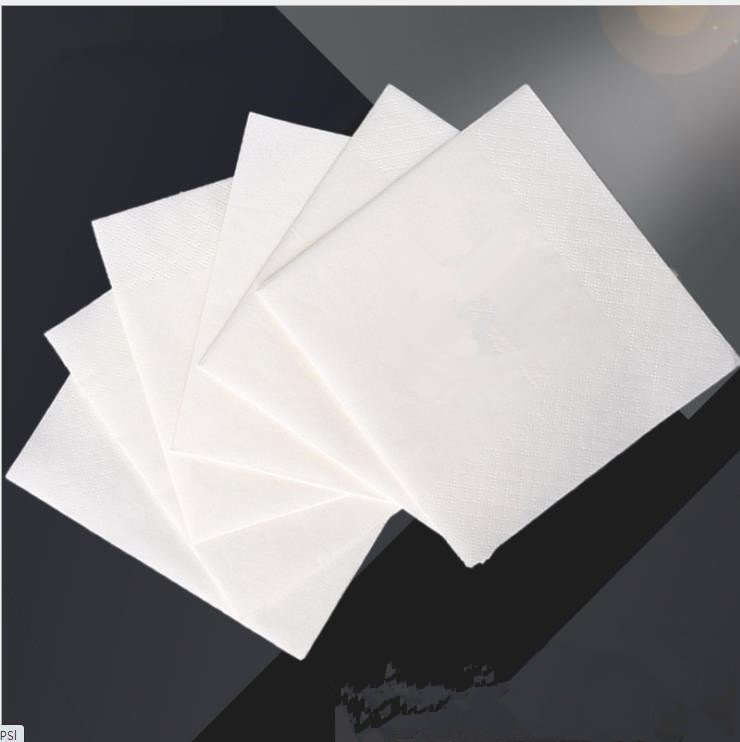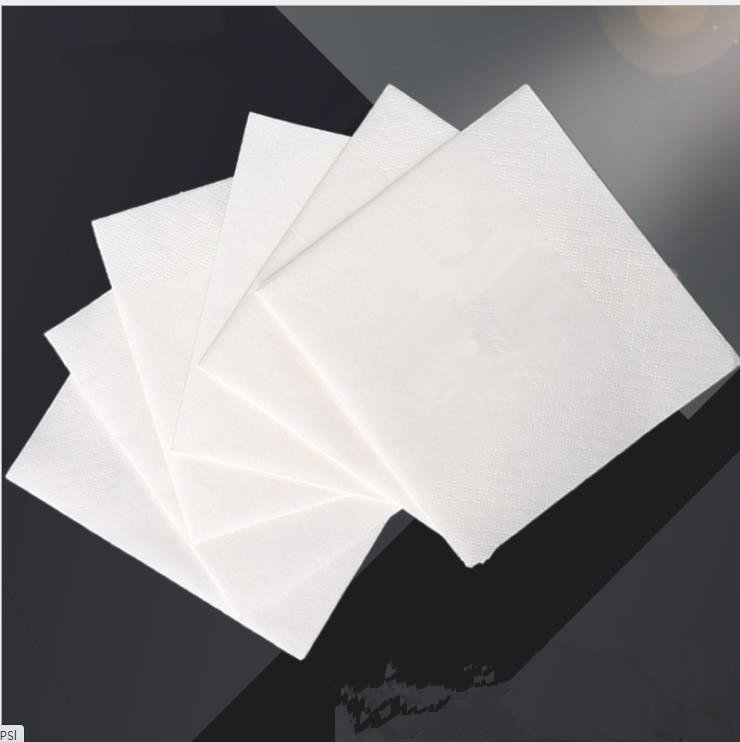
A repeat order of printed napkins lands and the print reads pale: the logo has lost weight, the border colour has softened, and every warehouse light seems to give a different verdict. The instinct is to find a number that settles it — and the number most buyers find online is borrowed from flat-sheet printing, automotive paint, or textiles. None of those was measured on crinkled, embossed tissue carrying water-based ink.
The direct answer: there is no universal ΔE tolerance for a paper napkin. What locks a printed-napkin repeat is four things you set yourself — a batch whiteness baseline tracked against the certificate, a written measurement geometry that avoids the embossing, a signed physical sample as the contract master, and a disposition clause naming what happens when a lot lands outside the band you agreed. The sections below build each one.

“Lighter Than Last Time” Is Three Different Problems
When a buyer says the reorder looks light, one of three separate things has usually happened, and they carry different remedies. The first is ink film: the transfer of ink onto the sheet changed — a plate running shallow, a press-side event that this site’s printing article already owns, so we will not re-explain it here. The second is the base: the paper under the print is a different batch, and a different batch can carry a different whiteness reading. The third is the judging conditions: the same sheet measured over an embossed valley instead of a flat area, or viewed under LED shelving instead of the light you approved the sample under, can move the verdict all by itself.
Buyers conflate the three because the eye cannot separate them. Human vision compares against memory, and memory is the worst instrument in the supply chain: it grades tonight’s pallet against a recoloured impression of a pallet from five months ago, in lighting that is not the lighting where the sample was signed. That is exactly why the answer to a drift complaint cannot be a single borrowed number — the number has to specify what it is measuring, where, and against what master.
Notice that only the first cause lives at the press. The other two live in the paperwork and the protocol: the batch record and the measurement conditions. A buyer who argues about ink when the base moved, or about the base when the geometry was wrong, will settle for the wrong reason and re-open the same argument on the next container.
Where the Borrowed ΔE Numbers Come From — and Where They Break
Ask a search engine or a chatbot what tolerance applies to a printed napkin reorder and the circulating answer is a number: ΔE00 of 2 for critical spot colours, 3 elsewhere. We ran that question ourselves and followed its citations. The pages carrying those answers were a Pantone customer-service help page — about tolerances within the Pantone colour system — and a fabric colour-quality article. The textile article is worth reading precisely because it undercuts the borrowing: it states that there is no universal Delta E tolerance for fabric, warns that a 1.0 in one formula does not become a 1.0 limit in another, and never discusses paper or printing at all. A model still lifted a number from it and applied it to napkins.
The serious instrument literature says the same thing more carefully. X-Rite’s guidance on defining pass/fail tolerances frames a tolerance as a buy-sell agreement between customer expectation and production capability, and its worked examples put general printing around ΔE (CMC) 2 and some processes up to 5.0, while automotive holds 0.5 or less. Same colour science, tenfold spread in the “standard” number — because tolerance is set by context, not lifted from a chart. That article is the right link to keep on hand when a supplier quotes you a constant: X-Rite — Defining a Realistic Pass/Fail Tolerance; the fabric-side confession of no universal number is at Spectrophotometer Direct — Delta E Tolerances for Fabric.
All of those numbers presuppose substrates that behave: a flat, smooth, dimensionally stable sheet measured at a defined point, over a fixed backing, with an ink film that sits on the surface. A napkin is none of these. It is a soft, crinkled tissue; the line carries a fine border embossing by default, so a large share of the printable field is shaped geometry rather than flat paper; and water-based ink soaks into the fibre instead of laying a film on it — the absorbency trade-off is explained once on this site in Printed Napkins: 1-4 Colour Water-Based Ink Printing Explained and we will not restate it. Copy ΔE 2 from a print brochure onto this sheet and you have measured nothing; the gap the internet leaves open is exactly this: those pages supply ΔE numbers for other substrates, but no measurement-and-contract procedure that a paper-napkin buyer can actually execute.
The Batch Under the Ink: Whiteness Is the Hidden Variable
A print reading is ink plus base, and buyers argue about the ink while the base moves underneath it. Put the same plate, same press, same ink weights on a whiter parent-roll batch and the colour reads brighter and often “cleaner”; on a slightly greyer batch it reads heavier. Nothing in the print changed — the white behind it did. Worse, brightening chemistry can fake the whole question: optical brightening agents absorb ultraviolet and re-emit blue light, inflating an instrument’s brightness reading without changing the sheet’s weight, strength, or softness, and shifting perceived shade depending on how much UV is in the judging light. A D65 lab lamp and a low-UV warehouse LED can disagree about the same napkin, and the tape or the film beneath the print can be the argument nobody thought to check.
Track the baseline instead of chasing a magic number. Two things make that possible on this line, and both are published, verifiable records rather than opinions. First, the written brightener policy is none added — no fluorescent whitening agents in the product spec, which keeps the UV-content trap at least one layer smaller. Second, brightness is one of the properties spot-checked on the virgin parent rolls at the first of our three QC gates, and the COA that travels with your shipment reports the brightness result — so every accepted lot you buy has a paper trail linking the base under the print to the batch it came from. Log that number lot by lot; it costs nothing and it is the diagnostic that separates a print complaint from a substrate story.
The measurement-method half of this — the ISO 2470-2 D65 convention, why bare brightness percentages without a method name are meaningless, the UV-torch screening trick at goods-in — is worked out for tissue stock on this site in our Toilet Paper Brightness Guide. We point you there for the optics method itself rather than rebuilding it inside a napkin article, and we do not carry any toilet-paper specification figure onto the napkin line.
Measuring a Crinkled, Embossed Sheet Without Fooling Yourself
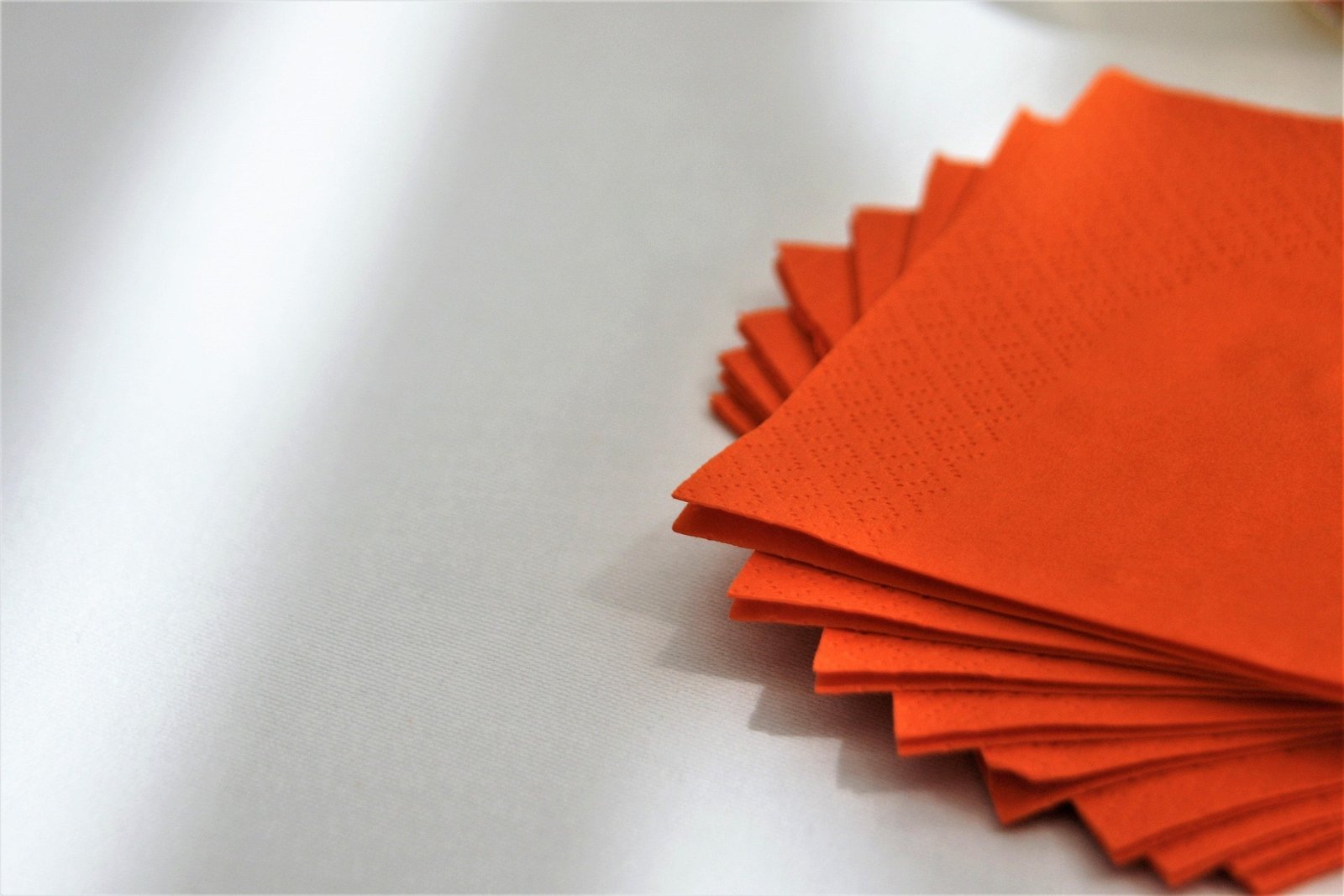
Before any ΔE number is meaningful on a napkin, five conditions have to be fixed — and the fixing is the buyer’s job to write, not the lab’s habit. Run through them in order. Which sheet: unfold one napkin, never measure through a fold, because a draw fold puts curvature and a shadow line inside the aperture. Where: the flat central field, away from the border embossing, because every one of our napkin formats carries that embossed edge and an instrument reading taken across embossed valleys blends paper, shadow, and ink in proportions nobody controls. How stacked: one single sheet over the same fixed white backing tile every time, or your reading silently includes whatever reflectance the sheets beneath happen to have. How often: same spot, marked lightly with pencil if you must, both for the master and for production. With which settings: illuminant, observer angle, aperture, specular inclusion — recorded on the report. The conventions differ by industry: the X-Rite article notes printing evaluates at D50 with a 2° observer while automotive uses D65 at 10°, and paper brightness testing quotes yet another convention. Neither party may “measure their own way”; one protocol, written on the PO, or the same pallet passes in your lab and fails in ours.
Two readings beat one. Do the visual check first, under the light both sides agreed, because the complaint you receive is always phrased in human terms — it reads light, it looks grey. Then confirm with the instrument against the master, because the instrument is the only witness that can repeat itself when the two of you are three thousand nautical miles apart. A number recorded without its five conditions is decoration, not data: same ΔE, different geometry, different verdict.
Video: “Precision Manufacturing for Unmatched Quality Toilet paper” on the Top Source Paper channel (@topsourcepaper4025). It shows the tissue production line — not a napkin press, a print station, or a colour instrument; use it as factory process context only.
The Signed Sample Is the Contract; the Number Serves It
Set the hierarchy the other way round from the way the internet does it. The master is a physical object: an approved first-article napkin, printed with the artwork version and dated, signed by the person who owns the brand, held as two parts — one in your file, one sealed at the converting facility. The tolerance is not imported from a chart; it is the band you agree around that sample, informed by your own acceptance history — what your rooms actually complained about, what they never noticed. The ΔE value is the third thing, the servant: a way of quantifying the distance between a production sheet and the signed master, under the written geometry above, so that “lighter” stops being a mood and becomes a measurement with named conditions.
The archive is what makes the sample repeatable across years. A private-label customer’s design drawings and formula are sealed and stored permanently, and repeat orders carry no re-charging of the plate — the policy that keeps a napkin print from repricing or reinterpreting itself every restock; the private-label route is laid out at OEM & Private Label. Chain buyers who need the full brand-rollout discipline — signed, dated first-article samples and retained production reference sheets — are already covered in Branded Napkins: Where the Logo Sits Once the Napkin Is Folded, and the ordering workflow lives in Custom Printed Napkins: A Buyer’s Guide; we link rather than re-teach. What this page adds is the half those conversations assume: how to measure against the sample on a crinkled, embossed sheet, so the sample can referee instead of merely existing.
The physical masters travel through the same channel as the full napkin range — quarter-fold, eighth-fold and dispenser formats in one or two ply — on the category page: Napkin Papers.

Write the Disposition, Not Just the Tolerance
A band with no remedy behind it is decoration on a specification sheet. The clause that survives a dispute names four parts, and it is written at PO stage, in calm ink, not in the angry week a pallet lands. Part one: the master and the protocol — the signed sample’s identity (artwork version, date, signatory) and the five measurement conditions above, incorporated by reference. Part two: the band, agreed against that master — its number and its formula, since the fabric article’s warning generalises to every industry: the same 1.0 means different things in different formulas, so name which one you used. Part three: the re-measurement step before any fail is declared — production reads outside the band, both sides repeat the flat-field measurement on a second sheet and confirm visually under the agreed light, because a large share of apparent failures collapse under geometry rather than under argument. Part four: the remedy ladder with owners and windows — the re-grading discount, the rework or reprint, the replacement of an out-of-band lot — each pre-selected, so nobody invents a settlement mid-dispute.
Then attach the records that make it enforceable from the factory side too. The batch-matched COA, whose brightness line ties the base under your print to the parent-roll lot it was spotted on, travels with the shipment; the retained sealed sample and reference sheet are the objects the clause points at; and the claim window sits inside the payment structure on purpose: terms run 30% T/T deposit and 70% before shipment, so an out-of-band question is raised, re-measured, and settled before the balance moves. If a lot passes off-band and you accept anyway, the clause records the concession and folds it into your own running acceptance history — which, over a year or two, becomes the most honest tolerance chart you will ever use, written by your own rooms rather than by somebody else’s substrate.
The Repeat-Order Colour Protocol, in the Order You Run It
Buyers who get this right do not do anything exotic — they sequence seven boring steps and let nothing slide. The sequence below is the whole method; the table exists so it survives being pasted into a PO annex.
| Step | What you do | Why it comes before the argument |
|---|---|---|
| 1. Pull your master | Take out the signed, dated first-article sample and the retained production reference sheet | Establishes what “the same” means before anyone judges |
| 2. Define the flat field | Mark the measured area on the unfolded sheet, clear of border embossing and folds | Removes the single biggest source of bogus readings on embossed tissue |
| 3. Fix backing and stack state | One sheet, same white backing tile, same aperture, both parties | Makes your lab and the mill’s lab comparable instead of merely confident |
| 4. Log the whiteness baseline | Record the COA brightness reading of this lot and of the last accepted lot | Separates a base change from an ink change before you accuse anyone |
| 5. Measure master then production | Same conditions for both; visual check under the agreed light first | The number is now a distance to a master, not a free-floating verdict |
| 6. Record number with its conditions | ΔE value, formula, illuminant/observer, spot, date — filed against the PO line | A bare number cannot be audited; a conditioned one can |
| 7. Only now invoke disposition | Outside the band? Re-measure, then run the pre-agreed remedy ladder | Settles disputes by sequence instead of by volume of email |
Every step is executable by a buyer without a laboratory relationship: the conditions go on the PO as text, the COA arrives with the shipment, the readings come from whoever owns the instrument — yours, the mill’s, or a third-party lab named in the clause. None of the steps requires a universal number, and that is the point: the procedure is portable between suppliers even when nobody’s tolerance matches anybody else’s.
What This Mill Publishes, and What Stays on Your Purchase Order
State the boundary honestly, because it is where most supplier content oversells. Published facts on this line, from the spec sheet up: napkins in one and two ply; quarter-fold, eighth-fold and commercial dispenser draw-off formats; fine border embossing; 1-4 colour eco water-based ink on napkin stock — the ink chemistry and its process are explained once at the water-based ink printing article and are not restated twice; sampling at 1-3 working days to make and dispatch; first bulk production at 25-30 working days including plate-making and artwork proofing; regular repeat orders at 20-25 working days; a permanent artwork archive with no repeat plate fee; export from Tianjin Xingang under FOB / CIF / CFR / EXW; payment 30% T/T deposit plus 70% before shipment, with the pre-shipment quality report and container-seal video; three QC gates from parent-roll spot check (tensile and brightness) through rewinding patrol to pre-shipment final; the virgin-fibre COA with its brightness line; 18+ years of papermaking, converting and export from Baoding, Hebei.
Not published — and refused as a default: a universal napkin colour tolerance; a one-size measurement protocol; a brightness percentage guaranteed across batches. The ΔE values quoted earlier in this article are other industries’ numbers, attributed to their sources, offered as evidence that context sets tolerance — not as our specification. White-label and plain napkins in transparent film over a plain box start at a 20GP; custom-printed napkins, where the printed carton and printed outer PE sleeve both carry your artwork, start at 1×40′HQ; the tier logic is owned by MOQ for Tissue Paper Orders: 20GP White-Label vs 40HQ Custom Print. The band, the geometry, and the disposition are your purchase-order lines, agreed against a physical sample — and a supplier who ships a number without them is guessing with better typography.
Frequently asked questions. These five are the questions a printed-napkin buyer should be able to answer before signing the next repeat-order purchase order.
Is there a standard ΔE tolerance for printed napkins on reorders?
No, and that is the core finding here. Numbers like ΔE00 of 2 to 3 that circulate in AI answers trace back to pages about other substrates — a Pantone customer-service page and a fabric colour article, the latter of which states plainly that there is no universal ΔE tolerance for fabric and never mentions paper. X-Rite’s tolerance-setting guidance puts general printing around ΔE 2 and automotive at 0.5 or less: a tenfold spread across industries from the same colour science. On a crinkled, embossed, water-based-ink napkin, the pass/fail reference is your signed sample measured under a written protocol, not a borrowed constant.
Why does my reorder look lighter when the artwork and plates are the same?
Because three things move even when the press does not: the whiteness of the batch underneath the print, the spot and geometry of any measurement or look, and the light you judge under. The same ink on a whiter base reads brighter; the same sheet reads differently under a D65 lamp, a daylight window, or low-UV warehouse LEDs. The archived artwork and no-repeat plate fee protect the press side of the match; the signed sample and the written protocol protect the eye side. Check the base before you blame the plate.
How should colour be measured on an embossed napkin?
On the flat central field of a single unfolded sheet, away from the border embossing and any draw fold, over the same fixed white backing every time, with the spot marked and repeated. Record illuminant, observer angle, aperture and specular setting, and make both buyer and supplier run the identical conditions — X-Rite’s own examples show conventions differ by industry, with printing at D50/2° and automotive at D65/10°. A number measured twice under two protocols is two unrelated facts.
Do optical brighteners change the colour reading?
Yes. Optical brightening agents absorb ultraviolet and re-emit blue light, inflating an instrument’s brightness reading and shifting perceived shade with the UV content of the light, without any change to the ink film. Our written policy on this line is no added fluorescent whitening agents, and brightness is spot-checked on the virgin parent rolls at the first QC gate and reported on the COA. Keep the batch whiteness baseline from the COA lot by lot; compare it before you ever open a colour argument.
What happens if a shipment falls outside the agreed band?
The disposition clause on the purchase order decides, and it should name the steps in advance. First, re-measure against the retained signed sample under the written protocol — most apparent failures collapse on a flat-field second reading. Then run the remedy ladder chosen at PO stage, with owners and windows, whether that is an agreed discount, a reprint, or replacement of the out-of-band lot; raise it inside the payment structure, which runs 30% T/T deposit and 70% before shipment, so a disputed lot settles before the balance moves. Sampling takes 1-3 working days, so a corrected re-pull can dispatch quickly; regular repeat production runs 20-25 working days.
To keep it practical: identify your master before you need it, write the five measurement conditions onto the PO, log the COA brightness line every accepted lot, re-measure under the protocol before declaring a fail, and let remedies be chosen in calm ink rather than in the angry week a pallet lands. There is no universal number to borrow — there is a procedure to own, and it travels with you from supplier to supplier.