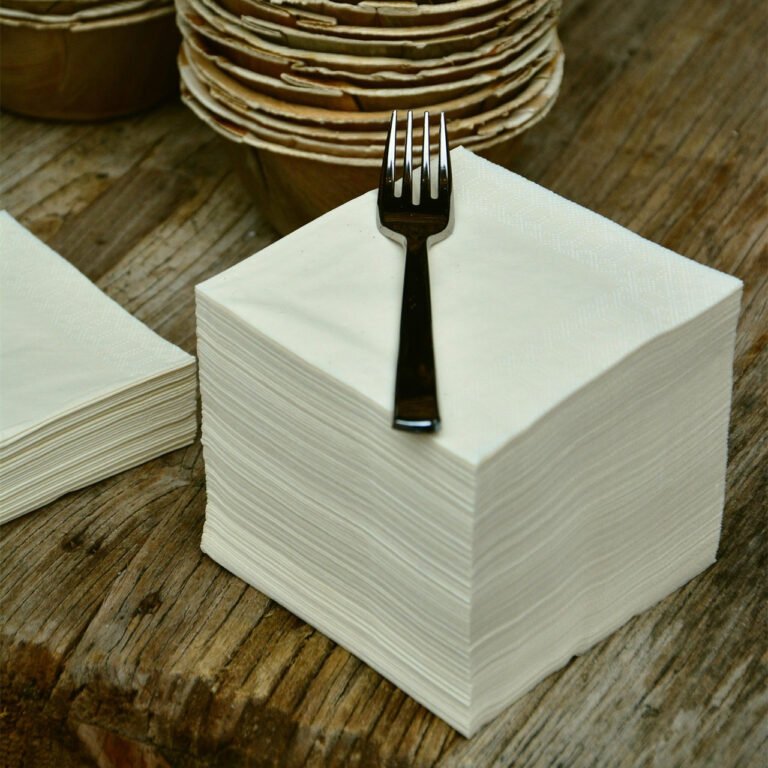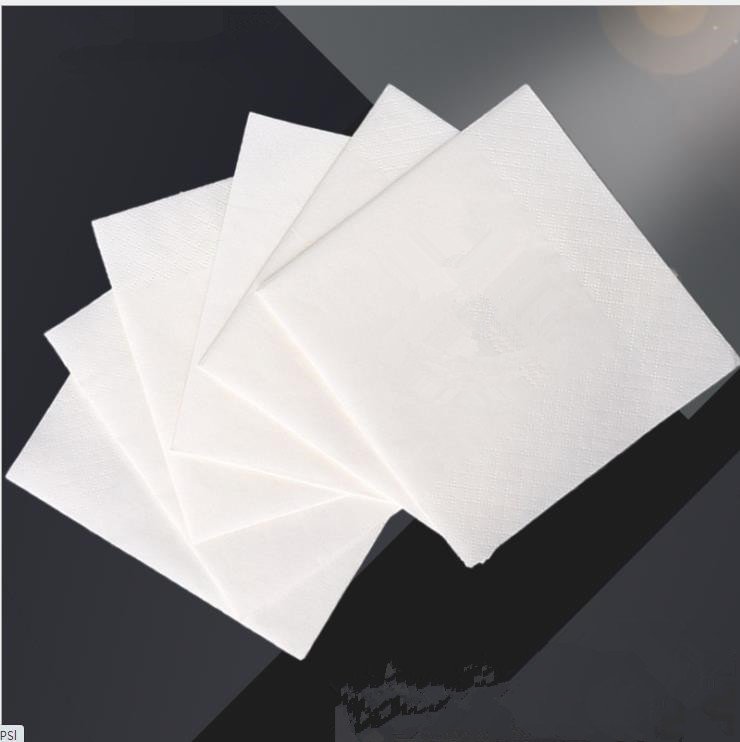
A catering company ordered 1/4-fold dinner napkins for a 400-cover gala because the case price beat the alternative by a rounding error. On the night the crew discovered two things. The folded bundle was the wrong footprint for the holders they already owned, and one case covered far fewer tables than the crate they had cancelled to pay for it, so the last two tables were laid with nothing left to lay. Nothing was wrong with the paper. The fold was chosen by a spreadsheet instead of by a service pattern, and the fold is what the crew actually handles.
Dinner napkins are bought on three variables that are always quoted in the wrong order: unfolded size, ply, and fold. Distributors case them from 1,000 to 8,000 pieces depending on which of the three you asked for, and the number that decides whether a banquet order works is not on the price list at all.
If you are styling a wedding table, this is not that article. Everything below assumes somebody folds, carries or dispenses these napkins at scale, on a clock.
Key Takeaways
- A 1/4 fold is folded in half vertically then horizontally; a 1/8 fold takes those same two folds and halves the sheet twice again, so it arrives smaller and thicker.
- Live distributor dinner napkin SKUs are cased at 3,024 pieces for a 2-ply 1/8-fold, against 6,000 for a 10 x 12 inch 1/4-fold luncheon.
- Dispenser formats are cased even higher, at 8,000 for a 6 x 13 inch tall-fold and 6,000 for a 6 1/4 x 4 3/8 inch wide interfold.
- The fold is chosen by how the napkin physically reaches the table, meaning who folds it, when, and at which station, rather than by the table design.
- Top Source Paper builds napkins in 1-ply and 2-ply in 1/4-fold, 1/8-fold and commercial dispenser pull-through, with decorative border embossing and 1-4 colour water-based ink printing.
- Plain and white-label napkins ship from a shared 20GP; a custom printed wrapper starts at one 40’HQ, with samples out in 1-3 working days.
- No napkin grammage is published for this line, so a supplier quoting 50-90 gsm is quoting somebody else’s product.
- A Case Of Napkins Is Not A Standard
- What 1/4 Fold Actually Means Physically
- Why The Fold Changes Your Pre-Set Line
- What Each Service Pattern Costs On The Night
- Case Counts Are A Distributor Fact
- How Many Napkins A Banquet Consumes
- Tissue Napkin Against Airlaid And Linen
- What This Factory Publishes And Does Not
- Ordering Dinner Napkins For A Season
A Case Of Napkins Is Not A Standard
Ask four suppliers for “a case of dinner napkins” and you will be quoted four different numbers, all of them honest. There is no trade standard for a napkin case; there is a carton a factory fills, a pallet it can build cleanly and a distributor who decided a round number was easier to sell. The count you should plan against is the one on your own invoice, converted into covers.
That conversion is the first thing a banqueting buyer loses. A case priced 8% lower than the alternative stops being cheaper the moment it holds, say, a third fewer usable napkins per table, because the variable you actually buy is covers per case. Everything in the ordering section below is arithmetic on that ratio.
Start with the fold, because the fold is what determines the size of the thing in the carton, and it is the one variable a quote sheet lets you change by accident.
What 1/4 Fold Actually Means Physically
The naming is geometric and it is worth getting straight, because suppliers use both terms in product titles without defining either. Restaurantware’s buying guide puts it plainly: a 1/4 fold napkin is a flat napkin folded in half vertically and then horizontally. A 1/8 fold is the same two folds and then folded in half twice more. The same guide defines a pocket or 1/2 fold as pre-folded with a pocket for storing cutlery, and a flat pack as arriving with no fold and no crease at all.
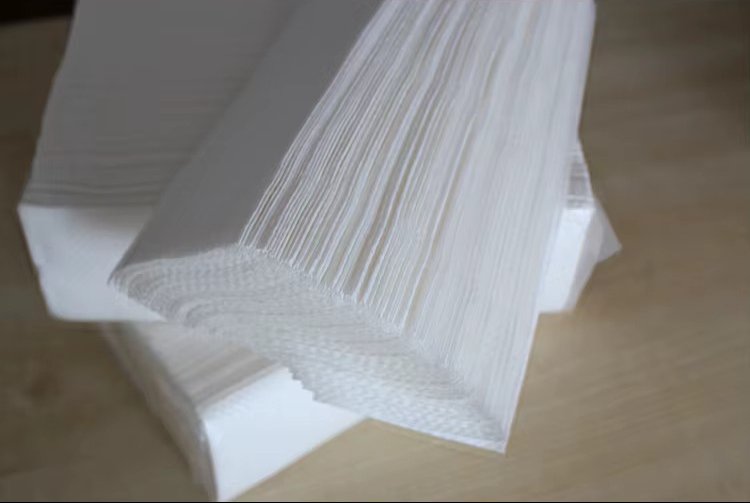
Read those as two different objects rather than two presentations of one. A quarter fold is halved twice from the unfolded square, so its folded footprint is a quarter of the sheet. An eighth fold takes those same two folds and halves twice again, so the footprint shrinks further while the bundle gets thicker. Same unfolded size, same ply, different crate behaviour, different hand motion at a pre-set station.
The consequence you can actually verify is the case count, not the pile height. Distributors carry 1/8-fold dinner napkins and 1/4-fold luncheon napkins in the same catalogue at very different pieces per case, so the fold you choose changes how many covers a crate buys before it changes anything about the table.
Why The Fold Changes Your Pre-Set Line
Folding is labour, and in catering labour is the cost line that moves. A flat-packed napkin has to be folded by somebody, at some point, on a table that is being built. A pre-folded napkin has that labour moved upstream into the mill and paid for in unit price instead of in hours on the night.
Run it on your own setup rather than on anybody’s rule. A pre-set crew working a banquet room lays glass, cutlery and napkin at every cover. Change the napkin from a pre-folded bundle set down in one movement to a flat pack that must be folded and then set, and you have added a folding station, a handling step and a queue of people waiting for folded stock. Multiply that by covers and by the number of rooms you turn in a week, and the unit-price advantage of the cheaper format usually disappears before the first table is finished.
The reverse is equally true and less often said. A crew that pre-sets the night before and has bench time does not need to pay for a fold it can do itself, and a smaller operation with no storage for pre-folded crates may prefer flat packs precisely because they compress.
The honest trade-off: buy pre-folded when labour on the night is scarce, and buy flat when storage is scarce. Do not decide it from the per-thousand price alone.
What Each Service Pattern Costs On The Night
Which napkin fold suits which service style is already mapped in the guide to custom napkin sizes and folds for food service, and re-arguing it here would only duplicate that article. What a mapping cannot tell you is what each pattern costs your crew between the crate and the guest, and that is the half that decides a season’s order.
| Service pattern | What it does on the floor | Where the cost lands |
|---|---|---|
| Napkin pre-set on the plate | Bundles arrive ready and are set down once | Crate turns and storage between events |
| Napkin beside cutlery on a bare cloth | The bundle has to stand unsupported or it slides | Re-laying before guests sit, table-side tidiness |
| Cutlery wrapped inside the napkin | Adds a wrap station and an extra pair of hands | Prep labour billed before the doors open |
| Self-serve dispenser at a counter | Edges engage so one sheet comes per pull | Refill frequency and litter around a bad stack |
| Folded on site from flat packs | Needs a bench and an hour nobody scheduled | The hour before every single service |
Read the dispenser row as a separate purchase rather than a smaller napkin. An interfolded sheet hands one napkin per pull because the edges engage, and a stack of flat-folded napkins in the same housing hands two or three and turns a tidy counter into a floor problem. If your operation runs any self-serve station, that fixture is its own line item with its own case count, and it should not be priced against table napkins.
Size taxonomy is likewise settled elsewhere: the cocktail against dinner napkin comparison covers where each size sits on a table, and printing decisions belong to water-based ink printing.

Case Counts Are A Distributor Fact
The most useful thing a banqueting buyer can do before requesting a quote is read how a large food-service distributor actually names and cases the category. On a live paper napkin results page carrying 540 SKUs, the product titles themselves publish the arithmetic: a 2-ply 1/8-fold dinner napkin cased at 3,024 pieces; a 10 x 12 inch 1/4-fold luncheon napkin at 6,000; a 6 x 13 inch white tall-fold dispenser napkin at 8,000; a 2-ply wide interfold dispenser napkin at 6,000; and a 14 x 14 inch linen-feel flat-packed napkin at only 1,000 per case, with 15 x 17 inch 2-ply dinner sizes also carried.
Read that list as market reality rather than as specification. Nobody is obliged to case a napkin at 3,024, and a factory that quotes you 100 pieces per bag with 30 bags per carton is describing the same category from the other side. The value is in the spread: the same six letters of the word “dinner” cover an eight-fold difference in covers per case, and a buyer who converts to covers before comparing prices will never again be fooled by a low unit cost.
One more observation from the retail side, because it explains a shelf argument you will hear. A club retailer selling branded 1/8-fold 2-ply dinner napkins lists them as twelve packs of a hundred, and a 1/4-fold 1-ply line at twelve packs of three hundred and thirty-four. Retail packs are built for a household’s storage and a shopper’s reading of a count. Catering cases are built for a pallet. They are different order objects and the comparison between them is not price.
How Many Napkins A Banquet Consumes
The number that decides your order is covers times passes, and only you know both. Work it on your own events rather than accepting anyone’s per-guest figure, because the honest answer changes with the menu.
| Input | Where you get it | What it settles |
|---|---|---|
| Covers per event | Your own booking sheet | Baseline demand for the season |
| Napkins per cover | A count from two similar past events | Whether one is really two on a messy menu |
| Replacements at the table | Server observation, not office assumption | The waste line nobody budgets for |
| Pieces per case | Your supplier’s written pack spec | Cases to order, the only useful number |
| Storage between events | Your own warehouse floor | How many cases you can actually hold |
With those five filled in, the calculation is a division and a rounding-up margin. What usually surprises a first-time banqueting buyer is the third row. Whether one napkin is really one depends on the menu, and only your own event records will say so; a run of shellfish or sauce-forward service moves the multiplier for the whole season rather than appearing as an exception to be absorbed.
Buy the season rather than the event. A caterer who sizes stock on the largest gala of the year ends the year with crates of an unusual fold on the floor, and a caterer who sizes on average events runs short exactly when the margins were good. The workable position is to hold a common size across the range and let the fold vary by event.
Tissue Napkin Against Airlaid And Linen
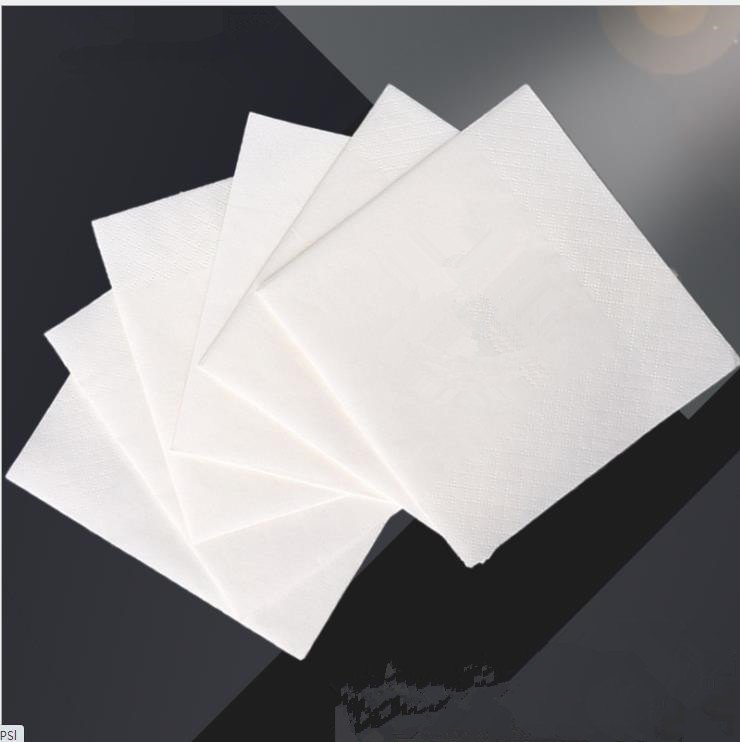
Airlaid is the other product a banqueting buyer is offered, and the distinction is a manufacturing one that shows up immediately on the table. Restaurantware’s guide describes airlaid napkins as made by using air to transfer and bond wood pulp fibres, known for a linen-like feel and high absorbency. In practice that means a heavier hand-feel from a similar-looking sheet, and a price that reflects it.
Same source also notes that disposable napkins come in 1-ply, 2-ply or 3-ply and that higher ply counts read as more absorbent and higher quality, which is the honest way to think about the upgrade conversation. What neither this factory nor that guide gives you is a grammage figure for airlaid against tissue, and a supplier who quotes you a neat range without a test report is estimating.
Where the choice is real: airlaid and linen-feel flat packs suit a long dinner service where the napkin is handled repeatedly. A 1-ply or 2-ply tissue dinner napkin suits a high-turn setting where the napkin is one course and then waste. Linen re-enters the argument only when laundering, transport and shrinkage are costed properly, which is a different article entirely.
Top Source Paper’s napkin line is a tissue napkin, not an airlaid one. If an event requires a linen-feel sheet, that is an honest no rather than a substitution.
What This Factory Publishes And Does Not
State the scope plainly, because most of the confusion in this category comes from listings that will say anything. This line is built in 1-ply and 2-ply, in 1/4-fold, 1/8-fold and a commercial dispenser pull-through format, with decorative border embossing, and it supports 1-to-4 colour printing in eco water-based inks. The furnish is 100% virgin wood pulp with no recycled waste paper and no fluorescent brightening agents, inside a plant-wide 13-45 GSM band.
Two limits sit inside that paragraph. The 13-45 GSM figure is a portfolio band spanning everything from bath tissue to kitchen towel, not a dinner napkin specification, and the plant does not publish a napkin grammage or an unfolded size table as its own standard. Sizes quoted elsewhere in this article belong to distributors and suppliers whose listings were read, not adopted. If a size matters to your table, put it on the purchase order and get it made.
The printing detail is what most caterers discover late. Water-based ink in up to four colours is what puts a logo or a border on a napkin sleeve, and the mechanics of that decision, from artwork to plate, are covered in printed napkins and water-based ink and in the guide to napkins with a logo.
Ordering Dinner Napkins For A Season
Ordering mechanics split on one line and it is not size. Plain and white-label napkins ship from a shared 20GP container, which lets a caterer or a reseller take a mixed load across folds and plies. A custom colour-printed carton or wrapper carries a minimum of one 40’HQ, so a branded season is a full-container commitment rather than a bigger discount.
Then the calendar. Samples of the real product go out in 1-3 working days, first production runs 25-30 working days including packaging pre-press, and reorders run 20-25 working days. Terms are FOB, CIF, CFR or EXW ex Tianjin Xingang with 30% T/T and the balance before shipment, confirmed against a QC report and a container-seal video. A pre-shipment check ends with a carton specification review and a drop test, which is the line that protects a stack of folded napkins arriving as a stack rather than as pancakes.
Before you commit, fold the sample. Take one napkin, fold it the way your crew folds it, set it on the plate you use, leave it through a four-course meal and pick it up. That test costs a minute and decides more about a banquet napkin than any datasheet in the category.
Formats, folds and print options for this line are listed on the napkin papers page.
Route from here: fix the service pattern first, because it picks the fold. Convert cases into covers from your own booking sheet and your own observed napkins per cover. Hold one size across the season and let the fold vary by event, keep the branded print at a 40’HQ until a logo has survived two seasons, and fold every sample by hand before you sign.
Video: “Precision Manufacturing for Unmatched Quality Toilet paper”, Top Source Paper own channel. It films this plant’s tissue converting line rather than napkin folding specifically.
Frequently Asked Questions On Dinner Napkins
What is the difference between 1/4 fold and 1/8 fold napkins?
A quarter fold is folded in half vertically then horizontally. An eighth fold takes those same two folds and halves the sheet twice more, so it arrives as a smaller, thicker bundle of the same unfolded sheet.
What size is a dinner napkin?
Distributors list dinner sizes from around 14 x 14 inches up to 15 x 17 inches unfolded, with luncheon sheets smaller at about 10 x 12 inches. Both 1/4-fold and 1/8-fold appear across those sizes, and neither set is a standard – they are observed SKUs.
How many dinner napkins do I need for a banquet?
Multiply covers by napkins per cover, add the replacements your servers actually collect, then divide by the pieces per case on your supplier’s written pack spec. Only your own event history supplies the middle term.
Which fold is best for catering?
Match the fold to how the napkin physically reaches the table. Pre-set plates, bare-cloth settings, cutlery wraps and counter dispensers each want a different bundle, and a dispenser format is a separate line item from table napkins altogether.
Can I order dinner napkins with a logo?
Yes, in up to four colours of water-based ink. A plain or white-label load ships from a shared 20GP, while custom printed packaging carries a minimum of one 40’HQ container.
The fold geometry is defined here; the napkin logo placement guide draws the placement consequence – one quarter visible on a quarter-fold – as a design rule.