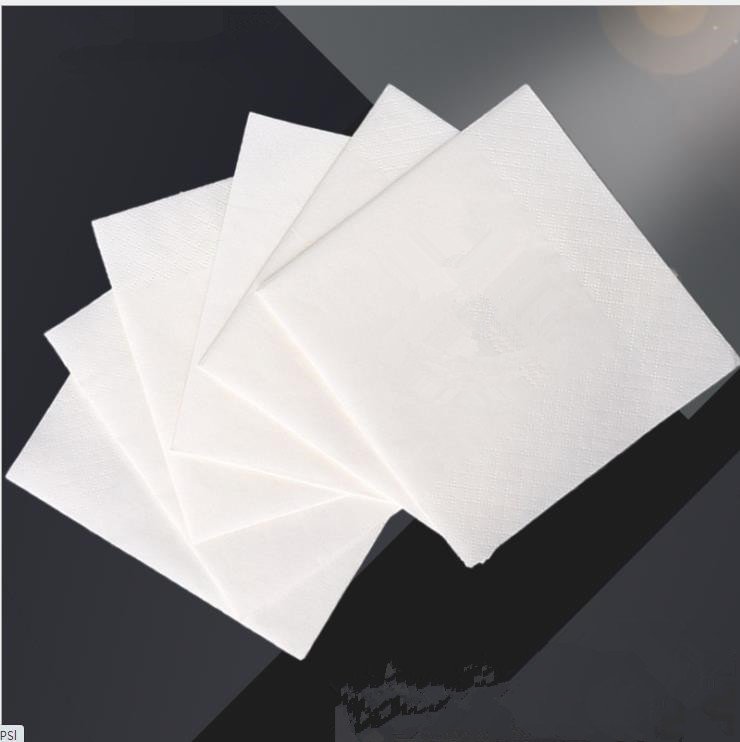
A caterer orders one napkin to cover the whole business, because it is cheaper to manage one SKU. It arrives in the size a dinner service needs. On the bar it looks absurd, gets used to wipe a spill it was never meant to handle, and gets thrown away after one drink — so the venue pays dinner-napkin material for a cocktail-napkin job.
The opposite mistake costs more. A banquet running small-format beverage napkins through a seated, sauced, multi-course dinner gets complaints the operator cannot explain, because the napkin was specified correctly for a use case the room did not have.
Cocktail and dinner napkins are not two quality grades of the same product. They are two answers to different questions, and the difference is decided by four variables: format size, fold geometry, ply, and whether the napkin is printed. Here is how to set all four on a purchase order.
What Actually Separates the Two Formats
A cocktail napkin is a small-format, light-duty napkin built for drinks, appetizers and standing events. A dinner napkin is a large-format napkin built for a seated meal, where it goes on the lap, deals with food contact, and survives the length of a service.
Both come off our napkin line in 1-ply and 2-ply, and both are available in 1/4-fold and 1/8-fold, including the commercial dispenser pull-out presentation. What differs is the unfolded dimension you specify, the folded presentation you want on the table, and how much material the sheet carries. Ply is not fixed by format: it is set per order against the duty the napkin has to perform, which is why a bar program can legitimately run a 2-ply beverage napkin and a casual canteen can run a 1-ply dinner napkin.
The trap is that buyers describe both formats in words — “bar napkin”, “banquet napkin” — and then let the factory fill in the numbers. State the dimension. It is the one variable that cannot be inferred from a name.
| Attribute | Cocktail / beverage napkin | Dinner napkin |
|---|---|---|
| Format class | Small format, light duty | Large format, full meal duty |
| Ply specified per order | 1-ply or 2-ply, set against light duty | 1-ply or 2-ply, set against food contact |
| Available folds on our line | 1/4-fold, 1/8-fold, dispenser pull-out | 1/4-fold, 1/8-fold, dispenser pull-out |
| Where it is presented | Bar top, cocktail station, counter dispenser | Lap, plate, napkin ring, table setting |
| Primary task | Condensation, crumbs, a single blot | Food contact through a full service |
| Print options | 1–4 colour water-based ink | 1–4 colour water-based ink |
| Standard finish | Decorative border embossing | Decorative border embossing |
| Main cost driver | Sheet area per unit is small | Sheet area per unit scales with the square of the side |
Fold Geometry: 1/4-Fold, 1/8-Fold, and Dispenser Presentation
Fold is not decoration. It determines the footprint the napkin presents on a table or in a dispenser, how much sheet the guest actually picks up, and how your staff restocks it.
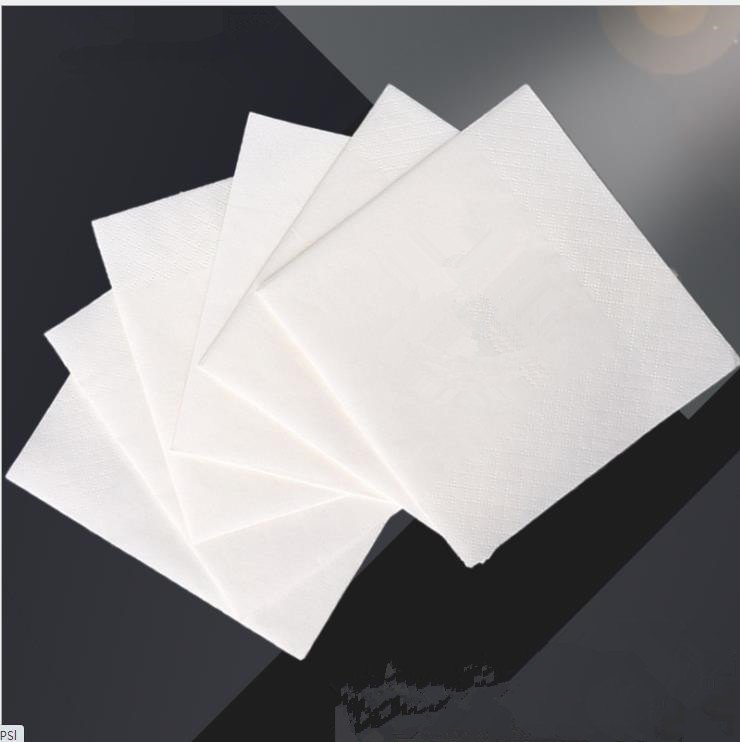
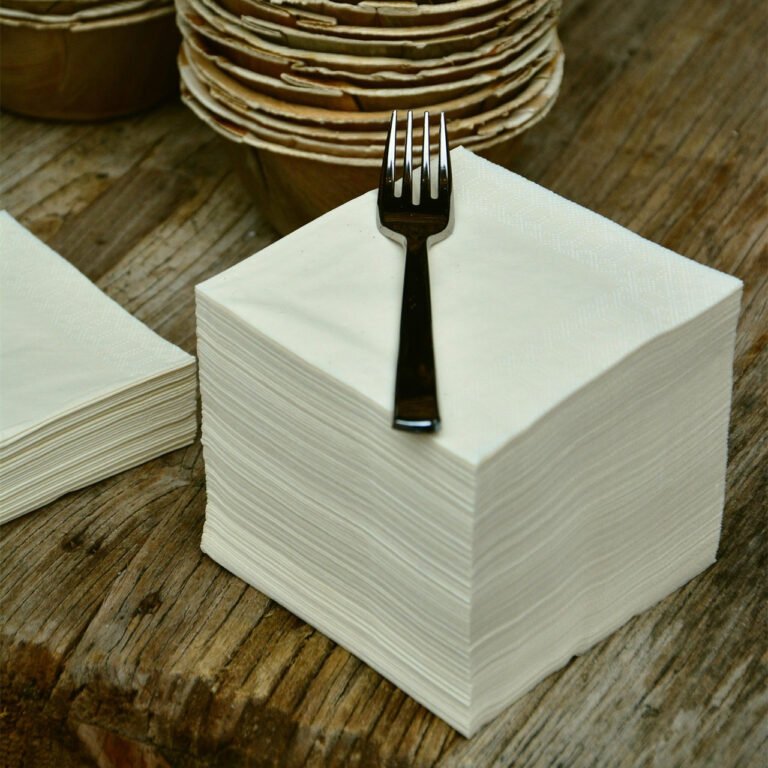
1/4-fold. The napkin is folded into quarters, presenting a square. It is the default for seated dinner service, because a quartered large-format napkin stands in a glass, lies flat on a plate, or presents in a napkin ring without extra handling.
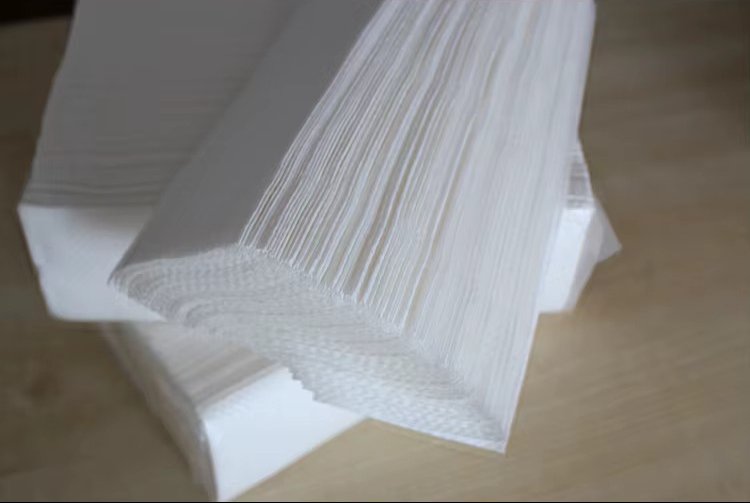
1/8-fold. Folded into eighths, presenting a narrower, taller profile. It is the choice where counter or tray space is limited, where the napkin has to fit a dispenser slot, or where you want a guest to pull one unit rather than separate a stack.
Commercial dispenser presentation. Our napkin line runs dispenser pull-out configurations for food-service stations, bars and cafeteria lines. Where restocking labour is the real cost, a dispenser format and a smaller napkin frequently beats a larger napkin presented by hand.
Decide the fold before you decide the size, because the fold is constrained by the hardware already in the room. A folded dimension that does not fit the dispenser is a return, not a preference.
Ply, Weight, and What Absorbency Really Depends On
Ply count is the first decision and the least subtle, and it is set by duty rather than by format name. A 1-ply napkin is adequate where the job is a condensation ring, a crumb, or a quick blot. A 2-ply napkin is specified where the sheet has to hold food contact and keep its integrity through a full service.
Weight is the second decision, and it is where a comparison gets technical rather than obvious. Our napkin paper runs in 1-ply and 2-ply constructions across the mill’s 13 to 45 GSM portfolio range, and GSM interacts with ply in a way that defeats simple rules: two light plies can outperform one heavy ply on absorbency while feeling thinner in the hand, and a heavy single ply can read as premium while drying poorly.
Set ply and target GSM together, then handle the sample wet rather than dry. Testing a napkin dry is testing its appearance. Testing it damp is testing whether the guest uses one or two.
Material purity is the third variable, and it is not optional in food service. Ours is produced from 100% virgin wood pulp with no recovered waste pulp, without fluorescent brightening agents or harmful chemical additives, and is food-contact safe as a material standard. Grey hand feel and dust on the glass are the two symptoms of the alternative.
Material Maths: Run It on Your Own Numbers
Cost per napkin is dominated by sheet area, and area scales with the square of the side length. That relationship is arithmetic, not an industry figure, and it is the reason the size you specify is a purchasing decision rather than a design one.
Use your own dimensions in the formula and you get a number you can trust. As a worked illustration — substitute the sizes you are actually quoting — an unfolded 20 cm square has an area of 400 square centimetres, while an unfolded 40 cm square has 1,600. Same ply, same GSM, same print, and the larger format carries four times the sheet area per unit. Halve the side and you quarter the area; the curve is unforgiving in both directions.
Two practical consequences. First, if a venue genuinely needs only the small-format job, buying large formats means paying multiples of the material for a task the guest completes in one wipe. Second, when you do need a dinner napkin, resisting the size because it looks expensive tends to convert one napkin into two — so the consumption question has to be answered with turnover data from the room, not with a hope.
Printing and Branding: Where the Real Decision Lives
Both formats support 1 to 4 colour water-based ink printing on our napkin line, and the print decision is where a napkin stops being a consumable and starts being brand surface.
Water-based ink is the specification that matters for food-adjacent use, and it is the reason to be sceptical of a quotation that offers printing without naming the ink system. Ask what the ink is, not only how many colours fit.
Our napkins also carry decorative border embossing as a standard finish, which is what makes a printed logo look intentional at a table rather than like a label stuck on tissue. If you are branding a premium banquet, the combination of border embossing plus a one-colour logo generally reads better than a full-colour print on an unembossed sheet.
Two routes exist on order size. Plain, standard-format napkins ship from one 20GP container. Custom-printed napkins with your design run at a minimum of one full 40’HQ container. Your artwork is then sealed and archived as a client-specific file, so a reorder neither pays the plate fee again nor waits on plate-making. The custom printed napkin buyer’s guide covers the artwork and proofing sequence in detail.
Why Food Service Specifies Single-Use
A cloth napkin programme is a laundering programme, and a laundering programme is an obligation you either perform or fail. In food service that distinction is codified: the FDA Food Code governs US retail food operations and sets the conditions under which reusable cloths may be used and how they must be held between uses, alongside its requirements for single-service and single-use articles.
For a bar, a cafeteria line, a festival or a high-turnover restaurant, a printed paper napkin is the simpler position: it is consumed, it is not laundered, and no shared textile passes between guests. For a seated fine-dining room, cloth may remain part of the intended guest experience — that is a brand decision, not a hygiene shortcut, and it should be made with the laundering obligation priced in.
Where an operator wants the branded look without the laundry, a custom-printed 2-ply dinner napkin in a large format is the middle path, and it is the order most restaurants and caterers place with us.
Ordering: MOQ, Lead Time, and Mixed Formats
- Plain and standard-format napkins: from one 20GP container.
- Custom printed napkins with your design: one full 40’HQ container.
- Samples and small-sample dispatch: 1 to 3 working days.
- First mass production: 25 to 30 working days, including packaging plate-making, sample approval and outer-carton printing.
- Repeat orders: 20 to 25 working days, plate fees waived against the archived file.
- Terms FOB, CIF, CFR or EXW ex Tianjin Xingang Port; payment 30% T/T deposit, 70% balance before shipment.
One container can hold mixed SKUs, which is the answer for operators who need both formats: a 40’HQ can carry a bar run and a banquet run from the same order as long as the total volume meets the minimum. That is also how you avoid the single-SKU compromise that started this article.
Documentation with each shipment: a 100% virgin pulp COA covering tensile strength, brightness and virgin-fibre verification; a wet-tensile and zero-dust test video pack; and loading plus moisture-proof packing photographs, with the QC report and container sealing video sent before the balance is called. Our napkin paper programme lists the format range, the 10-step sourcing checklist covers factory vetting for a first order, and the factory profile sets out capacity and export terms.
Once the format is chosen, our custom napkins with logo guide covers the branding and ordering path for food service.
Frequently Asked Questions
What is the difference between a cocktail napkin and a dinner napkin?
Format size and duty. A cocktail napkin is a small-format, light-duty sheet for drinks, appetizers and standing events. A dinner napkin is a large-format sheet built for seated service and food contact. Both run in 1-ply and 2-ply and in 1/4-fold and 1/8-fold on our line; ply is set per order against the duty, not by the format name.
Can I order cocktail and dinner napkins in the same container?
Yes. A 40’HQ can carry mixed sizes and formats from one order as long as total volume meets the minimum, which is how operators cover bar and banquet service without compromising on either.
What ply should I specify for each format?
Duty decides it, not the format name. 1-ply is adequate for beverage and cocktail service where the job is a condensation ring or a crumb; 2-ply is specified where the sheet has to hold food contact through a seated service. Ply should be quoted together with target GSM across our 13 to 45 GSM portfolio, and the sample should be tested damp rather than dry.
How many colours can be printed on a paper napkin?
Our napkin line supports 1 to 4 colour water-based ink printing, with decorative border embossing as a standard finish. Custom print runs at a minimum of one full 40’HQ container.
Are paper napkins more hygienic than cloth for a restaurant?
For high-turnover and food-service environments, yes, because they are single-use and carry no shared textile between guests, and no laundering obligation to administer. Cloth is a brand decision for seated service, and it has to be priced as a laundering programme.
For ordering those formats as a branded program, the custom paper napkins sizes and folds guide covers food-service specing.
Size taxonomy is where a dinner napkin is named; the 1/4-fold versus 1/8-fold catering guide is where it is chosen for the banqueting floor.