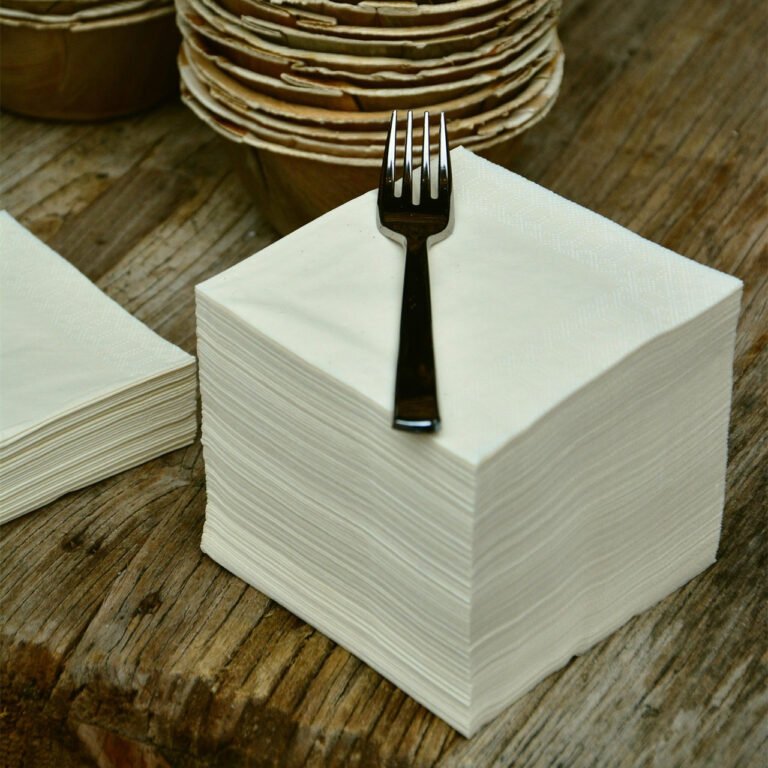
A restaurant group that rebrands, a caterer who wins a new airline contract, a hotel that refreshes its banqueting line: all three end up in the same place, trying to order custom paper napkins at a volume and a spec that a party-supply website cannot serve. Custom napkins are genuinely useful to food service, but the search results around them are polluted by wedding-decor shoppers buying fifty foil-stamped napkins for a shower. This guide is for the other buyer, the one specifying 1/4- versus 1/8-fold, water-based ink colors, and a container quantity for a working dining room.
We will cover how napkin sizes and folds map to actual table and dispenser use, what a printable custom spec really involves, and how the order economics change when you buy from a converting factory instead of a reseller stocking fixed SKUs.
Sizes And Folds Are A Food-Service Decision, Not A Color Choice
Before logos and prints, a napkin for food service is defined by two structural variables: the unfolded size and the fold it ships in. The size sets what the napkin is for, and across the trade the common bands run small beverage or cocktail formats, mid-size luncheon formats, and large dinner formats. A practical industry reference you will see repeated across supplier listings is roughly 25 x 25 cm for beverage and cocktail, 33 x 33 cm for luncheon, and 40 x 40 cm for dinner, in about 16 to 22 gsm, one to three ply; treat those as the market’s working bands, then set your own spec on a sample.
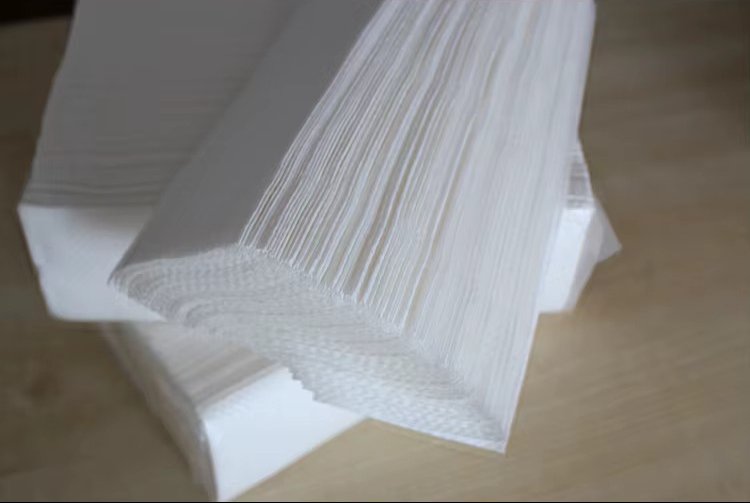
The fold decides how it is presented and dispensed. We offer napkins in a 1/4-fold and a tighter 1/8-fold, plus a dedicated commercial dispenser interfold style built for countertop and self-serve stations, in 1-ply and 2-ply stock with a decorative border embossing. The 1/4-fold is the classic folded square you present on a set table; the smaller 1/8-fold stacks neatly and suits higher-turn beverage service; the dispenser interfold feeds one napkin at a time in a self-serve line. Because the cm bands above are industry references rather than a single fixed standard, the cocktail versus dinner napkin size guide is where you confirm which format your covers actually need.
What “Custom” Really Means For A Napkin Program
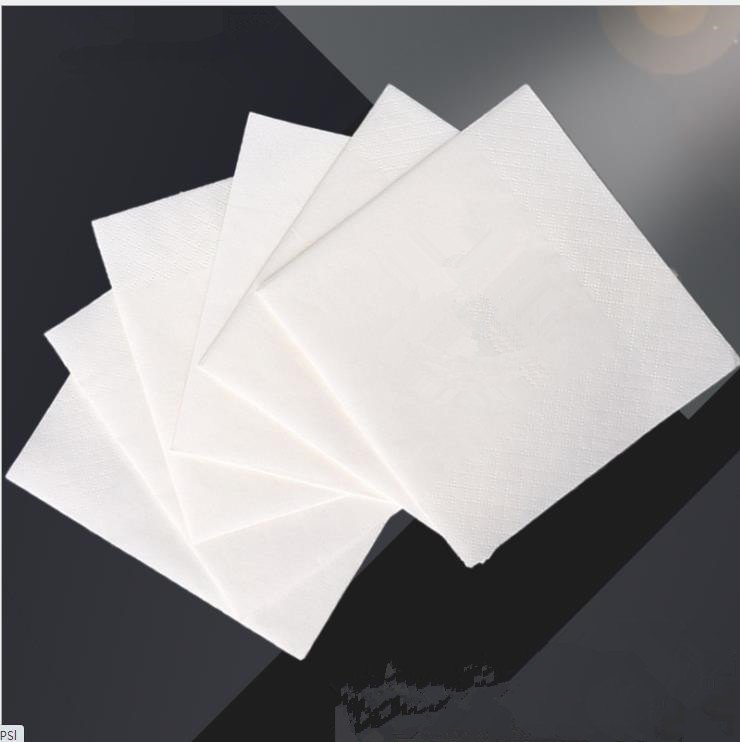
“Custom napkin” is used loosely online. In a working food-service order it means a defined set of choices: the size, the ply, the fold, the embossing, and the print. On the print side, we run one to four colors of eco water-based ink, which is the spec that matters for anything touching food and mouth, and it is the reason water-based printing is explained separately in the water-based ink printing guide rather than buried in a product blurb.
A single restaurant branding a cocktail napkin and a caterer printing a different beverage napkin per client are the same capability applied at different scales. Where they diverge is quantity: a logo print on your chosen size and fold is a custom-printed program, and that is priced and led differently from plain stock. The custom napkins with logo guide covers the branding path; here the point is to pick the structural spec first, because the print rides on top of it.
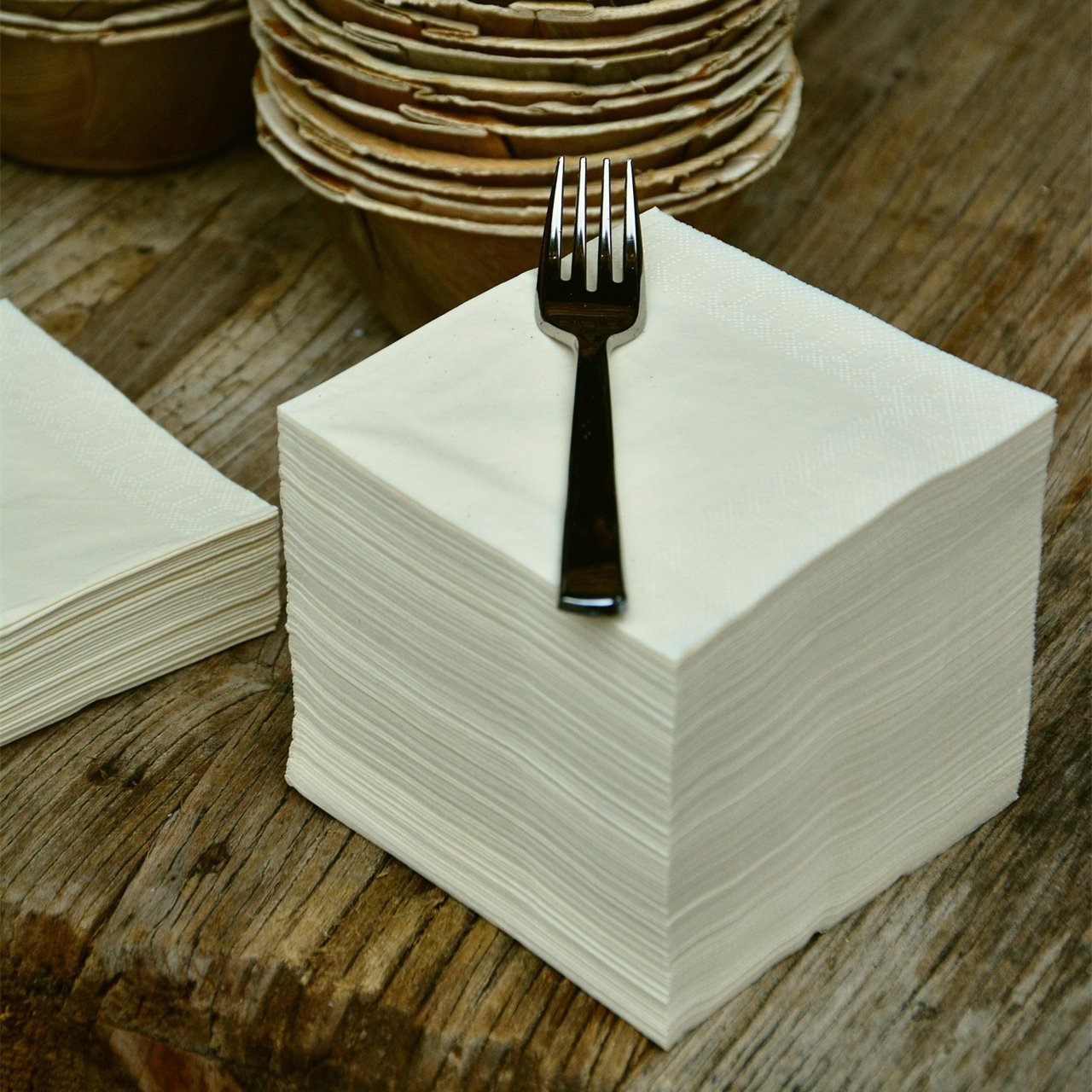
Matching The Napkin To The Service Style
The fastest way to waste money is to buy the wrong fold for the room. A plated, sit-down dining service wants a presentable folded square, usually the 1/4-fold dinner or luncheon size, laid on the plate or in the glass. A high-turn cafe, bar, or fast-casual line wants beverage or cocktail formats in a small 1/8-fold that stacks and moves. A staffed self-serve condiment station or a corporate cafeteria wants the dispenser interfold so guests pull one napkin rather than grabbing a handful off a pile.
Match fold to traffic pattern before you optimize cost. A generous dinner napkin in a low-turn restaurant reads as quality; the same size on a busy counter becomes a consumable you over-buy. This is a placement decision as much as a paper one, and it is where a distributor building a food-service catalog earns margin: quoting per service style rather than shipping one SKU to every account.
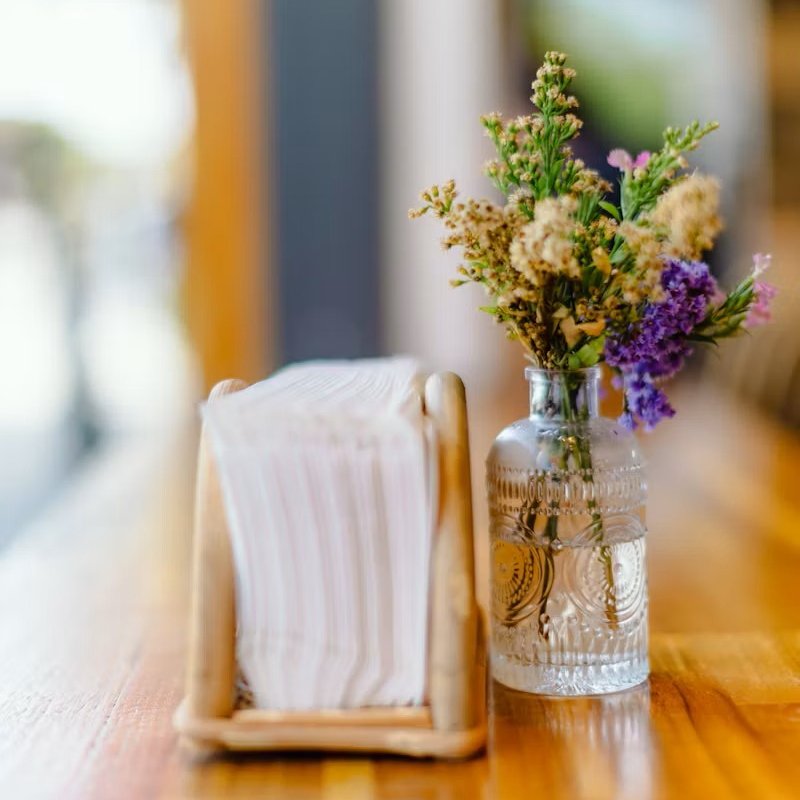
Order Economics: Plain Stock Versus A Printed Run
The commercial line between the two napkin programs is the container. Unbranded white-label napkins, plain stock in your chosen size and fold, ship from a shared 20GP container, so a distributor can build a food-service range without a six-figure print commitment. A custom-printed program, your logo, your size, your case configuration, starts at one full 40HQ. Samples of the actual folded, printed napkin go out in one to three working days so you can check embossing, print registration and fold on a real sheet, first production runs 25 to 30 working days, and reorders run 20 to 25.
One detail saves repeat buyers real money: on a private-label program, the design and plate work are archived and encrypted at our end, so your reorder does not re-pay plate-making fees. For an operator refreshing a printed line seasonally, that compounds quickly across reorders. The material underneath is constant regardless of print, 100% virgin wood pulp, no fluorescent brighteners or harmful chemical additives, food-contact safe across the 13 to 45 GSM portfolio.
Specing The Full Food-Service Napkin Line
For a restaurant group, caterer, or janitorial-and-foodservice distributor, the napkin is one line in a broader paper program alongside hand towels and guest tissue. Buying from the converting factory lets you set size, fold, ply, GSM band, embossing and print per service style and quote them together rather than reconciling three resellers. Spec the whole food-service range against the napkin papers line page, keeping the angle deliberately on working food service rather than event decor.
Video: precision converting and printing process for paper napkins (Top Source Paper)
Frequently Asked Questions On Custom Paper Napkins
What size napkin do restaurants use?
Food service typically works in three bands: roughly 25 x 25 cm beverage or cocktail, 33 x 33 cm luncheon, and 40 x 40 cm dinner, about 16 to 22 gsm, one to three ply. Confirm your own spec on a sample.
What is the difference between 1/4-fold and 1/8-fold napkins?
The 1/4-fold is the classic folded square for set tables; the smaller 1/8-fold stacks compactly for high-turn beverage service. Dispenser interfolds feed one napkin at a time on self-serve stations.
Can I print my logo on napkins in bulk?
Yes. Custom printing runs one to four colors of eco water-based ink. A printed program starts at one 40HQ, while plain white-label stock ships from a shared 20GP, with samples in one to three working days.
Are custom printed napkins food safe?
Ours are 100% virgin wood pulp with no fluorescent brighteners or harmful additives and use water-based inks, positioned as food-contact safe across the portfolio.
Size and fold are chosen by service style; the branded napkin placement guide treats the visible face as the design constraint those choices should obey.