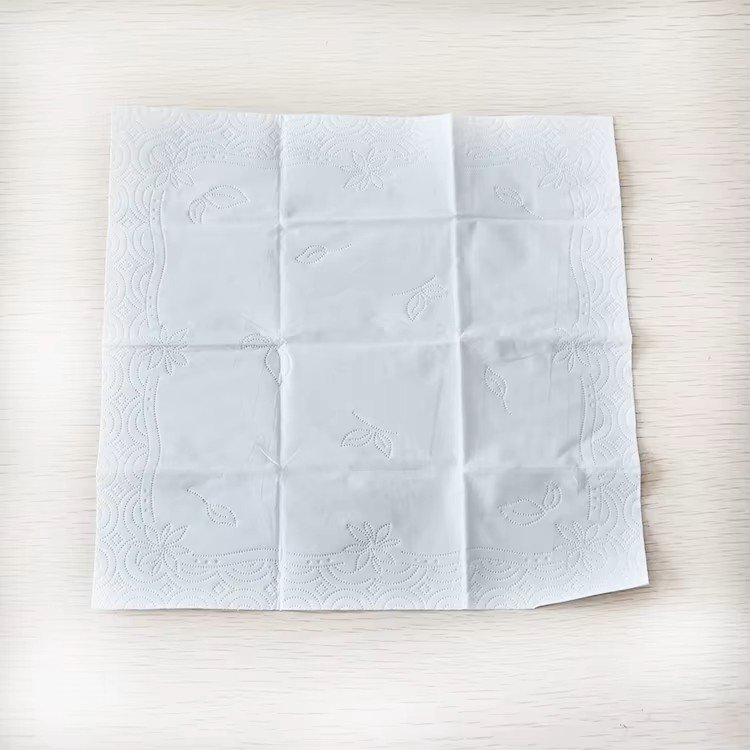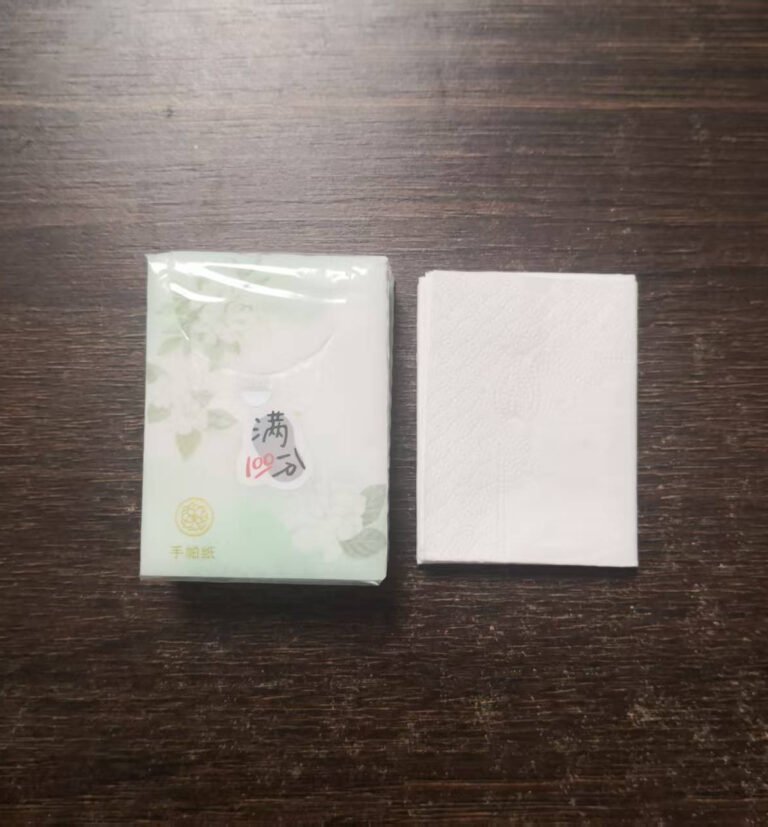
A hospitality buyer ordering 200 small tissue packs per floor expects the guest-room tray to absorb them. What arrives is often a carton counted differently: 400 packs at a heavier sheet count, in a depth the acrylic holder cannot close over. Nobody sent the wrong paper. The pack arithmetic was never agreed between the purchase order and the housekeeping floor.
Sheet count, case count, dispenser geometry and restock cadence are four separate variables; most sourcing conversations collapse them into one line item. This guide keeps them apart, covering the pack-size and case-size mathematics of small tissue packs in hospitality, airline cabin and promotional distribution. Retail shelf sourcing lives in Pocket Tissues: Sourcing for Retail and Promotions, single-use guest-room framing in Individual Tissue Packs for Travel and Hospitality. Neither is re-told here.
Key Takeaways
- The line is specified as multi-sheet, independent portable packs in high-toughness ultra-soft 100% virgin wood pulp, with single-pack colour print and multi-pack combination both supported. Sheet count is a PO variable.
- Pack bulk follows one relationship: sheet count multiplied by ply thickness multiplied by folded sheet depth. Cut to the same sheet, a fuller pack is proportionally deeper than a thinner one (arithmetic). The pocket cluster quotes a 7-10 sheet band; the count is a PO variable.
- Case arithmetic is a three-step multiplication: packs per carton, times cartons per pallet, times pallet positions per container.
- White-label packs ship from a 20GP minimum, consolidatable across sizes; custom colour print on pack or carton requires 1×40′HQ per packaging design.
- Lead times are 1-3 working days for samples, 25-30 working days for first bulk, 20-25 working days for reorders, out of Tianjin Xingang port.
- The third QC gate, the pre-shipment total check, audits case count and drop resistance, and it catches a 200-versus-400 mismatch before the container is sealed.
Why Small Tissue Packs Break Hospitality Restock Plans
Failure here rarely looks like bad paper. It looks like a housekeeping cart that cannot hold what it used to. Four symptoms produce that cart, each tracing to a different variable.
- Tray refusal. The pack is too deep for the holder, so staff place loose sheets instead and the tray reads as stocked while it is not. Sheet count and ply caused this.
- Case-count drift. A shelf plan built on one packs-per-carton figure receives another. Carton configuration caused this, not the pack.
- Consumption inflation. A thin pack disappears into a guest’s coat pocket, so the floor goes through several packs where one was planned.
- Restock labour. Smaller packs mean more units placed per room per turn, a case-and-pallet question as much as a staffing one.
Three of those four are arithmetic problems. Specifying only “pocket tissue, 200 packs” leaves all three open. Write the numbers down before the plate fee is paid.
The Sheet-Count Range and What More Sheets Does to Pack Bulk
Top Source Paper’s line entry describes multi-sheet portable packs; it does not pin one sheet count, because converters cut to the count a buyer specifies. Across our pocket cluster the sourcing guides quote a 7-10 sheet band, and the arithmetic below holds for any count you set on the PO.
Pack bulk follows one relationship: sheet count times ply thickness times the folded depth of one sheet. Because the last two factors stay constant within one PO, bulk scales linearly with sheet count. Cut to the same sheet, a 10-sheet pack is therefore 1.25 times the depth of an 8-sheet pack, and a 7-sheet pack is 0.875 times it (arithmetic, not a measured product dimension).
| Sheets per Pack | Relative Pack Bulk (arithmetic) | Where the Envelope Works | What the Buyer Checks First |
|---|---|---|---|
| 7 sheets | 0.875x the 8-sheet pack | Cabin seat-back pockets, event inserts, badge-lanyard pouches | Whether guests treat one pack as a single use and take several |
| 8 sheets | 1.0x baseline | Standard guest-room tray, conference folder, retail pocket display | Tray lid clearance at the folded edge |
| 10 sheets | 1.25x the 8-sheet pack | Lobby-side holders, escorted-visitor kits, branded promotional packs | Dispenser mouth depth; fuller packs sit near the limit of shallow holders |
One boundary stated plainly: the mill’s portfolio spans 13-45 GSM overall, but the Pocket Tissues entry carries no line-specific GSM, so anyone quoting a gram value for a pocket SKU from a generic spec sheet is guessing. Specify ply and sheet count on the PO and let a sample confirm hand feel within 1-3 working days.
Packs per Case, Cases per Pallet, Pallets per 20GP: The Container Multiplication
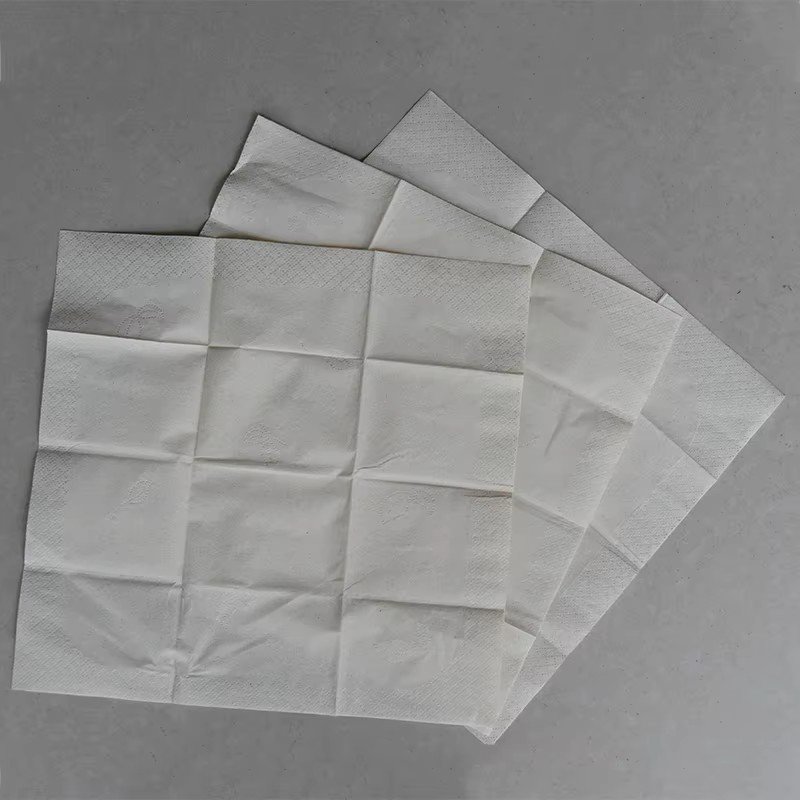
The second layer converts a pack into a delivery. Multiply packs per carton by cartons per pallet for packs per pallet, then by pallet positions for the total count the warehouse receives. Write each result on the PO.
The table demonstrates the method with placeholder inputs. Packs per carton depend on carton footprint and flute class, cartons per pallet on stacking height and cube, pallet positions on the loading plan confirmed at booking. Substitute your own inputs; the structure stays identical.
| Configuration | Packs per Carton | Cartons per Pallet | Packs per Pallet (arithmetic) | 10 Pallet Positions = Packs |
|---|---|---|---|---|
| A: shallow carton, high case count | 60 | 8 | 480 | 4,800 |
| B: balanced carton | 120 | 6 | 720 | 7,200 |
| C: deep carton, low case count | 240 | 4 | 960 | 9,600 |
Configuration C looks efficient on paper and fails in small storerooms: a 240-pack carton cannot be broken down on a housekeeping floor without re-palletising, so the property reverts to a shallower carton and pays more freight per pack. If the plan needs two counts in one container, ask for them consolidated inside the white-label 20GP — the line supports multi-pack combination (see the pocket tissues line page) — and confirm the per-carton split of each format on the PO.
Then run the reverse calculation. Divide the packs you intend to distribute over a season by packs per pallet; the answer is pallet positions, and it shows whether a 20GP white-label minimum is a stretch or an over-commitment.
Converting that carton arithmetic into physical cases is a line process, and seeing it once is cheaper than arguing about it after a container lands.
Video: “toilet tissue paper manufacturing process” on the Top Source Paper channel (@topsourcepaper4025). It shows the converting and rewinding line, not the pocket-tissue SKU in this article; use it as process context for how parent rolls become cut, folded and cased product.
Dispenser Compatibility for Tiny Packs
Mouth geometry answers compatibility questions, not brand names. Three fixtures dominate the small-pack environment, and each fails differently.
- Guest-room trays and lidded acrylic holders. The lid closes only if pack bulk plus tray base depth stays under the clearance. An 8-sheet pack that sat flat last year domes the lid once the count rises.
- Cabin-class holders and seat-back pockets. Narrow mouth, almost no depth allowance, which is why the thinnest packs survive them. A pack that must be folded to enter gets skipped by crew and read as a stock-out.
- Spring-loaded and gravity-feed dispensers. Mechanisms calibrated for boxed facial tissue or napkin stock will not meter a pocket pack; the follower pushes past it or jams it. Matching the pack to the dispenser beats recalibrating a mechanism built for a different format.
The check is arithmetic. Measure mouth width and depth, then compare both with the pack's folded envelope: footprint by bulk. Leave a few millimetres of working tolerance, since a PE overwrap adds thickness and a pack compressed in transit recovers its volume on the shelf.
Properties with mixed fixtures should order two formats rather than one compromise. The bridge article Hotel Facial Tissue: Guest Room and Lobby Boxes covers the boxed side of that split; this one owns the pocket side. On guest-facing packs, name the Zero-Dust micro-pore purification step on the PO, since loose fibre shows up on a dark tray and on white linen.

Hospitality Restock Cadence: Plan Around the Pallet, Not the SKU
Restock frequency is a property-level number. Turnover rate, room count, housekeeping rota and packs placed per clean are internal to each operation, so no supplier can honestly quote a cadence for you. A buyer can only convert a container into cover, using inputs from their own provisioning schedule.
Weeks of cover equals total packs received, divided by packs consumed per week. Packs consumed per week equals rooms, multiplied by turns per week, multiplied by packs placed per room per turn. Every term comes from the property's own rota, and the result is the only number that should drive a reorder point.
Then order the reorder in pallet units, not SKU units, because the pallet is what a storeroom physically receives and what a freight quote actually prices. Production cadence sets the safety margin: first bulk takes 25-30 working days including packaging plate-making and outer-carton printing, reorders 20-25 working days, out of Tianjin Xingang. A property that reorders two weeks before running dry will run dry; one that reorders two pallets low will not.
Sheet count enters the same equation through behaviour. A thin pack on a high-traffic lobby table is often taken whole, so two or three of them cover what one fuller pack would have. Multiplied across rooms and turns, the cheaper pack becomes the more frequently replenished one, a case-count decision wearing a unit-cost disguise.
Custom Print Thresholds at Pocket Size
The Pocket Tissues entry supports colour printing on the individual portable pack as well as multi-pack combination, and MOQ splits by packaging treatment rather than by paper. Unprinted white-label runs start at a 20GP container, consolidatable across pack sizes; custom colour print on packs or cartons requires 1×40′HQ.
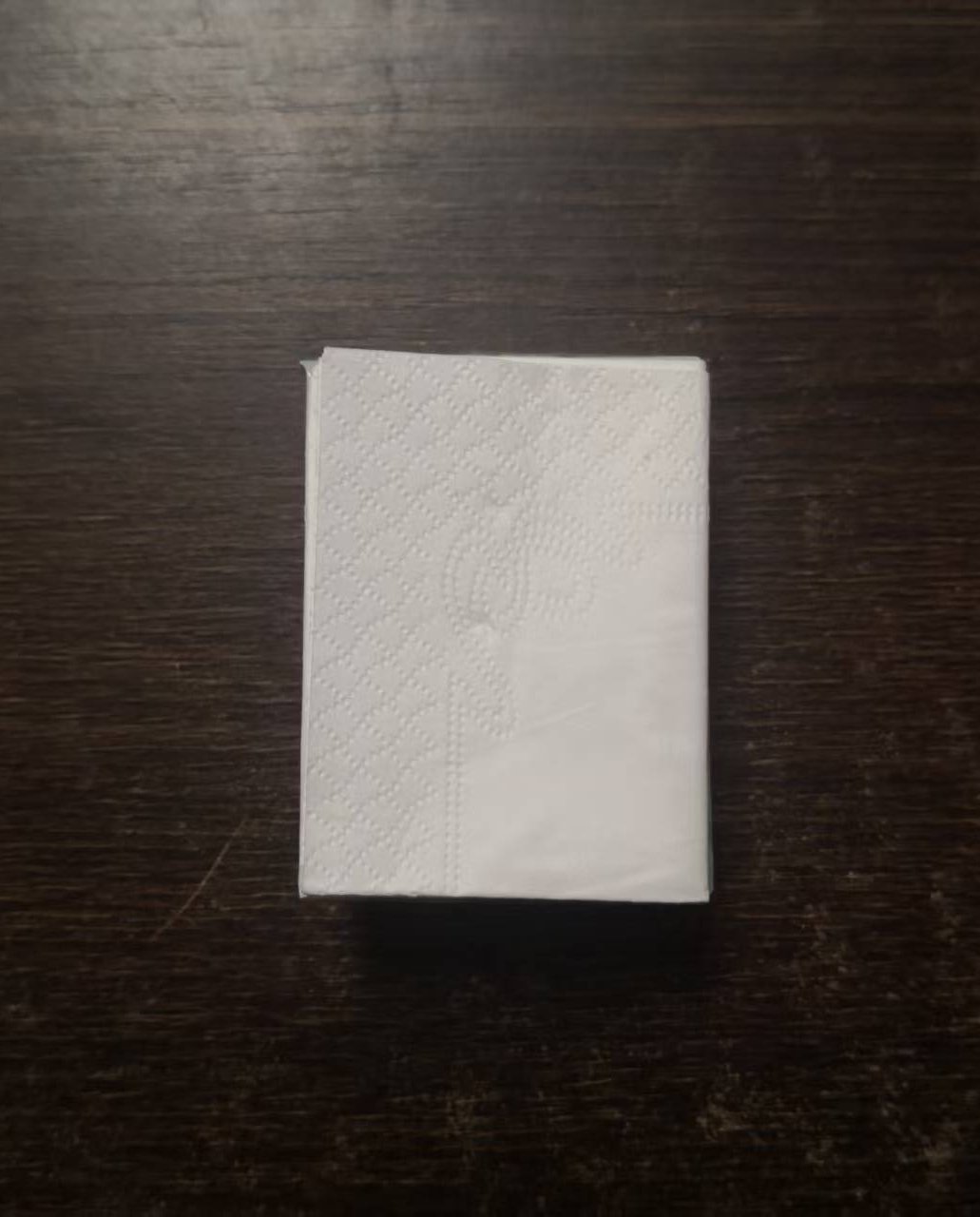
One line-specification fact drives the economics here: once a design exists, the buyer's artwork and formula are archived under encryption with no repeat plate fee on reorders, so the second container of the same printed pack costs less to plate than the first. How a campaign reaches 40′HQ volume is covered on the promotional and retail-print siblings linked below, and is not re-told here.
Adjacent angles already documented on this site: print-layer options are enumerated in Travel Tissue Packs: 7 Customization Options, artwork-on-pack economics for retail in Pocket Tissue Packs: Custom Printing for Retail and Promotions, and campaign-scale inserts in Promotional Pocket Tissues. This section stays on thresholds and volume logic.
The Three QC Gates That Actually Affect Small Packs
QC on a pocket-tissue container runs through three named gates, each answering a different question the buyer will ask at goods-in.
- Gate 1, mother-roll sampling. Tensile strength and brightness are tested on the incoming virgin pulp parent roll. This gate predicts whether a thin pack tears during folding, and whether the white a guest sees matches the last container's.
- Gate 2, in-process rewind inspection. GSM, web tension and perforation line are checked while the roll is rewound and cut. Tension drift makes a counted pack arrive short; a weak perforation makes a guest rip two sheets.
- Gate 3, pre-shipment total check. Case count and drop test are verified before sealing. This is the gate that catches a 200-versus-400 mismatch, a mis-marked carton, or a corrugated class that crushes under pallet stacking.
For a buyer whose pain is pack size and case size, gate 3 is the leverage point, and it belongs in the PO wording next to the material standard: 100% virgin wood pulp with a long and short fibre ratio balanced by the mill, no recycled fibre, zero-fluorescent, food-contact safe. Payment structure reinforces it: with 30% T/T deposit and 70% released before shipment, the inspection report and sealing video arrive before the second payment leaves.
Small Tissue Packs FAQ
How does sheet count change whether a pack fits my guest-room tray?
Raising the sheet count raises pack bulk in direct proportion — sheet count times ply times folded sheet depth. A tray lid that closed on a thin pack domes once the count climbs, so fix the count against the tray's measured clearance on the PO instead of assuming last year's pack still fits.
Which two numbers decide what my storeroom physically receives?
Packs per carton and cartons per pallet. Multiply those, then by pallet positions, and you get the total count the warehouse can actually take — the figure a 200-versus-400 mismatch turns on. Write both on the PO and repeat the resulting count on the carton marking.
Can I mix different sheet counts in one 20GP white-label order?
Yes. The line supports multi-pack combination, and the 20GP white-label minimum is a consolidated shipment rather than one SKU per container. Custom print is the exception: at the 1×40′HQ level the plate ties the run to a single packaging design, so a mixed pack-size order under one artwork is quoted separately per design.
Do pocket tissue packs fit hotel guest-room dispensers?
Fit depends on mouth geometry, not on the brand of dispenser. Measure the opening width and depth of the tray or holder and compare both with the folded envelope of the pack, which grows with sheet count times ply. A thin pack slides into a cabin seat-back pocket that a fuller pack cannot enter, and a spring-loaded box-tissue mechanism will not meter a pocket pack at all.
What do I check at receiving to prove the case count is right?
Pull the gate-3 record before the balance clears. The pre-shipment total check verifies case count and drop resistance, so cross-check the packs-per-carton figure printed on the carton against what the receiving dock counts. Pair that with the virgin-fibre COA and the loading photo set, and you are proving the container against the PO rather than trusting a pallet count.
Before You Order: A Decision Checklist for Small Tissue Packs
Pack size and case size are the two decisions still cheap to change at PO stage, and the two that become expensive once the container leaves Tianjin. Work the checklist in order and write each answer into the purchase order, not an email thread.
- Name the sheet count per pack and state ply; do not leave bulk to be discovered at the tray.
- Measure one dispenser or tray of each type, record mouth width and depth, and check both against the folded envelope.
- Fix packs per carton, cartons per pallet and pallet positions, then publish the resulting count on the carton marking.
- Convert your own consumption into weeks of cover and set the reorder point in pallets, timed to 20-25 working days.
- Choose the MOQ tier deliberately: 20GP white-label for mixed formats, 1×40′HQ only when printed artwork justifies the volume.
- Request the gate-3 case-count and drop-test record plus the COA by name, before the 70% balance is released.
If your numbers are already drafted, send the sheet count, the target case count and one dispenser measurement, and we will confirm which pack configuration the line can hold inside your pallet plan.