The cloth-versus-paper hand towel decision gets argued in terms of unit price, which is the wrong variable. A disposable sheet costs money every time someone dries their hands. A cloth roller costs money every time it is laundered, transported, refilled and replaced — and it costs something else that never appears on an invoice, which is the contamination liability of a shared fabric surface in a room that hundreds of strangers pass through.
Neither of those numbers is universal. What is universal is the list of cost lines you have to price before disposable hand towels or cloth rollers can be called the cheaper option. Below is that list, the hygiene evidence behind the single-use recommendation, and the specification detail that decides whether a disposable towel saves labour or quietly doubles consumption.
What the Guidance Says About Hand Drying
This is not a preference argument, and it is not a marketing one. Where international public-health guidance addresses the drying step at all, it points at single-use paper.
A 2023 scoping review in BMJ Open mapped 923 recommendations drawn from 51 international hand-hygiene guidelines published between 1999 and 2021. Reviewing guidance for community settings, the authors found that most of those guidelines specifically recommend handwashing with plain soap and running water for at least 20 seconds, and specifically recommend single-use paper towels for hand drying (MacLeod et al., BMJ Open 2023;13:e068887).
The reasoning is mechanical rather than moral: washing reduces the pathogen load on hands, and drying on a surface that another person used an hour ago re-contaminates them. A shared cloth roller does not have a clean state between users. A sheet pulled from a dispenser does.
In food service the logic is codified rather than recommended. The FDA Food Code governs US retail food operations and sets conditions for how reusable cloths must be handled between uses, including storage in sanitiser solution, alongside its requirements for single-service and single-use articles. Compliance with a reusable-cloth regime is an ongoing process obligation; a single-use towel is a simpler position to defend in an inspection.
Total Cost of Ownership: The Lines You Have to Price
Do not accept a per-towel comparison. Price every line below with your own local rates and the answer becomes specific to your building instead of generic to the industry.
| Cost line | Disposable paper towel | Cloth roller system |
|---|---|---|
| Product cost per hand dry | Paid every use, scales linearly with traffic | Amortised across the towel’s service life |
| Laundering: water, heat, detergent, bleach | None | Recurring per cycle, and per towel replaced |
| Laundry transport / outsourced service | None | Routine collection and delivery |
| Labour: refill versus roll change and mechanism cleaning | Dispenser refill in minutes | Roll change, cleaning the mechanism, handling soiled stock |
| Capital: dispenser or roller unit | Standard multifold or centrefeed cabinet | Roller housing with crank or spring mechanism |
| Replacement of degraded stock | None | Fabric wears out and is discarded on a cycle you set |
| Hygiene liability and audit exposure | Single-use, no shared contact surface | Shared surface; needs documented laundering control |
| Waste stream | Used sheet, virgin pulp, biodegradable | Minimal per use, plus end-of-life textiles |
Three of those lines decide most real comparisons. Laundering cost scales with wash frequency, not with towel price. Labour is the line facility managers under-price, because a roll change and a mechanism clean takes longer than a refill and happens more often than anyone plans for. And the liability line becomes real the moment your facility serves food, healthcare, or a client who audits you.
Put the arithmetic into a shape your finance review will accept. Every term above reduces to a cost per hand dry, and both sides are calculated the same way. For paper: delivered cost per sheet (container price divided by the total sheets actually shipped) multiplied by the average sheets pulled per dry that your housekeeping team observes. For cloth: purchase price of the towel divided by the number of laundered uses it gets before replacement, plus the laundering charge per use, plus the share of collection and transport cost per use, plus the labour minutes for a roll change and mechanism clean divided by the number of hand dries that roll delivers before it is changed.
Those are formulas with your own inputs, not industry averages, which is precisely why they survive challenge in a budget meeting. And do not zero out the liability line until you have priced what a single hygiene finding costs your operation: an inspection write-up, a client audit failure, or a closure event in a food-service area. Buyers habitually leave that term blank because it is the only one that is rarely invoiced and sometimes very expensive.
Why the Hygiene Argument Does Not Survive High Traffic
A cloth roller’s failure is not that it is dirty when it is installed. It is that every user touches the same length of fabric that the next user will touch, and the section in contact with hands is not renewed between them. In a quiet restroom this is an uncomfortable thought. In an airport, a stadium concourse or a hospital corridor it is where the shared surface becomes the finding, not the footnote.
The alternative is a documented laundering regime with strict change frequency, which is exactly the process obligation the Food Code-style requirements create. Facilities that genuinely run that discipline can make cloth defensible. Facilities that intend to run it and drift from it are the reason this comparison keeps getting made.
Format and Dispenser Compatibility: Where Disposable Hand Towels Are Won or Lost
Buying the wrong fold is the most expensive mistake in this category, because it does not show up as a product defect — it shows up as consumption.
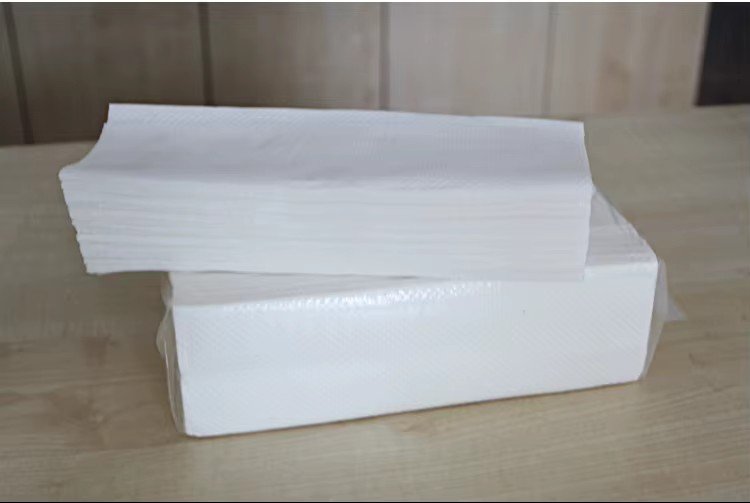
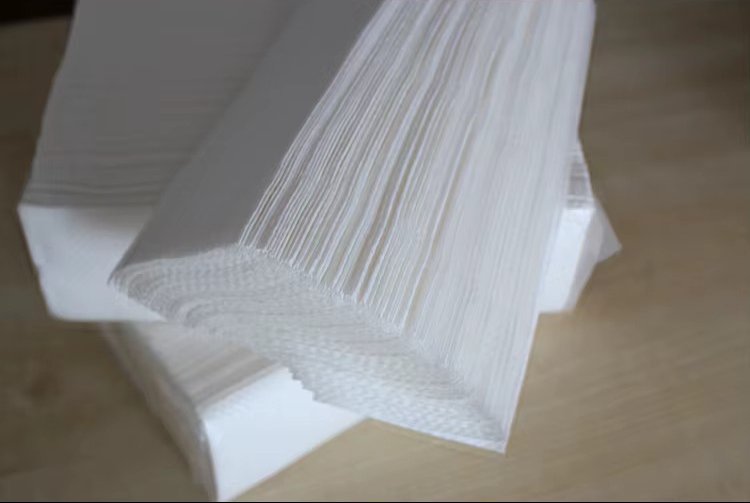
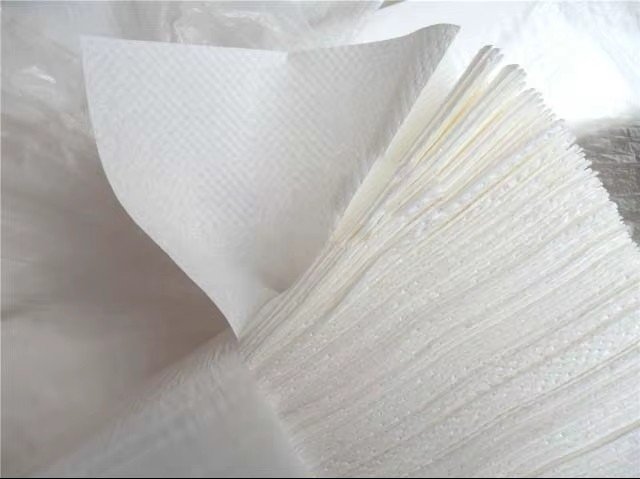
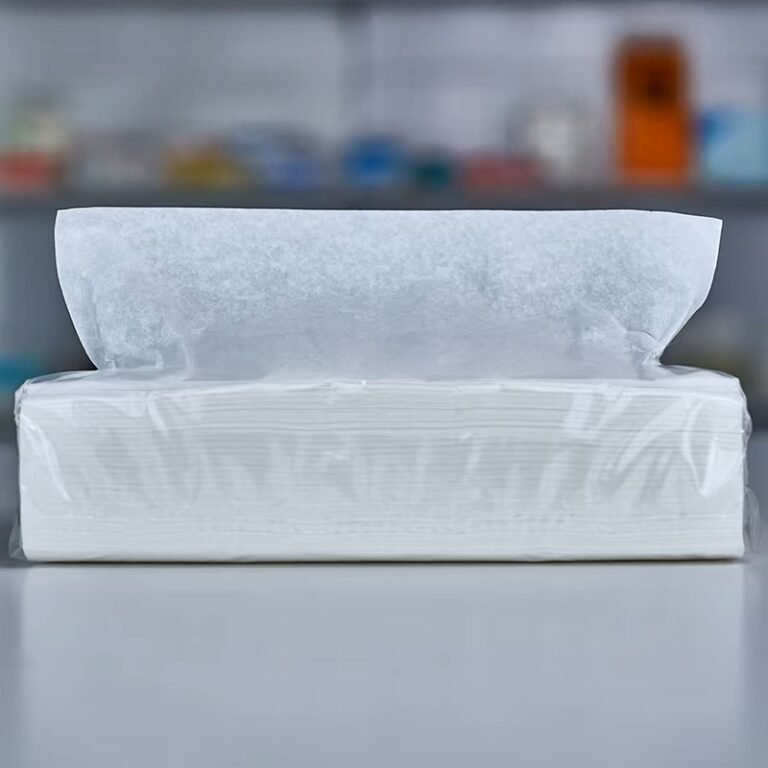
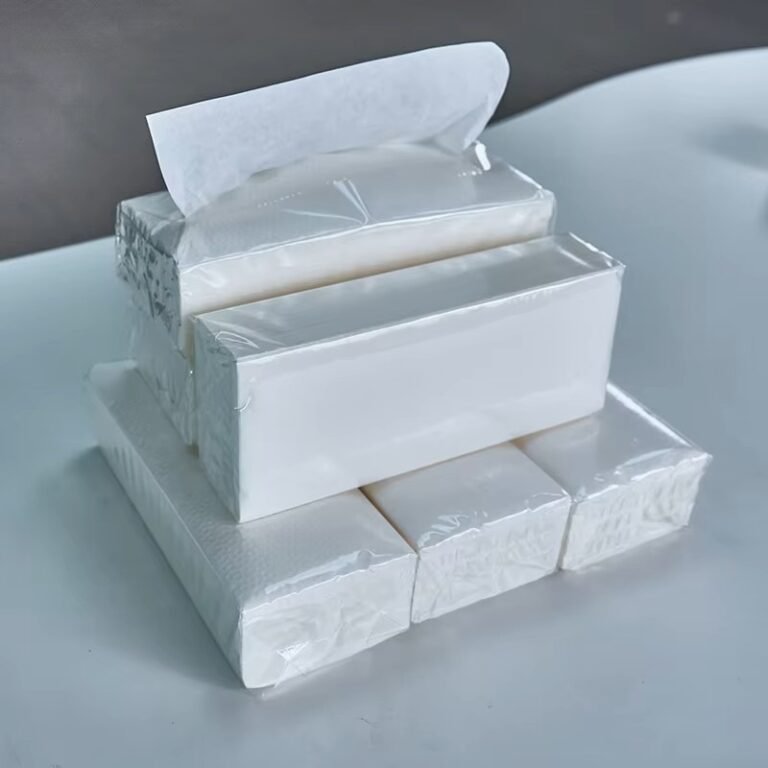
Multifold (V, Z and M fold). The commercial workhorse. Sheets interleave so one pull presents one sheet. Our folded hand towels are engineered for single-sheet extraction without cascading, which is the mechanism that controls consumption: if a pull releases three sheets, your per-use cost triples without anyone ordering more stock. M-fold presents a larger drying surface per sheet and is preferred where hand-drying performance is visible to the user.
Single-fold. Simpler geometry, widely compatible with universal dispensers, the usual choice when a building has mixed dispenser hardware it cannot replace.
Roll centrefeed. Continuous perforated roll for break rooms, kitchens and industrial settings, where users tear a length rather than take a counted sheet. Consumption is governed by perforation spacing and by user behaviour, so it is the format most sensitive to dispenser placement.
Confirm the fold geometry against the dispenser already installed before you order a container. The relevant specification is the machine, not the preference.
The Specification Lines That Decide Whether the Towel Performs
Absorbency and speed. Our folded hand towels absorb water in 3 seconds, which is the practical difference between one sheet and two sheets per dry.
Wet strength. A towel that disintegrates on a wet hand leaves lint on the hands it was supposed to dry, which pushes users to take more sheets and produces complaints no one can name. Our kitchen and hand towel lines are optimised for Wet-Burst Strength through the long-fiber ratio: wet use without falling apart and without shedding.
Dust. Zero-Dust micro-pore purification controls the paper-dust rate. In food prep areas and healthcare-adjacent settings the dust characteristic is a compliance concern, not a comfort one.
Material and purity. 100% virgin wood pulp with a balanced long- and short-fiber ratio, no recovered waste pulp, no fluorescent brightening agents, no harmful chemical additives, and food-contact safe as a material standard. Recycled-fiber dusting and grey hand feel are the two symptoms of the opposite choice.
Ply and weight. Both are yours to set: 1-ply through 3-ply, within a 13–45 GSM portfolio range. Specify ply and target GSM together and agree the tolerance with the mill, because a heavier sheet per ply is not automatically a better towel, and a lighter one is where short-meterage complaints begin.
Our High-Yield Meterage Control governs rewind tightness and cut length against the figure you specify — the direct answer to GSM overstatement and shortened meterage, which are the two most common complaints importers bring to this category.
When Cloth Still Makes Sense
Three situations, honestly stated. A low-traffic executive facility where a dedicated housekeeping routine genuinely renews the roller between uses. A site with an existing, verified industrial laundering contract running cold-water cycles and certified detergents, where the environmental case is documented rather than assumed. And a budget-constrained operation that has decided, knowingly, that invoice cost matters more than total cost and audit exposure. If your facility is not exactly one of those three, cloth is a decision you are making on price alone while the risk sits unpriced.
Bulk Ordering: MOQ, Lead Time, Documentation
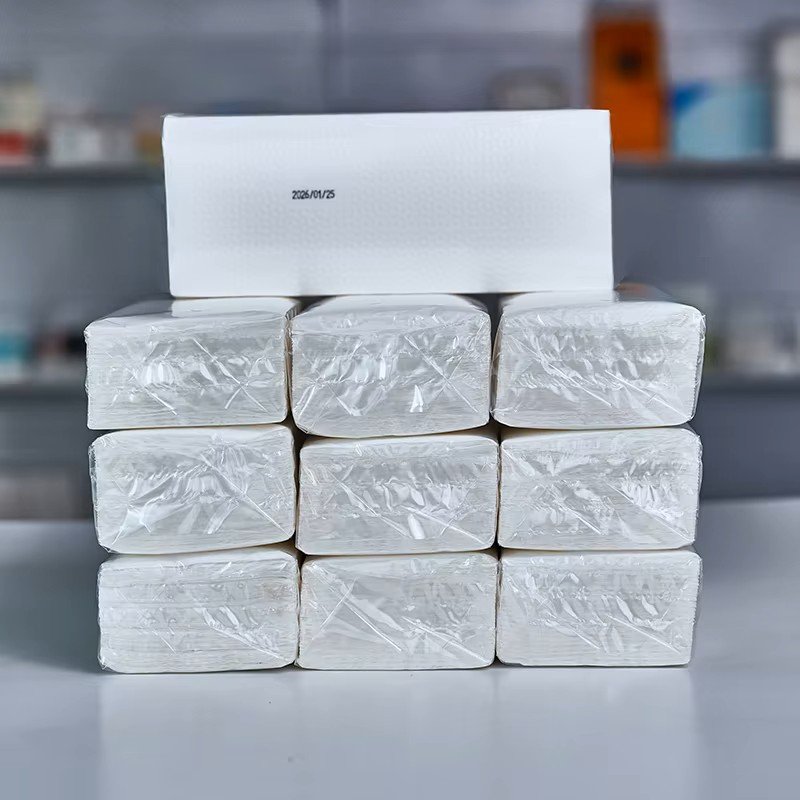
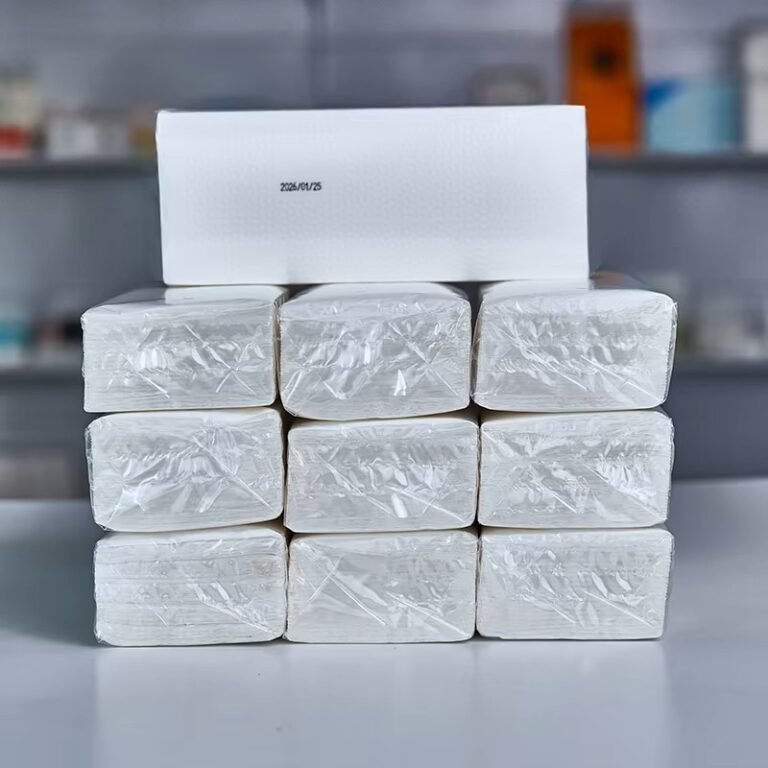
White-label and plain folded towels ship from one 20GP container. Custom-printed outer cartons and printed packaging for janitorial distributors run at a minimum of one full 40’HQ container, which is the route most distributors take once they are selling under their own brand rather than reselling ours.
Samples and small-sample dispatch take 1 to 3 working days. First mass production runs 25 to 30 working days, including packaging plate-making, sample approval and outer-carton printing. Repeat orders run 20 to 25 working days, and plate fees are waived because your artwork is sealed in a permanent client file. Terms are FOB, CIF, CFR or EXW ex Tianjin Xingang Port, on 30% T/T deposit with the 70% balance before shipment.
Each shipment carries a 100% virgin pulp COA covering tensile strength, brightness and virgin-fiber verification, a wet-tensile and zero-dust test video pack, and loading plus moisture-proof packing photographs. Before the balance is called you get the QC report and the container sealing video, which is the point to verify specification rather than after discharge.
For the container maths and factory-audit side of a first order, see the bulk sourcing guide, the 10-step sourcing checklist, and the fold-by-fold breakdown in multifold paper towels explained. Our paper hand towel programme lists the full format range, and the factory profile covers capacity and QC.
Frequently Asked Questions
Are disposable paper hand towels more hygienic than cloth towels?
Yes, for a reason that is structural rather than perceptual: a single-use sheet has no shared contact surface. Most of the international guidelines reviewed in the 2023 BMJ Open scoping review of community hand hygiene specifically recommend single-use paper towels for hand drying.
Which fold type suits high-traffic commercial restrooms?
Multifold V, Z and M fold, matched to the dispenser already installed. The specification that matters is single-sheet extraction without cascading, because cascade pulling multiplies consumption without appearing on any order.
Can disposable hand towels be custom printed for my distribution brand?
Yes. Custom-printed outer cartons and packaging require a minimum of one full 40’HQ container; plain and white-label product ships from a 20GP. Design files are archived permanently, so repeat orders carry no plate fee.
What ply and GSM should I specify for a commercial hand towel?
Both are set to your market rather than to a default. Ply options run 1-ply to 3-ply across a 13–45 GSM portfolio range, and the tolerance you expect production to hold should be agreed with the mill before the order.
Is a cloth roller towel ever the cheaper option?
At genuinely low traffic, with a laundering regime that is actually performed and documented. As traffic rises, laundering, labour and replacement scale with it while the shared-surface exposure gets worse, which is why high-traffic facilities specify single-use.