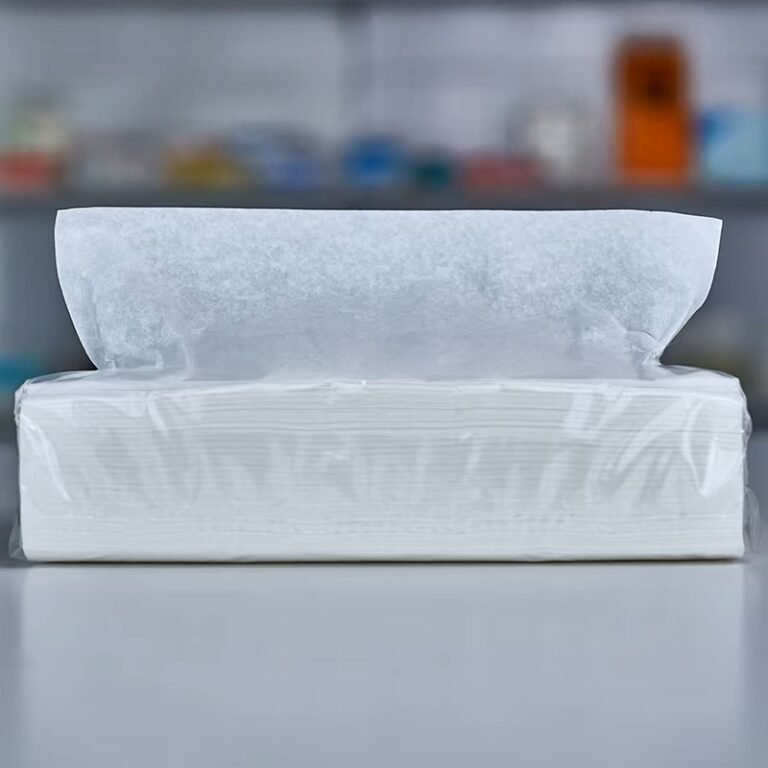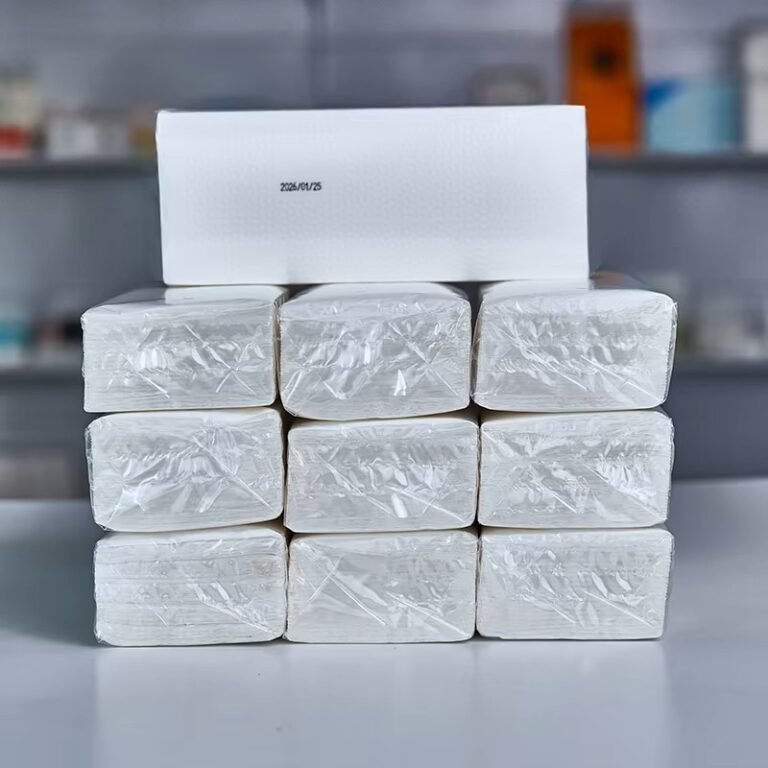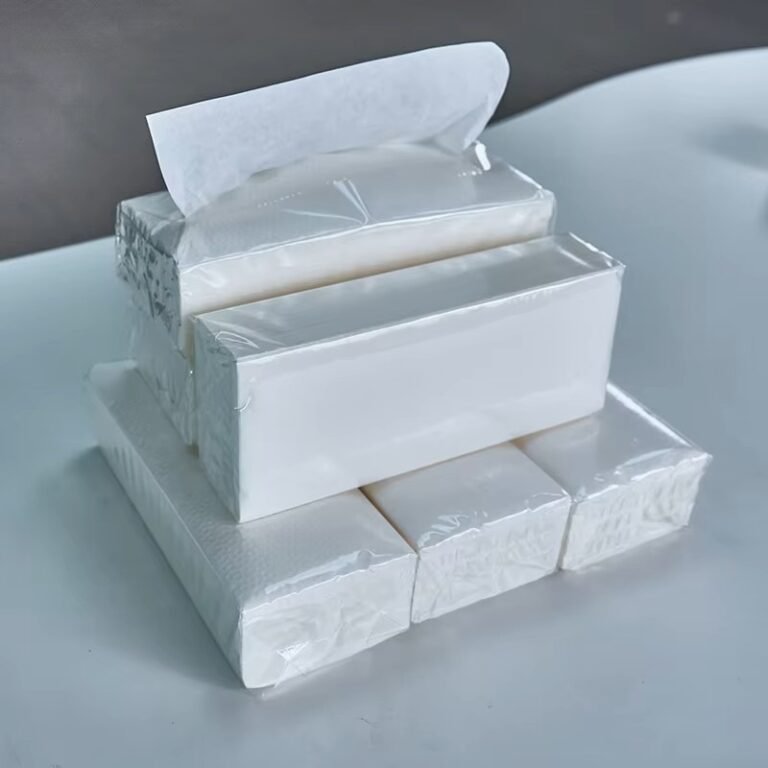
Every 1% of sheet waste in a high-traffic washroom compounds into thousands of dollars per year across a multi-site portfolio. For janitorial distributors and facility managers buying disposable hand towels in bulk, the real cost question is not price per sheet—it is cost per dry hand. That metric depends on GSM, fold geometry, ply bond strength, and dispenser compatibility, all of which must be specified correctly before a purchase order goes out.
This guide walks through the specifications that matter when sizing a bulk order of disposable hand towels for commercial bathrooms: fold types and their dispenser constraints, GSM ranges and how they map to traffic volume, container-level order quantities, and the QC documentation you should demand before the container leaves Tianjin port.
Fold Types and Dispenser Compatibility
The fold determines which dispenser the towel fits and how users interact with it. Mismatching fold to dispenser is the single most common sourcing error, and it shows up as jamming, multi-feed, or user frustration that drives over-consumption.
The three multi-fold formats dominate commercial washrooms:
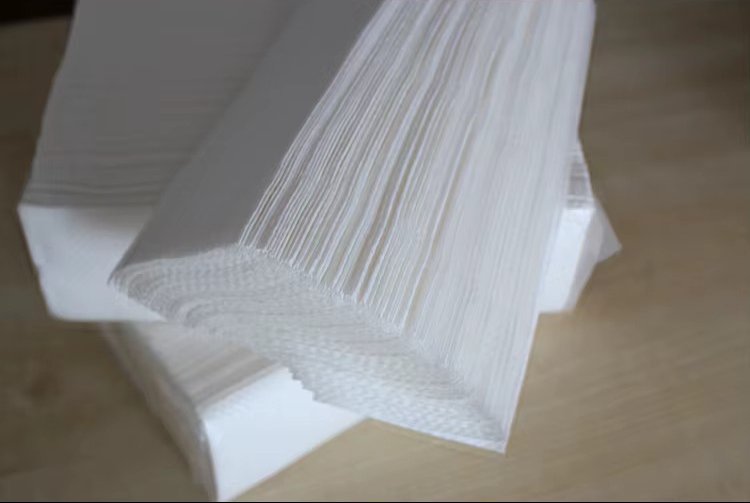
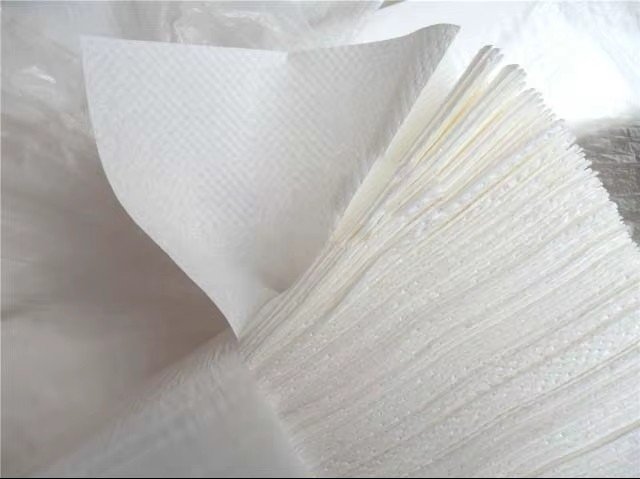
- V-fold (C-fold): The classic format. Sheets are folded in half twice, creating a V cross-section. Compatible with most wall-mounted enclosed dispensers. The V-fold presents the leading edge for single-sheet extraction, though older dispensers may still deliver two sheets at once.
- Z-fold: Sheets fold in a zigzag pattern. When one sheet is pulled, the next drops into position automatically. This cascade feed works well in high-traffic locations because it reduces touchpoints and speeds up hand-drying throughput.
- M-fold: A four-panel fold that creates the largest sheet surface area when opened. M-fold towels are preferred in premium settings where coverage and absorbency matter more than dispenser cost.
Single-fold towels remain in production for legacy dispenser fleets. They are less common in new installations but still specified in hospitals and older government buildings where dispenser replacement budgets are constrained.
All fold types are manufactured from 100% virgin wood pulp at our facility, with single-sheet extraction engineered to prevent multi-feed (anti-cascade). The embossing pattern—whether micro embossing, edge embossing, or deco point-to-point—is selected based on the target market’s absorbency expectations and the dispenser’s feed mechanism.
GSM Specifications by Traffic Volume
GSM (grams per square meter) is the weight of one square meter of paper. For hand towels, GSM directly correlates with absorbency per sheet, which determines how many sheets a user needs to dry their hands. Higher GSM means fewer sheets per dry, which lowers per-use cost even when the per-sheet price is higher.
Our production range spans 13–45 GSM across all tissue categories. For disposable hand towels in commercial bathrooms, the practical breakpoints are:
| GSM Range | Ply | Typical Application | Traffic Level |
|---|---|---|---|
| 13–17 GSM | 1-ply | High-volume restrooms, cost-sensitive contracts | Very high (airports, stadiums) |
| 18–25 GSM | 1-ply or 2-ply | Standard commercial washrooms | Moderate (offices, schools) |
| 26–35 GSM | 2-ply | Premium commercial, hospitality | Moderate to low (hotels, restaurants) |
| 36–45 GSM | 2-ply or 3-ply | Luxury hospitality, executive washrooms | Low (boutique hotels, corporate HQ) |
The key decision is whether to optimize for sheet count or per-sheet performance. A 1-ply 15 GSM towel in a stadium restroom may outperform a 2-ply 30 GSM towel in a hotel lobby—not because the paper is better, but because the traffic volume demands faster replenishment and lower per-unit cost. The right specification always follows the traffic pattern, not the other way around.
Sizing Your Bulk Order: Container Math
Once you have the fold and GSM locked in, the next step is calculating order volume. For importers buying from China, orders are sized by container, not by piece count.
Our paper hand towel product line follows the standard MOQ structure: white-label and unprinted towels start at one 20GP container, while custom-printed packaging or branded inner bags require one 40’HQ container minimum. The 40’HQ threshold applies because custom printing involves plate setup, color matching, and packaging line changeover that only make economic sense at volume.
Typical case counts per container depend on sheet size and pack configuration:
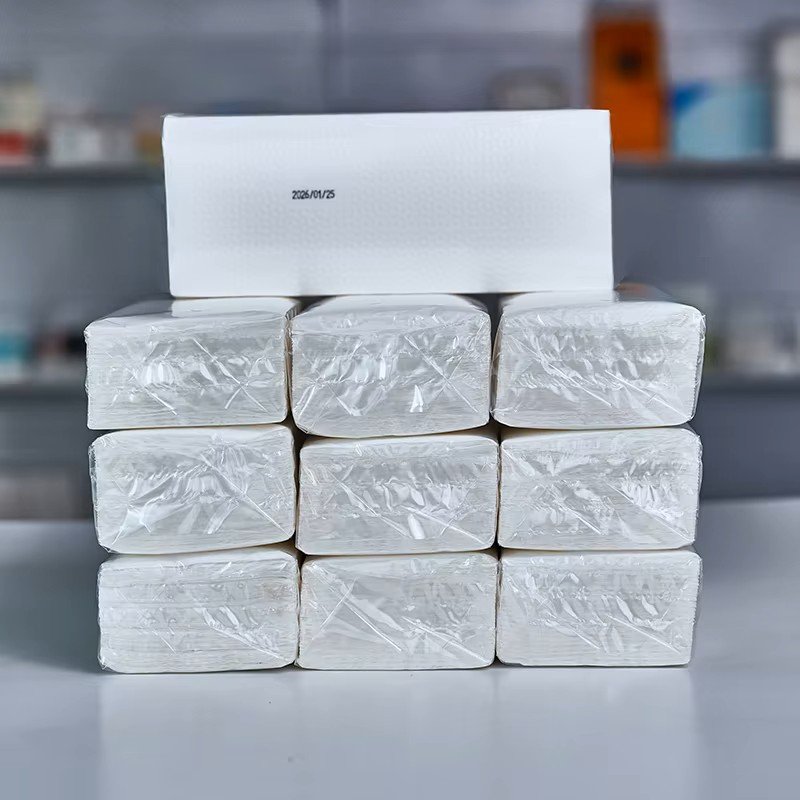
- A 20GP container holds approximately 80–120 master cartons of multifold hand towels, depending on inner pack count (200-sheet vs. 250-sheet packs) and carton dimensions.
- A 40’HQ container holds approximately 200–280 master cartons under the same variables.
For distributors supplying commercial washrooms, the most common order pattern is a 20GP of multifold towels in V-fold or Z-fold, paired with matching dispensers. First-time buyers typically start with white-label stock to validate market response before committing to custom print in a 40’HQ.
Lead Time and Order Planning
Lead time planning is where bulk orders succeed or fail. The production timeline for disposable hand towels is:
- Sampling: 1–3 working days. We ship physical samples of your specified fold, GSM, and embossing so you can test dispenser fit before committing to a container.
- First production run: 25–30 working days. This includes packaging plate setup, printing, and quality control. The longer window accounts for custom packaging development.
- Reorder production: 20–25 working days. Repeat orders with the same packaging skip plate setup and move directly to production.
For distributors managing seasonal demand spikes (back-to-school, holiday travel, conference season), we recommend placing reorder requests at least 45 days before the demand window opens. This accounts for production, ocean freight from Tianjin Xingang Port, and customs clearance at destination.
Trade terms are available as FOB, CIF, CFR, or EXW, depending on the buyer’s logistics capability. Payment follows the standard structure: 30% T/T deposit at order confirmation, 70% balance before shipment, with quality inspection reports and container loading videos provided for buyer verification.
Quality Control: What to Demand Before Shipment
Not all hand towel suppliers run the same quality standards. When evaluating a bulk order, the QC documentation should include three components that map to our three-stage inspection process:
- Parent roll inspection: Tensile strength, brightness, and fiber composition are tested before any converting begins. This is where virgin pulp quality is verified—a COA (Certificate of Analysis) confirming 100% virgin wood fiber should accompany every shipment.
- In-process patrol: During converting, GSM, tension, and perforation lines are checked at regular intervals. This catches weight drift and registration errors before they become full-container defects.
- Pre-shipment final inspection: Carton weight, drop test, and moisture content are verified against the purchase order specifications. Loading and moisture-proof packing photos or videos are provided to the buyer before the container seal is applied.
The wet-burst strength specification is particularly important for hand towels. Because users wet the towel before and during use, the fiber bond must hold together without disintegrating. Our long-fiber ratio optimization ensures the towel absorbs water within 3 seconds while maintaining structural integrity through the drying process. This is the difference between a towel that works and one that leaves residue on users’ hands.
Common Specification Mistakes to Avoid
After 18 years of exporting hand towels to distributors worldwide, the most frequent specification errors we see are:
Ordering the wrong fold for existing dispensers. Always request a sample and test it in your actual dispenser before placing a container order. V-fold and C-fold are often used interchangeably in conversation but have slightly different geometry that affects feed reliability.
Specifying GSM without testing absorbency. GSM is a weight measurement, not a performance measurement. Two towels at the same GSM can have very different absorbency depending on embossing pattern, fiber length ratio, and creping. Request a wet-burst test video alongside the COA.
Underestimating packaging lead time. Custom-printed cartons and inner bags add 5–7 working days to the production schedule compared to white-label orders. If you are launching a new SKU, build this buffer into your planning timeline.
Ignoring moisture protection for ocean freight. Hand towels are hygroscopic. Without proper moisture-proof packing—reinforced waterproof cartons, desiccant packs, and container seal inspection—a 30-day ocean crossing can deliver damaged product regardless of how good the paper was at the factory.
Requesting a Quote
To get an accurate quote for disposable hand towels in bulk, you will need to specify the fold type, sheet size, GSM, ply, quantity (in master cartons or container type), and packaging requirements (white-label or custom print). Our team provides sampling within 1–3 working days and full production quotes within one business day of receiving your specifications.
For distributors evaluating a new supplier, we recommend starting with a sample order to verify dispenser compatibility and paper quality before committing to a full container. Contact our team at info@chinatoiletpaper.com or WhatsApp +86-13180210660 to begin the process.
Frequently Asked Questions
What is the minimum order quantity for disposable hand towels?
White-label and unprinted disposable hand towels have a minimum order of one 20GP container. Custom-printed packaging requires one 40’HQ container minimum due to plate setup and packaging line configuration costs.
Which fold type works best for high-traffic restrooms?
Z-fold towels are generally preferred for high-traffic restrooms because the cascade feed mechanism presents the next sheet automatically after each pull, reducing touchpoints and speeding throughput. V-fold is the most universal format and works with the widest range of dispensers.
How long does production take for a bulk hand towel order?
First production runs take 25–30 working days including custom packaging setup. Repeat orders with existing packaging take 20–25 working days. Sampling is completed within 1–3 working days.
What quality documentation should I expect with my shipment?
Each shipment includes a COA verifying 100% virgin wood fiber, tensile strength, and brightness. Pre-shipment inspection photos and videos document carton condition and container loading. Wet-burst strength test results are available on request.
Can I order hand towels and other washroom products in the same container?
Yes. Many distributors combine hand towels with commercial toilet paper and jumbo roll tissue in a mixed container to optimize freight cost per SKU. Contact our team for mixed-container planning.

Related reading: For paper hand towel ply and GSM specifications, see our guide on this topic.
For a step-by-step method to size case orders against your building footprint, see the bulk multifold supply planning guide.
Before any order size makes sense the installed hardware must be surveyed; the bulk paper hand towel facility guide runs that survey first.