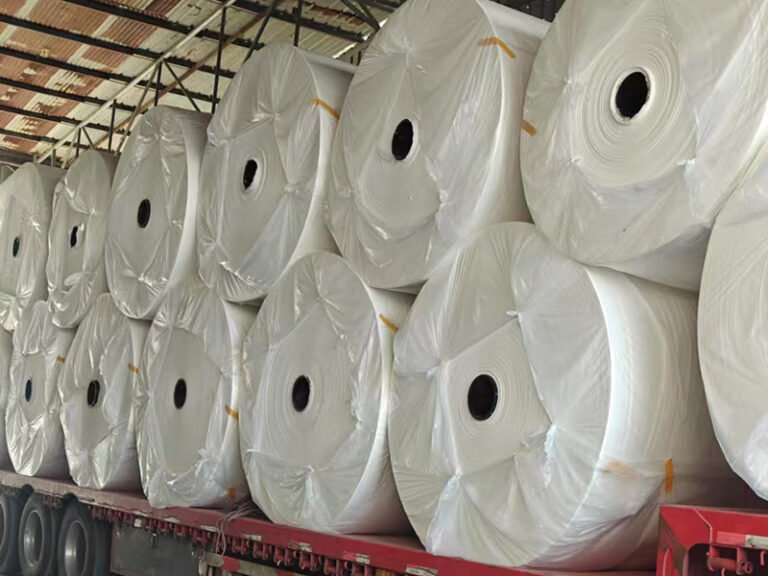
An off-spec parent roll does not announce itself at the dock. It passes an incoming glance, runs onto the converting line, and only surfaces later in the finished goods, by which point it is not one roll that is wrong but a production run. A mother jumbo roll that arrives off tolerance on basis weight, or with a fiber ratio the machine was not set up for, shows up as web breaks at speed, as a finished roll that feels wrong in the hand, and as a yield number that no longer matches the quote. The only thing that catches it first is the tolerance you wrote on the purchase order and measured on the incoming inspection.
This guide is for the converters, rewinders and private-label plants that buy tissue parent rolls as raw material and turn them into finished toilet paper, hand towel, napkin or facial product. It covers the two master variables, GSM and fiber ratio, and the supporting specifications a converter has to lock before a roll ever reaches the machine. It is written from the source side at Top Source Paper, which converts 100% virgin wood pulp parent rolls at Daceying, Mancheng, Baoding, with more than 18 years in paper-making, and ships mother rolls from Tianjin Xingang Port from a 20GP minimum.
What a Parent Roll Is, and Why Two Variables Govern It
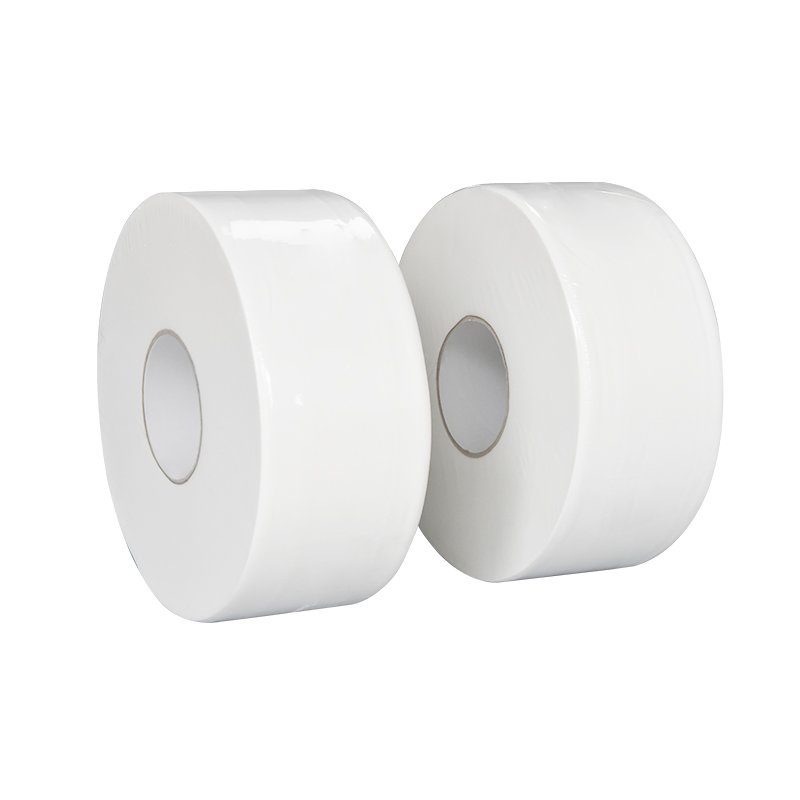
A parent roll, also called a mother jumbo roll, is the large-diameter reel of tissue that leaves the paper machine and becomes the input to a converting line. The converter slits it, rewinds it, embosses it, perforates it and packages it into finished product. Everything the converter does downstream inherits two properties from that parent roll: how much fiber is in the sheet, which is GSM, and what kind of fiber it is, which is the fiber ratio.
Those two variables govern the rest. GSM sets the basis weight, the bulk, the feel and the yield per tonne. The fiber ratio sets the strength, the softness and how the web behaves under tension at speed. Every other specification, from moisture to ring-crush to brightness, is either a consequence of those two or a control that keeps them stable. A converter who specifies the parent roll well specifies GSM and fiber ratio first and everything else in service of them.
Our mother jumbo rolls are 100% virgin pulp, with width, GSM, brightness and tensile strength cut precisely to the converting and rewinding machine, and with moisture and ring-crush strength strictly controlled. That phrase, cut precisely to the machine, is the whole point: a parent roll is not a universal input, it is built for a specific line and a specific finished product. The full mother-roll range, and how each reel is built to order, is set out on our mother jumbo rolls programme page.
GSM: What It Controls and How to Specify It
GSM, grams per square metre, is the basis weight of the sheet. Across the tissue portfolio the range runs 13 to 45 GSM, and where a given parent roll sits in that range decides what it can become. Lighter weights convert into facial tissue and single-ply products where softness and drape matter. Heavier weights convert into kitchen towel, hand towel and multi-ply builds where absorbency and wet strength matter. The converter’s end product sets the target GSM, not the other way around.
Three relationships make GSM a specification rather than a preference. GSM against bulk decides how thick the sheet feels for its weight, which is why two rolls at the same GSM can feel different if one is creped and embossed for bulk and the other is dense. GSM against ply decides the per-layer weight in a multi-ply build, and a 3-ply at a low total GSM can feel softer but dry out faster than a 2-ply built heavier. And GSM against yield decides how many finished units a tonne of parent roll produces, which is the number your cost model actually runs on.
Here is the discipline that separates a controlled converter from a guessing one. State a target GSM and a tolerance on the purchase order, and verify the delivered GSM against the COA rather than against the label. Our High-Yield Meterage Control governs rewind tightness and cut length specifically to reject GSM overstatement and short-meterage shrinkage, which is the supplier-side control. The converter-side control is to hold the number on the incoming inspection. A GSM figure nobody measures is a GSM figure nobody is responsible for.
Fiber Ratio: The Long and Short of It
Tissue is built from two kinds of wood fiber, and the ratio between them is the second master variable. Long fibers, typically from softwood, are what give a sheet tensile strength and the ability to survive tension on a fast converting line without breaking. Short fibers, typically from hardwood, are what give a sheet softness, bulk and a smooth surface. Neither alone makes a good tissue: long fiber only would be strong but harsh, short fiber only would be soft but weak and prone to breaking at speed.
Our parent rolls are built on a controlled golden long and short fiber ratio, which is the blend that lets one sheet carry both strength through the pull and softness on the surface. The exact ratio a converter wants depends on the finished product, because a kitchen towel leans toward strength and a facial tissue leans toward softness. That is a specification the converter sets with the mill against the end use; it is not a single number that suits every product, and we do not publish one ratio as universal because there is not one.
The practical consequence for a buyer is this: specify the fiber character against the finished product and the machine, then confirm it through the tensile result on the COA rather than through a claimed percentage. A parent roll with the right fiber ratio for your line runs clean at speed and converts into a finished sheet that performs. A roll with the wrong ratio either breaks on the machine or produces a product that misses its hand-feel target, and both failures show up after the roll is already paid for.
The Supporting Specifications a Converter Must Lock
GSM and fiber ratio are the masters, but a parent roll is defined by a set of supporting dimensions and properties, and every one of them has to match the converting line. These are the items to specify to the mill and confirm on the COA or the incoming inspection. None of them is a number to accept on assumption.
- Roll width. The web width of the parent roll, which has to match your slitting and rewinding setup. Width, GSM, brightness and tensile are cut to the machine, so state your line’s width requirement precisely.
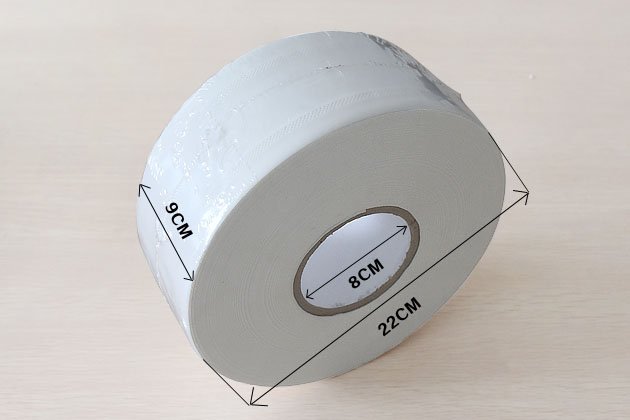
- Roll diameter. The wound diameter of the delivered roll, which has to fit your unwind stand and your handling equipment. Confirm the diameter range your line accepts.
- Core inner diameter. The bore the unwind spindle passes through. A mismatched core will not seat, and this is a common and entirely avoidable stoppage.
- Moisture content. Strictly controlled on our rolls, because moisture balance is what keeps a web stable under tension and prevents both brittleness and slack. Specify your target and confirm it on delivery.
- Ring-crush and tensile strength. Ring-crush strength is strictly controlled, and tensile strength is verified in Stage 1 of QC. These are the numbers that decide whether the web survives the machine.
- Brightness. Verified in Stage 1 sampling alongside tensile. A dull parent roll cannot be corrected downstream, so hold it on the incoming check.
Treat that list as the specification sheet you send with an inquiry, not as a set of figures to assume. The mill builds to it, and the converter verifies against it. When both sides work from the same sheet, runability stops being a matter of luck.
Why Runability Starts at the Parent Roll
A converting line runs fast, and fast is unforgiving of an inconsistent web. Web breaks at speed are rarely a machine problem; they are usually a parent-roll problem showing up under tension. The three properties that decide runability are tensile strength, moisture balance and ring-crush strength, and all three are set upstream on the paper machine, not on the converting floor.
This is why our mother rolls are built for machine runability: moisture and ring-crush strictly controlled, tensile verified before the roll leaves, and the web cut to the machine it will run on. A roll that is ready for high-speed converting does not break, does not wander, and does not produce a variable finished sheet. A roll that is off on moisture or tensile will stop a line, and a stopped line is the most expensive sound in a converting plant.
The insider test is simple. Before you commit a full container of parent rolls to a production schedule, run a trial roll on your own line at production speed and record the break rate and the finished-sheet consistency. A supplier who is confident in runability will expect that test. One who resists it is telling you something.
How to Verify a Parent Roll Before It Runs
Verification is what turns a specification into a guarantee, and for a parent roll it happens in three places. Our quality system runs a three-stage QC process: Stage 1 samples the parent jumbo roll for tensile strength and brightness, Stage 2 patrols the rewinding and converting in process for GSM, tension and perforation line, and Stage 3 audits the finished goods before shipment for carton specification and drop test. For a converter buying mother rolls, Stage 1 is the gate that matters most.
Every shipment carries a 100% virgin pulp COA covering tensile strength, brightness and verification that the fiber is 100% virgin rather than recovered, plus a wet-tensile and zero-dust test video pack and loading and moisture-proof packing photographs. Ask for the COA against your specification before the balance is called, and reconcile the delivered GSM, tensile and brightness against the numbers you ordered. A COA nobody checks is just paper.
The virgin-fiber verification is not a marketing line for a converter; it is a consistency input. A parent roll with recovered content behaves differently under tension and produces a less predictable finished sheet, which is why our rolls are 100% virgin wood pulp with no recovered or recycled input. For a converter, purity of input is what makes output repeatable.
MOQ, Lead Time and Freight Protection
The commercial frame for mother rolls. Our minimum order starts at a 20GP container, so a converting plant can trial a source without committing a full 40-foot load. Sampling and small-sample dispatch takes 1 to 3 working days, first mass production runs 25 to 30 working days, and repeat orders run 20 to 25 working days. Terms are FOB, CIF, CFR or EXW ex Tianjin Xingang Port, with 30% T/T deposit and 70% balance before shipment, and the QC report and container sealing video go to you before the balance is called.
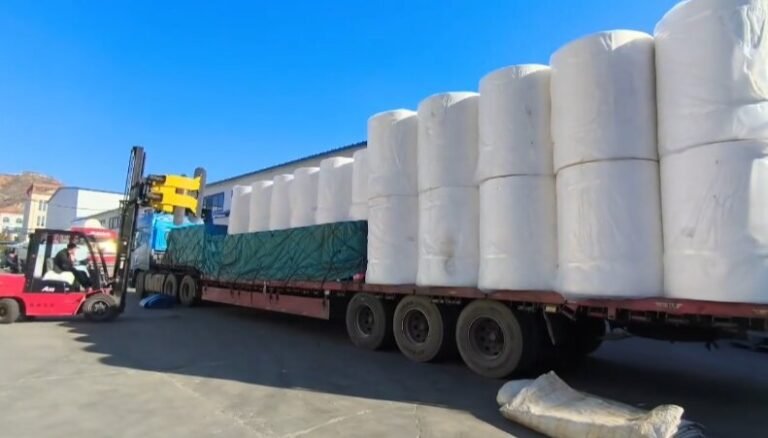
A parent roll is a large, dense, hygroscopic reel, and it travels for weeks, so moisture protection is not a detail. Our export standard is thickened moisture-proof corrugated protection, fumigation-free pallets and high-tensile strapping, with container airtightness and watertightness checked before loading. A parent roll that picks up moisture in transit will not run to the tensile and moisture spec it left with, which is why the packing standard is part of the specification and not an afterthought.
The Converter’s Parent-Roll Specification Checklist
Send this with every inquiry and verify it on every incoming roll. It is the difference between a line that runs and a line that stops.
- Target GSM and tolerance stated, against the finished product, within the 13-45 GSM portfolio.
- Fiber character specified against the end use, strength-leaning or softness-leaning, confirmed via COA tensile rather than a claimed percentage.
- Roll width matched to the slitting and rewinding line.
- Roll diameter and core inner diameter confirmed against the unwind stand and spindle.
- Moisture content and ring-crush strength specified and confirmed on delivery.
- Brightness and tensile verified in Stage 1 QC and reconciled against the COA.
- 100% virgin-fiber verification requested, with no recovered content.
- Trial roll run at production speed before committing a full container; break rate recorded.
- MOQ from 20GP, Incoterm, lead time and 30/70 terms written into the contract.
Lock those nine lines and the parent roll stops being a variable and becomes an input you can schedule against. For the wider mother-roll programme, including how the rolls are built and shipped, see our mother jumbo rolls converting guide, and for how the finished jumbo product is specified downstream the jumbo roll tissue buying guide covers it. The guide to sourcing tissue from China covers the import process, and the factory profile covers capacity, QC and export terms.
Frequently Asked Questions
What GSM is a tissue parent roll?
The tissue portfolio runs 13 to 45 GSM, and the right parent-roll weight depends on the finished product it converts into: lighter weights for facial and single-ply, heavier for towel and multi-ply builds. State a target GSM and a tolerance and verify the delivered figure against the COA.
What fiber ratio should a converter specify?
Specify the fiber character against the end use rather than chasing one universal number. Long fiber gives tensile strength and runability, short fiber gives softness and bulk, and our rolls run a controlled golden long and short fiber ratio built for the target product. Confirm the result through the COA tensile.
Why do parent rolls break on a fast converting line?
Web breaks at speed are usually a parent-roll property under tension, driven by tensile strength, moisture balance and ring-crush strength, all set upstream. Run a trial roll at production speed and record the break rate before committing a full container.
How is a mother jumbo roll verified before shipment?
Stage 1 of a three-stage QC process samples the parent roll for tensile strength and brightness, and every shipment carries a 100% virgin pulp COA plus a wet-tensile and zero-dust test video pack. Reconcile the COA against your specification before the balance is called.
What is the MOQ for tissue parent rolls?
Mother jumbo rolls ship from a 20GP container minimum, with sampling in 1-3 working days, first production in 25-30 working days and repeats in 20-25, FOB, CIF, CFR or EXW ex Tianjin Xingang Port on 30/70 T/T terms.
For who can actually answer those numbers in a quote, see the parent roll supplier vetting and acceptance guide.
GSM and fibre ratio set the converter spec; the virgin vs recycled parent roll comparison separates what each furnish does at the reel and how the claim is verified.