A converting plant in Turkey runs its rewinding line at 1,800 meters per minute. At that speed, a tissue parent roll that is too loosely wound causes telescoping — the outer layers slide sideways and the roll collapses before it reaches the slitter. A roll that is too tightly wound creates tension variations that snap the sheet at the perforation. The difference between a roll that runs cleanly and one that shuts down the line is measured in fractions of a percentage in moisture content and Newtons of tensile strength.
For tissue converting plants that purchase jumbo tissue rolls (also called parent rolls or mother rolls) from overseas suppliers, these specifications are not academic. They determine whether the roll runs on your machine without breaks, tears, or quality defects — and whether your production cost per unit stays within budget. This guide covers the technical specifications that converting plants should confirm with their jumbo roll supplier, from fiber composition and moisture balance to rewinding tension and slitting precision.
What a Jumbo Tissue Roll Is: The Product Definition
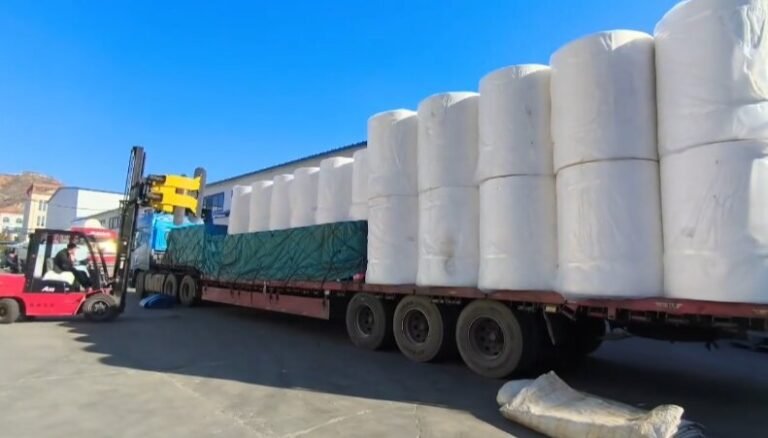
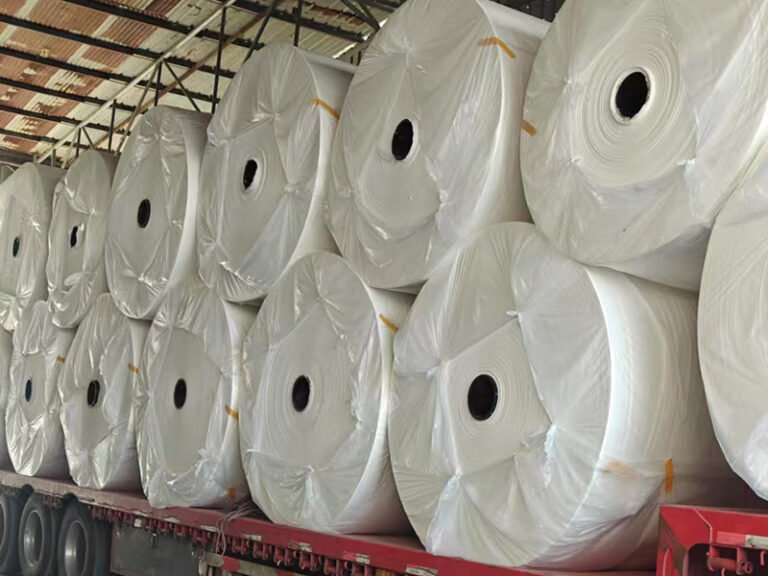
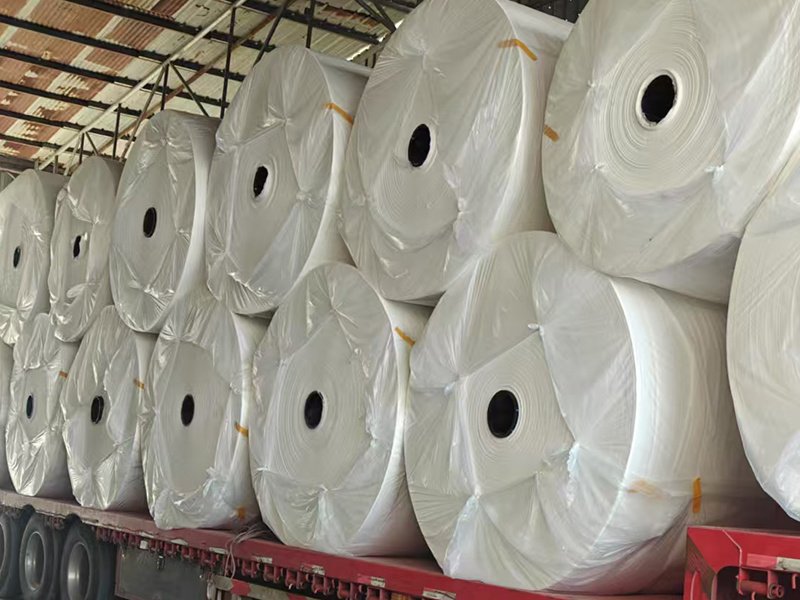
A jumbo tissue roll is the intermediate product between the paper machine and the finished tissue consumer product. It is a large-diameter roll of tissue paper — typically 1.5 to 3.0 meters in diameter and 1.0 to 3.6 meters in web width — wound directly off the paper machine’s dryer section. The converting plant then rewinds, slits, embosses, perforates, and packages this jumbo roll into finished products: toilet paper rolls, facial tissue boxes, paper hand towels, kitchen towels, or napkins.
The jumbo roll is the raw material of the converting process. Its quality determines the converting line’s runability — the ability to process the roll at target speed without breaks, defects, or excessive waste. A well-made jumbo roll from a supplier who understands converting requirements is worth more than a cheap roll that generates 15% waste on the rewinder.
Fiber Composition: The Foundation of Runability
The fiber blend in a jumbo tissue roll determines its fundamental behavior on the converting line. For 100% virgin wood pulp rolls — the standard for quality tissue converting — the critical variable is the ratio of long fibers to short fibers:
- Long fibers (softwood kraft): Provide tensile strength and wet-burst resistance. Too much long fiber makes the sheet resistant to embossing and perforation — it does not tear cleanly at the perforation line.
- Short fibers (hardwood kraft): Provide softness and bulk. Too much short fiber reduces tensile strength — the sheet breaks under the tension of high-speed rewinding.
The optimal ratio depends on the end product the converting plant is making:
| End Product | Fiber Preference | Reason |
|---|---|---|
| Toilet paper | Balanced — moderate long fiber | Needs enough strength for rewinding but must disintegrate in water |
| Facial tissue | Higher short fiber | Softness is the primary quality metric; tensile requirements are lower |
| Kitchen towels | Higher long fiber | Wet-strength requirements demand maximum tensile from the fiber base |
| Paper hand towels | Higher long fiber | Must withstand wet use without disintegrating; wet-burst strength is critical |
| Napkins | Balanced to short fiber | Print quality and softness matter more than tensile strength |
When ordering jumbo rolls, the converting plant should specify the target end product and the desired fiber ratio. A supplier who controls their own pulping — like established manufacturers in Baoding, China — can adjust the blend for each order. A supplier who purchases pre-made pulp from third parties offers less flexibility.
GSM and Basis Weight Uniformity: The Converting Line’s Tolerance
Jumbo tissue rolls for converting typically range from 13 to 45 GSM, depending on the end product. But the absolute GSM is less important than the GSM uniformity across the roll’s width and from the core to the outer diameter.
If the GSM varies by more than ±2% across the web width, the slitting process produces rolls with inconsistent hardness — some rolls feel loose, others feel tight. In the final packaged product, this inconsistency is visible on the shelf and generates customer complaints.
If the GSM varies from the core to the outer diameter (a problem called “profile drift”), the rewinding tension must be continuously adjusted to compensate. On older converting lines without automatic tension control, this creates frequent breaks and production stops. On modern lines with closed-loop tension control, the machine compensates automatically — but the waste rate still increases.
When evaluating a jumbo roll supplier, request the GSM uniformity data from their QC process. A professional supplier monitors GSM continuously during the paper machine run and provides a certificate showing the cross-direction and machine-direction variation for each roll.
Moisture Content: The Variable That Causes the Most Converting Problems
Tissue paper is hygroscopic — it absorbs and releases moisture based on the ambient humidity. The moisture content of a jumbo roll at the time of converting directly affects its runability:
- Too dry (below 4%): The sheet becomes brittle. It cracks during embossing, generates excessive dust, and breaks at the perforation. Dry rolls are the most common cause of converting line stops in arid climates or during winter months.
- Too wet (above 8%): The sheet stretches under tension, creating slack zones that cause wrinkles and misregistration during embossing. Wet rolls also promote mold growth during storage — a critical issue for rolls shipped by ocean freight through tropical routes.
- Optimal range (5–7%): The sheet has enough moisture to remain flexible without stretching, and enough dryness to avoid brittleness. This is the target range for converting runability.
For importers purchasing jumbo rolls from overseas suppliers, moisture control during shipping is critical. Ocean freight containers can reach 80%+ relative humidity in tropical routes, and a roll that leaves the factory at 6% moisture can absorb enough water during transit to reach 9–10% by the time it arrives at the converting plant. This is why moisture-proof packing is not optional — it is a requirement.
Standard moisture-proof packing for jumbo rolls exported from China includes:
- PE film wrapping around each roll (minimum 2 layers, sealed at both ends)
- Desiccant packets placed inside the wrapping
- Reinforced waterproof corrugated carton or shrink wrap for the outer layer
- Container desiccant bags hung in the shipping container

Rewinding Tension and Roll Hardness
The paper machine winds the jumbo roll at a specific tension profile — typically decreasing tension from the core to the outer layers. This profile determines the roll’s hardness distribution:
- Hard core, soft outside: The standard profile for tissue rolls. The tight inner layers provide structural support; the looser outer layers prevent crushing and enable clean unwinding on the converting line.
- Uniform hardness: Indicates flat tension during winding. Acceptable for some converting lines but not optimal — the inner layers may be too loose, causing telescoping during transport.
- Soft core: A winding defect. The core layers are too loose, and the roll may collapse during handling or transport. Rolls with soft cores should be rejected at incoming inspection.
When ordering jumbo rolls, specify the target roll hardness (measured in Shore A or P&P hardness units) and the acceptable hardness range. A professional supplier controls the winding tension profile through the paper machine’s winder control system and can hold hardness within ±3 units across the production batch.
Slitting Width and Edge Quality
The jumbo roll arrives at the converting plant at the full width of the paper machine (typically 2.8–3.6 meters). The converting plant’s slitter-rewinder cuts this wide web into narrower rolls matching the target product width. The quality of the jumbo roll’s edges affects the slitting process:
- Clean, straight edges: The paper machine’s edge trim must be clean and consistent. Ragged edges cause the slitting guide to drift, producing rolls with width variation.
- Edge cracks: If the paper machine’s edge moisture is too low, the web edges develop micro-cracks that propagate during converting — causing breaks at the edge of the slit rolls.
- Dust at edges: Excessive edge dust indicates poor fiber bonding at the web edge — a sign of uneven moisture or fiber distribution during paper-making.
Request edge quality samples from potential suppliers. A factory that controls the paper machine’s edge moisture and trim quality produces jumbo rolls that slit cleanly at high speed.
Ordering Terms for Converting Plants
Jumbo tissue roll orders follow standard B2B terms from virgin pulp manufacturers:
- MOQ: One 20GP container for mixed-size orders; one 40HQ for full-container single-spec orders
- Specifications to confirm: GSM, width, diameter, core inner diameter, fiber ratio, moisture content target, hardness profile, and edge quality standard
- Sample lead time: 1–3 business days for small-format samples from the same production batch
- Production lead time: 25–30 business days for first orders; 20–25 business days for reorders
- Payment: 30% T/T deposit, 70% before shipment against QC report
- Shipping: From Tianjin Xingang Port. FOB, CIF, CFR, EXW terms available
For converting plants evaluating new suppliers, request a trial order of one 20GP container with full QC documentation — including COA (tensile strength, brightness, fiber verification), GSM uniformity map, moisture content certificate, and hardness profile data. Top Source Paper in Baoding, China, provides this documentation package with every jumbo roll shipment as part of their three-stage QC process: parent roll inspection, in-process monitoring, and final pre-shipment testing.
Frequently Asked Questions
The optimal moisture content for jumbo tissue rolls is 5–7%. Below 4%, the sheet becomes brittle and cracks during embossing. Above 8%, the sheet stretches under tension and risks mold growth. For ocean freight shipments, moisture-proof packing is essential to maintain this range.
The fiber ratio depends on the end product: toilet paper needs balanced long/short fiber; facial tissue favors short fiber for softness; kitchen towels and hand towels need higher long fiber for wet strength. Specify the target end product when ordering so the supplier can adjust the blend.
Jumbo tissue rolls range from 13 to 45 GSM. The key specification is not the absolute GSM but the uniformity — it should vary by no more than ±2% across the web width. Request GSM uniformity data from the supplier’s QC records.
Jumbo tissue rolls start at one 20GP container for mixed-size orders. Full-container single-spec orders use one 40HQ. Samples from production batches ship in 1–3 business days for converting line testing.
Jumbo tissue rolls are not interchangeable commodities. The fiber ratio, GSM uniformity, moisture content, winding tension, and edge quality all affect how the roll performs on your converting line. The suppliers who understand converting — and who provide the QC documentation to prove their rolls meet your specifications — are the ones worth building a long-term supply relationship with.
Runability claims belong in an acceptance plan; the mother roll supplier guide sets one out by defect class.
Fibre composition underpins runability; the virgin vs recycled parent rolls guide explains why swelling loss, not fibre length, is the recycled-side mechanism converters actually see.