An international airport terminal processes 50,000 passengers through its restrooms on a typical day. The facility management team replaces standard toilet paper rolls every 45 minutes during peak hours. Switch to a high-capacity jumbo roll system, and that interval stretches to four hours or more. The math is not complicated, but the sourcing decision is — because “extra large toilet paper roll” covers a wide range of diameters, ply configurations, and dispenser compatibility standards, and getting the specification wrong means ordering a container of product that does not fit the hardware.
This guide is written for B2B buyers — facility management companies, janitorial distributors, and commercial building operators — who need to specify jumbo roll tissue (JRT) for high-traffic environments. It covers the diameter and meterage ranges available, how ply count and fiber composition affect performance, what to check for dispenser compatibility, and how to source these rolls from a virgin pulp factory in China with full documentation.
What Defines an Extra Large Toilet Paper Roll
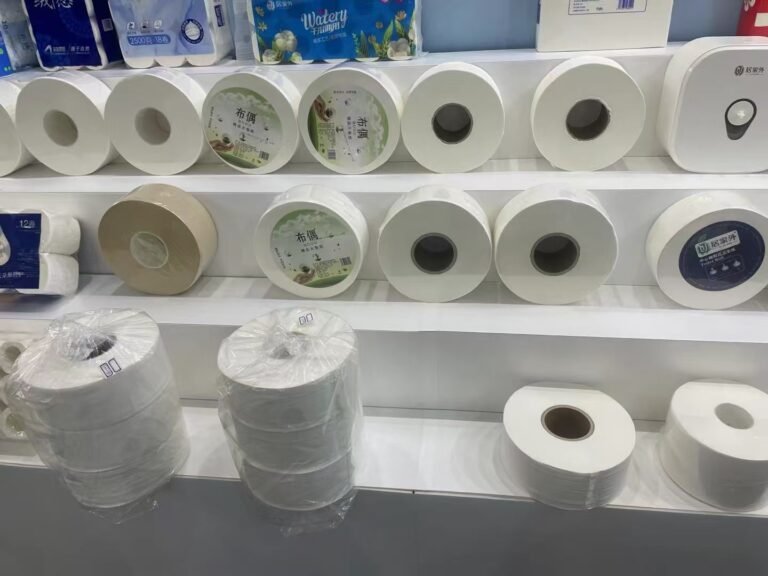
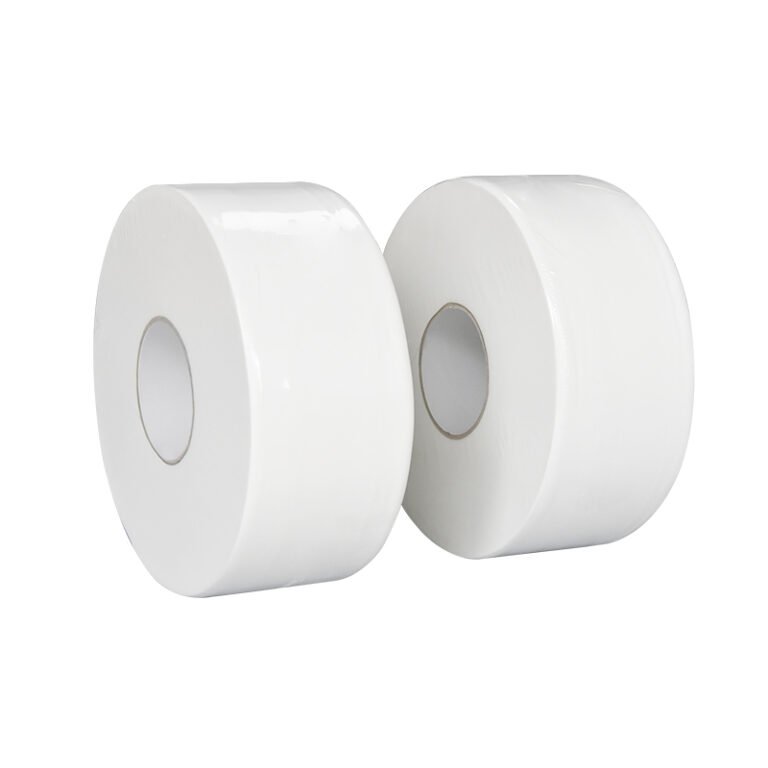
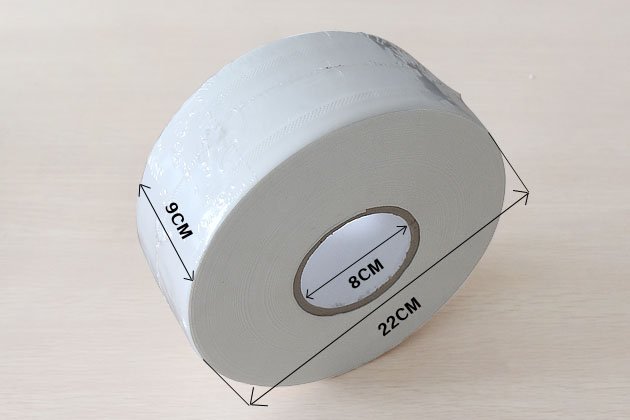
In commercial tissue terminology, “extra large” refers to jumbo roll tissue — a roll significantly bigger than the standard 100–120 mm diameter consumer roll. JRT rolls typically range from 18 cm to 28 cm in diameter, with corresponding increases in sheet count and total meterage. The core is usually 76 mm (3 inches) to fit standard jumbo roll dispensers, though some systems use coreless designs.
The key performance advantage is simple: more paper per roll means fewer changeouts. In a high-traffic restroom — airports, office towers, hospital wards, factory floors — this translates directly into lower labor costs and fewer service complaints. A standard roll contains roughly 45 meters of tissue. A jumbo roll at 25 cm diameter can hold 400–800 meters, depending on ply and embossing. That is a 10x to 18x increase in capacity per roll.
Diameter, Meterage, and Ply: The Three Variables That Matter
When requesting a quote from a tissue factory, these three parameters determine both the product performance and the container loading efficiency:
| Parameter | Options | Impact |
|---|---|---|
| Diameter | 18 cm, 22 cm, 25 cm, 28 cm | Larger diameter = more meterage per roll, but fewer rolls per carton and per container |
| Ply | 2-ply, 3-ply | More plies = softer feel and higher absorbency, but slower water disintegration and higher cost per roll |
| Total meterage | Customizable per spec | Directly determines service interval — the single most important metric for facility managers |
The tradeoff between diameter and logistics is worth understanding. A 28 cm jumbo roll delivers the longest service interval, but fewer rolls fit in each carton and each container. For buyers shipping to distant markets, the per-unit freight cost may offset the labor savings from fewer changeouts. A 22 cm roll often represents the optimal balance for importers who need to maximize container utilization while still delivering meaningful capacity gains over standard rolls.
Fiber Composition: Why Virgin Pulp Matters for JRT
Jumbo rolls face a mechanical challenge that standard rolls do not: the outer layers of a large-diameter roll exert continuous pressure on the inner layers. If the fiber is too brittle or the sheet lacks tensile strength, the inner sheets can tear during dispensing — a problem that worsens in humid environments. This is why long-fiber virgin wood pulp is the preferred raw material for JRT production.
Manufacturers like Top Source Paper in Baoding, China, use 100% virgin wood pulp with a calibrated long-to-short fiber ratio. The long fibers provide the tensile strength needed for the roll to maintain structural integrity during dispensing, while the short fibers ensure the paper remains soft enough for user comfort. This balance is controlled during the pulping stage and verified through the factory’s three-stage QC process: parent roll inspection for tensile strength and brightness, in-process monitoring of GSM and tension during rewinding, and final inspection including carton drop-testing.
Recycled fiber, while cheaper, tends to produce shorter, more brittle sheets that are prone to tearing under the tension of a large roll. For premium commercial applications — airports, hotels, hospitals — virgin pulp JRT is the industry standard.
Dispenser Compatibility: The Spec That Causes the Most Returns
The single most common sourcing error with jumbo roll tissue is ordering rolls that do not fit the existing dispenser hardware. Before placing an order, confirm these dimensions:
- Core inner diameter: Standard is 76 mm (3 inches), but some European and Asian dispenser systems use different core sizes.
- Maximum roll width: Must match the dispenser’s internal width. Typical JRT widths range from 220 mm to 280 mm.
- Maximum roll diameter: The dispenser housing must accommodate the full diameter. A 28 cm roll will not fit a dispenser designed for 22 cm.
Request dispenser specification sheets from the end user before ordering. If the buyer is also supplying dispensers as part of an integrated package, confirm the dispenser model and test-fit the roll sample before approving production.
Container Loading and Moisture Protection
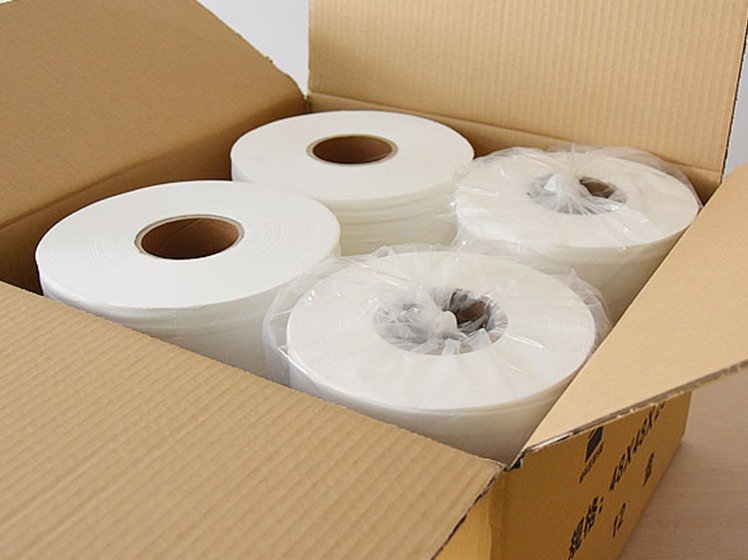
Jumbo rolls are heavy. A fully loaded 40HQ container of 25 cm JRT can exceed 20 metric tons. Container loading plans should account for weight distribution, carton stacking height, and moisture protection during ocean freight.
Standard packing from established factories includes:
- Reinforced waterproof corrugated cartons designed for the weight and diameter of jumbo rolls
- Fumigation-free pallets with high-strength strapping to prevent shifting during transit
- Pre-shipment container sealing inspection with photo and video documentation
For buyers importing from China, major tissue manufacturers ship from Tianjin Xingang Port under FOB, CIF, CFR, or EXW terms. Lead time for a first JRT order is typically 25–30 business days, including sample approval and production. Reorders run 20–25 business days.
Quality Documentation: What to Expect
A professional JRT supplier should provide the following with every shipment:
- COA (Certificate of Analysis): Covering tensile strength, brightness, and 100% virgin fiber verification. This confirms the raw material matches the specification you approved during sampling.
- Quality inspection video: Showing burst resistance testing and rewinding quality of the production batch.
- Loading documentation: Photos and video of the container loading process, including moisture-proof packing verification and seal number confirmation.
These documents protect the buyer in case of quality disputes and are increasingly required by importers in regulated markets. Any supplier who cannot or will not provide this documentation should be treated as a sourcing risk.
Ordering Terms and MOQ
For jumbo roll tissue, the standard MOQ structure is:
- White-label / unprinted rolls: One 20GP container (suitable for buyers testing a new market or running a trial with facility clients)
- Custom-printed packaging: One 40HQ container minimum (the printing plate setup cost is amortized across the full container volume)
Samples are available within 1–3 business days for dispenser fit testing and quality verification. Payment terms are typically 30% T/T deposit with 70% due before shipment, confirmed against the QC report and container sealing video.
One detail worth noting for repeat buyers: established factories permanently archive client-specific design files and packaging specifications. When you reorder, there is no re-plate charge — the factory pulls your archived specification and runs production directly. This policy significantly reduces reorder lead time and cost.
For the measurement framework behind the sizes quoted here, see our reference on toilet paper roll dimensions.
Ply selection at these sizes is compared head-to-head in 2-ply versus 3-ply jumbo roll tissue.
Frequently Asked Questions
Jumbo toilet paper rolls typically range from 18 cm to 28 cm in diameter. The most common commercial sizes are 22 cm and 25 cm, balancing capacity per roll with dispenser compatibility and container loading efficiency.
A standard toilet paper roll contains roughly 45 meters. A jumbo roll at 25 cm diameter can hold 400–800 meters depending on ply and embossing — a 10x to 18x increase in capacity.
The standard core inner diameter is 76 mm (3 inches), fitting most commercial jumbo roll dispensers. Some European and Asian systems use different core sizes, so always confirm dispenser compatibility before ordering.
White-label jumbo rolls start at one 20GP container. Custom-printed packaging requires a minimum of one 40HQ container. Samples are available in 1–3 business days for dispenser fit testing.
Specifying extra large toilet paper rolls for commercial facilities comes down to three decisions: diameter, ply, and dispenser fit. Get those right, and the rest of the sourcing process — from sampling to container loading — follows a predictable path. The factories that make this easiest to execute are the ones that provide transparent specifications, comprehensive QC documentation, and permanent design file archival for repeat orders.