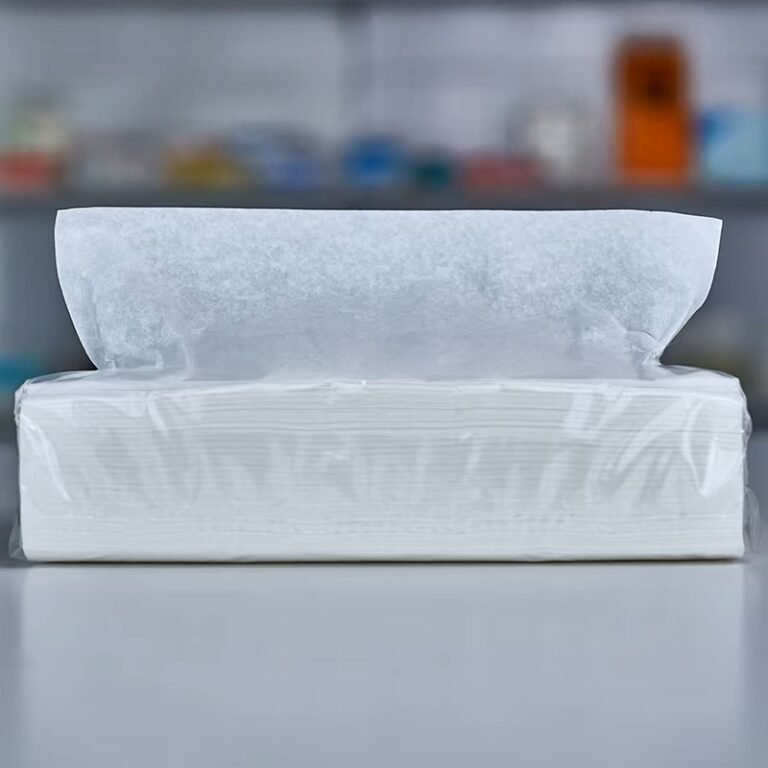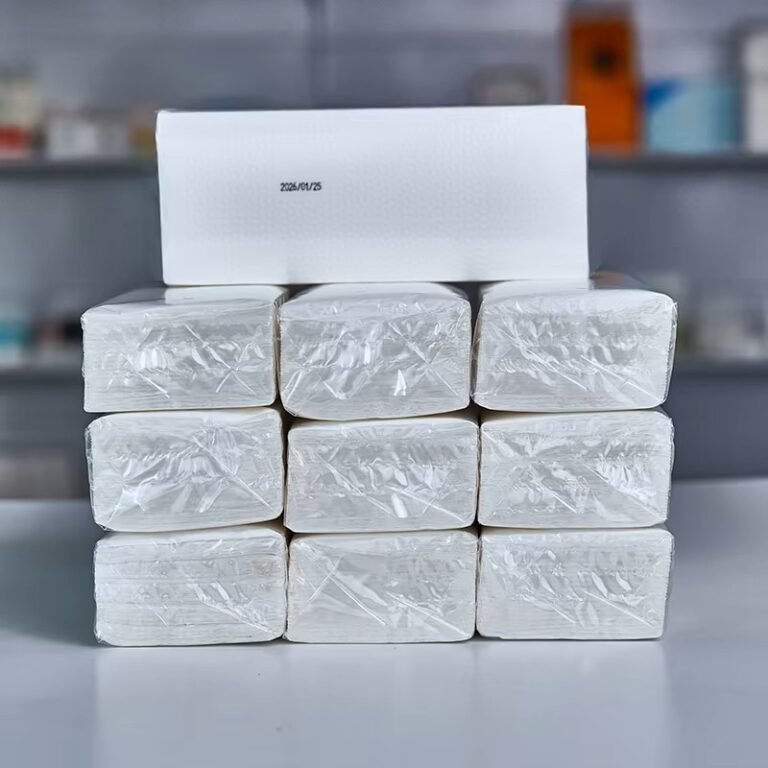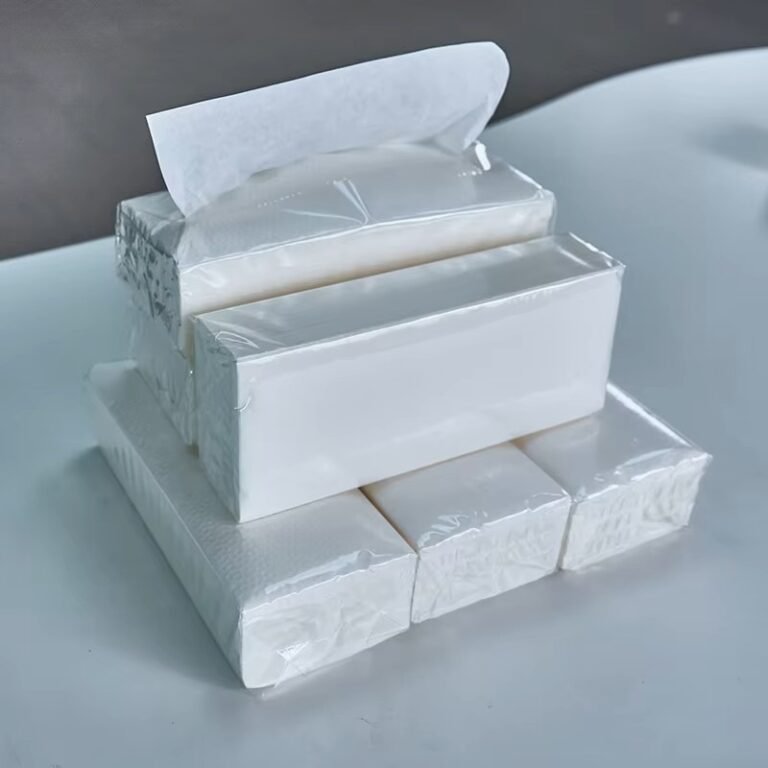
Walk into any commercial washroom in a shopping mall, airport, or office tower and you will find a paper towel dispenser on the wall. Open it, and the towel inside will almost certainly be a multifold — a sheet pre-folded in a specific pattern that lets it stack compactly and dispense one at a time. The fold type is not cosmetic. It determines how the towel fits the dispenser, how it presents to the user for hygienic grab-and-go, and how efficiently it absorbs water from wet hands. For facility suppliers and janitorial distributors, specifying the correct fold is the difference between a satisfied client and a complaint about towels jamming the dispenser or falling on the floor.
This guide breaks down the three dominant multifold formats — V-fold, Z-fold, and M-fold — with the technical details that matter at the purchasing stage: sheet dimensions, ply and GSM, dispenser compatibility, and case counts for container-scale sourcing.
The Three Multifold Patterns: How They Work and Where Each Excels
All multifold towels start as a flat sheet that is mechanically folded into a compact shape. The fold pattern determines the towel’s footprint in the dispenser, the direction from which the user pulls it, and how the next towel presents after withdrawal.
V-Fold (C-Fold): The Industry Standard
The V-fold, also called C-fold, is the most widely used multifold format worldwide. The sheet is folded once in half along its width, creating a V-shape cross-section. Typical finished dimensions are approximately 24.5 cm × 10.5 cm (9.6 in × 4.1 in) from a flat sheet of about 24.5 cm × 21 cm (9.6 in × 8.3 in).
V-fold towels stack face-down in the dispenser, with each towel’s fold resting on the towel below it. When the user pulls one towel, the weight of the stack pushes the next towel forward. This interleaved stacking means one pull delivers one towel — the “one-at-a-time” dispensing that reduces waste by an estimated 25–40% compared to roll towels in high-traffic washrooms.
The V-fold works best in standard wall-mounted dispensers with a narrow slot. It is the default specification for office buildings, schools, and mid-traffic commercial washrooms.
Z-Fold (N-Fold): The High-Presentation Upgrade
The Z-fold adds a second fold, creating a Z-shaped or N-shaped cross-section. The sheet is first folded in thirds (like a letter), then the resulting panel is folded in half. Finished dimensions are typically about 24 cm × 9.5 cm (9.4 in × 3.7 in).
The Z-fold’s key advantage is presentation. Because of the double fold, the leading edge of each towel fans out slightly when it presents in the dispenser, making it easier for the user to grab without touching the next towel. This “pop-up” effect is why Z-fold is preferred in premium environments — hotel lobbies, upscale restaurants, and corporate restrooms where perceived quality matters.
Z-fold dispensers are slightly deeper than V-fold dispensers to accommodate the thicker stack profile. When specifying Z-fold for a client, confirm that the existing dispenser accepts this fold pattern. Retrofitting dispensers is straightforward but adds cost.
M-Fold: The Heavy-Duty Hybrid
The M-fold combines elements of both V-fold and Z-fold. The sheet is folded into four panels that create an M-shaped cross-section. This produces a thicker, more absorbent towel in a compact footprint. Finished dimensions are approximately 24 cm × 8 cm (9.4 in × 3.1 in).
M-fold towels are the go-to choice for high-traffic, high-moisture environments — factory washrooms, gym locker rooms, and food service hand-washing stations. The extra folds create more surface area for water absorption, and the thicker cross-section provides the structural integrity that wet hands demand. M-fold dispensers are the deepest of the three, so wall space and clearance must be verified before specifying.
Technical Specifications: What Buyers Need to Specify
Beyond the fold pattern, four specifications determine the performance and cost of multifold paper towels.
| Specification | Typical Range | Impact |
|---|---|---|
| Ply | 1-ply, 2-ply | 2-ply offers better absorbency and hand-feel; 1-ply reduces cost per sheet |
| GSM | 30–45 GSM per ply | Higher GSM = thicker, more absorbent, heavier per case |
| Sheet size (flat) | 24–25 cm × 20–23 cm | Larger sheets cover more hand surface; also increases case volume |
| Towels per case | 2,000–4,000 sheets | Driven by dispenser compatibility and refill frequency targets |
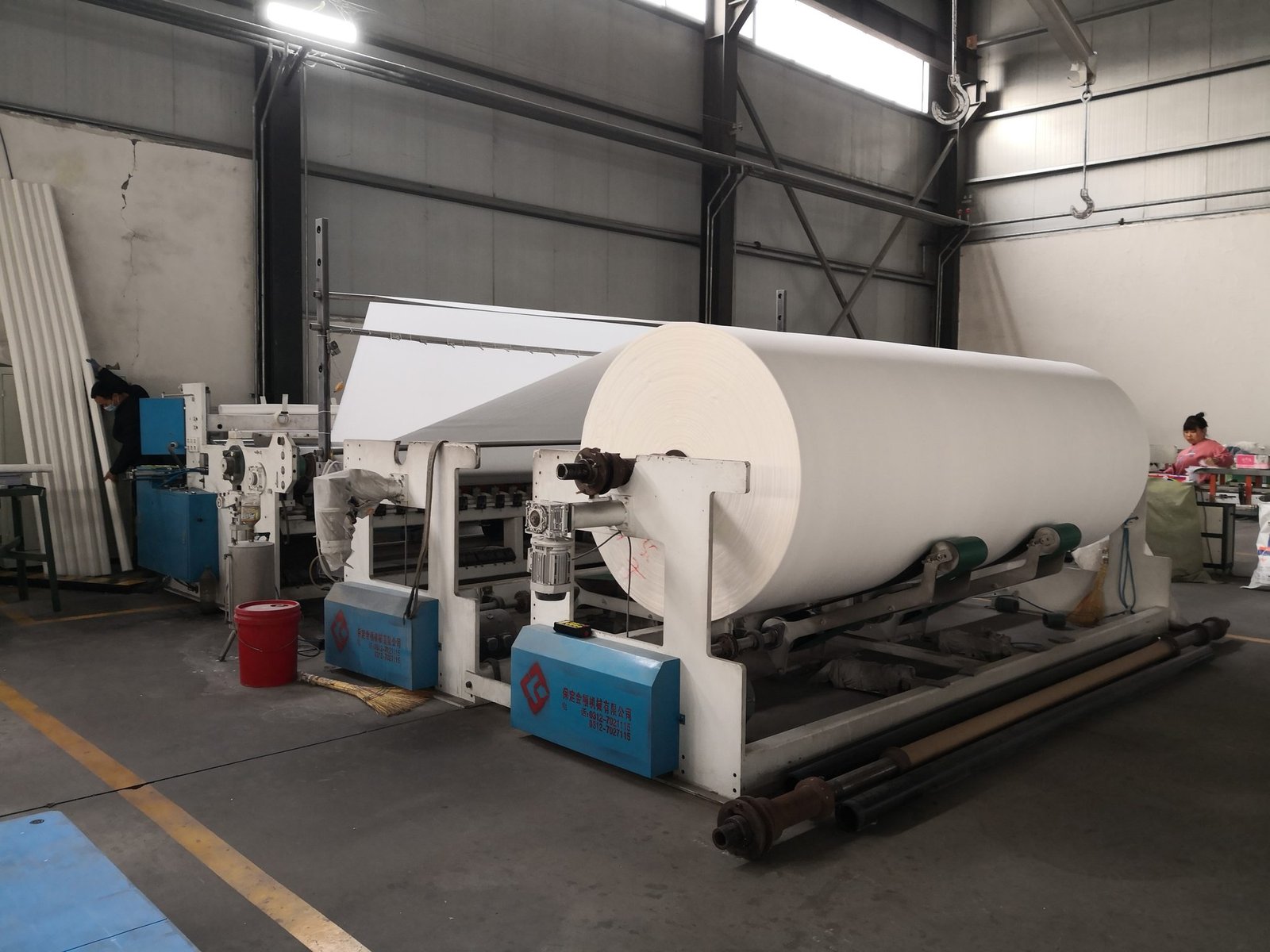
At Top Source Paper, multifold hand towels are produced in 1-ply and 2-ply constructions using 100% virgin wood pulp. The fiber formulation is optimized for wet-burst strength — the towels absorb water within 3 seconds without disintegrating or leaving residue on hands. This is achieved through long-fiber ratio optimization and point-to-point embossing that bonds the plies without reducing absorbency.
GSM selection depends on the target market. Budget segments (gas stations, fast-food restrooms) typically specify 1-ply at 30–33 GSM. Mid-range commercial (offices, schools) runs 2-ply at 35–38 GSM. Premium hospitality and healthcare specify 2-ply at 40–45 GSM with embossed surface texture.
Dispenser Compatibility: The Hidden Cost of Getting It Wrong
A multifold towel that does not fit the dispenser is worse than useless — it jams, wastes towels, and creates maintenance calls. The three fold patterns require different dispenser geometries:
- V-fold dispensers have a narrow internal channel that guides the interleaved stack. The slot width is typically 10–12 cm.
- Z-fold dispensers need a slightly wider channel (12–14 cm) and a deeper body to accommodate the thicker fan-fold stack.
- M-fold dispensers are the deepest (15–18 cm body depth) with a reinforced internal guide for the four-panel fold.
Some modern dispensers are “universal” and accept multiple fold types through adjustable internal guides. When sourcing towels for a client with existing dispensers, always confirm the dispenser model and its accepted fold types before ordering. Top Source Paper provides dispenser compatibility guidance as part of the quotation process.
Case Counts and Container Loading for Bulk Import
For importers buying multifold towels at container scale, the economics depend on sheets per case and cases per container.
Related: disposable hand towels in bulk.
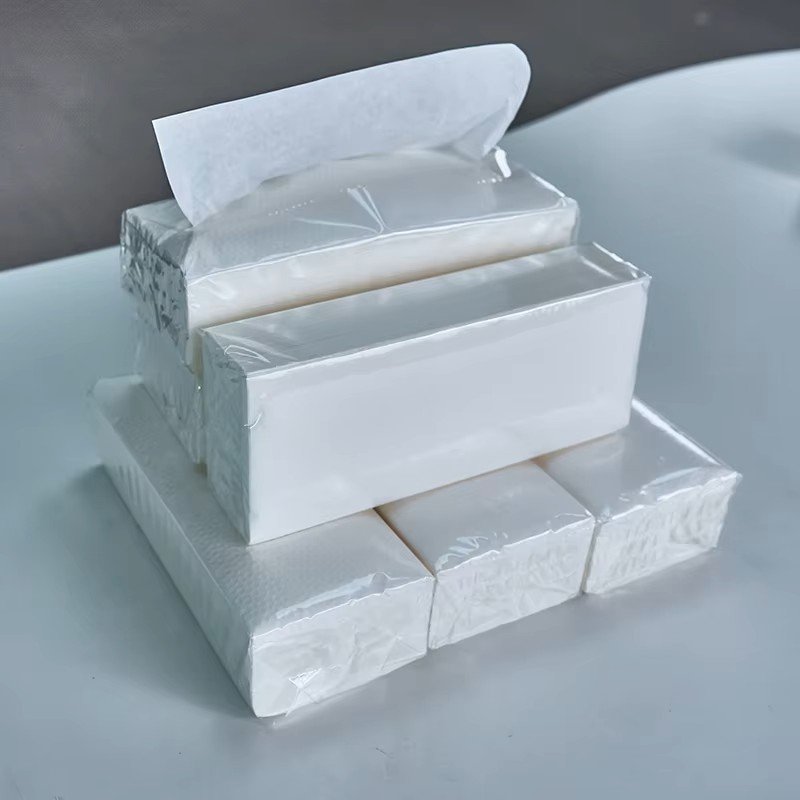
A standard carton of 2-ply V-fold towels (200 sheets per pack, 10 packs per carton = 2,000 sheets per carton) weighs approximately 12–14 kg. A 20GP container holds approximately 800–1,000 cartons. A 40HQ holds approximately 1,800–2,200 cartons.
White-label multifold towels ship in plain kraft cartons with an MOQ of one 20GP. Custom-printed cartons or poly-wrapped packs with branded labeling require one 40HQ minimum, as the plate-making setup cost is amortized across the larger volume. Production lead time is 25–30 working days for first orders and 20–25 working days for reorders.
For facility suppliers building a janitorial catalog, multifold towels are a high-frequency reorder item. A single mid-size office building (10 washrooms, 200 employees) consumes roughly 2–3 cartons per week. At that rate, a 40HQ order represents 12–18 months of supply for a single client — which is why distributors typically order mixed containers with multiple SKUs.
Single-Ply vs Two-Ply: When to Specify Each
The ply decision is a trade-off between performance and cost. Here is how the two options compare for typical commercial applications.
1-Ply multifold towels are the economic choice. They use less fiber per sheet, which means more sheets per case and lower cost per hand-dry. For high-traffic, low-expectation environments — construction site washrooms, public rest stops, fast-food chains — 1-ply gets the job done. The trade-off is lower absorbency (users may need 2–3 sheets per hand-dry) and a thinner hand-feel.
2-ply multifold towels deliver noticeably better absorbency and a premium hand-feel. The two plies are bonded through embossing, creating air pockets that accelerate water absorption. In environments where user perception matters — hotels, corporate offices, healthcare — 2-ply is the standard. Top Source Paper’s 2-ply towels use long-fiber virgin pulp for wet-burst strength, so the towel does not tear or leave lint when wet.
For distributors serving multiple market segments, carrying both 1-ply and 2-ply SKUs covers the full range. The paper hand towels product range at Top Source Paper includes both options with customizable GSM and sheet size.
Hygiene and Sustainability: What End-Users Actually Care About
Two concerns dominate the commercial hand-drying conversation: hygiene and environmental impact.
On hygiene, multifold towels have a structural advantage over air dryers in clinical and food-service settings. The one-at-a-time dispensing minimizes cross-contact, and the physical wiping action removes bacteria from hands more effectively than air drying alone. Studies referenced by the CDC and WHO consistently show that paper towels achieve higher bacterial reduction than warm-air dryers when measured by ATP bioluminescence.
On sustainability, virgin wood pulp towels from certified sources are biodegradable and compostable. The key differentiator is the fiber source: virgin pulp from sustainably managed forests produces a cleaner, lower-dust towel than recycled fiber. Top Source Paper uses 100% virgin wood pulp with no fluorescent brightening agents, making the towels safe for food-contact adjacent environments and compliant with food-processing hygiene standards.
For buyers building a sustainability narrative for their clients, request the COA (Certificate of Analysis) that documents fiber composition and confirm the absence of recycled content if low-dust performance is a priority. The buyer resources section covers documentation requirements in detail.
Sourcing Multifold Towels from a Virgin Pulp Manufacturer: What to Expect
The ordering process for multifold towels follows the same framework as other tissue products from a Chinese source factory.
- Submit specifications: fold type, ply, GSM, sheet size, packaging format, and quantity.
- Receive quotation with FOB Tianjin pricing and lead time.
- Request samples (1–3 working days production, shipped via express courier).
- Approve samples, sign proforma invoice, transfer 30% T/T deposit.
- Production: 25–30 working days for first order, 20–25 for reorders.
- QC inspection with COA, burst resistance video, and loading photos provided before final payment.
- Balance 70% payment, container dispatched from Tianjin Xingang Port.
Payment terms are 30% T/T deposit, 70% before shipment. Trade terms available include FOB, CIF, and CFR. For importers exploring private-label multifold towels with branded packaging, the OEM and private label service covers the full process from design file to finished carton.
For questions about multifold towel specifications or to request a sample, contact the Top Source Paper team directly.
Related reading: For detailed ply and GSM specs for commercial hand towels, see our guide on this topic.
For guest-facing washrooms, the luxury paper hand towel specification guide for hotels and spas shows how to build a premium tier on the same formats.
When you move from format selection to actual volume ordering, the multifold case-count guide shows how to model how many towels a building consumes.