
At ten minutes to eight, the first cleaner of the day opens the dispenser in the north tower restroom and finds the stack compressed into a single damp brick, two towels coming out for every hand, and half the box torn into shreds on the throat. Nobody in that building has read a specification. They have a complaint log, and by Thursday the janitorial contractor is buying a different towel because the building manager has decided the paper is the problem.
Most of what lands in that log is not a paper-quality mystery. It is a specification that was written without the fixture, the freight leg or the ventilation in it, and it can be read backwards: each symptom points at one line on an order document. That is the audit this page runs – the failure first, the spec line second, the question to ask the factory third.
Key Takeaways
- Single-sheet extraction – one pull releasing one sheet rather than a cascade – is a designed property of folded hand towels, not a luck-of-the-dispenser outcome, and it is the line that the two-sheets-per-hand complaint belongs to.
- Wet failure is a separate specification: this mill scopes wet-burst strength reinforcement to kitchen towel and hand towel, built on the long-fibre ratio, and it is verified as a wet-strength inspection video that ships with the order.
- Lint and dust are controlled by a distinct micro-pore purification step, so a third ply or a heavier towel will not fix a powder complaint.
- A stack that swells in transit is a packing and container-sealing matter: thickened moisture-proof corrugated cartons, fumigation-free pallets, high-tensile strapping, and a water-tightness check on the container before loading.
- Short counts are caught by the meterage and carton-specification gates rather than by a lower case quantity, so the count printed on the order is the thing to reconcile at goods-in.
- Fold taxonomy, dispenser-to-fold mapping, roll sizing and consumption modelling are each owned by other guides on this site; this page deliberately handles only the symptom-to-specification direction.
- The Symptom List Comes Before the Specification
- Two Sheets From One Pull
- The Sheet That Breaks on a Wet Hand
- Powder on the Tray
- The Stack That Swelled in Transit
- Empty Before the Restock Round
- Symptom-to-Specification Reverse Map
- Running the Audit Before You Reorder
- Frequently Asked Questions
The Symptom List Comes Before the Specification
Buyers specify forward: they pick a fold, a ply and a GSM target, then discover in use whether the building agreed. Auditing backwards is cheaper, because the building has already told you. Before you request a quote, spend one round of the site writing down three columns for each washroom: the symptom, the fixture it happens on, and how many people pass through it in a morning. That document is the specification.
What the Log Is Not For
It is not a place for opinions about softness, and it is not a place to argue whether paper towels beat air knives – the hygiene and cost comparison of disposables against cloth and dryers is settled elsewhere on this site, and the argument will not be improved by re-running it here. The log is a list of mechanical failures, and mechanical failures have spec lines.
Two Sheets From One Pull
The most expensive complaint in a commercial restroom is the one nobody can see on a pallet: the user asks for one towel and the dispenser hands over two or three. Consumption doubles, the bin overflows, the restock round runs late, and the building concludes the towels are too small. The property that prevents it is called single-sheet extraction – folded towels that pull apart without carrying the next one – and it is a manufacturing and nesting matter, not a fixture excuse.
Where Extraction Actually Comes From
Nesting geometry and fold depth decide whether a stack separates cleanly, and those belong to the towel, even though the dispenser gets blamed. Which fold fits which fixture is a mapping question with its own answer in the folded-towel dispenser compatibility guide; the point here is the audit side of it. If cascade appears on one fixture type and not another, the fixture is the variable and you are looking at a mismatch. If it appears on every fixture, the stack is the variable, and the order document needs to say how sheets are nested and what holds them apart.
The Test Before You Commit a Container
Load the sample into the actual dispenser, in the actual building, and pull it the way a person with wet hands pulls it – fast, downward, no ceremony. Count the sheets that come out over twenty pulls. Ten minutes of that is worth more than a datasheet, and it is the only test that reproduces the complaint.
The Sheet That Breaks on a Wet Hand
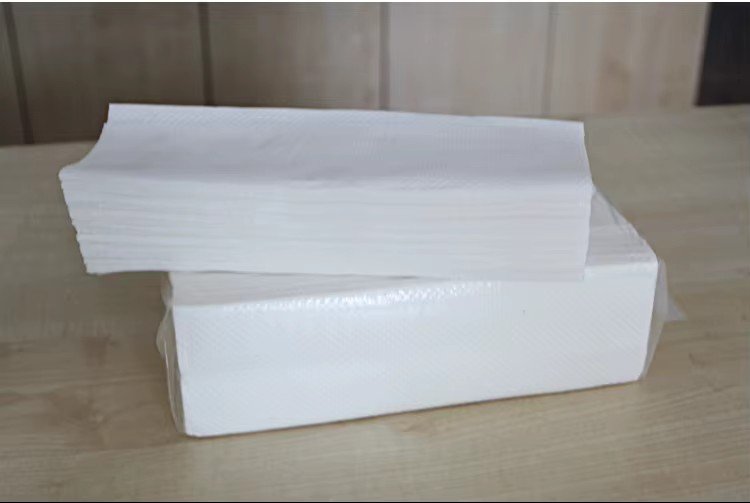
A towel that disintegrates into paste on a damp palm is not thin; it is unbuilt for water. That is a real distinction here, because wet strength is a specified position rather than a by-product of weight: this mill scopes wet-burst strength reinforcement to the kitchen-towel and hand-towel lines, working the long-fibre ratio so the sheet does not fall apart when wet and does not leave paper behind on the skin. Absorption speed is stated the same way – a folded hand towel takes water in about three seconds – which is the property that lets a single sheet finish the job.
Why More Grammage Does Not Buy This
Weight and wet behaviour are different axes, and the ply-and-grammage conversation belongs to the hand towel ply and GSM guide, which handles the specification of those two lines properly. What matters for the audit is that a heavy towel made from a short-fibre furnish can still shed and tear wet, so the wet failure is charged to the wrong line and fixed by paying more for the wrong thing.
The Two-Minute Wet Test
Wet one sheet fully, then lift it by a corner and let it hang. A hand towel built for wet use carries its own weight without tearing at the corner; one that has been optimised for dry softness starts to drop fibres within seconds. Then wipe a dark tray with the same wet sheet and look at what it leaves. That single test separates a lint problem from a strength problem, which is the confusion most complaint emails collapse into one sentence.
Powder on the Tray
Fibre dust is the complaint that ends supplier relationships in hospitality, because it is visible and it looks like dirtiness rather than like a specification. It is controlled here by a separate process step – micro-pore purification that holds the paper-dust rate down for sensitive-skin and low-dust wiping duties – and it is documented as a dust and wet-strength inspection video pack shipped with the order.
Write it as its own line. When dust sits inside a sentence about embossing, ply or softness, nobody owns it, and the housekeeping team that finds a grey halo under a dispenser has no document to point at. The roll-format versions of these products are sized and fitted differently, and the centrefeed sizing guide covers that side of the same complaint.
The Stack That Swelled in Transit
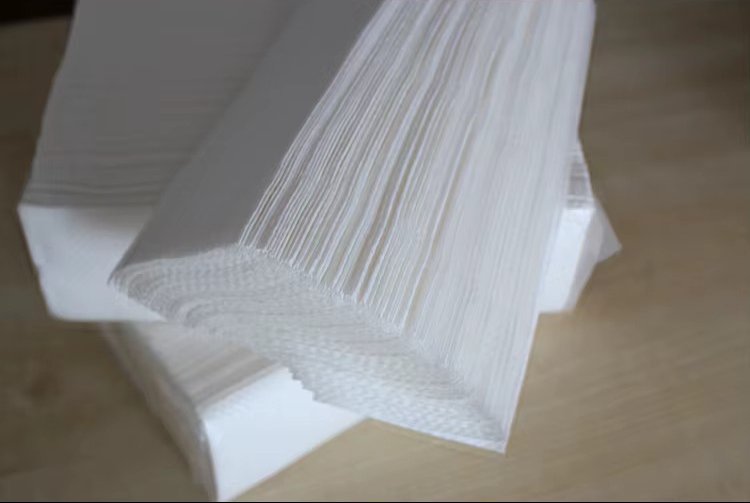
Tissue is a sponge with a print job on it, and the failure often arrives before the first hand does. A carton that took on water in a port warehouse or inside a container with a sealing defect delivers towels that are heavier, softer to the touch and physically stuck together; the dispenser then pulls bundles, and the building calls it a nesting problem. Same symptom, completely different cause, and the difference is only visible if you look at the packaging before the paper.
What to Look At Before You Blame the Sheet
Three things, in this order. The carton: an order here runs on thickened moisture-proof corrugated outer cartons, so a soft, bloated or delaminated carton face is a deviation from what you specified. The pallet: fumigation-free pallets and high-tensile strapping are the stated packing position, and a collapsed corner stack tells you the load was not strapped the way the order said. The container: sealing and water-tightness are checked before loading on this side of the freight, precisely because the failure mode is mould and wet damage on a long ocean leg, and a shipment that arrives with a wet underside should trigger a documented claim rather than a quiet acceptance.
Storage Is the Second Half of This Failure
A restroom cupboard with no ventilation and a mopping sink ten feet away will do the same thing to a perfect carton after delivery. Note where the building actually keeps the cases before you conclude anything about the towel, because the audit and the freight claim point at different pockets.
Empty Before the Restock Round
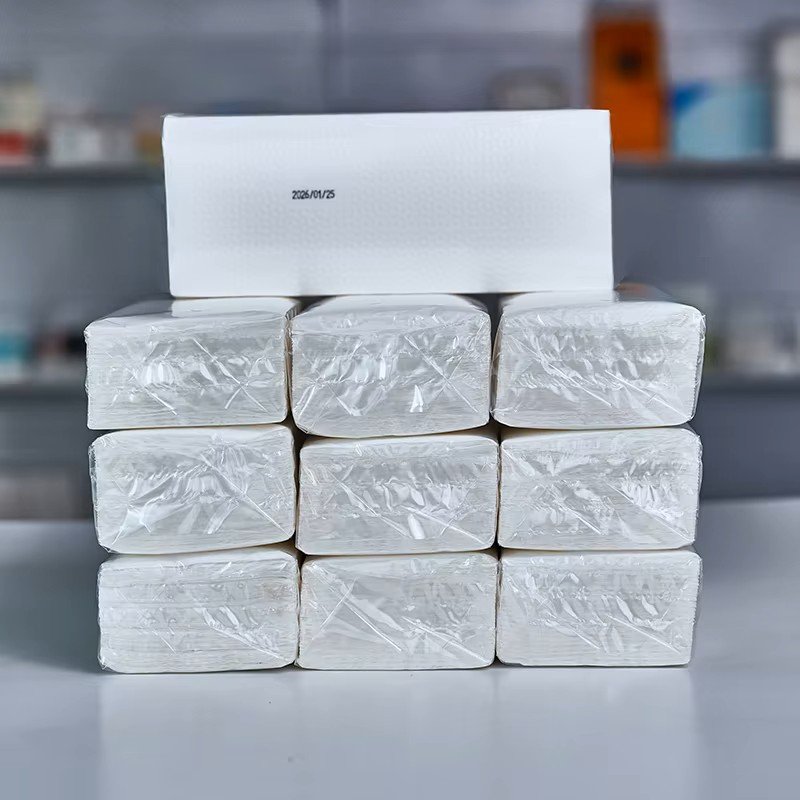
When a fixture runs out early, the reflex is to buy a bigger case. Before that, reconcile the count. A towel specified at one sheet count and delivered at another produces exactly the same complaint as over-consumption, and the difference decides whether the money is yours to reclaim or the building’s to spend.
The gate that owns this on the manufacturing side is a metreage and count discipline: short-run shrinkage and false grammage are refused as a policy, the rewind patrol check verifies grammage, web tension and perforation line mid-run, and the pre-shipment total check measures carton specification and runs the drop test. On the receiving side the arithmetic is yours: the sheet count on the order against the count in the carton against the pulls per restock. Modelling what a building consumes, and what a case should therefore contain, is done properly in the case-count planning guide; what belongs here is the suspicion that a short count is a specification breach rather than a usage problem.
Video: “Jumbo Roll Tissue manufacturing process”, Top Source Paper own channel. Mill footage from the tissue winding process; it is not a hand-towel folding, nesting or dispensing demonstration.
Symptom-to-Specification Reverse Map
The table below is the usable version of everything above. It is a reading aid for the complaint log: each symptom, the thing buyers usually blame, the line or gate that actually owns it, and the question that goes to the supplier.
| Symptom on the wall | Usually blamed on | Specification or gate that owns it |
|---|---|---|
| Two or three sheets per pull | The dispenser | Single-sheet extraction and nesting; fold-to-fixture match |
| Sheet tears on wet hands | Thin, cheap paper | Wet-burst strength build; long-fibre ratio |
| Grey lint halo under the fixture | Dust in the room | Micro-pore purification; dust inspection video pack |
| Stack fused, dispenser jams | The towel quality | Moisture-proof carton, pallet, strapping, container sealing |
| Runs out early every round | Over-use by tenants | Count and carton-specification gate; perforation and metreage check |
The question to attach to each row is the same shape: not “is your towel good” but “which of my five symptoms does your construction make impossible, and what document proves it after delivery.”
Running the Audit Before You Reorder
Five steps, and they cost one restock round of someone’s time. Walk the site and write the symptom list per fixture type. Photograph the carton condition at goods-in before the cases are distributed, including any wet or bloated faces. Run the twenty-pull test on the actual dispenser and the wet-corner test in a sink. Reconcile the sheet count on the order against the count in the carton. Then send the resulting list to the factory with one line at the top: which symptoms must be absent from the next shipment, and what will be checked to prove it.
A supplier who answers that with specification lines and a named QC gate is selling you a controlled product; one who answers it with a discount is selling you the same complaint at a lower price. That is the risk worth carrying into the reorder conversation: not that the next container is worse, but that the current one is quietly written off as a usage problem, the building keeps its cost, and the same five symptoms return in the spring tender. The hand towel range is where these three formats are built together, and if your complaint log names the dispenser rather than the paper, send a photograph of the fixture with the request before anything gets specified.
Frequently Asked Questions On Commercial Restroom Paper Towels
Why does my paper towel dispenser pull multiple sheets?
Either the stack or the fixture. If one fixture type does it and others do not, the fold and the fixture are mismatched. If every fixture does it, the towels are nesting and separating as a bundle, which is a single-sheet extraction problem in the product and should be tested with twenty pulls before you buy again.
Why do paper hand towels break when hands are wet?
Because wet behaviour is built, not inherited from weight. Wet-burst strength comes from long-fibre reinforcement, which is why a heavy short-fibre towel can still tear and shed. Test by hanging a fully wet sheet from one corner and wiping a dark tray with it.
What causes a case of towels to arrive stuck together?
Water taken on in the freight chain, usually before the paper is ever touched. Look at the carton face, the pallet wrap and the container sealing before blaming the sheet, because a bloated carton is a packing deviation and a documented claim, not a product fault.
How do I stop a restroom running out of towels early?
Reconcile counts before increasing order volume: sheets on the order against sheets in the carton against pulls per restock. A short count and an over-consumption problem feel identical to a cleaner and are settled by different documents.
Do thicker paper towels produce less lint?
No, and this is the most common wrong buy. Dust and lint are set by furnish and by the purification step that holds the paper-dust rate down, so a heavier towel can shed just as much. Specify dust control as its own line and ask for the dust inspection video pack with the shipment.