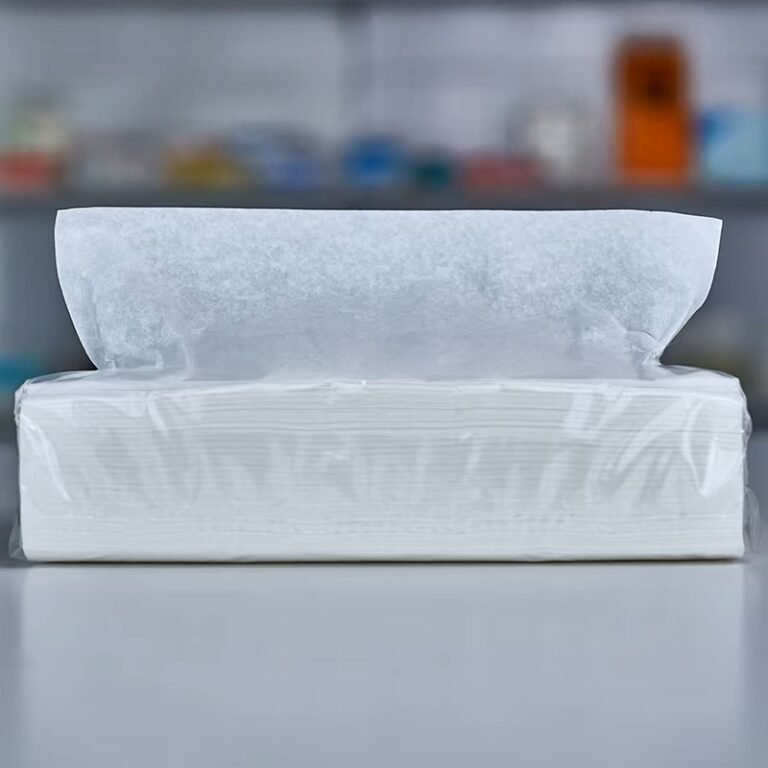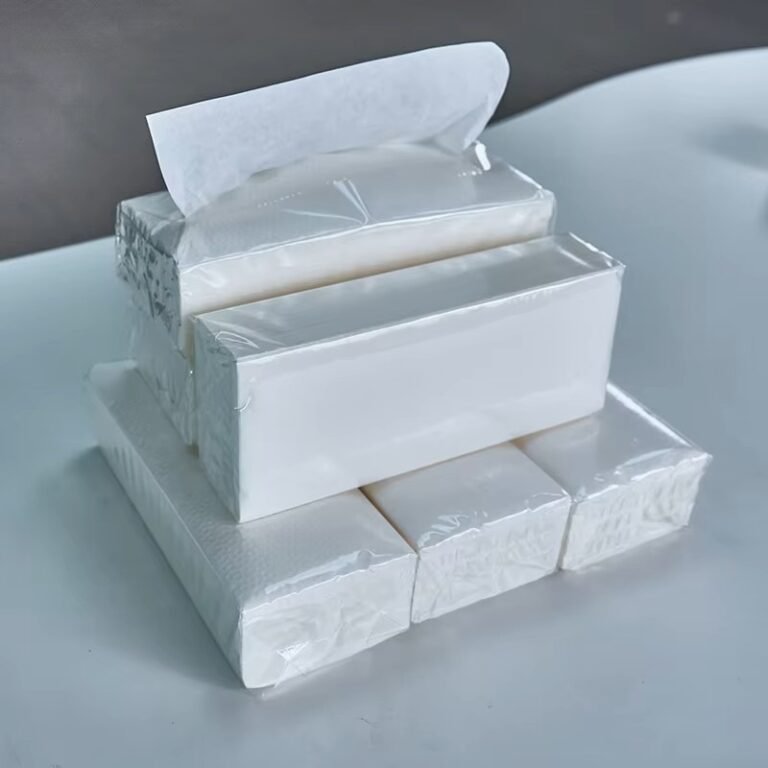
A pallet of multifold hand towels arrives at a distribution centre in February and is still there in June, and the paper is not the reason. Somebody quoted on price per sheet, the buyer needed the last refill round to fit a five-day service cycle, and the cartons that landed open into a dispenser that has been bolted inside eleven public washrooms since 2017. Nobody checked the wall before they checked the quote. The towels are good; they are simply not the towels that building takes.
Buying hand towels in bulk is not a paper decision dressed up as a logistics one. It is a compatibility decision, a labour decision and then a price decision, and the order that goes wrong is the one that solved them in the opposite sequence.
Key Takeaways
- Bulk paper hand towels fail on compatibility before they fail on quality: the towel must match a dispenser that is already installed.
- A pre-order survey records four things per washroom: dispenser count, cover footprint, feed mechanism and traffic band.
- In a three-country hospital study, bacterial recovery from jet-dryer dispenser surfaces was a median 100-300 cfu against 0-10 cfu from paper towel dispensers.
- A 1997 study found that a defined drying protocol cut wet-hand bacterial translocation by 94% to 99.8%, which points at residual moisture rather than softness.
- The evidence is not unanimous: a 1991 paper reported the highest bacterial reduction with electric air drying, so treat any absolute claim as marketing.
- This plant builds hand towels in V, Z and M fold, single-fold and roll formats, dispensing one sheet at a time, with a stated three-second absorption.
- Plain and white-label orders ship from a shared 20GP; printed packaging starts at one 40’HQ, with reorders at 20-25 working days.
- Survey The Building Before You Count A Thing
- Four Things A Site Survey Must Record
- What The Drying Evidence Actually Shows
- Where The Evidence Gets Messy
- What A Specification Can Honestly Claim
- Format Choice Follows The Fixture
- Cost Per Dry Is Yours To Measure
- Storage Cube And Dead Stock Decide The Case Buy
- Ordering Bulk Without A Returns Problem
Survey The Building Before You Count A Thing
Every bulk hand towel order that goes wrong goes wrong at the same place, and it is not the mill. It is the wall. Commercial washrooms are fitted out once and re-lined rarely, so the dispenser that a building runs on is usually older than the contract that supplies it. A buyer who standardises on a fold and a pack size without opening a cover will discover that a meaningful share of the estate cannot use what has been bought.
This is why the survey has to come before the case count, not after the quote. Once you know what is installed, the format conversation collapses into something arithmetic. Before you know it, you are guessing, and a guessed pallet of towels is the most expensive kind of storage you can rent.
One honest warning about the other article in this sequence. Case-count planning is a real discipline and it is covered properly in the multifold case-count guide. That arithmetic is worthless if it is run against a dispenser inventory you never verified, which is the mistake most buyers make in the order the steps are attempted in.
Four Things A Site Survey Must Record
| Record | How to capture it | What it decides |
|---|---|---|
| Dispenser count | Physical count per floor, not per building | Baseline refill events per week |
| Cover footprint | Width, height and depth with the lid open | Whether a pack physically fits inside |
| Feed mechanism | Fold stack, centrefeed, single-sheet, open holder | Which format can be loaded at all |
| Traffic band | Occupancy or door count, banded not exact | Refill frequency and overflow risk |
| Bin size and lid | Litre volume, pedal or open | Whether used towels are contained |
The second row is where buyers lose the most money. A towel pack that is a few millimetres too deep for a cover will still be delivered, invoiced and stored, and only discovered by a cleaning supervisor with a service round to finish. Photograph the open dispenser with a ruler in frame. That single habit removes most of the returns.
Band the traffic rather than measure it. Nobody needs an exact hand-dry count per washroom; they need to know which rooms drain a stack before the next scheduled visit and which do not. Fold names, sheet dimensions and how each one behaves in a given holder are settled elsewhere, in the dispenser compatibility guide, and repeating that taxonomy here would only duplicate it.
What The Drying Evidence Actually Shows
Hygiene-audited buyers are usually sold paper towels on a claim: something about bacteria, usually stated as a large round number. The real literature is more interesting and narrower than the claims, and it is worth reading properly because it points at a specification rather than a slogan.
The most useful mechanism finding is old and simple. Patrick, Findon and Miller reported in Epidemiology & Infection in 1997 that residual moisture after washing determines how much bacteria transfers on touch, and that a defined drying protocol achieved a 94% to 99.8% reduction in bacterial translocation associated with wet hands. Read that as a drying-speed specification. The property that earns its place on your order form is how fast the sheet pulls water off a hand in one pass, not how soft it feels in the packet.
On the environment side, a multi-centre study published in the Journal of Hospital Infection in 2018 ran 120 sampling sessions over twelve weeks in each of three hospitals in the UK, France and Italy, comparing paper towel use with jet air drying. Bacterial recovery from dispenser surfaces was significantly higher with dryers at every site, with medians of 100-300 cfu against 0-10 cfu for paper towel dispensers. Washroom floors in the UK and France showed a paper-towel median of 24 cfu against 191 cfu while dryers were in use. meticillin-susceptible S. aureus was recovered three times more often from dryer surfaces and at six-fold higher levels, MRSA three times more often at 21 cfu against 7, and in France ESBL-producing bacteria appeared in dust twice as often while dryers were in use.
A twelve-study review in Mayo Clinic Proceedings in 2012 concluded that most studies found paper towels dry hands efficiently, remove bacteria effectively and contaminate the washroom environment less, and put it plainly: from a hygiene viewpoint, paper towels are superior to electric air dryers.
Where The Evidence Gets Messy
Stop here and read the awkward half, because a supplier who skips it is selling you something rather than informing you.
Not every study points the same way. Ansari and colleagues reported in the American Journal of Infection Control in 1991 that, whatever hand-washing agent was used, electric air drying produced the highest reduction in test organism numbers and cloth drying the lowest. That is the opposite direction to the marketing sentence most buyers have been sold, and it is a real published finding.
There is a second limit worth carrying into a specification meeting. Yamamoto, Ugai and Takahashi found in Infection Control & Hospital Epidemiology in 2005 that log colony-forming units on palms and fingers rose significantly when hands were dried with warm air while rubbing for fifteen seconds, and that paper towels helped remove bacteria from fingertips but not from palms and fingers. A towel is not a hygiene system. It is one step, and it does not do the work of the washing that comes before it.
The practical reading for a buyer is this. Cite the mechanism you can defend, which is residual moisture and environmental contamination. Do not promise anyone that a paper towel specification prevents infection in their building, because the literature is design-sensitive and an auditor who reads the citations will know that.
What A Specification Can Honestly Claim
Once the evidence is framing the decision, the specification writes itself, and it should stay inside what a factory can actually support.
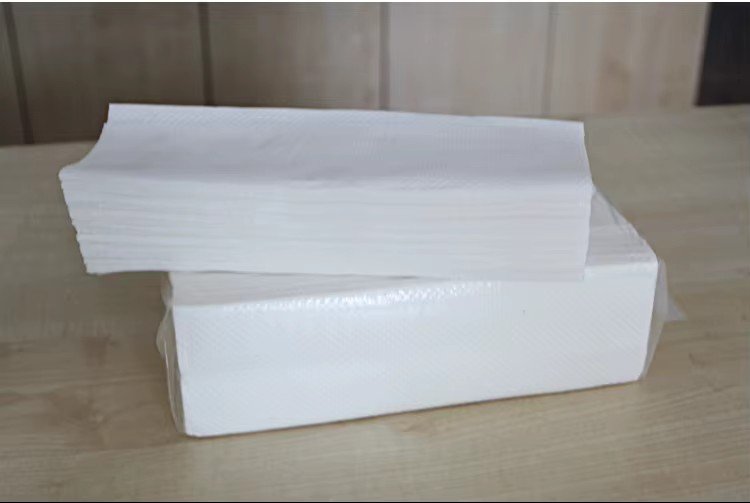
This line is built on 100% virgin wood pulp with a controlled long- and short-fibre ratio and no recycled furnish, across a plant-wide 13-45 GSM band and one to three plies. What the quality system states explicitly for hand towels is three things: single-sheet dispensing without cascading, absorption of water in roughly three seconds, and wet-burst strength reinforcement so a wet sheet does not fall apart or leave lint on the hands. Wet-burst treatment is scoped to kitchen towels and hand towels here, not to the whole portfolio, which is the honest version of a sentence most suppliers widen.
Zero-dust control sits under the same programme: a micro-pore purification process that manages paper-dust rate, and a wet-strength and dust test video pack that ships with the order alongside a certificate covering tensile strength, brightness and virgin-fibre verification. For a clinic or a food plant, dust matters more than softness, because dust is what a supervisor notices on a dark cabinet and what an auditor asks about.
What the plant will not hand you is a contractual grammage guarantee on a hand towel. The ply and GSM guide discusses typical bands for commercial buyers, but the figure that binds a delivery is the target you both agree on the order rather than a published promise. Nor will the plant promise compatibility with a dispenser brand it has never seen. Ply and grammage are separate specifications, and both belong on the order in writing.
Format Choice Follows The Fixture
Format is decided by the hardware, and the survey already told you what the hardware is. Fold stacks go where interfold and multifold holders live. Centrefeed and roll formats go where a wall spindle exists, and that choice belongs with the centrefeed sizing guide rather than here. Open holders at a staff sink will take almost anything, which is exactly why they quietly become where the wrong pallet gets dumped.
Where a portfolio genuinely mixes fixtures, the cheaper answer is usually two formats bought properly rather than one format bought wrong. That is a working-capital argument, not a quality one, and it is the same logic that decides whether a disposable or a rolled program suits a site, which is argued in full on the disposable against rolled comparison.
For buyers weighing paper against a linen program with laundry costs attached, that arithmetic exists separately in the disposable versus cloth towel analysis and is not repeated here.
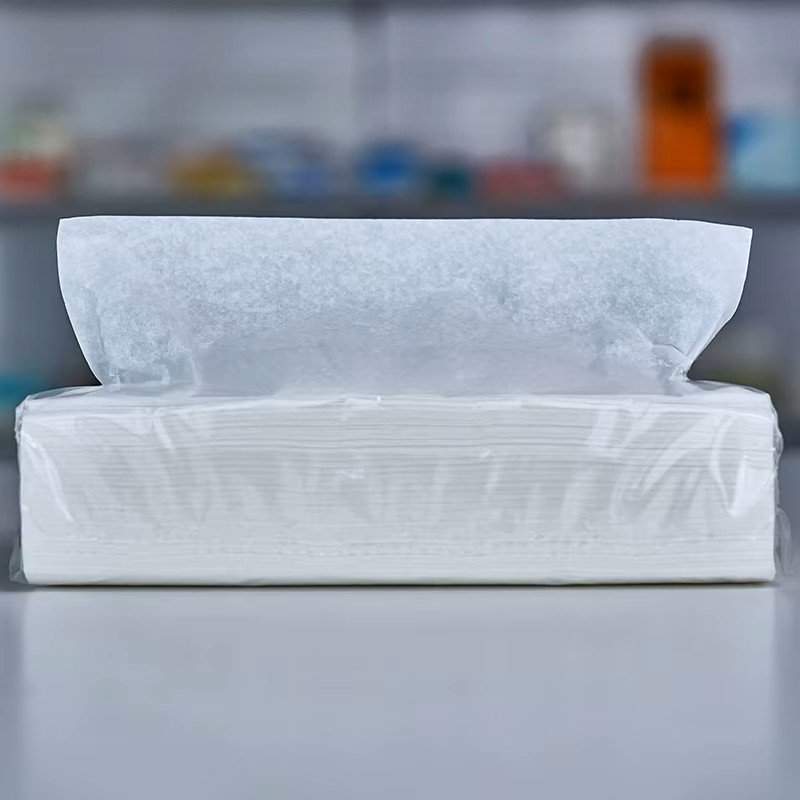
Cost Per Dry Is Yours To Measure
Run this on your own site, in your own corridor, because every supplier’s version of the calculation is written to win. You need four numbers and one observation.
| Input | Where it comes from | What it answers |
|---|---|---|
| Delivered cost per case | Your own PO with freight landed | The number two quotes actually compete on |
| Sheets per case | Written spec, not the carton art | Cost per sheet once you divide |
| Sheets per dry, observed | A twenty-minute watch at a busy sink | Cost per completed dry |
| Refills per dispenser per week | The service schedule you already run | Labour minutes attached to each format |
| Overflow complaints | Your own helpdesk log | Whether the cheap format is costing visits |
The fourth and fifth rows are what separate a good towel from a cheap one, and neither appears on a quotation. A sheet that dries in one pass and does not cascade into the next user’s hands changes the observed sheets-per-dry, and that term, not the case price, is what decides your annual spend. Worked with placeholders only: if format A costs 100 per case of 6,000 sheets and format B costs 130 per case of 6,000, B is thirty per cent dearer per sheet. If your own count shows three sheets per dry with A and one and a half with B, then B finishes the dry for about two-thirds of A’s cost, because one and a half sheets at a dearer rate still beats three at a cheap one. Only your count settles it, and the direction is the point, not the round numbers.
Storage Cube And Dead Stock Decide The Case Buy
Hand towels are light, bulky and unforgiving of a rented warehouse. The largest container you will ever buy for them is the one that arrived because the per-case price dipped.
Price the decision in weeks of cover rather than in discount. Three weeks of a moving format at a slightly worse unit price beats six weeks of a slow one at the best price you have ever seen, because the second number has to be stored, handled twice, and eventually sold at a discount or written off. A distribution colleague who buys to a service-level target rather than to a spot price will usually hold less and complain less.
Two levers reduce the risk without reducing the buy. Plain and white-label towels ship from a shared 20GP here, which lets a distributor consolidate grades and sizes into one commitment instead of one artwork; a custom printed carton or wrapper starts at one 40’HQ. And a survey-driven format list is usually shorter than the one a building currently runs, so the honest way to cut storage is to standardise the estate before you double the order.
Ordering Bulk Without A Returns Problem
Put the survey conclusions on the order in the same words you used in the building. Format and fold name, sheets per pack, packs per carton, carton dimensions, ply, target grammage, sheet size unfolded, and the dispenser it has to load into. Ask for a pre-production sample against that line list and load it into the actual cover before anybody signs a container.
Then check the three delivery realities that change nothing about the paper and everything about the program. Samples of the real product go out in 1-3 working days. First production runs 25-30 working days. Reorders run 20-25, which is the number that decides whether you can afford to hold less stock. Terms are FOB, CIF, CFR or EXW ex Tianjin Xingang, with 30% T/T and the balance before shipment against a QC report and a container-seal video.
A supplier who will not answer the carton-dimensions line is not going to save you a returns problem, because that line is the whole problem. Formats and case options for this line are on the paper hand towels page, and a buyer sizing a first order can start the conversation with the export team directly.
Route from here: survey the estate, cut the format list to what the fixtures actually take, quote two formats against your own sheets-per-dry count, then buy three weeks of cover rather than a discount. Order the sample, load it into the wall, and only then sign the container.
Video: “tissue paper manufacturing process”, Top Source Paper own channel
Frequently Asked Questions On Bulk Paper Hand Towels
How do I know which hand towel fits my dispenser?
Open the cover and measure the cavity, then match sheet dimensions and pack depth against it. Record the feed mechanism, because fold stacks, centrefeed and single-sheet holders are not interchangeable.
Are paper hand towels more hygienic than air dryers?
The published evidence mostly favours paper towels on drying efficiency, bacterial removal and washroom contamination, but one 1991 study reported the opposite direction, so treat absolute claims with caution.
What does residual moisture have to do with hand towels?
A 1997 study found residual moisture after washing drives how much bacteria transfers on touch, and a defined drying protocol cut wet-hand translocation by 94% to 99.8%. Absorbency per pass is therefore a specification, not a comfort feature.
How many cases of hand towels should a facility order?
Start from dispensers per week and observed sheets per dry, then buy three weeks of cover. The case-count method sits in our multifold case-count guide, but it only works after a dispenser survey.
Can I order mixed hand towel sizes in one container?
Yes for plain or white-label goods, which ship from a shared 20GP. Custom printed packaging needs one 40’HQ, so mixed trials are the cheaper route to market.