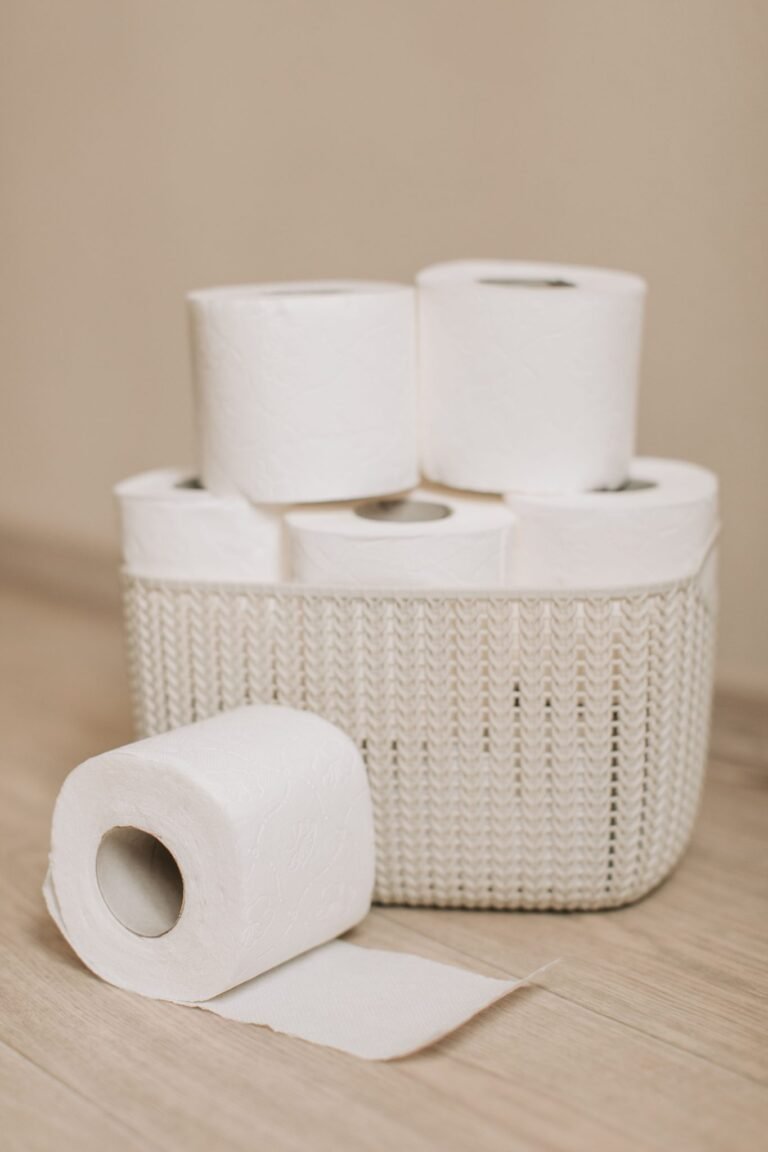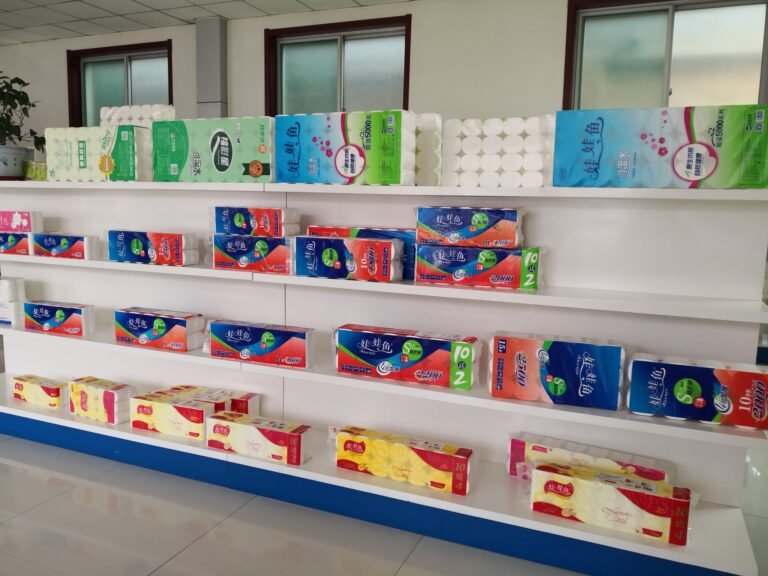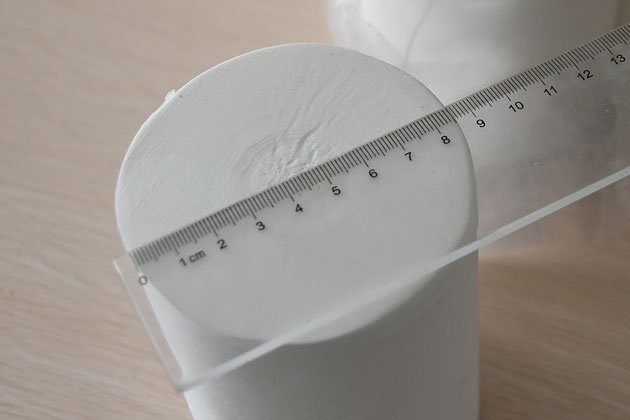
When procurement managers search for bulk toilet paper, the results range from retail multi-packs on Amazon to Alibaba supplier listings with vague MOQs. Neither tells you how container-scale sourcing actually works — the specs that survive a 30-day ocean crossing, the QC checkpoints that separate a reliable shipment from a claim, or the trade terms that protect your margin. This guide fills that gap. It is written from the perspective of a virgin wood pulp manufacturer in Baoding, China, that has shipped toilet paper to importers across five continents for over 18 years.
Why Importers Buy Toilet Paper by the Container, Not by the Pallet
Toilet paper is volumetric. A single roll weighs little, but its diameter and width consume space fast. Shipping loose pallets in a Less-than-Container-Load (LCL) consignment means paying freight on air — and accepting higher damage rates from mixed-cargo handling. The economics shift decisively once you commit to a full container.
A 20GP container holds approximately 70–90 cbm of toilet paper cartons, depending on roll size and packing density. A 40HQ nearly doubles that capacity. For white-label (unprinted) toilet paper, the minimum order at most Chinese factories is one 20GP. For custom-printed packaging — branded wrappers, embossed logos, printed carton sleeves — the MOQ rises to one 40HQ, because the plate-making and setup costs only amortize at that volume.
This is not arbitrary. At Top Source Paper, a 20GP of standard 2-ply toilet paper (13 GSM, 100 g/roll, 12 rolls × 10 packs) yields roughly 160,000 rolls. A 40HQ of the same specification holds roughly 350,000 rolls. The per-unit freight cost at container scale drops 35–50% versus LCL, and the factory can lock in raw pulp pricing for the full production run.
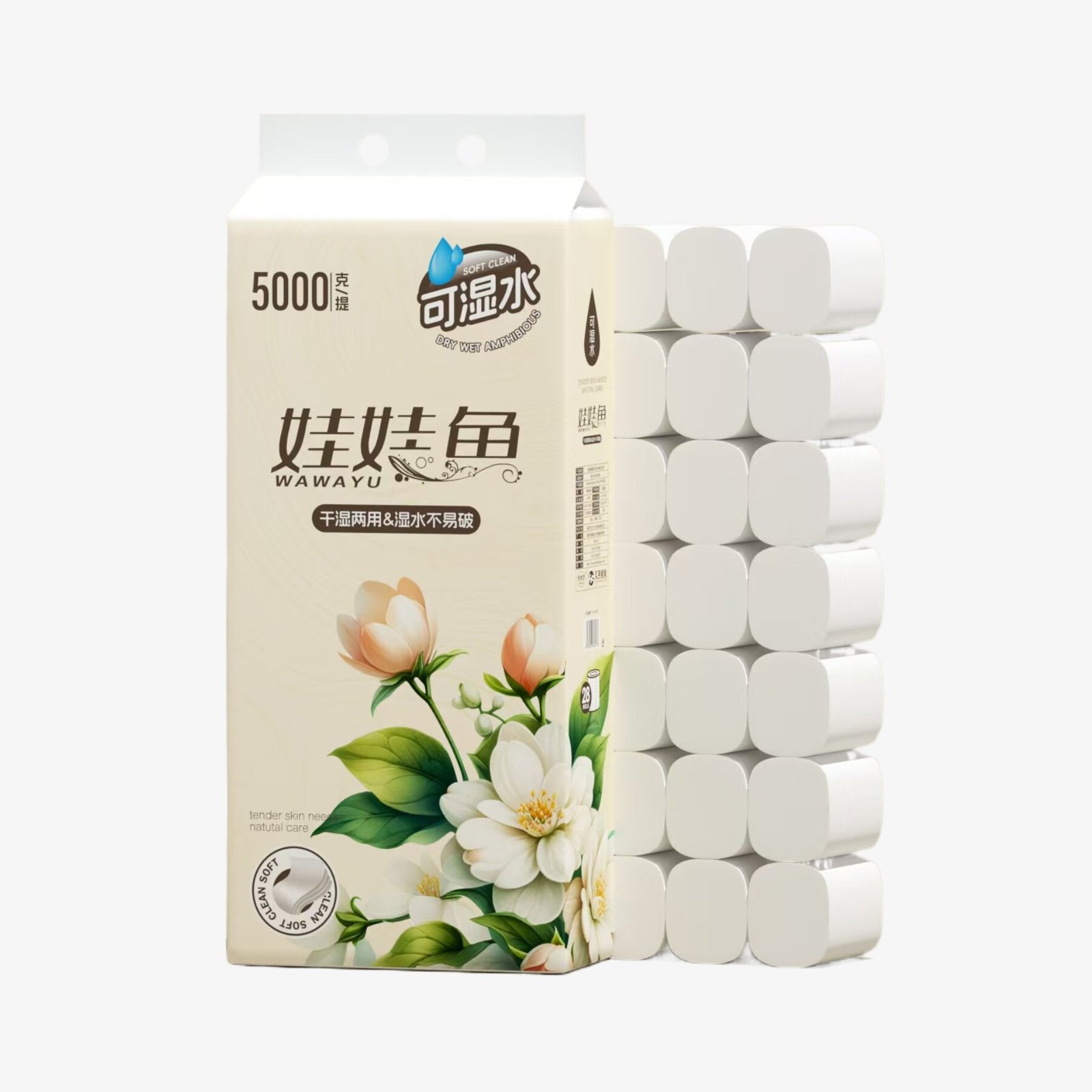
Key Specifications Every Bulk Buyer Must Confirm Before Ordering
The difference between a successful import and a costly dispute often comes down to five specifications. Get these wrong, and no amount of price negotiation will save the shipment.
Ply Count and GSM (Grams per Square Meter)
Ply count (1-ply, 2-ply, 3-ply) determines perceived thickness and softness. GSM measures the weight of paper per square meter — it is the single most auditable indicator of quality and cost. A 2-ply roll at 14 GSM uses more fiber than a 2-ply at 12 GSM, even if both rolls weigh the same on a scale. Some suppliers achieve the target roll weight by increasing the core diameter or loosening the wind, which gives the buyer fewer usable sheets per roll.
Top Source Paper produces toilet paper in 1-ply through 3-ply constructions, with GSM ranging from 13 to 18 GSM per ply. Every order ships with a COA (Certificate of Analysis) that verifies tensile strength, brightness, and 100% virgin fiber content. This is not a marketing claim — it is a physical inspection document tied to the production batch.
Roll Dimensions: Diameter, Width, and Core Size
Standard toilet paper roll diameters range from 9 cm to 12 cm for consumer formats. Commercial and institutional rolls (often called “jumbo rolls”) go up to 28 cm. Roll width typically runs 9–10 cm for standard formats. Core inner diameter must match the buyer’s dispenser — common sizes are 3.8 cm (1.5 inches) for standard cores and 7.6 cm (3 inches) for jumbo roll dispensers.
Buyers should always confirm these three dimensions in writing before production. A 5 mm width discrepancy can render an entire container incompatible with the target market’s dispenser ecosystem.
Embossing Pattern and Edge Treatment
Embossing serves both aesthetic and functional purposes. Micro embossing creates a uniform, premium surface. Edge embossing seals the ply edges to prevent separation during use. Point-to-point (or deco) embossing increases absorbency by creating air pockets between layers. The embossing choice affects perceived quality, dispensing behavior, and even the per-roll meterage.
Top Source Paper offers micro embossing, edge embossing, and deco/point-to-point embossing across all toilet paper lines. The choice is specified at order stage and locked into the production tooling.
Water Solubility and Flushability
In many import markets — particularly the EU, North America, and Australia — toilet paper must disintegrate rapidly in septic systems and municipal sewage. Virgin wood pulp fiber, by its nature, breaks down faster than recycled fiber because the fibers are shorter and less bonded. Top Source Paper’s toilet paper is manufactured to be flushable and septic-safe, with no fluorescent brightening agents added.
Packaging: White Label vs Custom Print
White-label (plain) packaging ships in generic kraft or white cartons with no branding. It is the fastest and cheapest route to market, with an MOQ of one 20GP. Custom-printed packaging — branded shrink wrap, printed poly bags, or custom carton boxes — requires plate-making and is typically MOQ’d at one 40HQ. Lead time for custom packaging adds 5–7 working days for plate production and color matching.
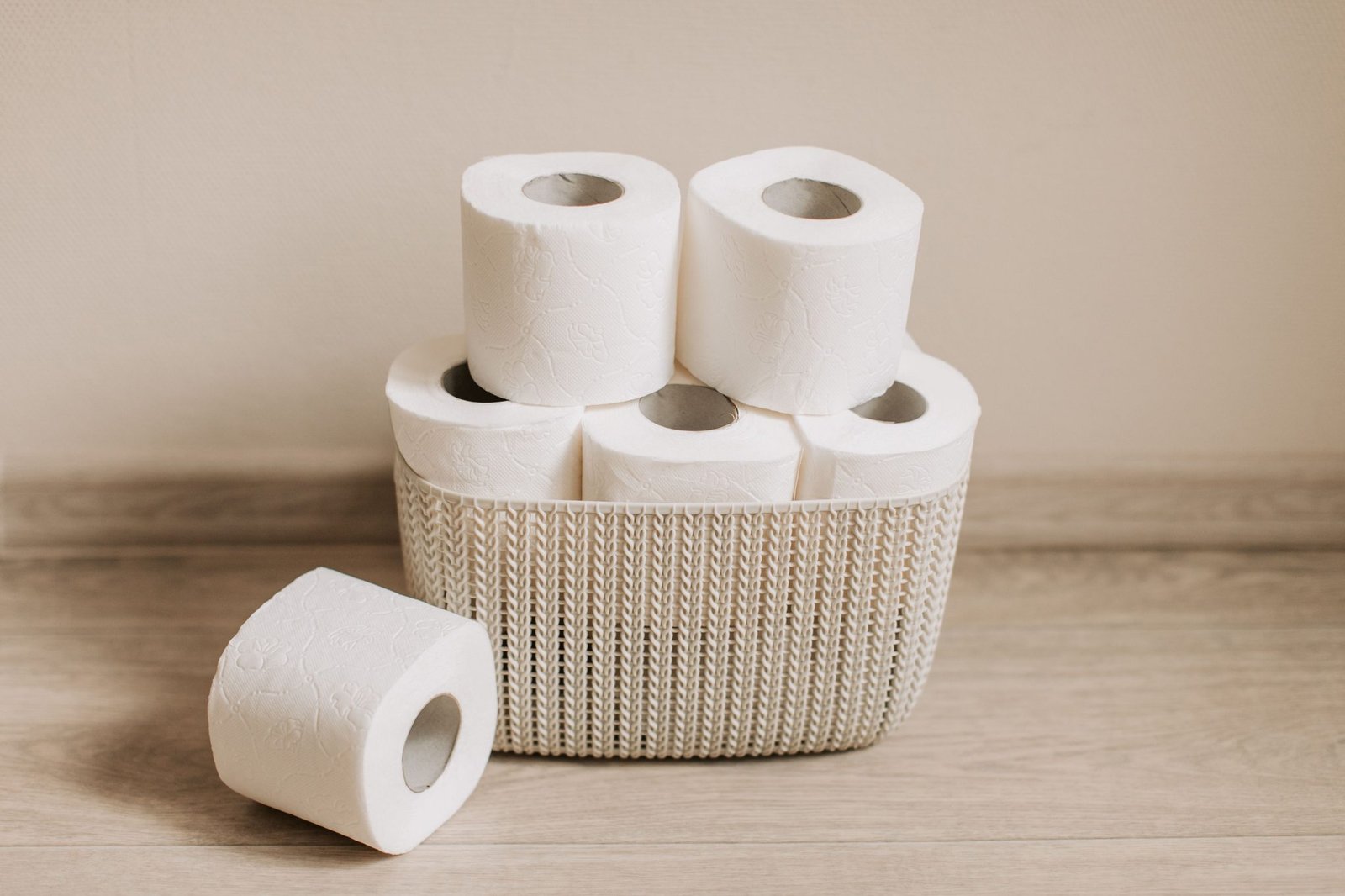
How to Vet a Toilet Paper Manufacturer: A 6-Point Checklist
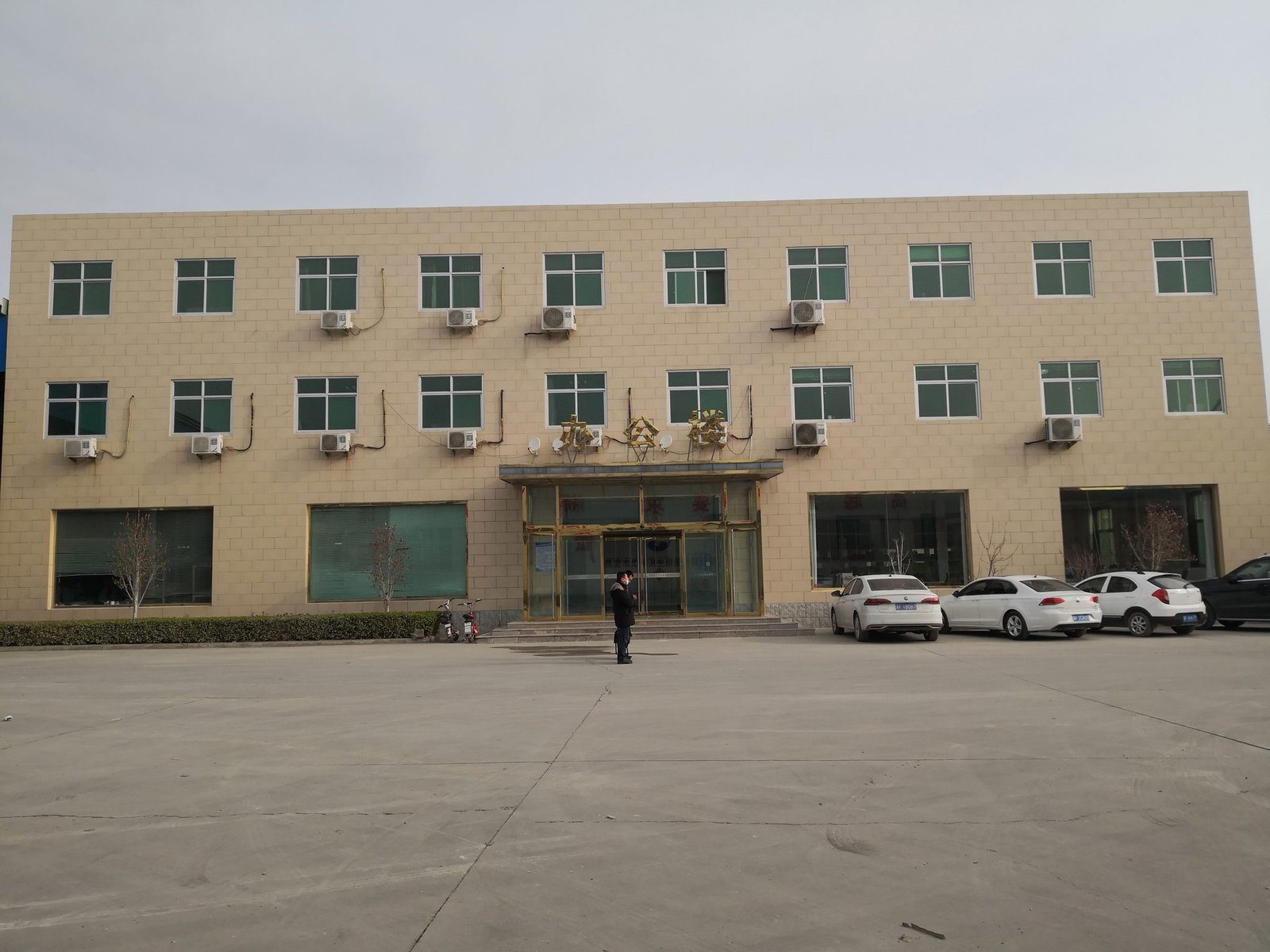
Not every factory that lists “toilet paper manufacturer” on Alibaba operates its own pulp-to-roll production line. Here is the vetting framework that separates genuine source factories from trading companies and middlemen.
- Virgin pulp verification. Ask for a COA that specifies fiber composition. A genuine manufacturer will provide a batch-level report showing 100% virgin wood pulp with no recycled fiber content. If the supplier hesitates or offers only a “general certificate,” that is a red flag.
- Production capacity transparency. A real factory can tell you its monthly tonnage, the number of paper machines in operation, and the average lead time for a 40HQ order. Top Source Paper’s lead time is 25–30 working days for a first order (including plate-making and sampling) and 20–25 working days for reorders.
- QC process documentation. Ask for the three-stage QC flow: parent roll inspection (tensile strength and brightness), in-process patrol during rewinding (GSM, tension, perforation alignment), and pre-shipment final inspection (carton weight, drop test, seal integrity). If the supplier cannot describe these stages in detail, QC is likely ad hoc.
- Sampling speed. A manufacturer with in-house capability produces samples in 1–3 working days. Trading companies add 5–10 days because they must coordinate with the factory.
- Ocean shipping preparation. Ask specifically about moisture protection. Top Source Paper uses reinforced waterproof corrugated cartons, standard fumigation-free pallets, and high-tensile strapping. Every container is inspected for seal integrity and water-tightness before loading. Request loading photos and video — a genuine factory provides these as standard deliverables.
- Payment terms clarity. Standard B2B terms are 30% T/T deposit, 70% before shipment (with inspection video and COA provided for confirmation). Be wary of suppliers demanding 100% upfront or offering suspiciously low prices that imply recycled pulp blending.
Container Loading: How Many Rolls Fit in a 20GP vs 40HQ
The following table shows approximate loading quantities for standard specifications. Actual numbers vary by roll diameter, width, and packing configuration.
| Specification | 20GP (rolls) | 40HQ (rolls) |
|---|---|---|
| 2-ply, 13 GSM, 100 g/roll, 12 rolls × 10 packs | ~160,000 | ~350,000 |
| 2-ply, 15 GSM, 120 g/roll, 12 rolls × 10 packs | ~130,000 | ~290,000 |
| 3-ply, 16 GSM, 150 g/roll, 6 rolls × 12 packs | ~95,000 | ~210,000 |
| Jumbo roll, 2-ply, 18 GSM, 600 g/roll | ~45,000 | ~100,000 |
These numbers assume optimized pallet stacking with fumigation-free pallets. Floor-loaded (non-palletized) containers can hold 15–20% more rolls but require manual unloading at destination, which adds labor cost.
For importers evaluating per-unit landed cost, the formula is straightforward: (FOB price per roll) + (ocean freight per roll, based on container capacity) + (import duty rate) + (last-mile distribution). At container scale, the ocean freight component typically adds $0.01–$0.03 per roll for a 20GP and $0.005–$0.015 per roll for a 40HQ, depending on the destination port.
Quality Assurance: The 3-Stage QC Process Explained
Consistent quality at container scale requires systematic inspection at three points, not a single final check.
Related: jumbo toilet paper vs standard rolls.
Stage 1 — Parent Roll Inspection. Before any converting begins, the virgin wood pulp parent rolls are tested for tensile strength, brightness (whiteness level), and fiber composition. This is where recycled fiber adulteration would be caught. Top Source Paper issues a COA for each batch that documents these parameters.
Stage 2 — In-Process Patrol. During rewinding, embossing, and cutting, QC inspectors patrol the production line to verify GSM consistency, winding tension, perforation alignment, and roll diameter. This stage catches mechanical drift before it generates thousands of off-spec rolls.
Stage 3 — Pre-Shipment Final Inspection. Finished rolls are checked for count accuracy, packaging integrity, and carton labeling. A drop test simulates handling stress during container loading and ocean transit. Top Source Paper also provides a burst resistance inspection video and loading photos as standard deliverables with every shipment.
For buyers who want additional assurance, third-party inspection services (SGS, Bureau Veritas, Intertek) can be engaged for pre-shipment inspection at the factory. Cost is typically $250–$400 per man-day, borne by the buyer unless negotiated otherwise.
Trade Terms and Payment: FOB, CIF, and What They Mean for Your Landed Cost
Understanding Incoterms is essential for accurate landed cost calculation.
- FOB (Free on Board) Tianjin. The factory delivers the goods, cleared for export, onto the vessel at Tianjin Xingang Port. The buyer pays ocean freight, insurance, import duty, and inland transport at destination. FOB gives the buyer maximum control over freight forwarding and is the most common term for experienced importers.
- CIF (Cost, Insurance, and Freight) to destination port. The factory arranges and pays for ocean freight and minimum insurance to the buyer’s named port. Risk transfers at the port of loading, but cost transfers at destination. CIF simplifies logistics for buyers who lack their own freight forwarder.
- CFR (Cost and Freight). Same as CIF but without insurance. The buyer arranges their own marine insurance.
- EXW (Ex Works). The buyer picks up from the factory gate. Rarely used for international tissue trade because the buyer must handle Chinese export customs.
Top Source Paper quotes FOB Tianjin, CIF, and CFR on request. Payment terms are 30% T/T deposit with 70% balance before shipment. Before the final payment, the buyer receives the COA, QC video, and container seal photos for confirmation.
For a detailed breakdown of how these terms affect your per-unit cost, see the buyer resources guide on tissue paper import logistics.
Ordering Workflow: From Inquiry to Container Delivery
Here is the typical sequence for a first-time bulk toilet paper order with a Chinese manufacturer.
- Inquiry and specification confirmation (Day 1–3). The buyer submits target specifications (ply, GSM, roll size, packaging type, quantity). The factory responds with a quotation and lead time estimate.
- Sampling (Day 3–6). The factory produces physical samples matching the confirmed specs and ships them via express courier (DHL/FedEx, 3–5 days to most destinations). Sample cost is typically refunded against the first order.
- Order confirmation and deposit (Day 7–10). The buyer approves samples, signs a proforma invoice, and transfers the 30% deposit.
- Production (Day 10–35). For custom-printed orders, plate-making takes 5–7 days, followed by 20–25 days of production and packing. White-label orders skip plate-making and complete in 20–25 days total.
- QC and shipping preparation (Day 35–38). Final inspection, carton labeling, palletizing, and container loading with moisture-proof protection.
- Ocean transit (Day 38–65). Depending on destination: 15–20 days to Southeast Asia, 25–30 days to Europe, 30–35 days to North America West Coast.
For importers evaluating private-label options with custom packaging, the OEM and private label tissue page covers plate-making, design file requirements, and the reorder policy (return orders are plate-fee-free).
Before you size a container, cross-check the shelf and dispenser geometry: our guide to toilet paper roll dimensions covers width, diameter, core, and meterage standards.
Frequently Asked Questions
For white-label (unprinted) toilet paper, the MOQ is one 20GP container, which holds approximately 130,000–160,000 rolls depending on specification. For custom-printed packaging, the MOQ is one 40HQ container.
Production lead time is 25–30 working days for a first order (including plate-making and sampling) and 20–25 working days for reorders. Ocean transit adds 15–35 days depending on destination.
Virgin wood pulp is made from fresh wood fiber, producing softer, stronger, and lower-dust paper. Recycled pulp uses recovered paper, which is cheaper but generates more dust, has lower wet strength, and may contain ink residues. All Top Source Paper products use 100% virgin wood pulp.
Yes. Samples are produced in 1–3 working days and shipped via express courier. Sample cost is typically refunded against the first order.
For importers ready to evaluate a bulk toilet paper supply from a virgin pulp source factory, contact Top Source Paper for a quotation and sample arrangement.
Within a bulk container plan, coreless versus cored toilet paper is one format decision that shifts delivered cost per meter.
Choosing the channel changes the order object before the container maths starts; the wholesale bath tissue vs retail packs comparison settles which one you are actually buying.