A centrefeed roll runs out at the worst possible moment, and the person who notices is not the person who ordered it. It is the facilities supervisor walking a washroom at two in the afternoon to find an empty dispenser, a queue, and a paper towel trail across the floor because someone pulled the whole tail through the throat. None of that is a paper quality failure. It is a sizing and compatibility failure made weeks earlier, on a purchase order that said “roll hand towels” and stopped there.
Centrefeed, sometimes written centre-pull or centerfeed, is the roll format where the sheet feeds from the middle of the roll through a core, rather than from the outside like a kitchen roll. It is the workhorse of commercial washrooms because one roll serves a high-traffic dispenser, the pull is metered, and the sheet stays enclosed until it is used. This guide covers how to size an order and how to make sure the roll actually fits the dispenser on the wall, written from the converting side at Top Source Paper, where paper hand towels are produced from 100% virgin wood pulp and shipped in containers from Tianjin Xingang Port.
What a Centrefeed Roll Hand Towel Actually Is
The mechanics are simple and they drive everything downstream. The towel is wound around a cardboard core, the inner tail is threaded out through that core, and the dispenser holds the roll on a spindle so the user pulls a sheet from the centre. Each pull rotates the roll and presents the next sheet from the same opening, which is why the format meters usage better than an outside-wound roll that a person can unspin freely.
Our hand towel line covers multi-fold V, Z and M formats, single-fold, and the roll centrefeed format, all built for high brightness, single-sheet pull without cascading, and water absorption in about three seconds. Those three properties are the ones a washroom feels. Cascading is the failure where one pull drags out a fistful of sheets; a roll that dispenses one sheet at a time keeps consumption and mess down. The three-second absorption is what stops a user reaching for a second or third sheet to finish drying.
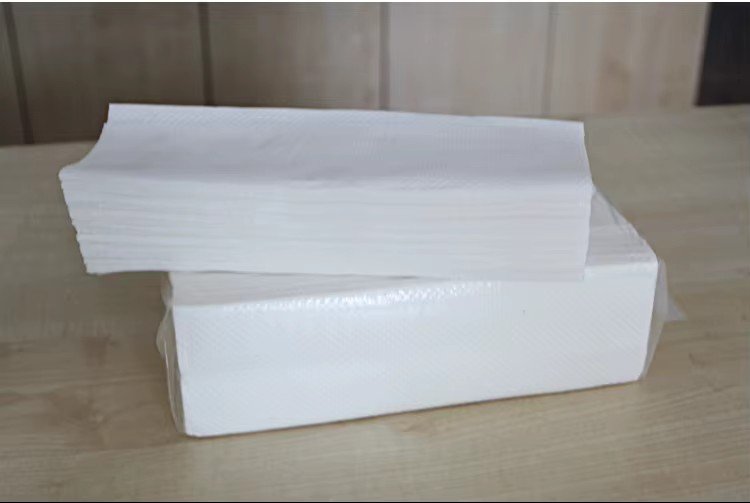
The distinction that matters at order time: centrefeed is a roll, and folded towels are a stack. They are not interchangeable in the dispenser, they are not priced the same way, and they suit different traffic levels. If you are converting a site from folded towels, read the dispenser before you read the catalogue.
Centrefeed Versus Folded Formats
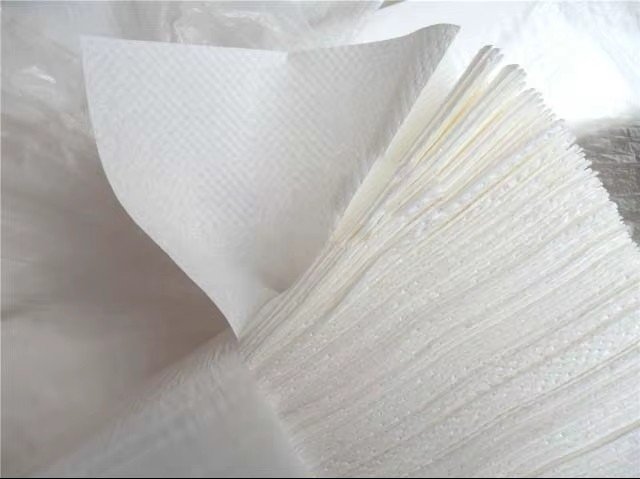
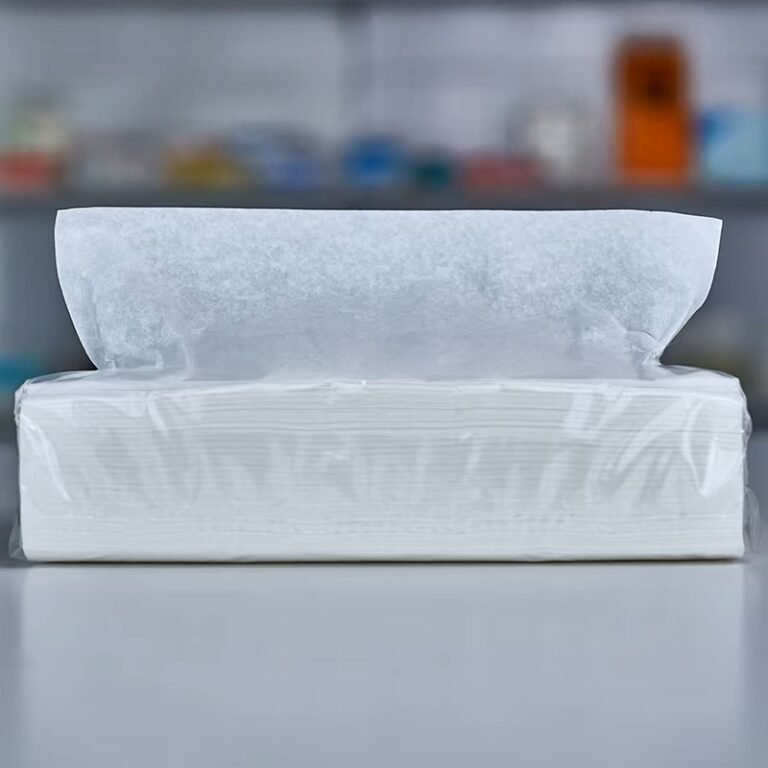
Neither format is universally better. Centrefeed wins on capacity and cost-per-dry in high-traffic single-point dispensers, because one large roll serves many users between refills and the enclosed sheet stays clean. Folded multi-fold wins where you want a controlled, one-sheet-at-a-time presentation in a smaller dispenser, or where the wall unit is already a folded-towel cabinet. The table sets out the operating differences.
| Factor | Centrefeed roll | Folded multi-fold (V/Z/M) |
|---|---|---|
| Feed method | Centre-pull through a core | Interfolded stack, top sheet pulls next |
| Best traffic level | High, single-point dispensers | Moderate to high, cabinet dispensers |
| Refill cadence | Fewer, larger refills | More frequent stack refills |
| Dispenser type | Spindle roll cabinet | Folded-towel cabinet |
| Usage control | Metered by pull and brake | One sheet presents the next |
| Sheet protection | Enclosed until pulled | Enclosed in cabinet |
For a deeper read on the folded side, including how V, Z and M folds behave in different cabinets, see our multifold paper towels guide. If the real question at your site is paper versus roller towels or reusable cloth, the disposable versus cloth hand towel comparison works through the hygiene and cost logic.
The Sizing Variables You Must Lock Before Ordering
This is the section that prevents the two-o-clock run-out. A centrefeed roll is defined by a small set of physical dimensions, and every one of them has to match the dispenser and the traffic. We build the roll to your specification, so these are the figures you write on the order and confirm with the mill. Treat each as a number you supply and we hold, not a number to guess.
Roll width
The width of the sheet across the roll. It has to clear the dispenser throat and match the presentation you want at the sink. Too wide and the sheet drags on the cabinet; too narrow and coverage per dry drops, so users pull twice. State the finished width you need and let the mill confirm the parent-roll slit that produces it.
Roll diameter and length
Two ways to express capacity. The wound diameter decides whether the roll physically fits inside the dispenser housing, and the total length or metreage decides how many dries it yields before a refill. Specify both. Our High-Yield Meterage Control governs rewind tightness and cut length precisely so the metreage you order is the metreage you get, with no short-meterage shrinkage quietly reducing the yield.
Core inner diameter
The hole the dispenser spindle passes through. This is the single most common compatibility miss: a roll with the wrong core will not seat on the spindle, or sits loose and wobbles, which jams the feed. Confirm the core diameter against the dispenser’s spindle before you order, and hold it constant across refills so a replacement always fits.
Ply and basis weight
Our portfolio runs 13 to 45 GSM across all tissue categories, and hand towels are built in the plies and weights that suit commercial drying. Ply and GSM interact with absorbency and with how many sheets a user takes per dry. Quote the ply and the target GSM together and ask what hand-feel and dry-count that combination produces, rather than naming a ply and hoping.
Dispenser Compatibility: The Fit Check That Saves a Container
Order the dispenser sample and the roll sample together, or you are matching on paper only. The fit check has four parts and needs only a sample roll, the dispenser and a pair of eyes. First, the core seats on the spindle without force and without play. Second, the wound roll diameter clears the housing with room for the roll to spin as it empties, since a full roll and a near-empty roll behave differently. Third, the sheet width feeds through the throat without catching. Fourth, the dispenser brake or tension system, if it has one, meters the pull instead of letting the roll free-spin.
Here is the warning that saves money. A dispenser with no brake and a loosely wound roll is how a single user pulls an armful of towel when one sheet would have done. If your cabinets have no tension control, specify a firmer rewind and a sheet size that delivers one clean dry, and expect to manage consumption through the roll spec rather than the hardware. Ask the mill for the rewind tightness that matches your dispenser type.
Wet performance is the other compatibility question, and it is about the sheet, not the dispenser. Our hand towel line is built with Wet-Burst Strength optimisation through a long-fiber ratio, so the towel does not fall apart wet and leaves no lint on the hands or the basin. For a washroom that means no shredded towel in the sink and no lint complaints from users drying off. Ask any supplier for the wet-tensile result and a lint test before committing.
Hygiene and Quality Specifications Worth Writing Down
Beyond size, three specifications decide whether the towel is fit for a commercial washroom. Brightness matters because a dull, grey sheet reads as low-grade to a user even when it performs. Our hand towels are produced for high brightness. Lint control matters in medical, food and premium hospitality settings, where Zero-Dust micro-pore purification controls the paper-dust rate. And cleanliness of the sheet itself matters: the paper is produced from 100% virgin wood pulp with no recovered content, without fluorescent brightening agents and without harmful chemical additives.
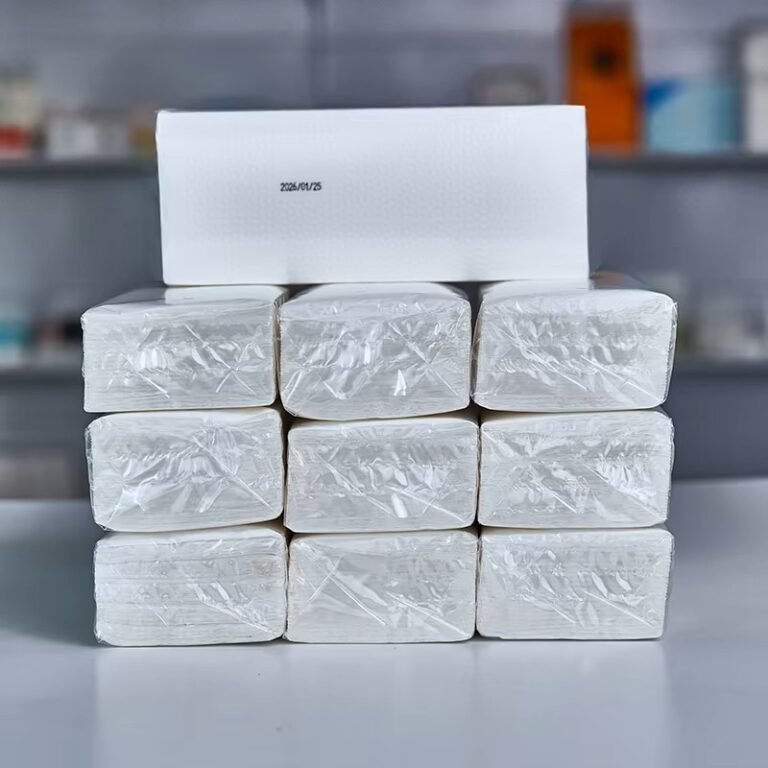
Verification is what turns a specification into a guarantee. Every shipment carries a 100% virgin pulp COA covering tensile strength, brightness and virgin-fiber verification, plus a wet-tensile and zero-dust test video pack, and loading and moisture-proof packing photographs. Quality runs through a three-stage QC process: parent-roll sampling for tensile and brightness, in-process patrol during rewinding for GSM, tension and perforation line, and a pre-shipment audit of carton specification and drop test.
Ordering, MOQ and Lead Time
The commercial frame, stated plainly. White-label and plain centrefeed product ships from a single 20GP container. Fully custom printed packaging, with your artwork on the wrap or the master carton, runs at one full 40’HQ container because the plate work only makes sense at that scale. Sampling and small-sample dispatch takes 1 to 3 working days. First mass production runs 25 to 30 working days including packaging plate-making and outer-carton printing, and repeat orders run 20 to 25 working days with plate fees waived on archived artwork. Terms are FOB, CIF, CFR or EXW ex Tianjin Xingang Port, with 30% T/T deposit and 70% balance before shipment.
Because a centrefeed roll is hygroscopic and a container sits on the water for weeks, the packing specification protects the order. Our export standard is thickened moisture-proof corrugated cartons, fumigation-free pallets and high-tensile strapping, with container airtightness and watertightness checked before loading. A roll that arrives damp will not feed cleanly and will not store, so this is not a detail to value-engineer out.
The Centrefeed Ordering Checklist
Before the order leaves your desk, confirm every line. This is the checklist that turns a vague “roll hand towels” into a specification that fits the wall and lasts the shift.
- Roll width stated, and confirmed against the dispenser throat.
- Wound roll diameter stated, and confirmed to clear the dispenser housing full and near-empty.
- Total length or metreage stated, held under High-Yield Meterage Control.
- Core inner diameter matched to the dispenser spindle, and constant across refills.
- Ply and target GSM quoted together, with the expected dry-count confirmed.
- Wet-burst and lint performance requested as a test video, not a claim.
- Virgin-fiber COA, three-stage QC and moisture-proof packing confirmed on the order.
- MOQ, Incoterm, lead time and 30/70 payment terms written into the contract.
Lock those eight lines and the two-o-clock run-out disappears. For the wider hand towel programme, including every format we convert, see the paper hand towels programme page, and for capacity, QC and export terms the factory profile covers the rest.
Centrefeed rolls anchor many hotel and spa hand towel programs, where larger sheets at the basin drive the format choice.
Frequently Asked Questions
What is a centrefeed hand towel roll?
It is a roll that feeds from the centre through a cardboard core rather than from the outside. The dispenser holds it on a spindle, the inner tail is threaded out, and each pull rotates the roll to present the next sheet, which meters usage in high-traffic washrooms.
How do I know a roll will fit my dispenser?
Match three dimensions to the dispenser: the core inner diameter to the spindle, the wound roll diameter to the housing, and the sheet width to the throat. Order a dispenser and roll sample together and run the fit check before committing a container.
What GSM should commercial hand towels be?
Our portfolio runs 13 to 45 GSM across tissue categories, and the right hand towel weight depends on ply and your target dry-count. Quote ply and GSM together and ask the mill what absorbency and sheets-per-dry that combination delivers.
Are centrefeed rolls better than folded towels?
For high-traffic single-point dispensers, centrefeed usually wins on capacity and cost-per-dry because one large roll serves many users between refills. Folded multi-fold suits smaller cabinets and a controlled one-sheet presentation. The dispenser on your wall decides which.
What is the MOQ for custom printed centrefeed hand towels?
White-label product ships from one 20GP container. Custom printed wrap or master cartons run at one full 40’HQ, with first production in 25-30 working days and repeats in 20-25 with plate fees waived.
Sizing a centrefeed roll correctly sits upstream; the in-use failure audit covers what goes wrong on the wall after the fit is right.