In a low-traffic office powder room, a janitor almost never thinks about the toilet paper. In an airport terminal or a stadium concourse, the same person is changing a dispenser four times a shift, and every one of those changes is a ladder, a walk to the stockroom, and a fixture out of service. That difference in labor is the entire reason jumbo commercial toilet paper exists as its own category, and it is the number you should be pricing, not the per-roll sticker.
This guide explains what actually distinguishes a jumbo roll from a standard one, how to size capacity against real traffic without overbuying, and how to confirm the roll will fit the dispenser already on the wall before a container is committed.
What Makes A Roll “Jumbo” In Commercial Terms
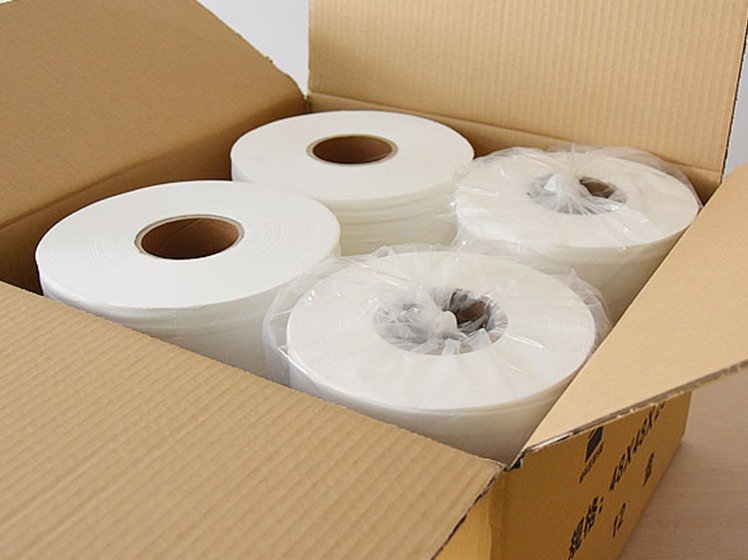
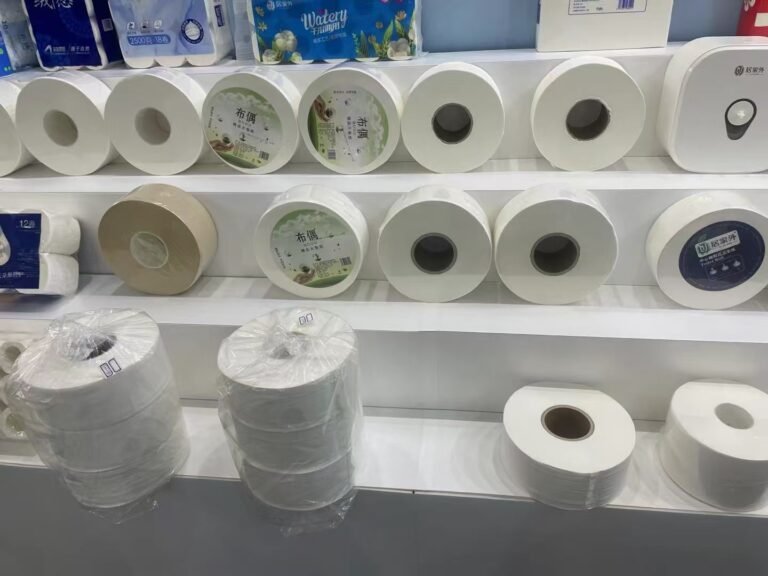
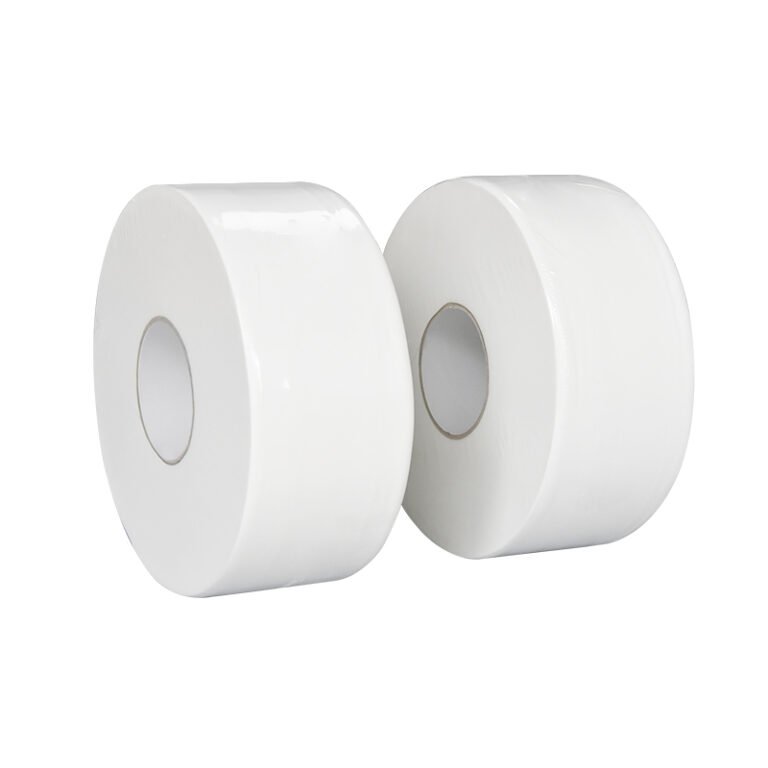
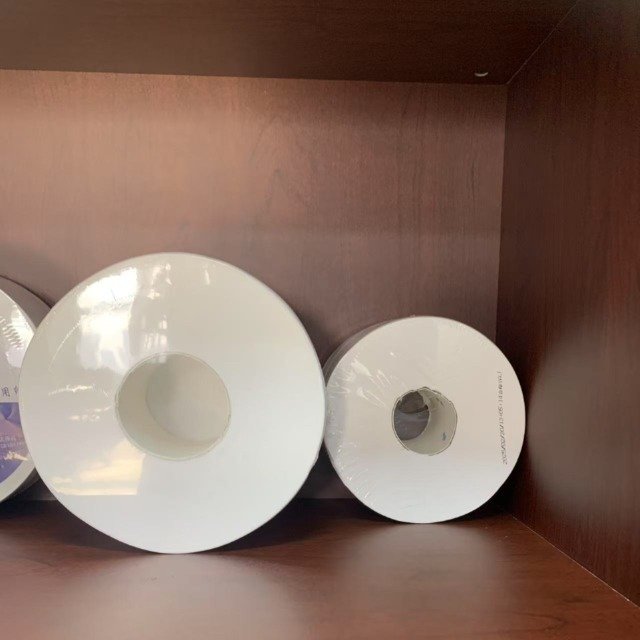
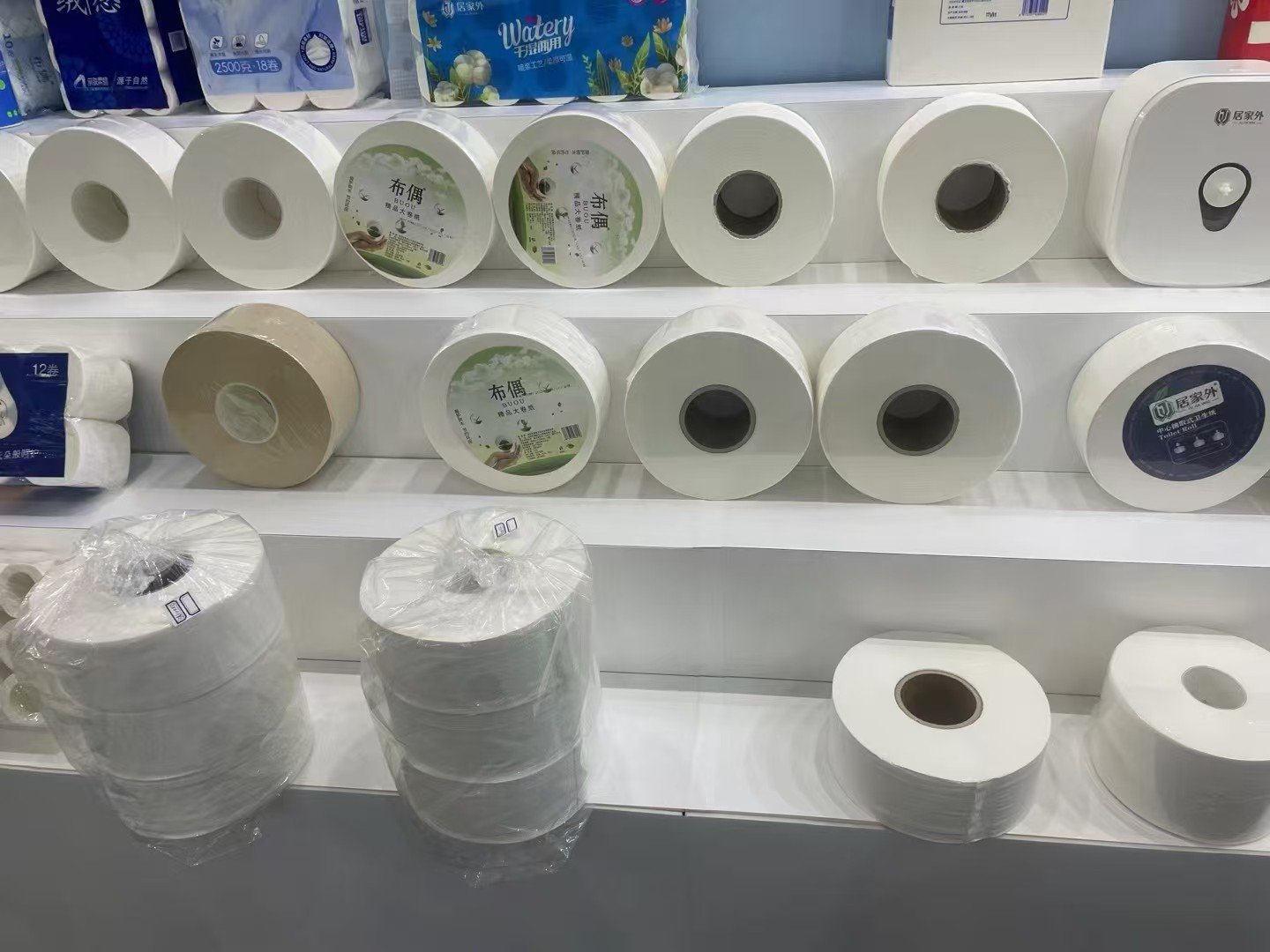
A jumbo roll, often abbreviated JRT for jumbo roll tissue, trades roll count for meterage. Instead of many small rolls that empty quickly, you install one larger, longer roll that carries far more paper per fixture and therefore needs servicing far less often. We build ours at diameters spanning 18 cm to 28 cm, in 2-ply and 3-ply, wound for long meterage with a high-tensile long-fiber furnish so the sheet holds together under constant public use, targeting exactly the office, airport, hospital and factory washrooms where standard rolls fail on refill frequency.
The construction is only half the story; the furnish is the other half. Our jumbo rolls run on 100% virgin wood pulp with a controlled long- and short-fiber ratio, no de-inked recycled pulp, across a portfolio basis weight of 13 to 45 GSM. That matters in sensitive venues, where a low-grade recycled jumbo may be cheap per roll but sheds lint, reads grey, and disappoints the very visitors a hospital or premium terminal is trying to serve.
Jumbo Versus Standard Rolls: The Real Trade-Off
Buyers usually default to whichever looks cheaper on the pallet, which is almost always the standard roll. That comparison is incomplete, because it ignores the labor line. A jumbo roll costs more to buy but does the work of several standard rolls between changes, and in high-traffic rooms labor dwarfs paper cost.
The market treats capacity this way explicitly. As a publicly documented reference point, Kimberly-Clark’s Scott Essential Jumbo lists each large roll at roughly five times the length of a standard commercial roll, which is precisely the kind of meterage multiplier that turns “fewer changes” from marketing into arithmetic. The jumbo-versus-standard mechanics are laid out in the direct comparison of jumbo and standard rolls; what matters here is deciding which side of the crossover your traffic sits on.
| Venue type | Dominant cost driver | Capacity call |
|---|---|---|
| Low-traffic office, boutique | Paper price per roll | Standard or small jumbo; refill burden is low |
| Mid-traffic mall, restaurant group | Refill labor + stock runs | Mid jumbo (18-22 cm) to halve changes |
| Airport, stadium, hospital corridor | Fixture downtime + labor | High-capacity jumbo (24-28 cm), long meterage |
Sizing Capacity Without Overbuying
The mistake on both ends is sizing from a competitor’s roll count instead of your own traffic. Build it from your fixtures: count the dispensers, estimate servings used per fixture per day under your real footfall, convert to meters consumed, and divide by the meterage the roll actually holds. That tells you how many changes per week each fixture needs at a given capacity, and therefore whether the mid jumbo or the high-capacity jumbo minimizes labor for the price.
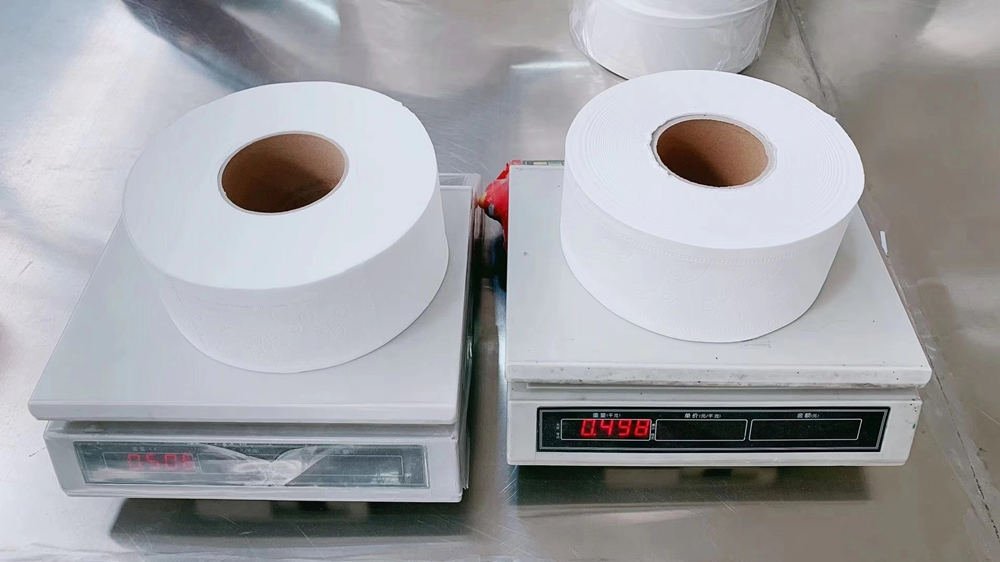
Because jumbo capacity is where a supplier can quietly shrink the deal, insist on verified meterage rather than roll count. We control this directly: high-yield meterage control locks rewind tightness and cut length so declared meters are real meters, and a three-stage QC process samples parent-roll tensile and brightness, patrols GSM and tension in-process, and finishes with a pre-shipment check including carton count and a drop test. A short roll defeats the whole labor-saving case for going jumbo, so the audited meterage is the spec that protects the purchase. For roll-size and core detail, the high-capacity JRT buying guide is the companion.
Check Dispenser Fit Before You Order A Container
None of the capacity math matters if the roll will not fit the housing. Jumbo dispensers are cavity-limited: a 28 cm roll cannot load into a housing bored for 22 cm, and core diameter has to agree with the spindle. This is why commercial lines publish core size as a hard spec; the same Scott listing that quotes five-times length also specifies a 60 mm core, because the core and the roll are matched to the dispenser as a system. Photograph your installed units, note diameter clearance and core size, and match to those before choosing capacity.
For the underlying size, meterage and core dimensions and how they interlock with the housing, the jumbo roll tissue (JRT) buying guide covers measuring the fixture to the roll. Getting fit right upstream is what lets the capacity and labor decisions downstream actually hold.
Buying Jumbo Commercial Rolls Direct
For distributors and large facilities, jumbo is where buying from the converting factory instead of a reseller earns its keep. You set diameter, ply, GSM band, fiber spec, core size and packing to match your dispensers and your traffic model rather than adapting to a fixed SKU. Unbranded white-label jumbo ships from a shared 20GP container, so you can prove a format across a few sites first; a custom-printed program starts at one 40HQ. Samples of the actual roll go out in one to three working days for a fit test in the real dispenser, first production runs 25 to 30 working days, reorders 20 to 25, and shipment leaves Tianjin Xingang on FOB, CIF, CFR or EXW terms. Spec the whole high-capacity program against the jumbo toilet paper line page.
Video: jumbo roll tissue manufacturing and meterage control process (Top Source Paper)
Frequently Asked Questions On Jumbo Commercial Toilet Paper
What size is a jumbo commercial toilet paper roll?
Commercial jumbo rolls commonly run from about 18 cm to 28 cm in diameter. Higher-traffic venues justify the larger diameters; the right size is set by your dispenser cavity and your meterage-per-change math.
Is jumbo toilet paper cheaper than standard rolls?
Per roll it usually costs more, but per change-out it is often cheaper in busy washrooms because one jumbo roll does the work of several standard rolls. Price the labor, not just the paper.
Do jumbo rolls fit any dispenser?
No. Jumbo dispensers are cavity- and core-limited, so roll diameter and core size must match the installed housing before you order.
How do I avoid short jumbo rolls?
Buy on verified meterage from a factory that controls rewind tightness and cut length and audits it at pre-shipment, rather than on a roll count alone.
Sizing chooses the diameter; the jumbo rolls wholesale guide then checks that the delivered core and metreage match the quote.