Five quotes for the same bulk tissue order land in your inbox, and none speak the same language. One mill prices per kilogram of jumbo roll, another per finished roll, a third per shrink-wrapped carton, and the reseller folds ocean freight into a delivered number you cannot separate. One is FOB, one CIF, one EXW. One claims 13-18 GSM bath tissue, another states no GSM at all. On the page they look impossible to line up, and that confusion is exactly why the cheapest-looking quote wins by default – which is how landed-cost surprises and quality failures get imported.
Related on this site: UK packaging EPR data for tissue importers.
Related on this site: lot coding and mock-recall drills to score into your supplier comparison.
The fix is not to chase the lowest headline number. It is to normalize every quote onto one basis, then score suppliers against weighted criteria you set before you look at price. This guide on how to compare tissue paper suppliers walks the method: common denominator, landed-cost example, weighted scorecard, the asymmetries that fool buyers, and a pilot you run before committing a container. If your question is whether one supplier is a real manufacturer rather than a broker, that is covered in our factory capacity and QC and paper-specific proofs guides, not re-taught here.
Why Tissue Paper Quotes Cannot Sit Side by Side
A quote is not one number. It is a bundle of five decisions, and each supplier makes them differently, so any honest tissue supplier comparison has to unpack all five before it touches price.
- Unit of measure. Jumbo sellers quote per kg of parent roll; converters quote per finished roll, carton or pack – not the same animal.
- Incoterm. FOB, CIF, CFR and EXW each include or exclude freight and insurance, so two identical factories can print very different numbers purely on the term quoted.
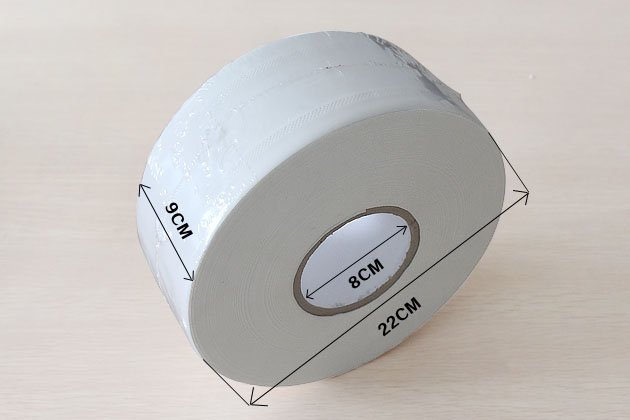
- Spec depth. GSM, ply, meterage per roll, core and pack count define the real paper; a quote that omits meterage hides the main cost driver.
- Container basis. Cost per unit turns on how many units fit the container you commit to. White-label orders move on a 20GP; a custom-printed carton and a printed outer PE sleeve both sit at the 1×40’HQ tier.
- Inclusions. Some prices carry plate fees, samples, inspection reports or moisture-proof packing; others strip them and re-add later.
Normalizing puts all five on one footing – delivered landed cost per sellable unit, matched spec, Incoterm and container tier – and only then does comparison become evaluation.
Step 1 – Put Every Quote on One Common Denominator
Before evaluating bulk paper suppliers on merit, force every quote into one worksheet. Have each vendor restate three fixed lines: the deliverable unit (rolls, packs, or kg), the spec sheet (GSM, ply, meterage per roll, core, pack count), and the Incoterm with its inclusions itemized. A supplier who cannot state these cleanly has already told you something.
Comparing FOB, CIF, CFR and EXW Quotes
Incoterms are the ICC-published trade terms, and putting them on one basis is a buyer-side verification exercise, not a factory claim. FOB prices goods at the origin port; CIF adds ocean freight and insurance to the destination port; CFR adds freight but not insurance; EXW prices at the factory door and pushes the rest onto you. To compare, strip each quote back to a delivered landed number at your warehouse using your forwarder’s rates and your duty lookup, then rebuild on that one basis. Our FOB vs CIF vs EXW cost guide walks the itemization; the point is you never compare a CIF number against an EXW number as if freight were zero.
Because a Hebei mill ships out of Tianjin port, ocean freight is set by your lane, forwarder and season – not the paper. Hold that variable constant across quotes so it cannot mask the real difference.
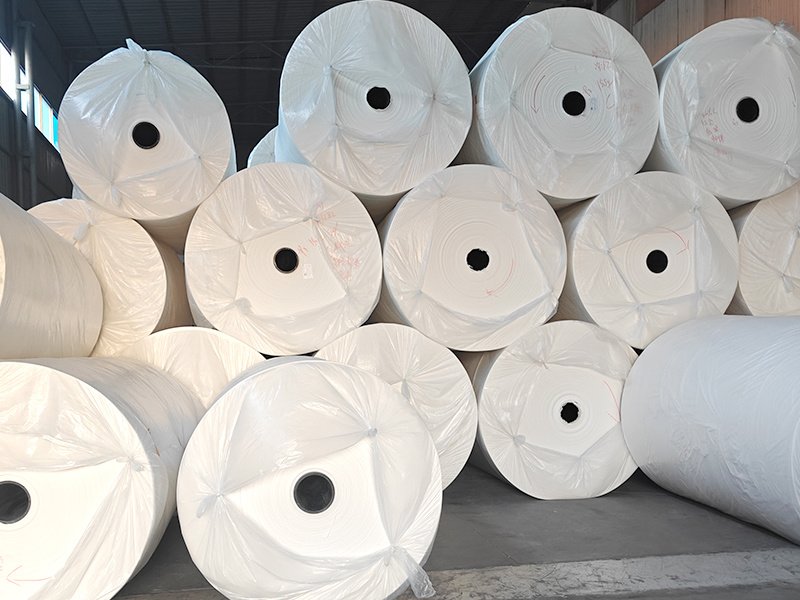
Video: “toilet tissue paper manufacturing process” on the Top Source Paper channel (@topsourcepaper4025). It shows the converting and production floor; it is not a supplier-comparison walkthrough.
Step 2 - Score Suppliers on Weighted Criteria
Normalized numbers still do not decide on price alone. Build a supplier scorecard around what you actually care about, then let price be one row among several. The weights below are illustrative only - each buyer sets their own. The discipline is committing to the weighting before you see who is cheapest, so the low quote cannot retroactively justify itself.
| Criterion | Example weight (buyer-set) | Buyer-side evidence to require |
|---|---|---|
| Landed cost per sellable unit | 25% | All quotes normalized to a delivered basis (see worked example) |
| Verified spec match (GSM, ply, meterage) | 20% | COA with Tensile Strength and Brightness; meterage per roll from packing list |
| Material authenticity | 15% | 100% virgin wood pulp verification; dust / zero-dust test video |
| MOQ fit to your tier | 10% | White-label 20GP vs 1x40'HQ custom-print commitment |
| Lead-time stability | 10% | First order 25-30 working days, reorder 20-25, stated start point |
| QC transparency | 10% | Three-gate QC; pre-shipment report plus container-seal video |
| Packaging and moisture protection | 10% | Packing photos/videos; sea-freight moisture and crush control |
Score each vendor on the non-price rows using evidence, not promises. A mill that supplies a physical-indicator COA for tensile strength, brightness and 100% virgin fiber verification, plus a wet-strength and dust video and packing photos on request, is easy to rate high on spec, authenticity and QC. A quote that waves all of it away and competes only on price is a bundle of unpriced risk. The buyer-side evidence behind each row sits in our buyer resources library, and the QC-report guide lists the documents to ask every vendor to match.
Step 3 - Normalize Landed Cost per Sellable Unit
Price per container is not price per product. Costing one container under a single Incoterm is its own exercise, covered in our FOB vs CIF vs EXW guide; the step here is different. It takes that container number and divides it down to the shelf - landed cost per sellable unit - so that unlike quotes from several suppliers collapse onto one comparable row. A cheap container holding fewer, shorter or lighter rolls is quietly expensive once you run it per unit. The table below is a worked arithmetic example: every figure is an illustrative buyer input you replace with your own quote, forwarder rates and duty lookup, and none of it is a Top Source Paper price.
| Line item (buyer-entered) | Supplier A (FOB) | Supplier B (CIF) | Supplier C (EXW) |
|---|---|---|---|
| Quoted price per container (USD) | 8,000 | 11,000 | 8,500 |
| Ocean freight + insurance you add (USD) | 3,000 | 0 (already in CIF) | 3,200 |
| Duty, clearance, inland to warehouse (USD) | 2,000 | 2,500 | 2,300 |
| Sellable rolls per container (from packing list) | 24,000 | 30,000 | 30,000 |
| Total landed (USD) | 13,000 | 13,500 | 14,000 |
| Landed cost per roll (USD) | 0.542 | 0.450 | 0.467 |
On the headline, Supplier A is the cheapest container at 8,000. On the last row it is the most expensive paper you can buy, at 0.542 per roll, because its container holds 24,000 shorter rolls while the others deliver 30,000. The formula that exposes this is simply total landed divided by sellable units per container. Normalizing to that unit is the whole point when you are learning how to choose a tissue manufacturer on real cost rather than being sold a number.
Red Flags That Hide in Asymmetric Quotes
Normalization surfaces asymmetries you would otherwise miss. Three recur on almost every sourcing round.
Spotting Low-Price Recycled Fill
An unusually low landed cost on tissue is usually a material story, not an efficiency one. Standard bath tissue sits in the 13-18 GSM range for its class and is built from 100% virgin wood pulp; a price far below the field with no explanation is a signal to demand the COA first. Verify the 100% virgin fiber claim against the physical-indicator report and the dust test, because recycled filler shows up as paper dust, weak wet strength, and a roll that shrinks effective meterage.
Plate Fee and Reorder Economics
Custom-printed packaging carries plate and tooling costs, and suppliers book them inconsistently: some fold them into the unit price, some bill once, some bill again every repeat. Ask each vendor to itemize the plate fee and say whether it recurs, because a supplier who re-charges tooling turns a cheap first quote into the expensive long-term partner. Here, private-label artwork and formula are archived for reuse and repeat orders carry no duplicate plate charge - but not every vendor does, so get it in writing per supplier.
Lead Time from Artwork Sign-Off
A "lead time" number means nothing until you know where the clock starts. Some quote from purchase order on a plain product; a custom-print run must fold in packaging tooling, sampling and outer-carton printing before goods hit the line. Normalize the start point to artwork sign-off and compare like for like. The private-label cadence is samples out in 1-3 working days, a first full run at 25-30 working days including that tooling and print cycle, and repeat orders at 20-25 working days. A vendor quoting 15 days "from order" on a printed SKU without saying how tooling is covered is the asymmetry to catch.
Pilot Before You Commit the Container
The final move is structural: do not let a comparison end in a big blind order. When two finalists land close on the scorecard, run them in parallel at the lower-risk tier before anyone signs a full private-label run.
White-label orders sit at the 20GP tier while custom-printed cartons and printed outer sleeves sit at the 1x40'HQ tier, so the pilot and the commitment are different sizes of bet. Keep the first physical test at the white-label commitment for each finalist, receive both, and run an inbound check: weigh rolls against the stated GSM, count meterage against the packing list, inspect dust, and compare each to its COA. Only after one survives receiving does stepping up to the 1x40'HQ private-label order make sense. The MOQ guide on 20GP versus 1x40'HQ lays out that ladder - buy information at the small tier before you buy brand at the large one.

That is the method for a defensible tissue supplier comparison: normalize the unit, Incoterm, spec and container tier; score against weighted criteria set before you saw price; drive everything to landed cost per sellable unit; catch the recycled-fill, plate-fee and lead-time asymmetries; then pilot small before committing big. Want a comparison-ready quote you can drop straight into your own scorecard - itemized Incoterm, spec sheet with GSM and meterage, COA, and a stated lead-time start point? Send your target spec and container tier and we will return a line-item quote built for apples-to-apples comparison, not a headline number.
Frequently Asked Questions
How do you compare tissue paper suppliers that quote differently?
Normalize every quote onto one denominator before judging price: same unit, same Incoterm restated to a delivered landed number, same spec sheet (GSM, ply, meterage per roll, core, pack count), same container tier. Then score on weighted criteria you set in advance, with landed cost per unit as one row.
What makes tissue paper quotes non-comparable side by side?
Five things: different units (per kg versus per roll versus per carton), Incoterms that each include or exclude freight and insurance, uneven spec depth like missing GSM or meterage, different container bases (20GP versus 1x40'HQ), and inconsistent inclusions such as plate fees. Normalize all five and they become comparable.
How do you score suppliers on a weighted basis?
Use a scorecard with rows for landed cost, verified spec, material authenticity, MOQ fit, lead-time stability, QC transparency, and packaging protection. Set weights to your own business before seeing prices, and score the non-price rows from evidence such as a physical-indicator COA and test videos, not promises.
What is the difference between a 20GP and a 1x40'HQ order?
White-label or plain goods move on a 20GP container; a custom-printed carton and a printed outer PE sleeve both sit at the 1x40'HQ tier. The 20GP is the smaller, natural pilot commitment; the 1x40'HQ is the larger brand run you reserve for a supplier who has already cleared receiving checks.
How should you pilot an order from two suppliers?
Run both close finalists in parallel at the lower-risk white-label tier rather than committing a private-label run to either. Receive both, weigh rolls against stated GSM, count meterage, check dust, compare each to its COA, then step up to the 1x40'HQ private-label order only with the survivor.
Should the first order be private label or white label?
Start white label at the 20GP tier unless the supplier is already proven - it is the smaller bet and lets you validate spec, meterage, material authenticity and packaging on real goods. Once one survives, move the custom-printed private-label program to its 1x40'HQ commitment, artwork archived so repeats avoid duplicate plate charges.