A three-ply facial tissue can be flimsier in use than a two-ply one, and a buyer who specifies by the ply number alone will never see that coming. Ply is a layer count. It says nothing on its own about how those layers are held together, and the holding is what decides whether the sheet behaves as one piece of paper or as a stack that separates at the corner of a pull.
That distinction is where the real decision sits between two and three plies: not in a softness adjective borrowed from a supplier PDF, but in what the extra layer costs you in fibre mass, what it does to the bond, and whether your channel is complaining about tearing or about delamination. Here is how to tell the two apart on a sample in under five minutes, and what the third layer is genuinely buying.
Key Takeaways
- Ply counts layers, not properties; the published converting research describes plies being pressed together either completely or only at the edges and held into a laminate, which is why bond method has to be specified alongside ply.
- The same literature reports that a higher number of plies improves tissue strength and softness, so 3-ply is not automatically softer – it is a different construction with a different failure mode.
- At unchanged sheet size, adding a third layer to a two-ply sheet raises the layered area per sheet by a factor of 1.5; that is arithmetic, and it is the reason a three-ply carton is heavier per thousand sheets.
- Facial tissue here is built as multi-layer composite with heat-bond embossing and edges that do not delaminate, on 2-ply or 3-ply construction, from 100 percent virgin wood pulp.
- Count plies at a cut edge under light and test the bond wet, not dry; a dry pull passes on sheets that fall apart the moment a cold hand touches them.
- Sheet count per box, box dimensions and any facial-tissue grammage are order terms to be confirmed with the mill, not published standards, and the whole cost-per-use calculation depends on them.
- Ply Is a Layer Count, Not a Property
- What a Third Layer Actually Adds
- Two Ply Against Three Ply, Line by Line
- Counting the Plies on a Sample
- What the Extra Layer Does to Mass and Yield
- The Bond Decides the Argument
- Choosing by Failure Mode, Not by Adjective
- Frequently Asked Questions
Ply Is a Layer Count, Not a Property
Ask for 3 ply and you will be quoted 3 ply, because the word is unambiguous about one thing only: there are three sheets of tissue in the stack. What happens next is a converting decision. The published record is specific about it – during embossing the plies are pressed together either completely or only at the edges, and the pattern of indentations is what holds them as a laminate (BioResources review of hygiene-tissue softness). Glue bonding is a separate route, used where a supplier is not relying on the press alone.
Why the Same Ply Number Behaves Differently Between Two Suppliers
Two boxes can both be honest 3-ply and be built in different ways: one fully pressed so the layers act as one stiff sheet, one edge-bonded so the layers move independently and the sheet reads thicker in the hand. Neither is wrong. The edge-bonded build is the one that complains differently later, and it is the one a buyer cannot detect from a number on a carton.
What a Third Layer Actually Adds
The direction of travel is documented: more plies improve both strength and softness in tissue, according to the same review. That is the honest version of the marketing claim, and it is also the reason the claim should not be read as a ranking. If both properties rise with ply count, the differentiator moves somewhere else – into basis weight, into bond method, and into how many sheets a buyer is willing to fit in a box.
The counterweight is real too. Embossing, the operation that makes a multi-ply sheet one product, can reduce tensile strength and thickness (Vieira et al., BioResources 15(2), 3888-3898). So a three-ply sheet that has been pressed hard to guarantee it never delaminates in a hotel basket can feel denser and pull weaker wet than a lightly bonded two-ply. This is the trade a buyer is actually buying, and it is almost never written on the quote.
Two Ply Against Three Ply, Line by Line
Comparison, stated as a buyer would use it. Anything the mill does not publish stays in the confirm column instead of being dressed up as a figure.
| Dimension | 2-ply | 3-ply | Confirm with the mill |
|---|---|---|---|
| Layered area per sheet | Baseline | 1.5x at unchanged sheet size | Sheet size, since area scales with it |
| Hand feel | Flatter, reads thinner | Loftier if bond is sparse | Bond method: complete or edge-only |
| Dominant failure mode | Tear through the sheet | Layers separating at the edge | Heat-bond or glue-bond construction |
| Carton mass per sheet count | Lighter | Heavier | Sheets per box and cartons per pallet |
| Fibre basis weight | Not published here | Not published here | Required, because the portfolio spans 13-45 GSM |
| Best used where | Volume channels, high turnover | Guest-facing and premium shelves | Your own complaint log, not a brochure |
Where the Verdict Falls
Pick three ply when your complaint log is about sheets tearing through onto a hand, and your shelf can carry the carton weight that comes with it. Pick two ply when the log is about boxes that look cheap but never cause a return, and you are buying on turnover. If both complaints are present, that is a bond-method problem, not a ply problem, and adding a layer will make it more expensive rather than rarer.
Counting the Plies on a Sample
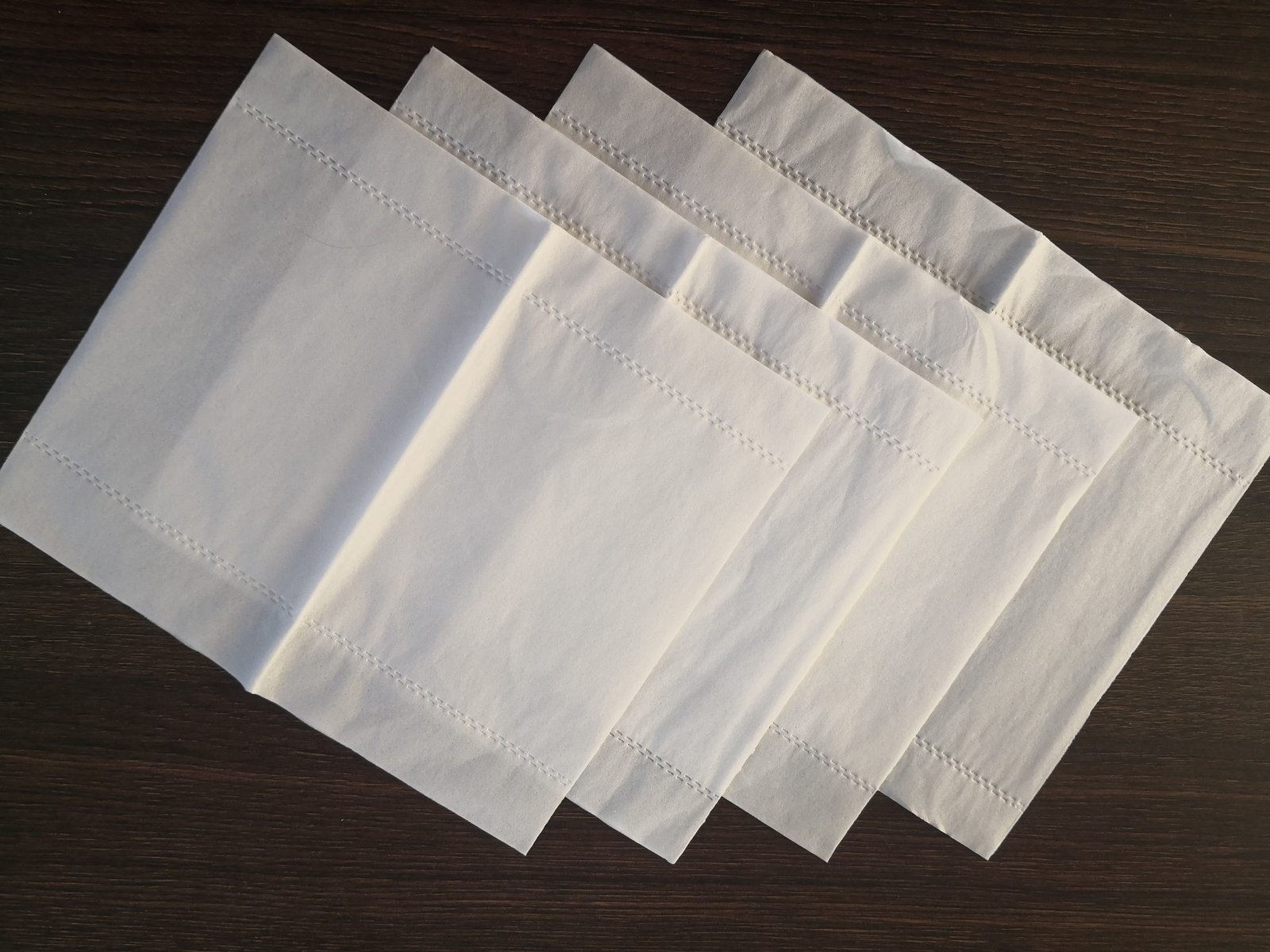
Do this on a delivered carton, not on a photo. Take one sheet, do not separate it, and look at the cut edge against a window or a lamp. Three layers read as three distinct faces with air between them; two layers read as two. Count at the corner where the cut was made, because the centre of a pressed sheet can fuse enough to hide a layer.
The Wet Test That Actually Predicts Complaints
Damp one corner of the same sheet with cold water and pull the layers apart from that corner. An edge-bonded laminate should let go along the bond line and stay in two clean halves; a sheet that shreds into fragments from the wet corner has a furnish or a bond problem that no ply number warned you about. Then dry the sheet flat and look at it sideways: a delaminating build shows its bond geometry as a shadow pattern, and that pattern is what you compare against the retained reference sample on the next delivery.
What to Log So the Next Order Is Comparable
Three lines, on the sample record: the ply count you observed, whether the bond read as complete or edge-only, and whether the wet corner tore through or separated. Those three are enough to hold a shipment against an approved sample. The softness conversation those numbers do not settle belongs in the premium facial-tissue hand-feel guide, and the manufacturing difference between facial tissue and bath tissue in the comparison of the two lines.
What the Extra Layer Does to Mass and Yield
Here the arithmetic is honest and limited, because the inputs a buyer does not have stay out of it. If a supplier changes a two-ply box to three plies and does not change the sheet size, the layered area per sheet goes up by 50 percent: three layers over two, 3 divided by 2 equals 1.5. That is the reason three-ply cartons feel heavier on a pallet and why a freight quote on the same sheet count moves.
What that 50 percent means in cost per thousand sheets depends on two numbers the mill does not publish as standards: how many sheets are in the box, and what each sheet weighs. Get both in writing and the comparison is trivial – cost per thousand sheets, then cost per use once you know how many sheets a customer actually uses per occasion. Get only one of them, and you are comparing two invoices with a unit mismatch, which is exactly how a three-ply line ends up looking cheap on a per-box basis and expensive in a margin review.
The Yield Trap Buyers Fall Into Once
The other move to watch for is quieter than a price increase: ply goes up, sheet count per box comes down, and the carton looks premium while the cost per use rises. It is invisible unless the box count is on the purchase order in the same sentence as the ply. Put it there.
The Bond Decides the Argument
A ply claim that is not backed by a bond method is a description of a stack. The position here is written the other way round: facial tissue is built as a multi-layer composite with heat-bond embossing and edges that do not delaminate, in two or three plies, from 100 percent virgin wood pulp with a long and short fibre blend, and dust is controlled by a separate micro-pore purification step rather than assumed away.
Three consequences follow for a buyer specifying ply. The delamination complaint is the one that a bond specification can actually prevent, so write the bond method onto the order. The dust complaint cannot be fixed by adding a ply, so do not buy a third layer to solve a powder problem. And the strength complaint can move in either direction with embossing pressure, which is why the wet-corner test above is a better predictor than a datasheet line.
Video: “Precision Manufacturing for Unmatched Quality Toilet paper”, Top Source Paper own channel. It is toilet-paper line footage from the same converting environment; it is not a facial-tissue ply or bond demonstration.
Format is the other half of the purchase and is deliberately not covered here: whether the sheet ships in a cube box, a flat box or a PE soft-pack changes shelf presence and moisture behaviour, and that comparison is owned by the boxed against soft-pack guide, with the bulk-format sourcing page covering what to lock on a hotel order.
Choosing by Failure Mode, Not by Adjective
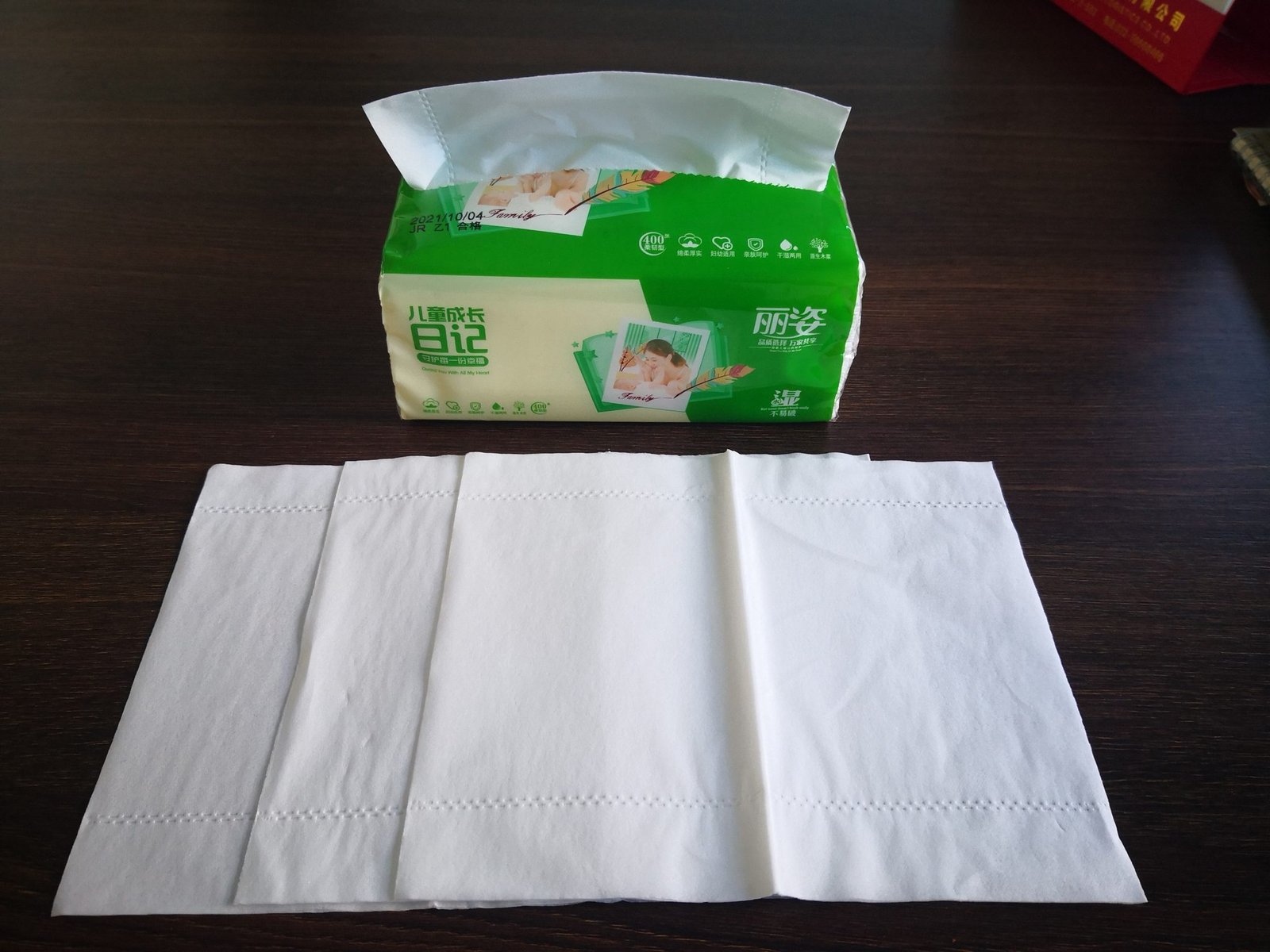
Read your own complaint log before you read a supplier’s brochure, because the log already knows which layer of this decision matters. Sheets tearing through during use point at the ply and, secondarily, at the furnish. Layers separating at the edge point at the bond. Powder on a dark tray points at purification, and buying a third ply to fix it will cost you margin and change nothing.
Then run the two tests – cut-edge count and wet corner – on a sample from both constructions, and put the ply, the bond method and the sheet count in the same sentence on the purchase order. A specification written that way survives a supplier change, because it describes the product rather than the adjective. If you want both constructions quoted against one set of numbers, the facial tissue line is where the two are built side by side, and sending your target sheet count with the request is what makes the comparison real instead of theoretical.
Frequently Asked Questions On Facial Tissue Ply
Is 3-ply facial tissue better than 2-ply?
Better at what. Published tissue research reports that more plies improve both strength and softness, so three plies should outperform two on both, but only if the bond holds: an over-pressed three-ply can read dense and pull weak wet. Choose against the failure your channel actually reports.
What does ply mean on a facial tissue spec?
The number of tissue layers in the sheet. It is a construction count, not a performance grade, and it says nothing by itself about whether those layers are pressed completely, bonded only at the edges, or glued.
How do I verify the ply count on a delivery?
Look at a cut edge against a lamp and count distinct faces at the corner, then damp a corner and pull the layers apart. A sheet that separates cleanly along a bond line is edge-bonded; one that shreds wet has a furnish or bond problem the ply number never disclosed.
Does 3-ply mean more sheets per box?
Not necessarily, and often the reverse. The carton gets heavier per sheet, and the sheet count per box can come down while the box itself stays the same size. Put sheets per box on the order in the same sentence as ply, then price on cost per thousand sheets.
Can facial tissue be made without the layers separating?
That is a bonding decision rather than a ply decision. The construction here is multi-layer composite with heat-bond embossing and edges specified not to delaminate, supported by a virgin-fibre COA and a dust and wet-strength inspection video shipped with the order.