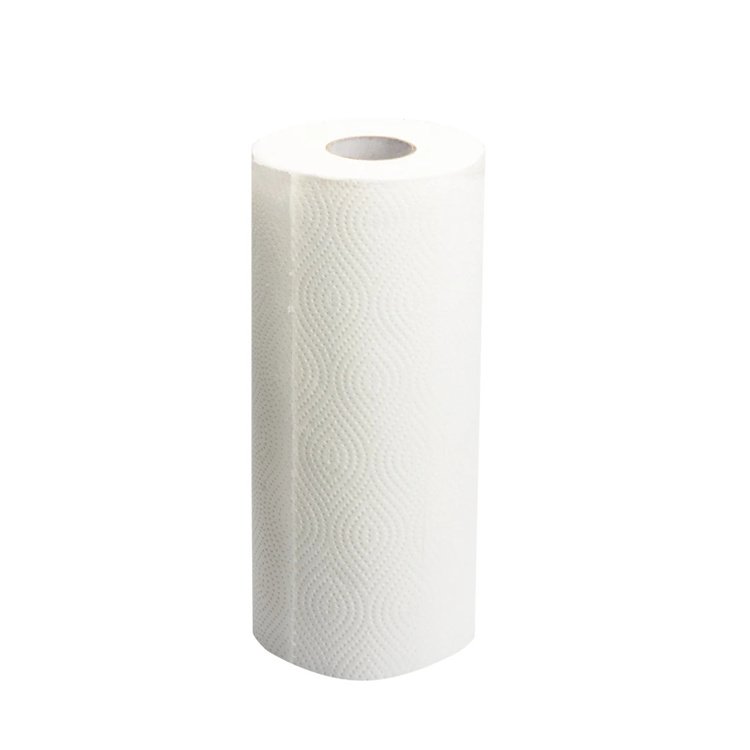
Buy paper towels by the case long enough and you notice the same quote structure failing the same way: two suppliers, two identical-sounding “per case” prices, and a shelf cost that can differ by nearly double. The case is the unit the whole janitorial-sanitary trade prices in, but nobody in the chain is required to standardise what a case is, and that gap is exactly where resale margin hides.
A wholesale catalogue that sells a 600-foot hardwound roll at 12 rolls per case and a 700-foot centrefeed roll at 6 per case is not being inconsistent; it is describing two different goods. A reseller who compares those offers per case compares nothing. This guide turns the case from a shipping box into a unit of arithmetic you can audit, reorder and defend at your own price list.
Key Takeaways
- “Case” has no fixed content. Observed US wholesale catalogue formats for rolled kitchen and hand towel run from 6 rolls per case (700-foot centrefeed) to 12 rolls per case (600-foot hardwound).
- The only honest comparison unit is cost per foot, per sheet or per square metre, derived from the case price divided by what is actually inside it.
- Case weight is evidence, not a verdict: it carries core, wrapper and absorbed moisture as well as fibre.
- A final-gate drop test on the packed carton, not the shelf life of the towel, is what protects your cases from forklift to customer.
- Plain and white-label kitchen towel consolidates into a shared 20GP, which is how a reseller tests several case formats on one commitment.
- The absorbency argument worth money is kitchen-specific: this kitchen line’s wet-strength resin and web-embossing build claims a 40% water-and-oil absorption efficiency uplift, and that claim belongs to no other product line.
- A Case Is a Unit of Trade, Not a Size
- Three Units That Make Two Quotes Comparable
- What Case Weight Actually Weighs
- Handling Damage Is a Spec, Not an Accident
- Mixing Cases Into One First Order
- The Claims Your Kitchen Cases Should Carry
- Building a Case-Based Line Card
- FAQ
- Compare Per Unit, Order Per Case, Reorder Per Velocity
A Case Is a Unit of Trade, Not a Size
Ask five suppliers what “one case” of kitchen paper towels means and you will get five boxes back, none of them the same. The distribution channel – independent janitorial-sanitary distributors buying from national suppliers, the structure buying groups like DPA exist to organise – runs on the case because the case is what a pallet is stacked from and what an invoice line reads. It was never designed to be a standard of quantity.
Formats You Will Actually See
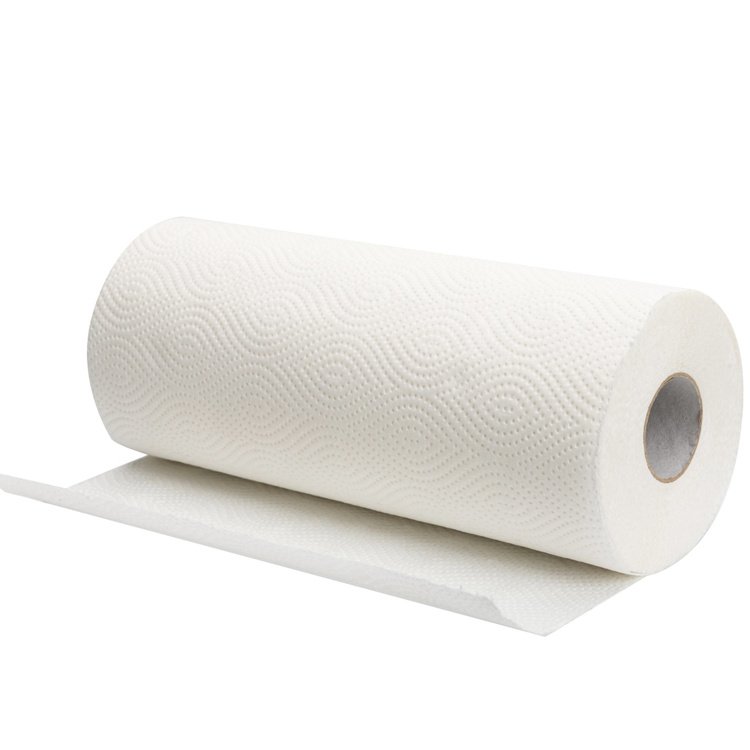
Open any major US foodservice-and-cleaning catalogue and count. Hardwound roll towel, 600 feet per roll, sold 12 rolls to the case; centrefeed roll, 700 feet per roll, sold 6 to the case; folded goods counted instead in sheet-packed multipacks, the case total printed in sheets rather than rolls. Same word, three different goods underneath it. The practical consequence: the case is a logistics object, and everything economic about it has to be rebuilt from the label inside.
Three Units That Make Two Quotes Comparable
A quote becomes comparable the moment you divide it out. Rolled kitchen towel divides to cost per foot or per metre; sheet and fold goods divide to cost per sheet; and when ply differs between two rolls, the only fair unit left is cost per square foot of actual paper, sheet count and dimensions multiplied out.
The Division, Worked on Placeholders
Input a placeholder case price of $18 – your real landed number will differ, the method will not. At 12 rolls per case, that is $1.50 per roll; on a 600-foot roll, 0.25 cents per foot. At 6 rolls per case, the same $18 is $3.00 per roll; on a 700-foot centrefeed, about 0.43 cents per foot. Same case price, a roughly 1.7x difference in the unit your customer actually consumes, and both quotes looked identical at case level. Run it on your own numbers and the ranking usually flips.
Where the Division Breaks
Two inputs sabotage the arithmetic quietly. Embossment stretch inflates stated sheet dimensions until the sheet lies flat, and perforation spacing gets “rounded” between quote and carton. Pull one roll, measure flat, count breaks over a metre, and you will know which supplier is quoting the paper and which is quoting the box.
What Case Weight Actually Weighs
Buyers use net case weight as a proxy for fibre content, and it is a fair proxy with three leaks: the core, the wrapper and the water. A heavy roll can be a heavy core; a carton that weights in on expectation can be carrying absorbed maritime humidity, which is a claim problem, not a quality signal.
Weights still earn their place in the receiving file. Log gross and net per lot, note the date and container, and the series over three reorder cycles will tell you whether the metreage you specified is the metreage being wound. That longitudinal habit catches the slow shave – a few grams per roll, one percent per order – that no single inspection is built to see. The spec-side of grammage and wet-strength verification, where the number itself is interrogated, is worked in the kitchen towel GSM and wet-strength guide; here the weight log is only the tripwire that tells you when to open that file.

Handling Damage Is a Spec, Not an Accident
Kitchen towel cases fail in the last hundred metres, not the last thousand miles. Corner crush opens cartons, printed plastic wrap tears and lets dust into goods sold as clean, and a crushed roll will not stack on your customer’s shelf. None of that is prevented by the paper; it is prevented by the carton specification and proven or disproven by one test.
This mill’s answer sits in the final gate before shipping: the pre-shipment check verifies carton specification and runs a drop test on the packed case, on top of the packing standard itself – thick, high-strength moisture-proof corrugated outer cartons, fumigation-free pallets and high-tensile strapping, with the container’s seals and water-tightness checked before the doors close. The evidence ships too: loading and moisture-proof packing photos and video travel with the goods, and a buyer who keeps them has a baseline for comparing the state of every later arrival. Ask any supplier for that photo set before booking; the ones who have one will send it unprompted.
Mixing Cases Into One First Order
The unit economics get interesting at the container. Plain and white-label kitchen towel consolidates into a shared 20GP, which means a first order does not have to be one product: hardwound and centrefeed formats, a 1-ply and a 2-ply line, sheet goods beside rolls – several case types riding one commitment. That is how a reseller discovers which format their channel repeats, rather than learning from a warehouse full of one answer. Where the larger sequence – when to stay generic and when to commit your own printed carton – belongs to the tissue reseller guide and is not re-told here. The container arithmetic behind the entry itself – 20GP versus 40HQ, what each commits – is settled in the MOQ guide to 20GP against 40HQ and not repeated either. Reorder rhythm favours the mixed start: 20-25 working days on routine reorders against 25-30 on a first production run means the proven format gets restocked faster than the experiment.
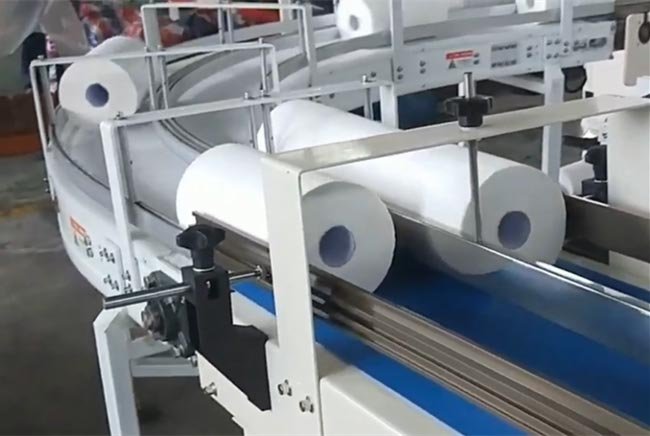
Video: “tissue paper manufacturing process”, Top Source Paper own channel. Converting-line footage from the tissue plant; it is not a kitchen-towel case-packing video.
The Claims Your Kitchen Cases Should Carry
Not every towel earns every sentence on the carton, and the resale conversation is where the scattershot claims get caught. A kitchen towel line legitimately sells on absorbency that survives being wet: this line is built with a wet-strength resin formula and a three-dimensional web embossing, and the stated result is a 40% improvement in water-and-oil absorption efficiency – a claim scoped to the kitchen product and deliberately not made for bath tissue or hand towels, where it does not belong.
Holding suppliers to line-scoped claims is what keeps your own price list defensible, because the generic version of the claim is worth nothing: every category page on the trade internet says “highly absorbent.” What is worth shelf space is the named mechanism and the number attached to the specific line – and an explanation of where the number comes from, which the process article on how kitchen paper towels are made gives. If a supplier will happily print the same absorbency sentence on their toilet paper, strip the claim from their kitchen towel and reprice it.
Format-level decisions – roll versus sheet, kitchen roll versus standard towel – are compared in kitchen roll against standard paper towels, and the ply economics in 1-ply against 2-ply kitchen towels; this article’s job ends where those two begin.
Building a Case-Based Line Card
Resale works when the line card is boring enough to reorder from memory. Build it case-first, one row per SKU, with the audited columns beside the marketing ones.
| Column | Source of truth | Why it earns space |
|---|---|---|
| Rolls (or packs) per case | Case label, verified on arrival | Converts any price quote into a unit cost |
| Feet or sheets per roll/pack | Product spec, unwind-checked per lot | The denominator the margin lives on |
| Cost per foot / sheet | Your division, not the quote | Only comparable unit across suppliers |
| Net weight per roll | Scale log at goods-in | Longitudinal tripwire for shrinkage |
| Dispenser or use fit | Your estate survey | Stops dead-stock cases accumulating |
Two neighbouring decisions sit outside this article’s scope: folded hand-towel case planning belongs to the washroom-supply side of the catalogue rather than the kitchen one, and becoming the distributor who runs a line card at all is the reseller guide’s subject, linked in the mixing section above. The kitchen paper towels pillar page collects the format families this table prices.
Compare Per Unit, Order Per Case, Reorder Per Velocity
The whole case question collapses into a sequence: normalise every quote to cost per foot or sheet before you rank suppliers, treat the case label as the audit target rather than the price tag, and then let shelf velocity – not container economics – set your reorder cadence on the 20-25 working day rhythm.
Each step has a document behind it: the packing photo baseline for arrivals, the weight log for shrinkage, the line card for reorders. If you are standing up your first kitchen-towel programme and want those three filled in before rather than after an order, send the mill your format shortlist and get a case spec, net weights and a sample carton moving toward you inside three working days.
Frequently Asked Questions On Buying Paper Towels By The Case
How many paper towels are in a case?
There is no standard. Observed US wholesale formats run 12 rolls per case on 600-foot hardwound towel and 6 rolls per case on 700-foot centrefeed; folded goods are counted in sheets per case instead. Always read the roll count and length off the case label before pricing.
Is buying paper towels by the case cheaper for resale?
Cheaper per unit than shelf packs, almost always – but the honest number is cost per foot or per sheet after you divide the case price by the contents. Two quotes at identical case prices can differ by roughly 1.7x per foot.
What should I check when a case of kitchen towels arrives?
Four things: carton condition against the packing photo baseline, roll count against the label, one unwind measurement against stated feet, and net roll weight logged for the trend. Keep one sealed sample per lot.
Can I order mixed case formats in one container?
Plain and white-label goods consolidate into a shared 20GP, so multiple formats and plies can ride one order. Custom colour-printed cartons require a full 40’HQ and belong after the formats have proven velocity.
What makes one case of kitchen towel better than another?
On this line: a wet-strength resin build and 3D web embossing with a stated 40% water-and-oil absorption efficiency uplift – a claim scoped to kitchen products. Compare that mechanism, and the case-label numbers, before comparing price.